


When you purchase through links on our site, we may earn an affiliate commission. Here’s how it works. |
In this article, we are looking at our final comparison, which is of all the R6 Cameras, beginning with the Original R6, moving to the R6 Mark II, and up to the latest R6 Mark III. What is different between the Canon EOS R6 Mark III and the other R6 series cameras, the EOS R6 Mark II, and the first EOS R6? If you are looking to upgrade, we have put together a clear comparison of the R6 series of cameras.
Don’t forget to check out our other comparisons.
Read Our Other Comparisions

Sensor and Image Quality
The 32.5MP sensor in the EOS R6 Mark III is a major upgrade. Expectedly, it should provide slightly more detailed images than the EOS R6 Mark II, which has 24.2MP, and more detailed pictures than the EOS R6, which has 20.1MP.
| R6 | R6 Mark II | R6 Mark III | |
|---|---|---|---|
| Sensor Size | 20.1MP | 24.2MP | 32.5MP |
| Image Size | 5472 x 3648 | 6000 x 4000 | 6960 x 4640 |
| Resolution Increase from R6 | 9.06% | 27.2% | |
| Resolution Increase from R6 Mark II | 16% |
But that’s just the number of megapixels; in reality, the difference between the R6 Mark II and the R6 Mark III is a resolution increase of 16% while the R6 to R6 Mark III is a resolution increase of 27%. The latter is most likely a noticeable resolution increase. The R6 Mark III’s new 32.5 megapixel sensor seems to be capable in low light, but perhaps not as much as the R6 and R6 Mark II, handling up to ISO 64,000, whereas the EOS R6 and R6 Mark II allow you to set the ISO range up to 102,400.
Because this topic came up before, resolution increase is different than the relative number of megapixels. While the total amount of megapixels is important, it may not tell you the entire story of how much you can visually see the increase.
The EOS R6 Mark III also gets a bump in in-body image stabilization (IBIS), producing up to 8.5 stops (depending on the lens); compared to the EOS R6 Mark II, which was limited to eight stops achievable in proper conditions.
The readout speed has steadily improved from the original R6, with the original R6 having a 19.7ms readout speed, the R6 Mark II having a 14.7ms readout speed, and finally the R6 Mark III having the quickest readout of 13.5ms. The reason why this matters is that it reduces rolling shutter effect during video and electronic shutter stills photography, and also assists with eliminating banding from fluorescent and LED lighting.
Autofocus and Speed
All three cameras share the same mechanical shutter speed of 12 frames per second. But both the EOS R6 Mark II and EOS R6 Mark III can shoot at 40fps with the electronic shutter, twice as fast as the EOS R6.

The R6 series shows the progression of Canon’s deep learning subject recognition.
- EOS R6: This was one of the first to utilize the Dual Pixel CMOS AF II system with deep learning, including subject recognition for people, as well as, later, animals such as dogs, cats, and birds.
- EOS R6 Mark II: This version includes even more advanced deep learning, such as the “Subject to detect: Auto”, which enables the camera to determine on its own what the best subject to focus on in a complex scene with multiple subjects (e.g., a car, a person, a dog).
- EOS R6 Mark III: Like the R6 Mark II, the R6 Mark III has the same underlying deep learning technology, but reportedly faster.
The Register People Priority feature, inspired by the EOS R3, is in the R6 Mark III, prioritizing specific faces in crowded scenes. The R6 Mark III also introduces full Pre-continuous shooting, which captures up to 20 frames before the shutter is fully pressed. Unlike the EOS R6 Mark II’s RAW Burst mode, which saves images in a single file, these are saved separately, making it easier to review and select your image of choice.
Video Features
For videographers, the EOS R6 Mark III builds upon what the EOS R6 Mark II previously accomplished. Canon did well in upgrading the EOS R6 Mark II in terms of 4K 60p using the full width of the sensor and from 6K oversampled 4K. The R6 Mark III takes this and expands on it in spades, offering 7K RAW, oversampled 4K from 7K, and 4K 120p
| EOS R6 | EOS R6 Mark II | EOS R6 Mark III | |
|---|---|---|---|
| Internal RAW Video | No | No | C-Raw |
| Max 4K Resolution | 4K up to 60p | 4K up to 60p (oversampled from 6K) | 4K up to 120p (oversampled from 7K) |
| C-Log | C-log | C-Log 3 | C-Log 2 and 3 |
| Slow-Motion | Full HD up to 120fps | Full HD up to 180fps | Full HD up to 180fps |
| Open Gate Recording | No | No | Yes |
| HDMI Output | Micro-HDMI | Micro-HDMI | Full-size HDMI |
| Lens Breathing Correction | No | No | Yes |
| Audio Features | – | Multi-function shoe | Multi-function shoe four-channel audio support |
| Additional Features | – | False color warning display | Waveform monitor, tally lamp, video proxies |
Open Gate RAW recording is another feature of the R6 Mark III, allowing you to record using the full sensor area, which allows you flexibility in post-production. Canon Log 2 video recording is also available on the R6 Mark III, and it can be used to save up to 15+ stops of dynamic range, according to Canon.

The EOS R6 Mark III offers additional video content creation tools such as a Waveform Monitor, full-size Type A HDMI output port, a tally lamp, four-channel audio, and video proxies.
Why use the EOS R6?
With the R6 now firmly two generations old, it’s harder to pick the R6 in this case, but not everyone can afford the R6 Mark II or the R6 Mark III. The R6 can still be purchased at a relatively decent price, and used cameras are available on the market. That makes it an attractive entry in the 6-series mirrorless camera line.
The EOS R6 Mark II’s Strengths
The EOS R6 Mark II is still a solid choice. It introduced 40fps shooting, Dual Pixel RAW, and HDR for moving subjects. It records 4K 60p internally, supports 6K RAW output via HDMI, and has a multi-function shoe for accessories like digital microphones.

The R6 Mark II and the R6 Mark III. The R6 Mark II is approximately $2100 retail, and used R6 Mark II’s will be on the market with the release of the R6 Mark II. This makes the R6 Mark II an economical choice with an excellent set of features. According to Canon, in 2025, the Canon EOS R6 Mark II was the highest-selling full-frame mirrorless camera.
Why Choose the EOS R6 Mark III?
The EOS R6 Mark III is an evolutionary leap from the R6 Mark II. It’s faster, with a 32.5MP sensor, enhanced autofocus over the other R6 models, and video features like 7K RAW and Open Gate recording, full-size HDMI, making it an ideal hybrid camera, equally good at stills photography and video. Anything the R6 Mark II and R6 can do, in all cases, the R6 Mark III can do as well, and in many cases, it can do it better and faster.

Summary Comparison Table
| Canon EOS R6 | Canon EOS R6 II | Canon EOS R6 III | |
|---|---|---|---|
| MSRP (US / UK) | $2,500 | $2300 / £2200 | $2800 / £2800 |
| Sensor type | Dual Pixel AF FSI CMOS | Dual Pixel AF FSI CMOS | Dual Pixel AF FSI CMOS |
| Resolution | 20MP | 24MP | 32.5MP |
| Maximum shooting rate | 12fps mech shutter 20fps electronic | 12fps mech. 40fps e-shutter | 12fps mech. 40fps e-shutter |
| Pre-burst capture? | Yes (Raw Burst mode) | Yes | |
| Image stabilization | Up to 8EV | 8EV | 8.5EV* |
| Stills rolling shutter rate (ms) | ~19.7ms | ∼14.7ms (12-bit) | ∼13.5ms (12-bit) |
| Flash sync speed | 1/250** | 1/250 sec | 1/250 sec |
| AF subject detection | Human Animal (Dog / Cat / Bird / Horse) Vehicle (car, motorcycle, plane, train) Manual | Human Animal (Dog / Cat / Bird / Horse) Vehicle (car, motorcycle, plane, train) Automatic | Human Animal (Dog / Cat / Bird / Horse) Vehicle (car, motorcycle, plane, train) Automatic |
| HDR still output | PQ HEIF | PQ HEIF | PQ HEIF |
| Video resolutions | UHD 4K 60p (1.05x crop) | 4K/60 (full-width, oversampled from 6K) 1080p/180 (full-width) | 7K DCI/60 (Raw) 7K/30 open-gate 4K/120 (full-width) 1080p/180 (full-width) |
| Uncompressed video | 4K over HDMI | 6K over HDMI | C-Raw |
| Video assist tools | False color overlay Log view assist | False color overlay Waveform Log view assist Customizable LUT | |
| Viewfinder res/ magnification/ eyepoint | 3.69M dot 0.76x 23mm | 3.69M dot 0.76x 23mm | 3.69M dot 0.76x 23mm |
| Rear screen | 3.0″ 1.62M-dot fully articulated touchscreen | 3.0″ 1.62M dot Fully-articulating | 3.0″ 1.62M dot Fully-articulating |
| Media types | 2x UHS-II SD | 2x UHS-II SD | 1x CFexpress Type B 1x UHS-II SD |
| Battery life EVF / LCD | 380 / 510 | 320 / 580 | 270 / 510 |
| Dimensions | 138 x 98 x 88mm | 138 x 98 x 88mm | 138 x 98 x 88mm |
| Weight | 680g | 680g | 699g |
Closing Thoughts
This was probably the most extensive and comprehensively compared camera we have done here at CanonRumors. I hope you enjoyed the comparisons, and no matter what camera you ultimately choose, it’s really difficult these days to make a poor decision. They are all just that good.
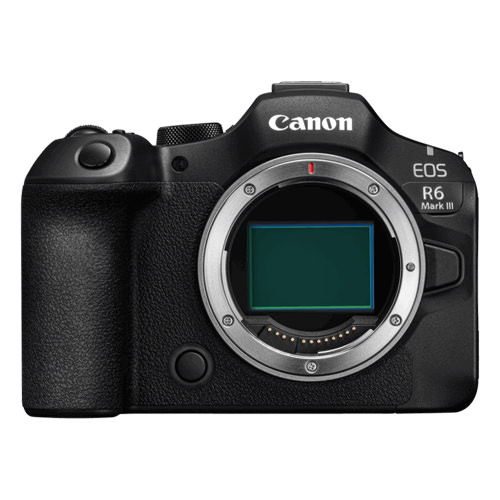
MSRP: $2799 • €2899 • £2799
32.5MP Full-Frame CMOS Sensor
7K 60p 12-Bit Internal RAW Light Video
Open Gate 7K 30p, High-Speed 4K 120p
Dual Pixel CMOS AF II & Movie Servo AF
Up to 40 fps & Pre-Continuous Shoot Mode




Prices also as expected (and of course too high 😉 ), In Germany 2899,- incl. VAT.
Now let's see the first RL hands on and sensor measurements and until then all the whiners whine 😛
Does this "new" mean, it is indeed a new sensor or the expected re-use of the (still quite new) EOS C50?
Never owned CFE cards and SD cards are more than enough for me. I was plenty satisfied with dual SD but I would get used to replace the SD card in place of letting the camera fill the second one when the first comes full
But from your answer it is still not 100% clear if it is the same sensor as the C50's (as rumored) the or an even newer one (maybe slightly improved).
However, the max iso has been reduced from the R6ii by 2/3rd of a stop. thisis uaully an indicator from Canon as to it's expected hit on the increased noise threshold those extra mp cause. If the ios noise between the R6ii to R5 was a whole stop then this increase in rez will affect the noise too. So maybe 1/2 to 2/3rd of a stop is about right.
this morning, I've heared numerous youtube influencers talking about the great features of the R6iii....most of these great features are alredy present in the R6ii....which goes to show how good the R6ii is / was.
Here in the Uk, the launch price is around £2700 GDP...whcih is very high considering I can buy a new R5ii (via grey import) for the same price. A mint used R5 for £1600 and a new R6ii (grey) for on;y £1350....for only a few new fetures...that's a lot of £££ for not a lot of benefits. I can literally buy a pair of R6ii's for the launch price of one R6iii.
I think if I was looking to jump from DSLR to mirrorless, this would be a great camera. I think upgraders from the EOS R and R6mk1 have a lot of milage in this upgrade. but for existing R6ii users....it's more of an expensive side grade. Slightly improved, more of an evolution that definatly builds on the shoulders of it's great predecessor. If Canon continues selling their R6ii alongside the R6iii, then the R6ii may become the true bargain of the canon range.
When [Cropping/aspect ratio: Full-frame] is set: 1/200 sec mechanical shutter / 1/250 electronic 1st curtain,
When [Cropping/aspect ratio: 1.6x (crop)] is set: 1/250 sec mechanical shutter / 1/320 electronic 1st curtain.
So the 1/320s sync speed is for 1.6x crop electronic 1st curtain.
As expected for non-stacked sensor, no flash sync using fully electronic shutter.
mic drop