Report: New Canon Super Telephoto Lenses Coming in May
They already have a Zero extender for all lenses.It would be handy if Canon developed a Zero//1.4/2 extender that could be attached to any of the big whites.


Upvote
0
They already have a Zero extender for all lenses.It would be handy if Canon developed a Zero//1.4/2 extender that could be attached to any of the big whites.

Just as good? Also with the 2X extender?Yes and most expensive, however Nikon's new one is just as good and slightly lighter from what I've read but even more expensive





Me too! I’m team Canon but the 5D II was so great! I didn’t think I would ever upgrade. I kept it until the R5 and don’t think I will ever buy another camera until it can’t be fixed! 5D IV is my backup.What a blast from the past! I really loved my 5D II, and with the small 40mm pancake it was surprisingly portable.
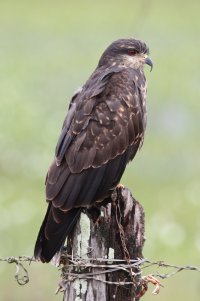
Here is a 3000x2000 crop downsized the same as yours to 1600x1060 (a Snail Kite, taken in the Pantanal in 2013). They seem similarly sharp, and my images occupying a large fraction of the frame are fine. The problem is that I usually have to crop far more than that. My images often used to be rejected by the mods on a Dutch bird site because they considered them too soft. Everything changed when I got a 300mm f/2.8 II and put a 1.4xTC on it. The increase in resolution made all the difference for heavy cropping, and my images sneaked through. Nowadays, if I have an image of a bird that is about 1000 px long, it looks very sharp and I see lots of detail. I couldn't do that at 1000px on the 100-400mm original, though modern software would help greatly. They are still sharper than many images posted here but they wouldn't get past those tough Dutch mods.I must have gotten lucky, my copy of the original 100-400L was quite good. I sold it after getting the 600/4 II, and never owned the 100-400L II.
“Mockingbird’s Glare”
View attachment 228874
EOS 7D, EF 100-400mm f/4.5-5.6L IS USM @ 400mm, 1/640 s, f/5.6, ISO 200

Yes and most expensiveIt might be the best 70-200 zoom ever!
, however Nikon's new one is just as good and slightly lighter from what I've read but even more expensive
Some... but Canon, e.g., builds sensors but buys DIGIC CPUs and other chips. In any case, building chips is relatively quick once the facilities are in place, while growing / polishing / preparing the big glass elements for big whites takes up to 1 year or so in certain cases and it's therefore much less scalableI mean, you have to build those electronic parts as well. And the design part especially looks very very complex.
Ducks,in general, are not very cooperative.I have seen only once adult female on Oahu. The purplish collar on the neck is practically invisible with the females, with the males it's better but usually at shorter distances. It was pretty shy: on the last photo, when I was like "oh, it's coming closer!!!" it actually accelerated and took off!
View attachment 228875View attachment 228876View attachment 228877
It might be the best 70-200 zoom ever!Asking about the RF 70-200 Z ? It's amazingly sharp corner to corner


Very nice series Alan! My favorites are the Wren, Jay and the Goldfinch on that apple branch!Active couple of days. Today, from the largest, a Great White Egret - formerly very rare but now more common, a tiny Eurasian Wren, a Pied Wagtail (White Wagtail). A Linnet from the same locality, and from my garden yesterday, a Jay, Chaffinch and Goldfinch. All with R5ii and RF 200-800mm.View attachment 228854View attachment 228855View attachment 228856View attachment 228857View attachment 228858View attachment 228859View attachment 228860View attachment 228861
I have seen only once adult female on Oahu. The purplish collar on the neck is practically invisible with the females, with the males it's better but usually at shorter distances. It was pretty shy: on the last photo, when I was like "oh, it's coming closer!!!" it actually accelerated and took offring-necked duck (Aythya collaris)
most of the time it is hard to see the ringView attachment 228865View attachment 228866View attachment 228867View attachment 228868
!


Asking about the RF 70-200 Z ? It's amazingly sharp corner to cornerHow about corners for landscape?
Yes you won't regret it if you do even though it's very expensive it fills a gap in Canon's line up when paired with the 2x and the bare lens is of course fabulous for portrait workIt's an incredible lens. I did a comparison of it with other star lenses and it did so well. I really should get one.

Cropped to about 2000x3000 (before downsampling to post).Is that a crop or the full image?
I mean, you have to build those electronic parts as well. And the design part especially looks very very complex.To be fair they are pretty different processes: cameras are mostly an assembly of electronic parts, while lenses, especially high end ones, require a lot of time and effort to mold / polish the glass elements
Is that a crop or the full image?I must have gotten lucky, my copy of the original 100-400L was quite good. I sold it after getting the 600/4 II, and never owned the 100-400L II.
“Mockingbird’s Glare”
View attachment 228874
EOS 7D, EF 100-400mm f/4.5-5.6L IS USM @ 400mm, 1/640 s, f/5.6, ISO 200