There is no one-stop "gain" using a 0.71x speedbooster. There is no change in the number of photons per duck as the increase in light intensity on the image of the duck by reducing the f-number is exactly offset by the reduction in the area of the image of the duck because of the reduction of the focal length of the lens. It's not the iso but it is the number of photons per duck that determines the S/N in the image of the duck, and this depends on the area of the front element (entrance pupil) of the lens, and TCs and speedboosters don't alter that.Buying the RF 600mm f11 (or the RF 100-500m or RF200-800mm, or EF100-400mm II + 1.4 extender, if you are willing and able to spend the extra $ or €) would make a lot more sense than this contraption. Both f8 and f11 are not very suitable for dawn patrols or low light bird photography, so the one stop “gain” by adapting the RF800mm will not make much difference. And I strongly suspect that the image quality of the combination of speedbooster and 800mm f11 will fall apart on the (rumored) 39mp sensor.
“which historically had been used on lower priced Canon and Nikkor lenses”: like the EF 24-70mm f2.8 L and EF 100-400mm L lenses (both version I and II), like the RF100-500mm L lens? Canon and Nikon use(d) the extending design to keep the size (relatively) compact.I would think the RF 24-70mm f2.8 mark ii is next. When introduced both the RF 24-70mm and 70-200 f2.8’s were pumper zooms, which historically had been used on lower priced Canon and Nikkor lenses. Canon introduced the RF 70-200 f2.8 Z a non-pumper. I upgraded to this last week. I see that Nikkor upgraded their Z 24-70 f2.8, moving from pumper to non-pumper in their mark ii version. I would think it just around the corner.
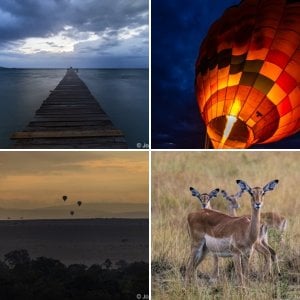
I don’t know. Jordan Drake, who shot the astro pics, is a videographer. The correct lensprofile may not have been available when he shot and processed the pictures and maybe he selected the lensprofile with the nearest focal range. Maybe he was lazy, but as @neuroanatomist posted, manual corrections have their limitations. It is stupid to apply another lenses profile for a lens which requires software corrections and not mention it in the text and video and draw any conclusions from those pictures.I can only guess it wouldn't have happened with a Sony lens! The old Sony bias still present, I presume.
Buying the RF 600mm f11 (or the RF 100-500m or RF200-800mm, or EF100-400mm II + 1.4 extender, if you are willing and able to spend the extra $ or €) would make a lot more sense than this contraption. Both f8 and f11 are not very suitable for dawn patrols or low light bird photography, so the one stop “gain” by adapting the RF800mm will not make much difference. And I strongly suspect that the image quality of the combination of speedbooster and 800mm f11 will fall apart on the (rumored) 39mp sensor.I kinda left this thread, but I found EXACTLY what I'm looking for, and it should explain it better without us talking in circles.
This madman disassembled a Meike 0.71X speedbooster and stuck it in his RF 800mm F11! And it works!
- YouTube
Enjoy the videos and music you love, upload original content, and share it all with friends, family, and the world on YouTube.www.youtube.com
That. That's it! That is precisely what I want from Canon, exactly that; a 570mm f8. And if this guy can literally glue it onto an 800mm F11, surely Canon can glue their own 0.71X speedbooster in the same spot and sell it without any extra engineering? Like the YouTuber suggests.
It would go *great* with that 39MP R7II.
Will 28/1.7 do ? If so you have the perfect excuse to get a Leica Q3A fast 28mm is all that’s left on my wishlist, f/2 or wider, it doesn’t even need a red ring.
I’m currently considering repurchasing the Sigma 28mm f/1.4 Art, it’s been almost two years since I got rid of mine, and there’s no alternative in sight. I no longer have any EF lens, but I still have the adapter, so I’m considering making an exception for this one, and keeping it as long as necessary.
There is only one reliable source and that is personal experience. Anyone can start a website. Anyone can be a blogger. Expertise is not a requirement. Not being biased or having an agenda is not a requirement. Even with the best intentions, lenses vary. Experience varies. Needs vary. Clicks, followers, subscribers are usually the goal.I think it does matter, many naive readers still believe they are a reliable source. Intellectual honesty would suggest a quick correction, but I doubt this will happen...
I can only guess it wouldn't have happened with a Sony lens! The old Sony bias still present, I presume.I agree. The pinned comment to the review was added by the "Editor-in-chief", so I suspect that Petapixel did not feel "comfortable" with the review.
They should add a comment box at the start of the review to make it clearer that they used an incorrect lens profile.
This is very bad for their credibility (I've corrected my earlier posts).
I could see the R3 model number being used for a high mp beast. I’d have thought that from a marketing position this should be more attractive than introducing a R5SCrazy idea: what if Canon killed the R3 and put the R7 II in that form factor?
I agree. The pinned comment to the review was added by the "Editor-in-chief", so I suspect that Petapixel did not feel "comfortable" with the review.I think it does matter, many naive readers still believe they are a reliable source. Intellectual honesty would suggest a quick correction, but I doubt this will happen...
My guess is that the camera you are describing is a $3000 tp $3500 camera. All the evidence from the way Canon and Nikon have been reluctant to upgrade or even make a high level crop sensor camera makes me think it is unlikely. Nor will Canon care if the R3 mark II infringes on the R1 sales, as long as the R3 mark II sales are adequate. Either way they sell a profitable camera.Crazy idea: what if Canon killed the R3 and put the R7 II in that form factor? I'm not saying this is at all probable. Just noting that it kind of makes sense. The R3 will have a tough time upgrading to a Mark II version without infringing on R1's market. On the other hand, many of us think Canon has short-shrifted us resolution/distance limited shooters. Putting a BSI stacked sensor of around 45mp in an R3 form factor on a crop sensor and juicing the processors to do the sort of pre-baking done in the 1 series cameras could be appealing. Maybe add that expansive viewfinder too. People would expect to pay an extra grand for it. -tig
PS: Whenever I come up with a "brilliant" idea for Canon's product planning they do the opposite. So the R72 will probably come out in m-mount .
I think it does matter, many naive readers still believe they are a reliable source. Intellectual honesty would suggest a quick correction, but I doubt this will happen...Does it matter? Either makes them an untrustworthy source.
Does it matter? Either makes them an untrustworthy source.Was it sabotage or simply stupidity?
Was it sabotage or simply stupidity?From the pinned comment:
Not only the wrong profile, but one for a relatively cheap, 2-stop slower non-L lens. Manual distortion correction is linear and barrel only, while a proper profile corrects for the nonlinear nature of most distortion and any mustache components.
Or course the streaking will be present in uncorrected RAWs, as well.
So personally, I’d take all their conclusions with a chunk of salt…one big enough to choke on.
Thanks, that comment was added after I read the review and watched the video. VeryFrom the pinned comment:
Not only the wrong profile, but one for a relatively cheap, 2-stop slower non-L lens. Manual distortion correction is linear and barrel only, while a proper profile corrects for the nonlinear nature of most distortion and any mustache components.
Or course the streaking will be present in uncorrected RAWs, as well.
So personally, I’d take all their conclusions with a chunk of salt…one big enough to choke on.
From the pinned comment:Where did you get the information about the lens profile from?
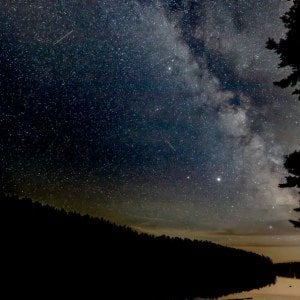
Hi all! As an explanation for the star streaking results, Jordan used the Canon 16mm profile as a starting point, with additional vignetting and distortion correction added manually. That said, the streaking of stars is still prominent in the uncorrected RAW files.