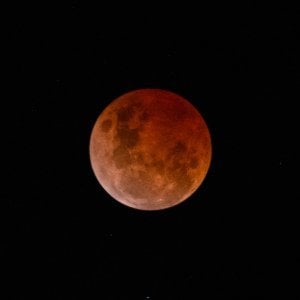
Canon RF 14mm F/1.4 – Is it the Astrophography Dream Lens for RF?

If a good performance manual 14/1.4 or 14/1.8 on RF or EF mount was released then it would be a no-brainer for me. No different to my Samyang 14/2.8 decision in the past.
I think that there is a larger niche for a manual fast and good 14mm RF lens as the 'astro' community isn't that small any more.
I theory Sigma can just add an aperture ring to their lenses and replace the AF by a MF system and sell them with an RF bayonet. Well, there might be reasons why they don't do it ...
  • Like
Reactions: 1 user
Upvote 0

Opinion: Love it or Hate it, Digital Correction is here to Stay

You missed the point that optical correction of distortion is not free - it also introduces aberations and losses in quality. There was an interview with Sigma engineers who said that in many cases correcting distortion and vignetting digitally results in better sharpness than doing it optically.
I’d love to learn more about this; do you have links to those interviews?
  • Like
Reactions: 1 user
Upvote 0

Opinion: Love it or Hate it, Digital Correction is here to Stay

Great analysis Richard! Go one stage further and compare the two lenses at 18mm, 24mm and 35mm at f/4, and you see from the optical limits charts that the 14-35mm has far, far less fall off on going from the centre to the extremes. So, for this pair of lenses, the optical correction at the shortest length causes far more damage at longer lengths than does the digital!
While in my "physical" comparison, the 15-35 was noticeably better at 35mm, and at least as good at the other focal lengths...
Upvote 0

Opinion: Love it or Hate it, Digital Correction is here to Stay

I had both the 15-35 and the 14-35. I finally sold the 15-35 last week because it constantly stayed at home. The 14-35 is so much smaller, lighter AND a full mm wider where it really counts. I can definitely live with one stop less light at these lengths. In the worst case, I can crank up the ISOs (I use DxO PhotoLab anyway) And while I also have the 10-20, this one often feels too wide.. The 14-35 barely leaves my camera during a city trip.
I agree, was my only lens on a 3 week hiking trip in the alpes last summer. The only thing i missed was a tele lens for the occassional wildlife. It is also good enough for auroras and okay for wide field astro, especially because of the convenience of having one lens. Now i am considering the 20mm for handheld astro/auroras but is not sure if its wide enough. Would love a third party manual in the 14-18 range with f2 or something :)
  • Like
Reactions: 1 user
Upvote 0

Here We Go Again, More EOS R3 Mark II Chatter

24 MP is the exact APS-C crop resolution of a 54 MP full-frame sensor. However, Canon uses a 1.6x crop factor. The 54 -> 24 MP reduction corresponds to a 1.5x crop factor.
So if it was not Canon, I'd be pretty sure that someone saw a cropped version of the image.

I don't think dual resolution makes much sense. It would have to be pixel-binned (something like 80/20 MP, four neighboring pixels would share the same color in the Bayer mask). In that case, I don't think it would bring much of an increase in detail in the 80 MP image.
If the binned pixels don't share the same microlens, then you'd still have to store data from all the pixels to recreate the color information.
Upvote 0

Opinion: Love it or Hate it, Digital Correction is here to Stay

Great analysis Richard! Go one stage further and compare the two lenses at 18mm, 24mm and 35mm at f/4, and you see from the optical limits charts that the 14-35mm has far, far less fall off on going from the centre to the extremes. So, for this pair of lenses, the optical correction at the shortest length causes far more damage at longer lengths than does the digital!

That's true, and it's much harder to get to 14mm as well in terms of optical design. The 14-35 has a slightly more zoom range, and because it's software reliant, the designers can engineer a better-performing lens overall.
  • Like
Reactions: 2 users
Upvote 0

Opinion: Love it or Hate it, Digital Correction is here to Stay

OpticalLimits has recently gotten its hands on the Canon RF 14-35mm f/4L IS USM, which was announced way back on June 29, 2021. That in itself probably isn't newsworthy. So instead of talking about the review itself, I focused on a specific part of the review that caught my eye. This part of the review […]

See full article...
Great analysis Richard! Go one stage further and compare the two lenses at 18mm, 24mm and 35mm at f/4, and you see from the optical limits charts that the 14-35mm has far, far less fall off on going from the centre to the extremes. So, for this pair of lenses, the optical correction at the shortest length causes far more damage at longer lengths than does the digital!
  • Like
  • Wow
Reactions: 5 users
Upvote 0

Opinion: Love it or Hate it, Digital Correction is here to Stay

You missed the point that optical correction of distortion is not free - it also introduces aberations and losses in quality. There was an interview with Sigma engineers who said that in many cases correcting distortion and vignetting digitally results in better sharpness than doing it optically.

That's a fair point. I implied it, that by not worrying about the image circle as much, it allows the designers to focus on other aspects of the design, but yes, I didn't go into as much detail as I should have.
Upvote 0

Opinion: Love it or Hate it, Digital Correction is here to Stay

I had both the 15-35 and the 14-35. I finally sold the 15-35 last week because it constantly stayed at home. The 14-35 is so much smaller, lighter AND a full mm wider where it really counts. I can definitely live with one stop less light at these lengths. In the worst case, I can crank up the ISOs (I use DxO PhotoLab anyway) And while I also have the 10-20, this one often feels too wide.. The 14-35 barely leaves my camera during a city trip.
  • Like
Reactions: 2 users
Upvote 0

Opinion: Love it or Hate it, Digital Correction is here to Stay

You missed the point that optical correction of distortion is not free - it also introduces aberations and losses in quality. There was an interview with Sigma engineers who said that in many cases correcting distortion and vignetting digitally results in better sharpness than doing it optically.
  • Like
Reactions: 8 users
Upvote 0

Opinion: Love it or Hate it, Digital Correction is here to Stay

OpticalLimits has recently gotten its hands on the Canon RF 14-35mm f/4L IS USM, which was announced way back on June 29, 2021. That in itself probably isn't newsworthy. So instead of talking about the review itself, I focused on a specific part of the review that caught my eye. This part of the review […]

See full article...
  • Like
  • Love
Reactions: 6 users

Canon RF 14mm F/1.4 – Is it the Astrophography Dream Lens for RF?

You can call it loyalty, or inertia, or whatever you wish. It's all the same thing. You keep buying from the same company even if there are potentially better options for some of what you do. A lot of people don't even educate themselves on what those options are! Like the author of the article this thread comes from, posting about how Sigma is dead to him because they don't exist on RF. Maybe expand horizons a bit.
Easier said than done. I went from Canon to Sony and then back to Canon. The grass is not always greener. A company might have a better option in one area and not in another. Personally I think that most camera systems are fantastic these days and it's usually not worth switching unless you are a professional and switching will make you money. Most people would benefit more from getting out and shooting rather than worrying about the latest tech.
  • Like
Reactions: 5 users
Upvote 0

Canon RF 14mm F/1.4 – Is it the Astrophography Dream Lens for RF?

To be specific, RF allows 3rd party crop sensor lenses that have full access to Canon's AF/IBIS protocols.
I think that you are referring to FF lenses instead.
Canon allows a limited subset of available APS-C glass onto RF-S. Currently two Tamron lenses and a few more from Sigma. There are no signs that the same thing will happen for FF RF which is the type of lens being discussed here.

I believed that Canon should allow 3rd party FF lenses for niches that Canon wasn't interested in themselves. UWA prime was one that they weren't interested in for a very long time.
With the RF14/1.4 and RF7-15, they hit 2 of the missing niches in their lineup. Canon might not have cheap options but they have coverage in that sense.
There are still some missing niches though: TS-R, long/short and 5x macro, mid priced zoom telephotos, 300/4, completion of f2 trinity, etc
Personally I hope that eventually the EU forces open mounts to increase competition and improve consumer selection. Besides prying open RF and Z, it would hopefully include requiring a level playing field and thus remove the limits that Sony places on E mount for 3rd party glass. I doubt it will be Sigma or Tamron who will force this, it will probably be a well-funded Chinese maker.
Upvote 0

Canon RF 14mm F/1.4 – Is it the Astrophography Dream Lens for RF?

On the other hand, people who swap brands or use more than one (and I imagine both are a minority) can overestimate how much brand loyalty there is. Speaking for myself, I have no loyalty but I do have inertia. My gear does most of what I want and any gripes or dissatisfaction aren't worth the hassle and expense of starting afresh. I suspect a lot of people are likewise in the middle.
You can call it loyalty, or inertia, or whatever you wish. It's all the same thing. You keep buying from the same company even if there are potentially better options for some of what you do. A lot of people don't even educate themselves on what those options are! Like the author of the article this thread comes from, posting about how Sigma is dead to him because they don't exist on RF. Maybe expand horizons a bit.
  • Like
Reactions: 1 user
Upvote 0

Is the Canon EOS R10 Mark II Coming in Q4 2026?

Right now they think it's 3. Sounds about right to me, too. One as cheap as possible, one sensible entry level and one slightly above that.

Nobody looks at the R50V for photography and the rumored R10 ii will be replacing the current R10, so stays at 3.

5 years ago they had basically 9! 90D, 77D, 850D, 250D, 2000D, 4000D! And don't forget M6 ii, M50 ii and M200.
I don't think either the 90D or the M6II qualify as "entry level". Both very capable cameras, as is the 77D.
  • Like
Reactions: 2 users
Upvote 0

Is the Canon EOS R10 Mark II Coming in Q4 2026?

This sounds...too far fetched for canon.

The crop sensors have hit a self imposed wall, which alone is half the battle for the IQ sensitive amongst us; The designs are utterly lackluster (in comparison to m50/m62 design direction), and ibis is a pipe dream; canon doesn't allow cameras under 1500.00 or so to have ibis - call it a luxury tax if you will. The r7 debuted at 1500.00, so that holds. R8 sold well so theirs no motivation for them to add ibis there.

As well, pigs have been flying for few years now, so anythings possible. But canon...nah. They just don't care enough (22f2 cough cough).
Yeah... I would put money on an R7 sensor with no IBIS, too.
Upvote 0

Filter

Forum statistics

Threads
37,419
Messages
972,781
Members
24,777
Latest member
EJFUDD

Gallery statistics

Categories
1
Albums
29
Uploaded media
372
Embedded media
1
Comments
25
Disk usage
1 GB