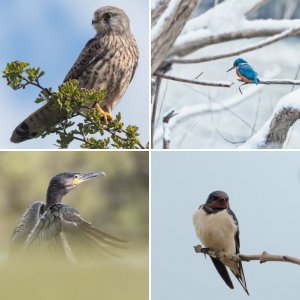
Show your Bird Portraits
- By antonn
- Animal Kingdom
- 33436 Replies
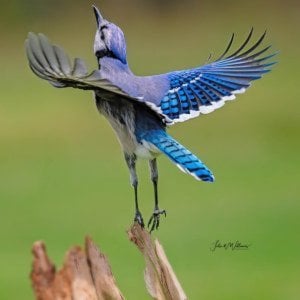
Let's add some bright colors! 
R3 + RF100-500 (first +TC1.4)


R3 + RF100-500 (first +TC1.4)

Upvote
0
That was an absolute steal. It would seem to be below the wholesale cost.I got fed up waiting, and ordered a new RF 100-300mm f2.8L IS USM. Withe a doubler I get a 200-600mm f5.6, which is better than a 300-600mm in terms of range. Sure I have to choose to double or not before I set out, or swap the field. Obviously, I’ve got the 1.4x option too. 140-420mm f4.
I got the RF 100-300 for £8600 from Wex Photo Video, new UK stock at the Photography show. 72.5% of RRP

So basically nothing has changed.....Craig mentioned the 24 f/1.4 SSC. I watched a guy buy one of those in I think 1975. He paid for half of it with cash and put the other half on his credit card. He said the didn't want his wife to know how much the lens cost.



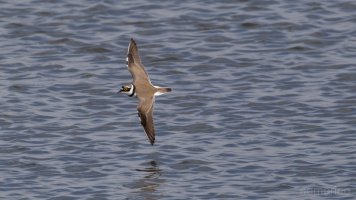
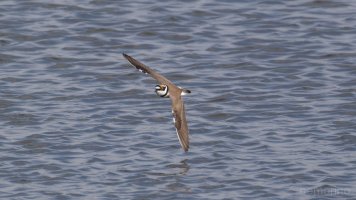
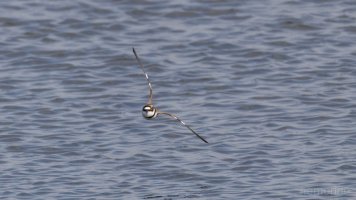
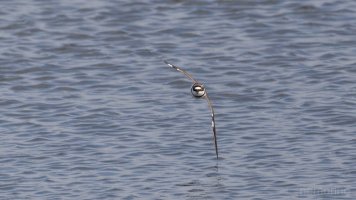
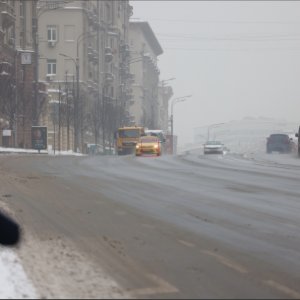
Great shots, even in an unusual enviroment!Falco tinnunculus in the city

That's in reference to EF lenses. RF lenses don't do that. No point in switching off IS for transport of an RF lens.EDIT: I am reading "The IS unit is able to lock and unlock the shifting lens cell depending on the IS switch position on the lens barrel. Mechanically locking the compensation optics prevents the lens from unintentional shifts when stabilization is turned off."
Hi Pieter, thank you for the link to the article. I will read it.As @neuroanatomist status: this is normal (I got quite a fright when I got my 100-500mm and saw the IS unit moving around). Canon has stopped "locking" the image stabilizer in (some) RF lenses.
See section "IS Lens Lock Mechanism"on https://exclusivearchitecture.com/03-technical-articles-CLT-18-image-stabilization.html

As @neuroanatomist status: this is normal (I got quite a fright when I got my 100-500mm and saw the IS unit moving around). Canon has stopped "locking" the image stabilizer in (some) RF lenses.Thank you for providing some more clarity. By the way, I don't hear any clunking sound. I guess that is good. So I only see the elements moving. After the first experience, I was already afraid I would have to go back to Canon again. Now I just hope for nice weather in the coming days so I can put the lens to work outdoors as well.


Thank you for providing some more clarity. By the way, I don't hear any clunking sound. I guess that is good. So I only see the elements moving. After the first experience, I was already afraid I would have to go back to Canon again. Now I just hope for nice weather in the coming days so I can put the lens to work outdoors as well.Yes, that's normal. Some, but not all, RF lenses do that. My RF 100-400 does, as do my RF 100-500L, 70-200/2.8L and 100/2.8L Macro. Other lenses, e.g., my RF 24-105/2.8L and RF 24-240, do not. Even if you can't see the elements moving inside, RF lenses with IS don't park it when unmounted so they'll make a clunking sound when you move them around.

 ).
).
Practically speaking, it will likely end up being a wash. The m4/3 sensor will have about 1/2 stop more image noise than the APS-C sensor (e.g., ISO 2200 on the OM-1 II would look like ISO 3200 on the R7II), and the OM lens is 2/3-stop faster. So about 1/6-stop overall advantage of the OM system despite the slower aperture of the Canon RF 100-400, and the RF 100-400 is about half the weight of the OM 100-400 II. The OM-1 II weighs the same as the R7 so if weight is your primary concern then the Canon will be the lighter system by at least 500 g and probably more.If the R7Ii gets an R6 body with cooling it will most probably grow weight. The birding set up requires low weight. The Rf100-400 is pretty light, but apenditure comprise at the long end.
If the price really would be around 2300$, would an OM1 mark II with their oly 100-400 lens not a better value proposition? Micro 4/3 gives crop factor 2. Is the lower MP an issue? The sensor is smaller, hence probably not? Probably same weight range, however a bit more expensive?

But still more expensive than the Sony and Nikon version.Yep, and it’s one of the cheapest Canon products!