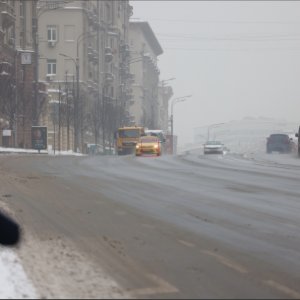
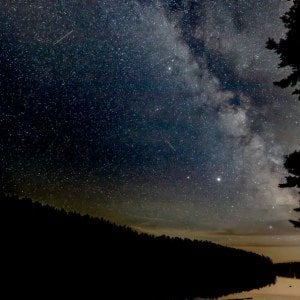
Quick thoughts after scanning through the review, with close scrutiny of the sharpness tests (24, 35, 50, and 70mm), then viewing/reviewing several of the posted photos, including zooming in on several. Several of the shots do not look either focused properly or the shutter was to slow even with the VC engaged. So I can't tell if I'm critiquing the lens or the tester's shooting technique. Most of the architectural shots are tack-sharp, even out to the edges (real-world example). As opposed to their sharpness tests of book spines. (Which have terrible lighting.) To get a proper understanding of center and edge sharpness, in my humble opinion, it would be far better to test the same 4 focal lengths at the closest focusing distance of each, then at 15-20 feet, and at Infinity. And in a mixture of settings: indoor & outdoor, good & bad lighting, contrasty and drab, etc.
The lens is a winner. I have no doubts that one can capture excellent photos with it. However, I would not pair it with a high-megapixel model like the Canon 5DS r they did their shooting with. I would love to see the lens tested on a 5D Mk IV, the new 6D Mk II, and a 5DX Mk II. Would also like to see some results with an 80D and a 7D Mk II. In the same breath, you simply can't best the Canon 24-70mm f2.8 Mk II - for a number of reasons. However, I'm also not a professional photographer, and so, feel that one can get exceptional images given the right lighting and camera settings with any of the current offerings and including the older models of each (Canon, Sigma, and Tamron). And don't forget, Tokina has a very well received (by an albeit limited crowd) newer 24-70mm f2.8 offering as well.