Canon EOS R5 Firmware v2.0.0 Released

Is anyone experiencing a focus problem after updating to 2.0? I did a shoot last night and discovered that auto focus sometimes didn't show the area that the camera focused on. I haven't had a chance to look at the RAWs but they seem to be in focus. It was weird but the focus square would not jump to the obvious focus point and would stay in one spot. It seemed as if my R5 was focusing properly but not displaying the selected focus point. Eye auto focus seemed to work properly but it was the normal auto focus seemed flaky.

This is my initial impressions and I haven't had a chance to do testing and fully understand what's going on.
Are you still having focus issues or is it resolved now?
Upvote 0

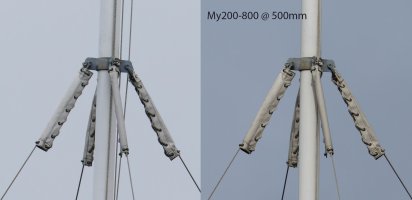
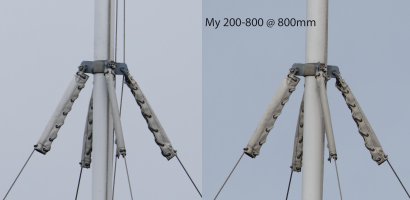
RF 200-800mm vs RF 100-500mm very close up

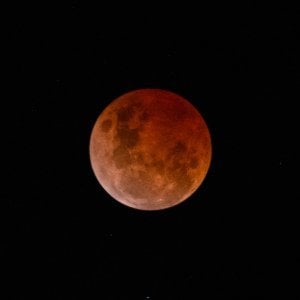
How did your eclipse photos turn out? Have you posted them anywhere on here yet?
:) Thanks. It turned out good. Stressful. I had a house with several family members outside Austin (under totality). The forecast has been calling for clouds. We saw a small window (using an astrophotography app :LOL:) that ended up being right. We had a very brief window, mostly before totality and then right at totality. So, many machinations, trying to decide if we abandon our position and drive or if we sit tight. We sat tight and I am good with our choice.

I will go through all my pics by the weekend, but I posted a few I liked on my initial glance at my pictures:
  • Love
Reactions: 1 user
Upvote 0

Set R5 to bracket exposures using ISO instead of shutter speed.

Which ISO ranges are you planning to use? The R5 is ISO invariant in most of its ISO range, so changing exposure in post has the same effect as changing ISO during capture.
Very good point! It is isoinvariant from 800-51200 so if you set it to underexpose at iso 800 you have six stops to 51200 from just one exposure without any need for bracketing. And, it wouldn't be too bad even starting at iso 50.

Screenshot 2024-04-09 at 19.02.29.png
Upvote 0

NEW LOGITECH MEVO CORE 4K CAMERA ENABLES SEAMLESS WIRELESS LIVE STREAMING OF ANY EVENT, ANYWHERE

It certainly looks interesting. The price tag is a little hefty, though. I think it'd be a no-brainer at the $700-$750 price point body only considering it's purported capabilities, and $999 with a decent mft lens. Initial reviews from when Mevo launched weren't too positive. The more recent ones are better and they've really got me wanting to give it a go, but I'm still hesitant. I have several applications where the ability to run it from an iPad would be very convenient.
Upvote 0

DJI officially announces the DJI RS 4, DJI RS 4 Pro, and DJI Focus Pro, available now!

DJI, the global leader in civilian drones and creative camera technology, today introduces three groundbreaking products that revolutionize the filmmaking and content creation landscape. The DJI RS 4, a lightweight commercial stabilizer, redefines vertical shooting with enhanced efficiency and stabilization performance, empowering solo cinematographers to capture grand scenes effortlessly. The DJI RS 4 Pro flagship

See full article...

Canon officially registers a second unannounced EOS R camera body

If Canon is going to be distributing the camera to professional prior to the Olympics does it have to be registered before hand?
I doubt it.
Registration is mainly for sales and rental but the Olympics may have their own requirements.
They would only need to register in France if anything.
Upvote 0

Canon EOS R5 Mark II will ship in June or July

More and more I wondered, what about trying a Nikon? It doesn't end there. Now, I am starting to ask myself will I really go to bad ergonomic hand-cramp city if I used a Sony body?

Does anyone know an exorcist?
That is what you get when you ignore my advice. Don’t say I didn’t warn you ;).
  • Haha
Reactions: 2 users
Upvote 0

Viewfinder brightness (eye) overload when shooting dark scenes.

I bought it new. But before I bought it I rented another R5 to shoot a musical. It was the same at that time, so it,s not a device issue, it,s more a type issue which doesn`t seem to happen when in medium or good light. It,s pure darkness with some highlights on persons when this happens.

I,ll try to make an example with my phone this weekend.
I did not install firmware 2.0.0, for what it's worth.
Upvote 0

You can connect to a V10 while it's off!

I usually connect to my R6 to transfer images when it's switched off. The app says some functions (like changing the camera clock time) are unavailable but accessing and downloading images is fine.
that's just wild. I've never thought of connecting to my r5 when it was off. I'll have to give it a try
  • Like
Reactions: 1 user
Upvote 0

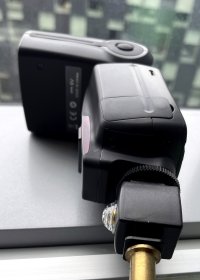
Canon Patent Application: Hybrid Speedlite Cooling

This was posted on Canons repair forum. Not mine, but just reposting.
It's interesting but without analyzing the actual radio situation in that moment it's one empirical evidence. I routinely use Canon wireless in my home studio, where there is also a WiFi AP, without any issue. But I'm in a detached house and beyond my own WiFi other signals are quite weak. My APs are set to regulate the transmission power as needed, also, and that might help to avoid hampering the Canon signal. Also, wireless flash should not disrupt WiFi transmissions.

A building with a lot of APs filling each and every channel, blasting at full power, the interference can be far worse. Still, being the 2.4GHz band an unlicensed one, interference must be expected, and any design should account for them. Wireless flash has the issue it has to be a real-time signal, with strict tolerances, unlike WiFi which can stand far higher latency. Maybe today using a different band is not a bad idea, since most devices moved to WiFi, although many now uses the 5 GHz band.

Anyway, we don't know if it is a problem at the hardware level - the hardware enter a state when it loses the link and can't re-establish it until power cycled, or it's a software problem, the hardware still works correctly but the software is in a state when it cannot resume operations. The latter might be far simpler to fix than the former, although without software update capabilities Canon units can't be fixed that way.

I hope Canon is working on new, more powerful units and they might need to exchange more data - requiring a protocol overhaul.
Upvote 0

Transmitter compatibility?

Please forget what I said because someone posted elsewhere saying the radios in the v1, 2 and 3 transmitters are the same.

Frequency: 2405 - 2475 MHz
Modulation System: Primary modulation: OQPSK; Secondary modulation: DS-SS
Channel: Auto, 1 - 15
Wireless Radio ID: 0000 - 9999

So if the issues are related to wi-fi and interference, the v3 is likely going to act the same.
Upvote 0

Nikon announces the Z 28-400mm F4-8 VR

Such "rubber" zoom lenses never come w/o strong distortion, either on short or long focal lengths (most probably at the wide angle end). I think all manufacturers of such extreme wide angle to tele zooms rely on a heavy-sided in-camera correction of all sorts of distortion, vignetting, and aberrations to keep weight, size, and price within tolerable limits. Personally, I therefore prefer dedicated tele or wide angle zooms (if not primes anyway) with much more properly designed optics.
I keep asking people to show me an example of how in-camera correction of distortion hurts a photo or is even detectable. No-one EVER supplies an example. If you have an example I'd be very thankful.

"Properly designed optics" are ones that make enough customers happy that the firm benefits. My 16/2.8 and 14-35/4 both have, I'm told a lot of distortion correction but I have never seen anything specific that is a problem.

Basically, optics design is a N-way tradeoff between size, weight, price, reliability, focus speed, center sharpness, corner sharpness, contrast, distortion, vignetting, bokeh quality, and aberrations that cannot be corrected in software. A traditional lens design that tries to improve distortion, will have to get worse on at least one or two of the other factors. But if we let the software fix what the software can fix--distortion and in most cases vignetting--then we can actually improve EVERYTHING else: make it a bit smaller and let distortion suffer. Improve sharpness and let distortion suffer more. Improve contrast and let vignetting increase. We can make ALL other factors better, and just let these two go to he11. Then... we can fix those two in software so well that... I think, though I'm happy to find out otherwise... the fix is literally invisible and undetectable. And yet you're saying such an optic would be improperly designed??

Note that for some astrophotography, I HAVE seen some cases where vignetting slightly hurts image quality. Since the corners are darker, they need a bit more boost in brightness... and since the sky's supposed to be near black, most of the signal there is noise... so it ends up being noise that's boosted. And yet even then, it's not complicated to minimize, and I haven't seen any other subject matter where it's detectable.

So, thanks to some members of this forum, I learned that in some very special cases, software correction of vignetting can be detected. But I still haven't seen evidence of detectable issues with distortion correction. Again, I would love to find out I'm wrong. Please share any relevant images you have and I'm actually quite ready to admit I'm wrong and you're right. But please share the images. (And if you don't have such images, maybe you might want to rethink your basic assumption here.)
Upvote 0

Canon EOS R5 Mark II sensor resolution likely to stick at 45mp but with new AI features [CR2]

I think the people clamouring for 50/1.4 are ACTUALLY asking for one of the two lenses we ALREADY have. Either they want something like the EF50/1.4, a double Gaussian design, cheap, compact, good not great IQ, and so basically what the RF50/1.8 is, once you factor in the lower need for raw F-stop these days. People are hung up on the 1.8 vs. 1.4 but I think that is a mistake (and one I made for 3-4 years before finding peace!). In other words, the RF50/1.8 **IS** the double-Gaussian RF50/1.4 you've been waiting for.
Canon's problem is that they really low-balled the 'economy' lenses; so while you're right that a light 50 f1.8 might be the right ballpark for a lot of folk; that particular 50 f1.8 might not be. It's definitely built down to a price, it's not weather sealed, and the close focus IQ is poor.

Canon is doing pretty well rounding out the RF lenses and bodies for the pro crowd, for the sports/wildlife crowd and for the low to mid enthusiast crowd.

I think they still have a wide-open hole in provisions for the light weight/street shooter/travel well heeled enthusiast crowd. The sort of folks who buy Leica Qs, Fuji x100vis, Nikon Zfs etc. A nice compact setup with high quality primes, high build quality, weather sealed. The sort of bracket Sony is hitting quite regularly now, that Sigma hits with it's 'i' series glass (all beautifully made from metal, all weather sealed). Really it's a shame the 28 f2.8 isn't better made; because it's an interesting proposition for someone building a light street/travel kit, but it's not going to tempt people away from the Q/Zf etc.
  • Like
Reactions: 1 users
Upvote 0

For R series, when playback button to view the pictures taken on the LCD, does the shutter close and turn off the sensor, or the sensor is still on?

As title, wonders if the sensor is still draining battery or the shutter is closed sensor power down?
The shutter stays open in ECO mode when the screen and EVF time out. Not sure that means the sensor is in a power-saving standby mode too or still "draining the battery." If the sensor is still at full, active power, then "Eco Mode" isn't so Eco.

What drains my battery the very fastest is having the EVF and screen set to automatically switch back and forth whenever the EVF proximity sensor is triggered, as I'm almost always brushing my elbow, strap, hand or shirt material near it when walking. I've set my camera to use the video recording button to manually switch from back-screen to EVF as I lift the camera to my eye. Can easily double, even triple my battery time, as the camera is also set to ECO mode, and when done taking photos, I reflexively switch from EVF back to screen, which then times out quickly.

In the studio, when I don't use a strap, I usually put the camera on a cart when not actually photographing, so for that situation I do use the automatic EVF to back-screen function. During a session, ECO mode is off.

It's easy to change settings so that the video recording button goes back to doing what it's intended for.
Upvote 0

Filter

Forum statistics

Threads
37,272
Messages
966,979
Members
24,634
Latest member
Mcsnows

Gallery statistics

Categories
1
Albums
29
Uploaded media
353
Embedded media
1
Comments
25
Disk usage
982.4 MB