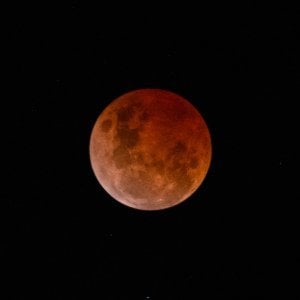
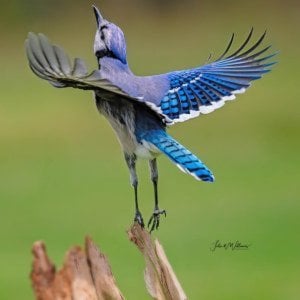
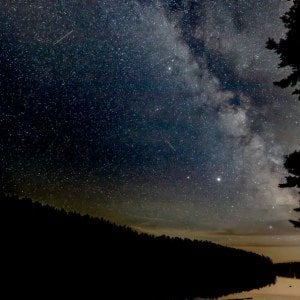
My weapons of war.
- By Don Haines
- Canon General
- 27 Replies
My weapons of war.....
I am a peaceful kind of person
Attachments
Upvote
0
jrista said:ScubaX said:jrista said:jeffa4444 said:As for you can do everything in Photoshop etc. if that was the case then why do professional landscape photographers such as Joe Cornish, Jeremy Walker, Mark Denton, David Ward, Charlie Waite, David Noton, John Gravett, Tom Mackie, David Clapp (he has made videos for Canon on the 6d) etc. carry them in their kit bags adding weight & bulk?. I would suggest looking at Xposure the free new download magazine on the Lee Filters web-site this highlights professional photographers using filters in many situations and why.
The reason you cannot simulate what a solid ND does in post is because it allows you to expose over a duration of time within which motion is occurring. You can take a photo of water, but if you take it with a high shutter speed, your not going to be able to replicate the effect that flowing water produces over a longer duration with an ND filter. Same goes for clouds, or anything else with motion. ND filters reduce the rate of light entering the lens, and therefor allow longer exposure times. There is no way to simulate a longer exposure time in post.
The reason you cannot simulate what a GND filter does in post is because it reduces the dynamic range OF THE SCENE. If you are actually clipping your highlights without a GND, then those pixels are pure white. There is no recovery, and there is no simulating a GND filter...all you could do is make those pixels gray, you could not actually recover the detail that was lost by not using a GND filter. With GND filters, you pull down highlights in ANALOG space, before the light ever even reaches the sensor, thereby reducing the dynamic range of the world around you AS it enters the lens.
These are real-world physical effects. They cannot be simulated. Hence the reason photographers who know what they are doing invest the money on a good multi-filter holder (like the Lee Filter system) and a bunch of good 4x6" filters. Because they are quite literally ESSENTIAL to achieve the effects they support.
I agree with most of what you said, but I think there are situations where GND can be simulated in post. Just like using a filter, it takes some forethought by taking multiple exposures of that scene and then in post compositing and masking. As long as it doesn't include motion such as clouds or water it will be a pretty good substitution for a GND filter.
The whole entire point of GND filters is to AVOID having to take multiple shots, which is where you get into HDR. HDR is really a misnomer...doesn't matter if you do an HDR blend and convert down to 16-bit, use Enfuse, or manually tonemapp, all three approaches achieve the same thing, and all three require more than one shot. HDR is certainly a viable option, however HDR is different than using a GND and it's not the same as single-shot photography. The purpose of a GND is to balance contrast and reduce dynamic range so you can take one single shot of your scene and not have to worry about clipped highlights.
I hope you like it as much as I do - I have found it to be incredibly useful to cut reflections, reduce dynamic range (by killing the glare), slow shutter speeds, and punch up the colors. I wasn't expecting to get so much use out of it, but I have.Steb said:Got the WII filter this weekend. Fits perfectly and works great. The slight color mismatch is even less noticeable than I expected, so not an issue at all. Thanks again for your support.![]()
neuroanatomist said:Thanks, Arnie. I was hoping you'd found a way to trigger a TT5 from the PC port. I've got a MiniTTI/AC3, a pair of TT5s, and an MC2 for my Einstein, but since moving to the Canon -RT system, the reliability makes me reluctant to spend more on my PWs. The Einstein's optical slave has been working for me, fortunately.
Logan said:anyone have a working link to info on this? I have searched canons site, their estore site, google, and no mention of a "canon club canada" or a "canada eos club canon" anywhere, some google results but they dont lead to the same page on the canon site that the google excerpt is from.
100 said:To get an idea of the possibilities with tilt-shift macro on 35mm:
http://www.photodady.com/blog/2012/05/18/tilt-shift-stacked-hdr-macro-photography/
Pennies are flat and don’t move. With living insects the third dimension and the possibility of movement make it a lot harder to get the result you want. My experience with tilt is that it takes a lot of time to get the shot exactly like I want it. Set the angle, focus (manual only), check the focus plane in live view, adjust the angle, check again, etc. Sometimes I need to do that 3 or 4 times to get it right and that’s with non-macro static subjects on the Canon TS-E 24mm f/3.5L II.
About the fly shot
I see about 1/3 of the fly filling 80% of the height of the picture.
If shot at 1:1 on a 7D (22.3 x 14.9 mm sensor) that would make the fly 35mm or so. That’s either an enormous fly, or this is a substantially cropped image.
What is the real diameter of the flies eye?
What the DOF is depends on how you calculate it and the values you use.
The 100L at its minimum focus distance of 30cm is no longer a 100mm lens but about a 75mm lens
It’s shot at f/5.6, but at the minimum focus distance the effective f-stop (that’s what determines the DOF) is no longer f/5.6 but about f/11.
If I use DOFMaster http://www.dofmaster.com/dofjs.html to calculate the DOF (Canon 7D; 75mm; 30cm; f/11) I get a DOF of 0.52cm (5.2mm).
With 100mm; 30cm and f/5.6 I get 0.13cm (1.3mm).
If I use the Macro Depth of Field Calculator at Cambridge in Colour http://www.cambridgeincolour.com/tutorials/macro-lenses.htm (a great source of information by the way) and put in a magnification of 1; sensor Size 1.6 crop and f/5.6 (f number as seen by the camera) the DOF is 0.45mm. This is millimeters instead of centimeters, so there is a huge difference between these calculations.
With a DOF of 1mm or less you need to be very accurate with the focal plane to get the exact result you aim for. I think a TS-E 1:1 macro will only be useful with static subjects.
candyman said:Very often auto adjust in the moment I do not want it to adjust. :-X
wsmith96 said:Portrait of a Painted Lady Butterfly
I love the detail of the fur on this butterfly. Macro photography really allows you to see some amazing things. I grabbed the camera quick as my daughter held this butterfly on her finger.
Shot with a T1i with EF-S 60mm macro, 430EX flash, and Rogue flash bender soft box kit.
neuroanatomist said:Speaking of TL;DR, let me explain...no, there is too much, let me sum up:
DxOMark Scores = Biased Scores = BS.
'Nuff said.
KKCFamilyman said:mackguyver said:If the 300 f/2.8 was too much, then I think the 1D X is probably going to be too much as well. The 1D features are really nice, but there are simple workarounds to most of them that can be done with the 5DIII. I think the 1D X is really for those needing one or more of the following: combat-ready build quality, 12 FPS (are you missing a lot of fast moving shots?), or are someone who uses big whites a lot and and would benefit from the higher votage drive for faster AF, or for someone who has pretty much all the other lenses and gear they need. If wildlife or fast motion things like sports aren't a priority, lenses and other gear are a better investment. The 5DIII is an amazing camera and the 1D X is better, but (other than the frame rate) not mind-blowingly better.KKCFamilyman said:I did also return my 300mm 2.8 since that is just too much. I would prefer to wait until canon answers with a revised 100-400. Events and portraits still remain my main focus.
Those are good points. I just want to clarify that the 300mm felt large and was so expensive for what it was. I felt if I was going that route I would save for the 400 with extenders for next season. Lately i have been doing some indoor water polo at a high school and wanted better files to work with in the iso 3200-8000 range. Also when I am chasing the kids I felt the multiple mn buttuns that can be configured on the fly sounded beneficial such as being in one shot and being able to prog my dof to aiservo and the other the all focus points if the kids/animal just moved to quick to react.
Thanks for sharing your thoughts and I guess I owe it to myself to check out the Sigma.rocksubculture said:mackguyver said:Now that you've had both lenses together for a little while, can you comment on the ergonomics of using them? I realize this is a lot more subjective, but how does the Sigma's weight and balance (front or back heavy, balanced?) feel in hand? Which one is more enjoyable to use? If the IQ was exactly the same, which one would you prefer?
In terms of ergonomics only, I would chose the Sigma for more action kind of photography - feels much more rugged and gives you more to work with. The Canon maybe for portraits or stealthy street stuff, since it is really short. Overall I prefer the ergonomics of the Sigma, but I don't mind big/heavy lenses (not that it is really, just compared to the Canon). Probably my two all-time favorite lenses are the Canon 70-200 2.8 II (and obviously that is a big and heavy lens) and the Sigma 35mm 1.4 Art. So I don't really have a brand bias. For me it's matching what a lens can do for the kind if photography I do.
Jason