The Best and Worst of 2025

Totally fair!

But… the aspherical elements don’t require additional software. They distort all on their own. 😜

I expect lens designers to use all of the material engineering tricks. I expect those tricks to fall short of perfection, although I wish they didn’t.

I guess the question is how much balance is OK? For me personally, I see some value in software but prefer it to be tweaks and not essential. For me scientifically, I’d hate to have to through in digital photo as part of an automated pipeline.

For you? Your workflow seems good with it and you’re obviously very happy. So for you, Canon’s strategy seems like a win!
I'm also a bit of a scientist, and I see no scientific objections to correcting via digital rather than by analogue methods.
 
  • Like
Reactions: 1 users
Upvote 0
If you want to use Canon's Digital Lens Optimizer, then yes you need to take JPGs from the camera or use Canon's DPP for RAW conversions. But 3rd party RAW converters have profiles for RF lenses that require digital correction, and they work just fine. Personally, I view using Canon's DPP with the same affection that I view getting a Norovirus infection. I use DxO PhotoLab for RAW conversions, which is what I did for the aforementioned RF 14-35/4 vs. EF 11-24/4 comparison, though I also included camera JPGs along with DPP and Adobe RAW conversions for completeness.

It's not. I see no reason to use Canon's software to process Canon RAWs. DxO, Adobe, Affinity, CaptureOne, and a bunch of others seem to manage just fine (as they do with RAW files from Nikon, Sony, Fuji, etc.). IMO, DxO handles noise reduction much better than Canon's DPP, for example. No reason a software pipeline couldn't run demosaicing and image corrections if properly coded, just as 3rd party RAW converters do.
Wait, are you saying that Canon’s digitally corrected lenses are already corrected in the raw file itself and digital optimizer isn’t needed? And therefore any third party editor gets the same benefit of Canon’s software corrections before their own third party corrections are applied? i.e., I could theoretically put the RF lens on a Nikon or Sony body with an adapter and get the same image for the same shooting situation like I could with an EF lens?

If so, then I guess the lens really is hardware plus soft box in a self-contained box.

But my impression is Canon’s magic is more like digital lens optimizer in reality.

I have yet to use DxO or Capture One.

The film analogy was broader – it's about resistance to change. People (at the time, not now) argued that film was analog and pure while digital was 'fake' and 'computer trickery'. The only 'true' workflow was negative to print or slide film to projection. Your suggestion of scanning the developed film would not satisfy those folks, that's just more digital trickery. Interesting that you used that same word about digital
Ah. OK.

Also worth noting that RAW images from the camera are never 'good to go'. At a minimum, they require demosaicing / color interpolation.
Agreed.

The EF 50/1.2L has 1.5% barrel distortion (enough to be noticeable, almost as much as the 1.7% of the EF 14/2.8L II), strong axial CA and significant focus shift...it can produce lovely, dreamy images but as example of what can be achieved with pure performance based on physics it leaves much to be desired. OTOH, the RF 50/1.2L has a native 0.2% barrel distortion and requires no digital correction, it has very little axial CA (especially for an f/1.2 lens), no focus shift and is very sharp.
Is the RF performance equal or better without correction? Or did Canon just try harder with the software? Not being facetious, I don’t know the answer and you might.

Leaving that aside, for your 'pick any other L EF lens challenge, I pick the EF 17-40mm f/4L. Convince me that the physics-based optical corrections are doing the job there. Unless you like the fisheye-esque look, that lens desperately needs 'a little push' to correct the ~4% barrel distortion, as does the EF 11-24/4L.
Did I miss a new Canon RF 17-40 that avoids those issues without correction?

But in fairness the 16-35 f4 replaced it.

And in any event since I’m bringing up the 16-35 and I did say “any”… touché.

Sorry, I disagree with your conclusion that 'any other' L EF lenses is 'good to go' without some digital correction applied. Unless you're shooting in-camera JPGs or are happy with distorted images with visible chromatic aberration, most images benefit from digital correction even if they don't strictly require it.
Uh, huh — I didn’t say that I don’t use corrective software, the opposite. I just prefer to start with better source material and apply software as an option and not a necessity for missing corner data, etc.

I'm definitely results oriented. I can promise you that the 0.6 kg RF 10-20/4L that I pack for a trip will deliver significantly better flexibility and outcomes than the 1.2 kg EF 11-24/4L that I would often leave at home.
Haha! I’m certainly not going to argue against you being results oriented!

For personal work I’m OK with optional correction that I tend to do all the time anyhow. For lab image capture and processing by AI pipelines I’ll hope the labs stick with EF or third party for now.

So I’ll keep hitting the gym and lug around my EF beasts. 🐄🔭😜
 
Upvote 0
Wait, are you saying that Canon’s digitally corrected lenses are already corrected in the raw file itself and digital optimizer isn’t needed?
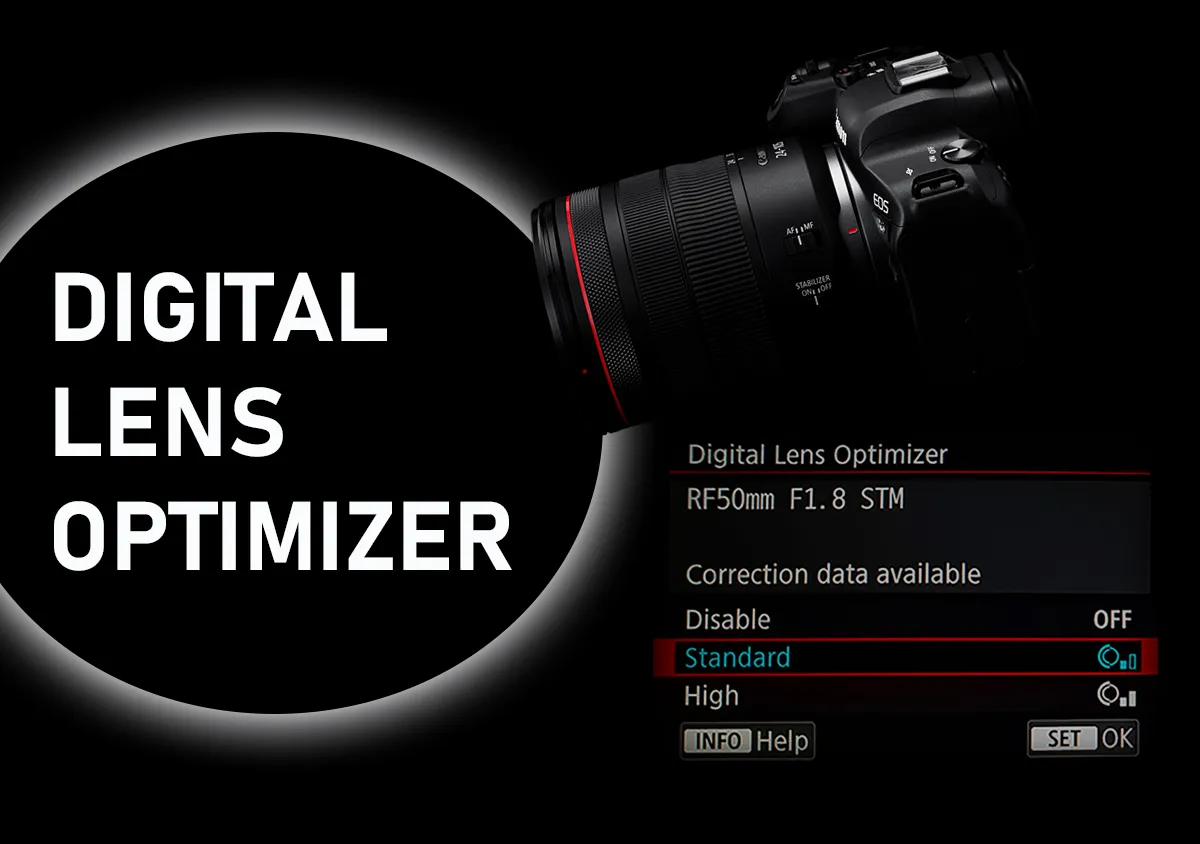
DLO does nothing to RAW files.

By the way, recently I’ve seen a difference. RAW files from the R6 Mark III have the lens profile built-in, as noted by Adobe Camera RAW (which does not have a profile for the RF 45mm yet), where the files appear with a profile loaded by default and it’s not an Adobe one. And it’s the camera, not the lens, as RAW files from the R5 II do not exhibit the same behaviour.
(EDIT: no, the R5 II reads the same way, it's my original R6 that does not)

Anyway, it has been stated by Canon that optical corrections imply sacrifices as well. If I’m not mistaken, they have clearly mentioned that this approach allows them to create sharper lenses.

And people really ignore how much profile corrections EF lenses had. I’ve shared examples in this forum a few weeks ago. While distortions were usually more corrected optically, vignetting levels were very similar to those of RF lenses.
 
Last edited:
  • Like
Reactions: 2 users
Upvote 0
DLO does nothing to RAW files.
It does read the optimizer data and performs the adjustments. Third parties aren’t provided with instructions on how to parse the optimizer data and need to do their own math, which is often limited to apparent distortion, shading, etc. and less so the physics of the lens that Canon’s engineers have bothered to calculate.
 
  • Like
Reactions: 1 user
Upvote 0
the way, recently I’ve seen a difference. RAW files from the R6 Mark III have the lens profile built-in, as noted by Adobe Camera RAW (which does not have a profile for the RF 45mm yet), where the files appear with a profile loaded by default and it’s not an Adobe one. And it’s the camera, not the lens, as RAW files from the R5 II do not exhibit the same behaviour.
Interesting! Maybe they’re sharing now, at least partially!

And people really ignore how much profile corrections EF lenses had. I’ve shared examples in this forum a few weeks ago. While distortions were usually more corrected optically, vignetting levels were very similar to those of RF lenses.
Oh, totally. It’s why I do use them.

Taking this back to my original comments:
- yes I use the corrections
- I also prefer higher standards / effort for the physical side
 
  • Like
Reactions: 1 users
Upvote 0
I’ll say again, DLO does nothing to RAW files :P
(in-camera, that is, of course)

(1) Effects are only applied to the JPEG file

The in-camera DLO function makes corrections in real time, but its effects are applied only onto JPEG files at the time of recording. To apply DLO to RAW files, you can either;

- Post-process your RAW files in-camera. You can apply DLO (if it wasn’t already enabled) or change the effect level, and the effects will be visible in the exported JPEG image.

- Use Canon’s free Digital Photo Professional (DPP) software to post-process your RAW files on the computer.
 
Upvote 0
OMG. 🤦‍♂️ Uh, yeah… DPP or the camera applies the DLO data. Let me extract the rake from my face. And then get more coffee…
:LOL:

Yeah, it's probably just one line in Exif data, that DPP reads and applies accordingly, but the RAW image data is not really modified.


Interesting! Maybe they’re sharing now, at least partially!
Actually, I have to correct myself: the files from the R5 II do the same, but those from my original R6 do not.
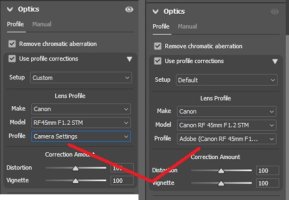
Also, I updated Adobe Camera RAW today, and now it has profile for the 45mm, but I can still show the difference:

R6 III left vs R6 I right.jpg
R5 II on the left, my original R6 on the right. Both photographs are corrected for vignetting and distortion.
Canon is including lens profiles in the RAW file now or, at least, Adobe is able to read that information for newer cameras.

Prior to this update, the photographs from my R6 with the 45mm had no correction at all on ACR, while with the other cameras they had since day one.

I much prefer this approach, since Adobe profiles tend to overcorrect.
 
Last edited:
  • Like
  • Love
Reactions: 1 users
Upvote 0
Please explain the 2nd sentence. I do have a little background in molecular biology but the meaning escapes me.
Sure - it’s when missing data is guessed.

When reading in chemistry data like which genes were active in a cell in a tissue slice it’s common to have no value read. Could be for all sorts of reasons.

To get around that some people will fill in the blanks with (educated) guesses. It could be that many similar tissue slices are scanned and averages are made for each approximate cell location, or perhaps neighboring cells with values are used to determine what likely was going on.

But a guess is a guess, no matter how good. It’s still invented.

If everyone knows that and is appropriately cautious then all is well. If not, or the software using the data is unaware, then overall errors can be made. Not unlike the use or abuse of rounding, which is handy but can compound into an error.
 
Last edited:
  • Like
Reactions: 1 users
Upvote 0
Wait, are you saying that Canon’s digitally corrected lenses are already corrected in the raw file itself and digital optimizer isn’t needed? And therefore any third party editor gets the same benefit of Canon’s software corrections before their own third party corrections are applied? i.e., I could theoretically put the RF lens on a Nikon or Sony body with an adapter and get the same image for the same shooting situation like I could with an EF lens?
Answered by others already, I think. But I did enjoy watching The Nutcracker performed by the Boston Ballet while those answers were provided.

Is the RF performance equal or better without correction? Or did Canon just try harder with the software? Not being facetious, I don’t know the answer and you might.
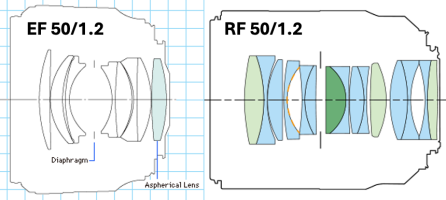
It’s the lens optics. The EF 50/1.2 is the standard double Gauss design that’s been around almost as long as lenses, the RF 50/1.2 is a modern design that delivers much better performance.

The RF version has 15 elements (including 3 aspherical lenses and a UD lens) vs. 8 in the EF (with just one aspherical lens), and as a result the former is 400 g heavier and 40 mm longer…but optically far superior before the (almost unnecessary) digital corrections.

Screenshot 2025-12-23 at 11.45.47 PM.png

Uh, huh — I didn’t say that I don’t use corrective software, the opposite. I just prefer to start with better source material and apply software as an option and not a necessity for missing corner data, etc.
I get the preference. But ‘better source material’ isn’t free, the cost is usually size, weight, and actual cost (for example, the RF 50/1.2 lists for over $1000 more than the EF).

OTOH, the 10-20/4 is optically as good (after correction) as the EF 11-24/4, and the former is smaller, lighter and much cheaper…and it goes past 11 (RIP, Rob :cry:).

For personal work I’m OK with optional correction that I tend to do all the time anyhow. For lab image capture and processing by AI pipelines I’ll hope the labs stick with EF or third party for now.
We don’t capture images in the lab with MILC lenses, we use microscope objectives. Our automated cell-based high-throughout screening system for small molecule libraries captures ~64,500 images per day. Each of those images has digital corrections applied before being processed by ML-driven algorithms to quantify the effects of the compounds on the cells.
 
  • Like
Reactions: 1 users
Upvote 0
We don’t capture images in the lab with MILC lenses, we use microscope objectives. Our automated cell-based high-throughout screening system for small molecule libraries captures ~64,500 images per day. Each of those images has digital corrections applied before being processed by ML-driven algorithms to quantify the effects of the compounds on the cells.
Sounds like some of our work overlaps. 😎

Agreed for many kinds of work, but not all work is this refined. Pathology takes into account other perspectives as well. Big pharma in Boston or Redwood? Sure, what you said. Some lab operations in Africa? Better work with “inferior tools” than you’d think.

But better source is better source, no matter the size of the lens and spectra’s of light or radio waves. My teams help out with some of those libraries and pipelines at various places, and not all hardware is the same grade. Another discussion for another forum.

Thanks for the insight into the RF 50mm!
 
Last edited:
Upvote 0
I get the preference. But ‘better source material’ isn’t free, the cost is usually size, weight, and actual cost
…and, potentially, peak sharpness.

Personally, I don’t have a definitive preference but, this method has been giving us some very useful and innovative lenses designs.
 
Last edited:
  • Like
Reactions: 2 users
Upvote 0
…and, potentially, peak sharpness.

Personally, I don’t have a definitive preference but, this method has been giving us some very useful and innovative lenses designs.
Yeah, I think so.

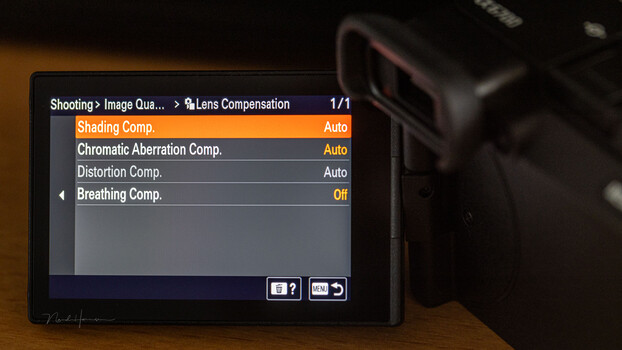
I found this by Nando Harmsen, which seems relevant to the software-as-a-lens-component discussion:


I think that in the context of the “best of 2025” theme, neuroanatomist’s point about the expense of optically ideal lenses is a very valid measure.

I also think that your point stands in the same context. I don’t think they’re taking an OG innovative approach, but the effort to help people buy into the game is good for the rest of the community.

I also don’t think an emphasis on software over physical design is a thing to be celebrated as a trend, but I do think that bringing a competent overall solution at a tolerable price point merits a best of the year consideration.

In fact, really I have kept much of my EF L stable (and 20mm USM) because physically they are good (not the best, but corner to corner full of data and identifiable detail that can be made sharp/er with f-stop use) and the DLO application by camera or computer makes the camera-exiting image great — and in some cases stunning. More than acceptable enough (to me) to save $1k per lens by not upgrading the glass for hobby work (ignoring other issues like lack of full-time override).

Canon is simply now milking this approach to the nth-degree with their modern VCM, 10-24mm, etc. work. So I recognize that I’m accepting / doing conceptually the same practice —but with what I feel is better overall raw source data for the software part of the chain. No black corners or need for imputed data given the image that hits the sensor with my lenses; I could use the raw photo imprint pre-DLO in all cases.

I think it would be nice to see some of those EF L designs be re-introduced for the mid-tier lens market with the same modern RF computational assist via DLO or like mechanism. This would help keep cost down, wow factor up for typical image review use cases, and not leave people with multi-thousand dollar corners with inflated noise or imputed data. The 75-300 RF edition surely deserves its worst of laugh. But I think the idea of classic L designs being used in this recycling of glass manner is the right way to go for many cases.

Failing that, and coming back to the reality of today, I think the awarded lens is a valid proposal. 👍 But in the context of EF on an RF mount using DLO to save some serious bucks for a solid final output before artistic editing takes place kind of way. Put another way, it might as well have been an EF lens with a splash of DLO.
 
Last edited:
  • Like
Reactions: 1 user
Upvote 0
…and, potentially, peak sharpness.
Oh, just so I make myself clear: I didn't mean to refer to the loss of detail due to image stretching that occurs on software-corrected lenses, as that is obvious.
I actually meant the opposite: the more optical corrections a lens includes, via the addition of extra elements, the more detail is prone to be lost.

Software vignetting corrections sometimes bother me, specially as Adobe tends to over-correct them, but they're not new and were present on EF lenses already.

A few examples for vignetting:


As for software distortion corrections....I'm currently at the point where as long as I don't notice image degradation, I'll look the other way, because in my line of work real usefulness is having a lens that delivers results, not one that takes a perfect image of the wrong composition.
Of course, such thinking may not be suitable for all genres of photography.
 
  • Like
Reactions: 1 users
Upvote 0
I thought it was Roby NOT approving it. They do the opposite of everything he wants.
Eh what?
I am neutral about that feature, mostly because I do not use the RF 100 MACRO a lot (I do have it). But I do agree that extender compatibility would be more important, at least until Canon releases a RF MP-E equivalent.

But if you are right by chance…. Canon listen well to me: "Never EVER make a RF 35 1.2!" 🤪
 
Last edited:
  • Haha
Reactions: 1 users
Upvote 0
Overall, the Z5 II is a nice camera with a big, very bright viewfinder given its price, but I wouldn't really recommend it for wildlife/birding, in particular for BIF.
TL;DR: the Z5 II is a great camera unless you use it for a use case it was not made for.
WOW. Somehow I think I could say the same for most cameras….
 
  • Haha
  • Like
Reactions: 3 users
Upvote 0