The Best and Worst of 2025

I'm also a bit of a scientist, and I see no scientific objections to correcting via digital rather than by analogue methods.
I’m no scientist but I do indeed see one.
But this discussion has been had multiple times in the past and I am on the Alps with an iPad so I’m not retyping all of that :p
 
  • Haha
Reactions: 1 users
Upvote 0
I've simply enjoyed having the chance to learn from and debate with a number of people whose remarks on this forum have proved interesting and useful to me over the years before I created an account.

My specialities are in large compute systems (distributed/parallel), data analysis (think spectra), complex information presentation/exploration, and knowledge systems (especially the psychology of technologies). I know a bunch of smart people, have hired a bunch of smart people, and I have a little bit of personal experience — but there's a lot I don't know in a pulled-the-lever-myself kind of way. My perspective does change as people comment back on my thoughts, questions, and posits.

And regrets for any confusion or consternation when I post casually betwixt ongoings and gloss over swaths of detailed info that gets implied within my own brain for a few quips of text. I'm more often in agreement with people here than what my posts probably indicate. It's a rumours forum, so I'm at peace with that.

In that spirit, thank you. I wish every fellow camera nerd here a peaceful, pleasant, and hope-filled transition to 2026. ☃️🤓📷
 
  • Like
Reactions: 6 users
Upvote 0
I've simply enjoyed having the chance to learn from and debate with a number of people whose remarks on this forum have proved interesting and useful to me over the years before I created an account.

My specialities are in large compute systems (distributed/parallel), data analysis (think spectra), complex information presentation/exploration, and knowledge systems (especially the psychology of technologies). I know a bunch of smart people, have hired a bunch of smart people, and I have a little bit of personal experience — but there's a lot I don't know in a pulled-the-lever-myself kind of way. My perspective does change as people comment back on my thoughts, questions, and posits.

And regrets for any confusion or consternation when I post casually betwixt ongoings and gloss over swaths of detailed info that gets implied within my own brain for a few quips of text. I'm more often in agreement with people here than what my posts probably indicate. It's a rumours forum, so I'm at peace with that.

In that spirit, thank you. I wish every fellow camera nerd here a peaceful, pleasant, and hope-filled transition to 2026. ☃️🤓📷
There are lots of us here who enjoy the science and technology of photography in addition to taking photos, and it can be useful in choosing our gear and knowing its limitations and advantage in advance. You can take great photos without much of such knowledge, but then experience and practice are all important to polish the creativity.
 
  • Like
Reactions: 7 users
Upvote 0
Eh eh

I explained my "scientist" here time ago:
Post in thread 'The Canon EOS R6 Mark III is Canon’s Next Full-Frame Release'
https://www.canonrumors.com/forum/threads/the-canon-eos-r6-mark-iii-is-canon’s-next-full-frame-release.44753/post-1032060
Thanks for the link, which I have now read and the subsequent discussion. I get your point about the number of pixels in the corners etc when compressed. It remains moot until someone has done the necessary investigation to discover whether there is the same amount of image quality and information content in the periphery of an image that is stretched by an analogue lens method or a mathematical method of expansion of the compressed periphery. Information is lost on compression and the question is whether the analogue lens method manages to avoid that loss by prevention or is it simply expanding the compression similar to digital? I don't know the answer. Do you know as I would like to learn whether it does? It probably depends on how much effort and expenses they put in.
 
Upvote 0
I’ll say again, DLO does nothing to RAW files :P
(in-camera, that is, of course)


they don't bake the RAW file, correct. but it's a good idea unless there's a performance hit to turn it on for JPEG output.

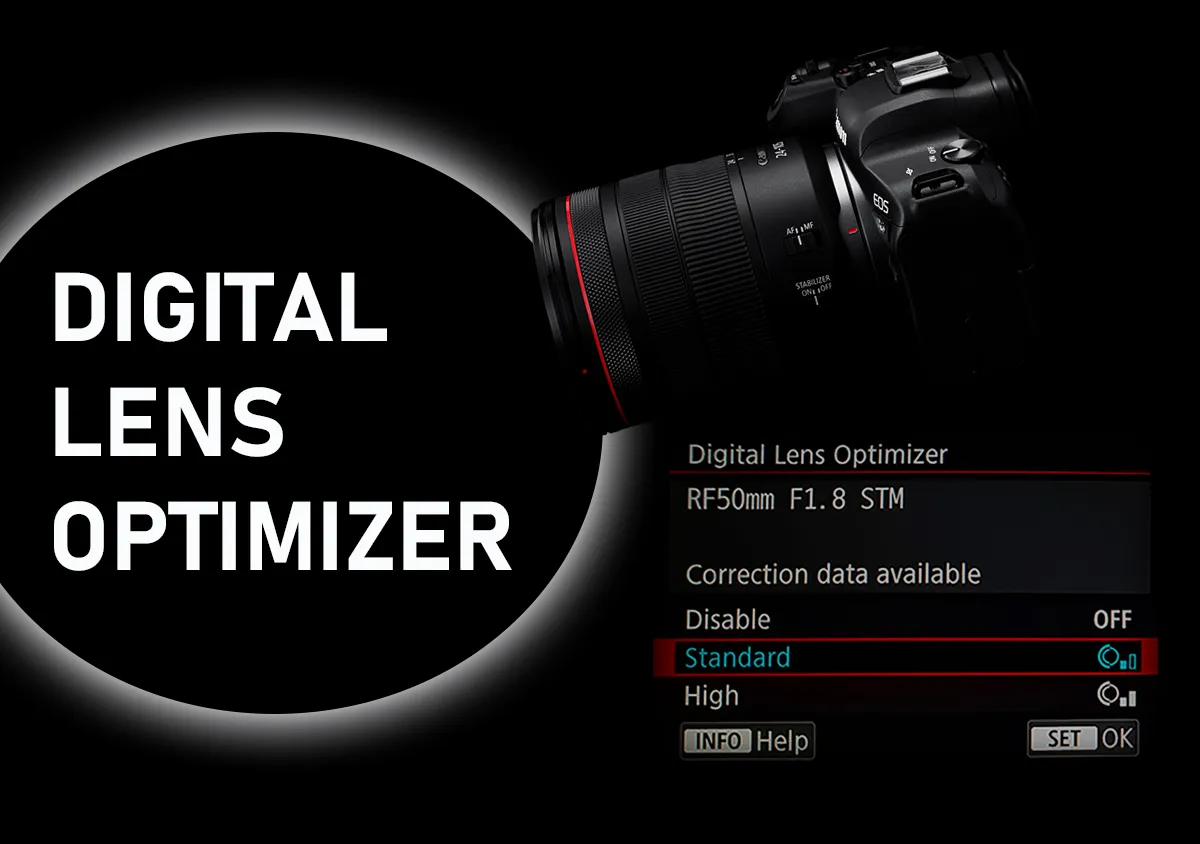
DLO is more than what Adobe, etc can do. Canon boils the camera and lens down to their mathematical and data representation and then use deconvolution to reverse aberrations based on the camera and lens combination.

one of the rumors of the RF mount was that each lens could have its own unique DLO mathematical representation based upon its actual QC data testing.

However, I'm not sure they are actually doing that, since you still download the profiles from Canon.

I started to write an article on CanonNews about DLO way back when, and recently got Craig all excited about what DLO could do (I showed him one of the RF STM lenses before and after), and now he's a fan after it blew his mind. One of us is going to do a deep dive in the new year on it.

It's probably the most underrated thing that Canon gives us for free.
 
  • Like
Reactions: 3 users
Upvote 0
they don't bake the RAW file, correct. but it's a good idea unless there's a performance hit to turn it on for JPEG output.

DLO is more than what Adobe, etc can do. Canon boils the camera and lens down to their mathematical and data representation and then use deconvolution to reverse aberrations based on the camera and lens combination.

one of the rumors of the RF mount was that each lens could have its own unique DLO mathematical representation based upon its actual QC data testing.

However, I'm not sure they are actually doing that, since you still download the profiles from Canon.

I started to write an article on CanonNews about DLO way back when, and recently got Craig all excited about what DLO could do (I showed him one of the RF STM lenses before and after), and now he's a fan after it blew his mind. One of us is going to do a deep dive in the new year on it.

It's probably the most underrated thing that Canon gives us for free.
There is some good stuff in DLO, and showed me the impressive RF work so looking forward to the write-up. A few years ago before RF, I tested its claim to restore the effects of diffraction, but I couldn't detect it on an EF. I found it hard to believe it did a Lucy-Richardson type algorithm and suspected it was just sharpening. I'll give it a try now on some of my shots with extenders on the narrow aperture telephotos. It will have to be in bright light as my favourite DxO is a titan to compete with for noise reduction.
 
Upvote 0
Thanks for the link, which I have now read and the subsequent discussion. I get your point about the number of pixels in the corners etc when compressed. It remains moot until someone has done the necessary investigation to discover whether there is the same amount of image quality and information content in the periphery of an image that is stretched by an analogue lens method or a mathematical method of expansion of the compressed periphery. Information is lost on compression and the question is whether the analogue lens method manages to avoid that loss by prevention or is it simply expanding the compression similar to digital? I don't know the answer. Do you know as I would like to learn whether it does? It probably depends on how much effort and expenses they put in.
Would love to see a definitive proof one way or the other… but I don’t have one.
What I wrote was based on my own reasoning that, essentially, the less data you interpolate and / or the more data you start from, the better.
So I will continue to believe that optical corrections, all else being equal, are better IQ-wise, and obviously worse size- and weight-wise. Maybe marginally, but better.
 
  • Like
Reactions: 1 user
Upvote 0
I wouldn't consider myself a scientist, but I become a fanatic of ultra wide lenses. So I have made some observations. a major thing depends on the quality of the optics, the sensor, and the correction process. I've come to believe each will have some effect on the final image. So, ideally everything is best possible. That said, two out of three isn't bad, is it?
 
  • Like
Reactions: 1 users
Upvote 0
Intresting selection!
Suggestion: let's add a category for video cameras.
Comment: good discussion about RF 45 f1.2 (no personal opinion, no experience with it).
Personl opinion: I nominate Nikon Zf Silver for the best camera, not that I care that much about silver trim - I prefer that body and ergonomics over Z5/Z6 and it's technically a 2025 release! :)
 
Upvote 0
it's a good idea unless there's a performance hit to turn it on for JPEG output.
That's what I'm currently doing. A few months ago I decided to quit using RAW for personal stuff, preferring final exposures in-camera. I'm shooting medium quality, max resolution jpegs with DLO and ALO.
It's not that I'm taking much advantage of DLO, as in fact I dial down sharpness a little but, I when I tested the 45mm, I noticed that DLO also cleared residual spherical aberrations, and that lead me to give it a try with all lenses.

Depends on the correction - does stretching qualify as correction?
That's the thing, yes. Even if being done optically, it's still stretching. Some defend adding, for instance, an extra lens element to straighten the image.
Will that extra element lead to a softer image? Perhaps.
Will that optically corrected image be softer than cropping a few pixels and enlarging a little bit? Hmm maybe, we don't really know.

Two things are certain:
1. The uncorrected image is the sharpest.
2. Profile corrections can be improved with new algorithms, for the same existing lenses, via lens firmware, new DLO methods or updates to post-processing software, while optical corrections stay the same for the lens lifetime.
 
  • Like
Reactions: 1 users
Upvote 0
they don't bake the RAW file, correct. but it's a good idea unless there's a performance hit to turn it on for JPEG output.

DLO is more than what Adobe, etc can do. Canon boils the camera and lens down to their mathematical and data representation and then use deconvolution to reverse aberrations based on the camera and lens combination.

one of the rumors of the RF mount was that each lens could have its own unique DLO mathematical representation based upon its actual QC data testing.

However, I'm not sure they are actually doing that, since you still download the profiles from Canon.

I started to write an article on CanonNews about DLO way back when, and recently got Craig all excited about what DLO could do (I showed him one of the RF STM lenses before and after), and now he's a fan after it blew his mind. One of us is going to do a deep dive in the new year on it.

It's probably the most underrated thing that Canon gives us for free.
I attempted some testing for the correction of diffraction using DLO and found limitations in lenses where it could be applied. It can be applied to the RF 200-800mm on the R5ii and with the 1.4xTC but it is not compatible with the 2x. It is compatible with the 2x on the RF 100-500mm. And it is not compatible with the RF 100-400mm on the R7. The DLO box was greyed out n those incompatible cases.
 
Upvote 0
Oohhhh, that sounds great!!! Enjoy it and have some fun. And maybe, just maybe, post a nice wintery pic here :)
Thanks and Merry Christmas! We’ve been lucky: we’ve had a snowy Xmas here. Better than expected when we arrived to pretty bare mountains.
I usually do post travel photos here…. But only if I have taken any I like 🧐
Sometimes in Jan when I’ll be back and will have processed them
 
  • Like
Reactions: 2 users
Upvote 0