
You are using an out of date browser. It may not display this or other websites correctly.
You should upgrade or use an alternative browser.
You should upgrade or use an alternative browser.
A Canon RF 7-14mm f/2.8-3.5 Fisheye Zoom is Coming Soon
- Thread starter Canon Rumors
- Start date

Blanket statements are always a bit precarious. I have spent the last few months seriously looking at Nikon's offerings - and they do have some excellent choices. But in my experience - and my preferences, Canon would be my choice. During the 5 years or so I have been shooting wildlife (mostly birds) I find that primes are far too restrictive. Those lightweight Nikon PF lenses are sure tempting, but I will choose a zoom over a prime every time. I do prefer a lightweight lens, though, so the best wildlife lens in my opinion is the Canon RF 100-500. For many birds I shoot, maximum reach is another preference, in which case, the RF 200-800 is something no one else offers, and it is also relatively affordable, which is my other preference. So, based on that, my vote for the best two wildlife lenses available at a reasonable cost are both Canon.... Compared to especially Nikon, Canon is currently not first choice for wildlife and sports photographers, even if the R5 II is an amazing camera to do exactly that.

Upvote
0

Well, duh - that's what I was referring to in my first comment.Funnily enough, Canon have just done exactly this....go look at the new RF 7-14mm fisheye!
I wish Canon would include drop-in filters into many more other lenses. For example, I'm convinced they could've done it for the 24-105 f2.8 as well as the internal zooming 70-200 f2.8. Both lenses aimed at video, which means they'll often have their front ends mounted into matte boxes - further complicating the control of the screw on filters.
Not to mention how cool it would be to have it on the 100-500 and not having to reach and fiddle with the circular polarizers all the way up front and then searching for that little finger port, flicking it open, smudging the filter in the process...
The drop in filters can be controlled without removing your left hand from the lens.
Upvote
0
I got to see the $25,000 Sigma green lens mounted on a stand at Photokina in Cologne (Koln), Germany back in 2012. I don’t recall the focal length specs, but maybe f/2.8, my initial thought when seeing it firsthand was, it was totally worthless to me.
Upvote
0

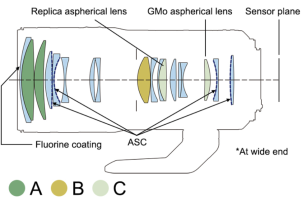
24-105/2.8 Z, where?For example, I'm convinced they could've done it for the 24-105 f2.8 as well as the internal zooming 70-200 f2.8.
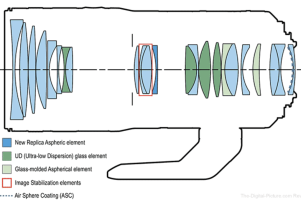
70-200/2.8 Z, there’s room for it…as long as you don’t need to insert a TC in the back end. Which one do you think most people would want?
Upvote
0
There'd be zero issues having it between the last two elements on the 70-200, without sacrificing compatibility with extenders. The gap is more than enough for a drop in filter.24-105/2.8 Z, where?
70-200/2.8 Z, there’s room for it…as long as you don’t need to insert a TC in the back end. Which one do you think most people would want?
Obviously, I'm pretty sure it could be done for the 24-105 with a slightly different internal layout. You're asking "where" as if the current layout is the only way. If these lenses were done with drop in filters in mind from the get go, it could've been done, even preserving the extender compatibility.
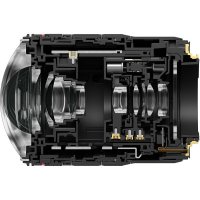
I mean, look how little space the drop in filter actually takes in a lens. That's the new fisheye zoom and the last slimmest piece of flat glass is the drop in filter.
Upvote
0
Are there lens designs from Canon or anyone else where a drop-in filter is not the last piece of glass in the path? If not, might there be a reason for that?There'd be zero issues having it between the last two elements on the 70-200, without sacrificing compatibility with extenders. The gap is more than enough for a drop in filter.
Like many wide and non-telephoto zoom lenses, the design depends on having the rear element(s) as close to the sensor as possible. Sure, it probably could have been designed for a drop-in filter, but there would have been design, size and cost consequences.Obviously, I'm pretty sure it could be done for the 24-105 with a slightly different internal layout. You're asking "where" as if the current layout is the only way.
Canon has only ever put a drop-in slot on lenses that don’t have front filter threads.If these lenses were done with drop in filters in mind from the get go, it could've been done, even preserving the extender compatibility.
It’s not just the thickness of the filter. It’s the ‘opportunity cost’ of not putting lens elements from there back to the end of the mount – that empty space behind the filter in the cutaway, where lens elements are in most other modern designs for wide and standard lenses.I mean, look how little space the drop in filter actually takes in a lens. That's the new fisheye zoom and the last slimmest piece of flat glass is the drop in filter.
The new fisheye is a design based heavily on the EF predecessor, the space was available. Someone mentioned the new lens is the length of the old one plus an adapter. Better optics in terms of special elements and coatings, but an old design.
When Canon launched the RF mount, they touted the benefits of being able to get rear elements much closer to the sensor than EF allowed, and those benefits make many of the RF lenses possible, whereas they would have been prohibitive or not possible on EF.
You are suggesting that Canon can and should just eschew those advantages they touted and put a drop-in filter back there instead, for lenses that work perfectly well with front filters. Well, fortunately for those of us who like and benefit from the design advantages of putting lens elements within 2 cm of the sensor, Canon’s designers know better than to put a filter slot there instead.
Upvote
0
Well, fortunately for those of us who like and benefit from the design advantages of putting lens elements within 2 cm of the sensor, Canon’s designers know better than to put a filter slot there instead.
Oh gosh, that tone you take every time someone has a different opinion than you is so insufferable.
Over and over again you act like the only view that counts is your own and god forbid someone offers an alternative opinion. You'll do all sorts of verbal acrobatics just to make sure you have the last say.
Sure, it probably could have been designed for a drop-in filter, but there would have been design, size and cost consequences.
If you know this, then why even go countering my initial claim that it could've been done?
Upvote
0
I find pushing an argument that is easily refuted by readily available facts to be insufferable. When has Canon put a drop-in filter on a lens that takes front filters? Great white lenses typically have them…but not the 100-300/2.8, which takes a 112mm front filter. Why would Canon make a lens longer and heavier to incorporate a feature that the front filter threads make redundant for most use cases? But you keep arguing that they can and should.Oh gosh, that tone you take every time someone has a different opinion than you is so insufferable.
So stating facts that counter your arguments is ‘verbal acrobatics’? Mmmmkay.Over and over again you act like the only view that counts is your own and god forbid someone offers an alternative opinion. You'll do all sorts of verbal acrobatics just to make sure you have the last say.
I said ‘probably’. I don’t know for sure. You started with ‘convinced’ then backpedaled to ‘pretty sure’. I do know that if it was possible, the lens wouldn’t have taken its current form. Canon never made a 24-105/2.8 for EF. Probably that design was possible but prohibitive in terms of size, weight and cost – obstacles that were removed by the ability to put lens elements much closer to the sensor with the RF mount. But maybe it just wasn’t possible.If you know this, then why even go countering my initial claim that it could've been done?
Consider the RF 14/1.4, which also cannot take a front filter and thus would clearly benefit from a drop-in slot. Incidentally, I’d have used it – I already have the CPL, vND and clear filters for the adapter. Canon put lots of glass there, instead. Could they have put a slot in? Probably. Maybe not, there was never a 14/1.4 for a DSLR. But if they had designed it that way, it would have been a much larger and heavier lens.
For a relevant comparison of the tradeoffs, look at the EF 11-24/4 vs the RF 10-20/4. Putting lots of glass close to the sensor precludes a drop-in filter slot but I’ve owned both and the difference in size and weight is very significant (and the latter lens is cheaper, too).
Many things are possible, but not practical. Sigma’s 200-500mm f/2.8 lens. Canon’s 5200mm f/14 lens. Both were made, so clearly they are possible. Doesn’t mean I want to carry them around and use them. But heck, the Sigmonster even has a drop-in filter slot. Sounds like the lens for you!
The point is, even if something is possible, that doesn’t mean doing it is a good idea because lens design choices are always about compromise.
Upvote
0
Interesting that you ignored all the reasoned points and evidence presented, to focus on the tone of that last bit.Oh gosh, that tone you take every time someone has a different opinion than you is so insufferable.
Over and over again you act like the only view that counts is your own and god forbid someone offers an alternative opinion. You'll do all sorts of verbal acrobatics just to make sure you have the last say.
If you know this, then why even go countering my initial claim that it could've been done?
You want something that is niche. You present that as reasonable. You reject or ignore explanations as to why things aren't how you want. Would it not be more sensible to try to understand why reality doesn't match your expectations? Or you could just criticise the tone of the people gently trying to lead you to understanding

Upvote
0
I find pushing an argument that is easily refuted by readily available facts to be insufferable.
There is nobody on this whole forum involved in more flame wars than you and your "arguments" are frequently delivered with asinine levels of arrogance and insults. If you only had the capacity to ask yourself how come everybody here seems to get along pretty well and we can appreciate different views without spewing toxic vitriol - something that's increasingly characteristic of your posts.
I'm pretty sure I blocked you long time ago, so this is probably your new profile.

Upvote
0
I see...you've decided to stop arguing on merit and technical parameters (since you failed at that) and instead have descended to a personal attack. I get it, you made a point for which there was very little logical support, and when the point was refuted with technical arguments against it, you felt trapped. Puerile, but at least you're consistent in that way.There is nobody on this whole forum involved in more flame wars than you and your "arguments" are frequently delivered with asinine levels of arrogance and insults. If you only had the capacity to ask yourself how come everybody here seems to get along pretty well and we can appreciate different views without spewing toxic vitriol - something that's increasingly characteristic of your posts.
I'm pretty sure I blocked you long time ago, so this is probably your new profile.
Upvote
0
Just to illustrate another of your failed technical arguments, you stated unequivocally that a drop in filter would have zero issues fitting in between the last two elements of the 70-200/2.8 Z.There'd be zero issues having it between the last two elements on the 70-200, without sacrificing compatibility with extenders. The gap is more than enough for a drop in filter.
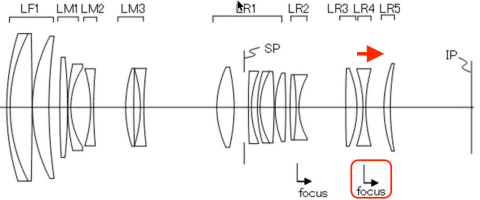
Putting a piece of glass into a 'gap' when Canon designed one of the Nano USM-driven focusing groups to move into that space would constitute an issue. A pretty significant, non-zero issue.
But that's just my own viewpoint. Personally, I like my lenses to have the ability to focus on a subject when I take a picture. Your vast knowledge of optics evidently exceeds that of Canon's own engineers, at least in your own mind. Or maybe you just don't see a need for your lenses to have the ability to focus.
Either way, I'm sure you know best.
Upvote
0

roby17269
R5, X2D II 100c, DJI Mavic 4 Pro & Mini 5 Pro
The Sigmonster is a 200-500mm f/2.8 lens, sold with a dedicated 2x extender that turn it into a 400-1000 f/5.6.I got to see the $25,000 Sigma green lens mounted on a stand at Photokina in Cologne (Koln), Germany back in 2012. I don’t recall the focal length specs, but maybe f/2.8, my initial thought when seeing it firsthand was, it was totally worthless to me.
Fun fact: that lens had a dedicated battery to power the AF motors

Upvote
0
I see...you've decided to stop arguing on merit and technical parameters (since you failed at that) and instead have descended to a personal attack. I get it, you made a point for which there was very little logical support, and when the point was refuted with technical arguments against it, you felt trapped. Puerile, but at least you're consistent in that way.

Oh, I've given up on arguing anything with you about anything... It's a complete waste of time.
You're literally just confirming my previous assesments about your charming characther.
BYEEE
Upvote
0
That's exactly where I played with it as well! I remember I was allowed to put my cf card into the camera and do some test shots.I got to see the $25,000 Sigma green lens mounted on a stand at Photokina in Cologne (Koln), Germany back in 2012. I don’t recall the focal length specs, but maybe f/2.8, my initial thought when seeing it firsthand was, it was totally worthless to me.
It just seemed ridiculous to me. It was so big and so heavy and the electronic zoom was sooo slow... I couldn't see any point in that lens other than serving as a brand statement.
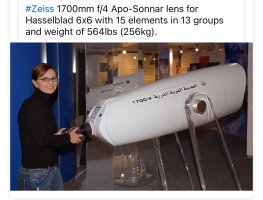
I'm pretty sure Zeiss had that space-craft looking 1700mm lens on display that year as well in Cologne. That one was even crazier.
[Edit: yep, here it is!]
Attachments
Last edited:
Upvote
0
That makes sense…if you can’t win, quit the game. By no means admit your mistakes, that would require maturity beyond your capacity.Oh, I've given up on arguing anything with you about anything... It's a complete waste of time.
Upvote
0
As an underwater photographer I've been waiting for an RF fisheye for a long time now. The EF 8-15 f/4 L fisheye is a mainstay for basically anyone who shoots Canon underwater.
That said, I'm a bit underwhelmed. The slightly wider aperture isn't really useful, the lens is at least as large as the 8-15 fisheye with an RF adapter attached, they went and made it even wider for some reason, it won't take teleconverters, and no IS. Shooting 180 degree circular fisheye has always been a very niche thing which requires a lot of preparation like removing dome port shades, and many photographers do what I do and tape their lens at 15mm all the time. ~190 degrees underwater would be even more difficult to pull off and I don't see many people itching to try it. And losing that 1mm of reach on the long end hurts for a lens where you already have to have it within 1-2 feet of a big animal to get a decent shot much of the time.
The holy grail for underwater would either be a fisheye zoom with more reach out to maybe 18-20mm, an RF 7-14 that takes a 1.4 TC, or maybe one that ditches the widest 180 degree circular end and shifts the whole range up to simplify lens design, like a 14-20 fisheye or something.
Anyways, if I didn't own the EF fisheye yeah maybe I consider buying this since it's functionally very similar and not too much more expensive than the EF (if you can find one) plus the RF adapter. But I don't see any reason to upgrade to it.
That said, I'm a bit underwhelmed. The slightly wider aperture isn't really useful, the lens is at least as large as the 8-15 fisheye with an RF adapter attached, they went and made it even wider for some reason, it won't take teleconverters, and no IS. Shooting 180 degree circular fisheye has always been a very niche thing which requires a lot of preparation like removing dome port shades, and many photographers do what I do and tape their lens at 15mm all the time. ~190 degrees underwater would be even more difficult to pull off and I don't see many people itching to try it. And losing that 1mm of reach on the long end hurts for a lens where you already have to have it within 1-2 feet of a big animal to get a decent shot much of the time.
The holy grail for underwater would either be a fisheye zoom with more reach out to maybe 18-20mm, an RF 7-14 that takes a 1.4 TC, or maybe one that ditches the widest 180 degree circular end and shifts the whole range up to simplify lens design, like a 14-20 fisheye or something.
Anyways, if I didn't own the EF fisheye yeah maybe I consider buying this since it's functionally very similar and not too much more expensive than the EF (if you can find one) plus the RF adapter. But I don't see any reason to upgrade to it.
Last edited:
Upvote
0
Or because it will be incredibly huge and heavy.still disappointed that the RF300-600 L will apparently not be f4 throughout the range… suspect it’s largely to preclude cannibalizing future sales of RF600 f4 L II product
Upvote
0

Primes are restrictive but the 200-800 only resolves to about 650mm (per tests in this forum) and beyond that it just makes the image bigger without any additional detail resolved. You'd do just as well with the Nikon 180-600 and then up-sizing in Photoshop or with an AI resizer. Or the Sony 200-600 for that matter.Blanket statements are always a bit precarious. I have spent the last few months seriously looking at Nikon's offerings - and they do have some excellent choices. But in my experience - and my preferences, Canon would be my choice. During the 5 years or so I have been shooting wildlife (mostly birds) I find that primes are far too restrictive. Those lightweight Nikon PF lenses are sure tempting, but I will choose a zoom over a prime every time. I do prefer a lightweight lens, though, so the best wildlife lens in my opinion is the Canon RF 100-500. For many birds I shoot, maximum reach is another preference, in which case, the RF 200-800 is something no one else offers, and it is also relatively affordable, which is my other preference. So, based on that, my vote for the best two wildlife lenses available at a reasonable cost are both Canon.
Upvote
0
Similar threads

- Replies
- 12
- Views
- 2K


- Replies
- 148
- Views
- 18K
- Replies
- 6
- Views
- 921

- Replies
- 63
- Views
- 8K