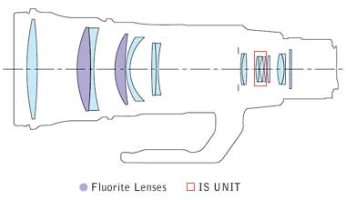
Canon Shows off RF 500mm F5.6 L IS in Latest Patent

what is the use of a 300-600 f5.6 if Canon has the 100-500 of very decent quality. You would gain 100mm and 2/3 stop of light at the cost of 7k? IMHO 600/5.6 would be ideal in combination with the 100-500. Light, small and with very good optical quality. With the extender RF 1.4 and 2.0 ideal which would cover all needs from 100-1200mm.
It may not sound much, but to me it would. Given the lens is of decent optical quality and in combination with a TC it translates into an additional 140/200mm.
 
Upvote 0
I'm asking here for this lens for years, thank god!! Make it happen Canon!!

I loved my EF 400mm 5.6L and never had a lens like this again! (no, 100-500 L is not close).
The RF 100-500mm is an order of magnitude or more better than the EF 400/5.6. It is sharper at 500 than the prime at 400, has excellent IS against its absence, faster AF, will focus close and had all the advantages of zoom for framing as well as longer with little extra weight. I’ve used both extensively and the zoom is indeed not close, it is miles ahead.
 
  • Like
Reactions: 4 users
Upvote 0
The RF 100-500mm is an order of magnitude or more better than the EF 400/5.6. It is sharper at 500 than the prime at 400, has excellent IS against its absence, faster AF, will focus close and had all the advantages of zoom for framing as well as longer with little extra weight. I’ve used both extensively and the zoom is indeed not close, it is miles ahead.
All true, of course, but perhaps the point is that the 400 f/5.6 provided a reasonable way for people to get — for the era — a combination of reach and affordability, as opposed to more expensive commercial-oriented solutions. In that regard, the EF 400 f/5.6 vis-a-vis the RF 500 f.5.6 in terms of hopes remain a valid call-out by forum members.

In a nod to your comment, things do get better. 🤠

Continuing the general conversation...

Putting a potential RF 500mm f/5.6 into economic context for primes:
  • Canon EF 500 f/4 IS II: CAD $11,999 (MSRP still listed)
  • Canon RF 600 f/4: CAD 18,999
And for zooms:
  • Canon RF 200-800 f/6.3-9: CAD $2,799
  • Canon EF 100-400 f/4.5-5.6: CAD $2,999
  • Canon RF 100-500 f/4.5-7.1: CAD $3,999
And the lenses of question:
  • Sigma L or E 500 f/5.6: CAD $4,399 (market benchmark)
  • Canon EF 400 5.6: CAD $1,599 (MSRP still listed)
So if you look at the relative cost, the EF 400 f/5.6 was a fantastic option to get people into quality telephoto photography on the Canon platform. Given that for years anything over 400 was rather exotic the EF 400 5.6 was a remarkable offer, and with competitive IQ. Sure, no IS — but for a fraction of the cost of anything else and still with moderate internal sealing (no fogging)... uh, whatever.

If Canon made this a red ring lens then it would probably pair very well with a 100-500, and if a silver ring lens then the 200-800. I think Canon could offer it for around the same price as the Sigma, maybe a pinch more, if red and probably for CAD $3,500 if silver should they really want to make a market statement similar to the 200-800, which itself is priced very fairly compared to historic and modern "peers".

A dual silver offering of the 200-800 and 500 5.6 with similar, as appropriate, build, functionality, and costing would be an epic combo for the prosumer and advanced amature market. It would also probably be a great grab-and-go for tight spaces for pro's as well.

 
Last edited:
  • Like
Reactions: 1 user
Upvote 0
All true, of course, but perhaps the point is that the 400 f/5.6 provided a reasonable way for people to get — for the era — a combination of reach and affordability, as opposed to more expensive commercial-oriented solutions. In that regard, the EF 400 f/5.6 vis-a-vis the RF 500 f.5.6 in terms of hopes remain a valid call-out by forum members.

In a nod to your comment, things do get better. 🤠

Continuing the general conversation...

Putting a potential RF 500mm f/5.6 into economic context for primes:
  • Canon EF 500 f/4 IS II: CAD $11,999 (MSRP still listed)
  • Canon RF 600 f/4: CAD 18,999
And for zooms:
  • Canon RF 200-800 f/6.3-9: CAD $2,799
  • Canon EF 100-400 f/4.5-5.6: CAD $2,999
  • Canon RF 100-500 f/4.5-7.1: CAD $3,999
And the lenses of question:
  • Sigma L or E 500 f/5.6: CAD $4,399 (market benchmark)
  • Canon EF 400 5.6: CAD $1,599 (MSRP still listed)
So if you look at the relative cost, the EF 400 f/5.6 was a fantastic option to get people into quality telephoto photography on the Canon platform. Given that for years anything over 400 was rather exotic the EF 400 5.6 was a remarkable offer, and with competitive IQ. Sure, no IS — but for a fraction of the cost of anything else and still with moderate internal sealing (no fogging)... uh, whatever.

If Canon made this a red ring lens then it would probably pair very well with a 100-500, and if a silver ring lens then the 200-800. I think Canon could offer it for around the same price as the Sigma, maybe a pinch more, if red and probably for CAD $3,500 if silver should they really want to make a market statement similar to the 200-800, which itself is priced very fairly compared to historic and modern "peers".

A dual silver offering of the 200-800 and 500 5.6 with similar, as appropriate, build, functionality, and costing would be an epic combo for the prosumer and advanced amature market. It would also probably be a great grab-and-go for tight spaces for pro's as well.
The EF 400/5.6 L was introduced in 1993 at $1250, which equates to $2750 in 2026, to put in perspective. It was popular because there was no alternative. For a while, my favourite lens was the Nikon 500mm f/5.6 PF, an absolute cracker of a lens. However, I don’t miss it a bit as the RF 100-500 mm is just about as sharp and has all of the advantages of a zoom and close focussing, which outweigh for me the loss of 2/3 stops. Now, the extra 60% of focal length of the RF 200-800mm makes it my go to lens for birding. As good as a 500/5.6 is likely to be from Canon, I personally would probably give it a miss because it would not be used that much owing to the two Canon zooms. But, I am sure it would be the first choice for others and a useful and welcome addition.
 
  • Like
Reactions: 1 user
Upvote 0
The EF 400/5.6 L was introduced in 1993 at $1250, which equates to $2750 in 2026, to put in perspective.
Canon says if you still have one in stock then sell it at $1,599 CAD. In 2026. I didn't make the numbers up. 🙂

It was popular because there was no alternative. For a while, my favourite lens was the Nikon 500mm f/5.6 PF, an absolute cracker of a lens. However, I don’t miss it a bit as the RF 100-500 mm is just about as sharp and has all of the advantages of a zoom and close focussing, which outweigh for me the loss of 2/3 stops. Now, the extra 60% of focal length of the RF 200-800mm makes it my go to lens for birding. As good as a 500/5.6 is likely to be from Canon, I personally would probably give it a miss because it would not be used that much owing to the two Canon zooms. But, I am sure it would be the first choice for others and a useful and welcome addition.
Totally fair! And I trust your opinion on lens quality comparisons for things like birds, etc.

I do think that the zoom + prime combo at either tier for likely pricing ranges would be solid. I'm amazed at how much distortion correction eats into the scene, plus other issues, when comparing my shots from a tripod with prime vs zoom at same length. The EF 24mm 1.4 II captures a noticeable extra chunk over the 24-70 f/4 set to 24 as an example when corrections are applied. I agree that zooms are the ultimate in convenience when subjects move much closer or further, but when the situation permits I prefer to reach for a prime instead. Extra nice is that my better half and I can split the set and she can carry the zoom while I futz with the prime.
 
Upvote 0
Canon says if you still have one in stock then sell it at $1,599 CAD. In 2026. I didn't make the numbers up. 🙂


Totally fair! And I trust your opinion on lens quality comparisons for things like birds, etc.

I do think that the zoom + prime combo at either tier for likely pricing ranges would be solid. I'm amazed at how much distortion correction eats into the scene, plus other issues, when comparing my shots from a tripod with prime vs zoom at same length. The EF 24mm 1.4 II captures a noticeable extra chunk over the 24-70 f/4 set to 24 as an example when corrections are applied. I agree that zooms are the ultimate in convenience when subjects move much closer or further, but when the situation permits I prefer to reach for a prime instead. Extra nice is that my better half and I can split the set and she can carry the zoom while I futz with the prime.
There is a complete difference between comparing a 24mm zoom with a 500mm zoom when it comes to distortion. There is minimal inherent distortion from 500mm lens as the inherent curvature from a 500mm radius over a 36mm frame is tiny compared with that from a 24mm radius over 36mm, which requires massive optical and digital correction.
 
  • Like
Reactions: 1 user
Upvote 0
]I'm amazed at how much distortion correction eats into the scene, plus other issues, when comparing my shots from a tripod with prime vs zoom at same length. The EF 24mm 1.4 II captures a noticeable extra chunk over the 24-70 f/4 set to 24 as an example when corrections are applied.
Just to drive Alan's point home, compare the distortion of the RF 200-800 to that of the EF 24/1.4L II prime that you prefer for its 'lower distortion'.

 
  • Like
Reactions: 1 user
Upvote 0
There is a complete difference between comparing a 24mm zoom with a 500mm zoom when it comes to distortion. There is minimal inherent distortion from 500mm lens as the inherent curvature from a 500mm radius over a 36mm frame is tiny compared with that from a 24mm radius over 36mm, which requires massive optical and digital correction.
Good to know. I don't have a 500mm or 600mm zoom to compare with at this time, just Canon and Nikon primes in those ranges. I had assumed similar issues, however.
 
Upvote 0
Just to drive Alan's point home, compare the distortion of the RF 200-800 to that of the EF 24/1.4L II prime that you prefer for its 'lower distortion'.

Not so sure this is a valid comparison. 200mm to 24mm?

OK, quick switch in the tool for an apples to apples comparison... and the tool doesn't really tell me the end effect, however. I expect distortion, and if you compare the lenses I mentioned (24 1.4 ii vs 24-70 4) then both look distorted in the tool and yet in the real world the difference is so huge after correction I thought I had my zoom set to the wrong length the first time I stared at the test shots side by side (I was using the zoom to quickly decide the desired framing in an unfamiliar room arrangement for a portrait later in the day, and later slapped on the prime for the wider aperture).

I would be very interested in comparing real world tripod-anchored shots of the 200-800 set to 500 and an actual 500. I cannot reproduce that at home.

Regardless, my point good fellows was this: in the lenses I have — of which just one example is the 24 vis-a-vis the 24-70 — this "crop" is noticeable. It remains noticeable for my 24, 40, 50, and 100 primes vs my zooms in controlled situations. I agree that the effect is less for longer lengths. Maybe, but I don't know, moot by the time 500 rolls around. You say moot, I say I have to trust you but cannot know for myself in advance.

Which leads to my second point: I have a personal preference arising from situations like this (and combined with vignetting, etc.) for primes over zooms at the same or similar lengths. I just like primes. You guys like zooms. I'd still hang out with you in the Rockies despite your preference. :cool:

It's not like the effect is world changing — running around with a prime and a zoom covering the same range taking pictures of dogs, horses, and people will not be noticeable. It's just noticeable if I have a vision and plunk down in a location for a specific framing and spatial relationship. I suspect the more pragmatic differences are things like f/5.6 at 500 vs 7.1 for the 200-800 @ 500, etc.
 
Upvote 0
Not so sure this is a valid comparison. 200mm to 24mm?
No, it's not. That was the point...you stated that you would rather have a supertelephoto prime than a zoom, and indicated that the distortion correction required for your wide angle lenses was one reason. The point was that what you see in terms of distortion at 24mm is not relevant for 500mm prime vs. a zoom lens covering that range (e.g. 300-600mm).
 
  • Like
Reactions: 2 users
Upvote 0
No, it's not. That was the point...you stated that you would rather have a supertelephoto prime than a zoom, and indicated that the distortion correction required for your wide angle lenses was one reason. The point was that what you see in terms of distortion at 24mm is not relevant for 500mm prime vs. a zoom lens covering that range (e.g. 300-600mm).
If you're telling me I shouldn't use my experience with what I have to make a judgement call then we are disagreed.
  • I was using my experience of like to like at the 24 range, and then extrapolating that relationship to a posited 500 to 500-zoomed relationship for something I don't have.
  • I was not looking at 200 vs 24 (etc.) and going... oh yeah, those totally have different distortion patterns.
If you're telling me you both happen to know better because you have the lenses and it's going to be OK, then I appreciate the insight! 🙏 It wasn't clear to me that's what was happening.

I'd still buy both: the zoom for tricky situations where lens changes are foolish or impractical yet necessary, and the prime for a more zen like experience to my taste.
 
Last edited:
Upvote 0
I'm asking here for this lens for years, thank god!! Make it happen Canon!!

I loved my EF 400mm 5.6L and never had a lens like this again! (no, 100-500 L is not close).
EF 5.6 400 is a great lens except
→ missing IS
→ 3m close focus limitation
→ relatively large size

But it excels in clarity, weight and good diameter for firm grip. Clarity presumably is a consequence of low lens/group count!
 
Upvote 0
"Canon's RF line-up is missing the 500mm f/4 lens from the EF days. With how much weight Canon has shaved off of the 600mm F4 L IS USM over the years, I don't think there's a need for a 500mm F4 in the line-up.
Going with a 500mm f/5.6 prime would cover both of those lenses from the EF days."

This is an incorrect pairing. The lens released in the 1990s as the other half of the choice set with the 400 f/5.6 was the 300mm f/4. Both lenses were amateur-oriented products. Both were designed without solid compatibility to 1.4x and 2x teleconverters to reduce development costs, keeping the price point lower. They were similar in price, designed for film cameras, allowed screw-on filters that amateurs used, but their entrance allowed the buyer to choose between slightly greater focal length or slightly higher aperture. Both sold very well for over ten years as Canon sales swelled between the mid-90s and the mid-00s.

The 500 f/4 was a professional lens for those who shot large mammals at closer range, auto races, and the like. It was a weight tradeoff with the 600 f/4, had similarly high weather sealing and drop-in filters, and it was designed for teleconverter use. It seemed to me like the press corps in particular liked to rent the shorter lens on an as-needed basis.

The proposed lens design is likely to be an amateur-focused design like the old 400 f/5.6 and 300 f/4 were. But a lot has changed since then. Older amateurs have more money and are pickier about lens quality, in line with other aspects of the large Boomer-ish demographic (I think the 800mm f/11 was a flop with them). Amateurs today seem to think more about lens weight than in the past. The costs to design a lens compatible with teleconverters have dropped as computers do the heavy lifting. I'm guessing this is a pure cost and weight play relative to the higher-end pro lenses, and that there is only enough amateur market today for one such lens. If the 400mm focal length is chosen over the 300mm length, it suggests than Canon's market research arm concluded that people today preferred reach over an f-stop.
 
Upvote 0
If you're telling me I shouldn't use my experience with what I have to make a judgement call then we are disagreed.
It’s important to have an understanding of the applicability of your own experience. If you had experience piloting a Piper, then that would likely enable you to make a judgment call if you were to pilot a Cessna. I don’t believe that experience would enable you to make good judgement calls about piloting an Airbus A380 or an F-35 fighter jet.

  • I was using my experience of like to like at the 24 range, and then extrapolating that relationship to a posited 500 to 500-zoomed relationship for something I don't have.
  • I was not looking at 200 vs 24 (etc.) and going... oh yeah, those totally have different distortion patterns.
Indeed, and it wasn’t a valid extrapolation. The point of the 24 vs. 200 comparison was that the distortion of a supertelephoto lens is minimal compared to a wide angle lens, prime or zoom.

If you're telling me you both happen to know better because you have the lenses and it's going to be OK, then I appreciate the insight! 🙏 It wasn't clear to me that's what was happening.
We know better because of an understanding of optics, in addition to having similar lenses. Distortion simply isn’t a significant issue at longer focal lengths.

I'd still buy both: the zoom for tricky situations where lens changes are foolish or impractical yet necessary, and the prime for a more zen like experience to my taste.
Buying both a 300-600/5.6 and a 500/5.6 would likely be a very expensive path to a zen-like experience. But I’ve heard that privation can be a zen-like experience. ;)
 
Upvote 0
I have an EF 600/4L Mark III, which I bought to upgrade my previous 500/4L II. The problem isn't weight, it's bulk. The 600 is awesome for working from a hide or another fixed position with reasonably nearby parking, but it's too big to fit in a conventional backpack along with the other things you need for a wildlife day away from the car.
Well, I carry my EF 600/4 III in a backpack (Lowepro 600 AW III) with two additional quivers for additional gear, and I shoot it mostly hand-held. But my back is well trained, but I do understand well that this isn't a solution for everybody. But you're right, if you need to carry an additional tent, sleeping bag etc., this is really too much for one person. You'd need an artificial exoskeleton and always very solid ground in rugged terrain ;)
 
Upvote 0