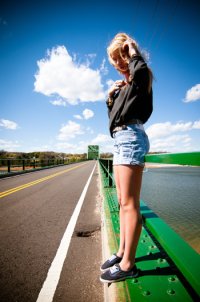
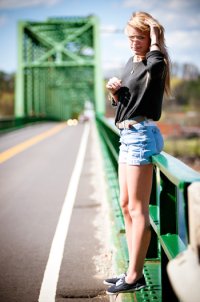
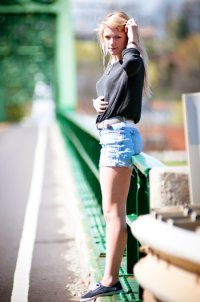
Visualising focal length perception.

Status
Not open for further replies.
Jan 11, 2011
195
0
6,371
I hope the title of this thread isn't misleading. I only use primes, I dont know why, I just like them. Im trying to understand how focal perception effects photos.

For shooting small groups, and if space wasn't an issue, is the best reason to use the widest lens possible before distortion factors show up, because it gives the most sense of depth to the photo?

Imagine the worlds best telephoto lens, that would allow me to photograph a group of 6 people or so from the other end of a football pitch and crop in, still retaining amazing sharpenss. It would still look weird because everything would look so compressed and there would be no depth to the photo right? Or would this scenario infact depend upon how close they were stood to a backround.

Is this a suitable way to visualise this focal length perception or am I missing something? What would you suggest to be the longest focal length to be used for group photos, space permitting?
 
For a FF body, around 50mm gives the best perception. On a crop body, about 30mm is equivalent.
If you are back far enough to get a group in the image, say 20 ft, the depth of field is going to be very deep.
http://www.dofmaster.com/doftable.html

Examples: for a distance of 20 feet:
Canon 5D MK III 50mm f/4: In focus from 15' 6" to 28' 2"
Canon 7D 28mm f/4: Iin focus from 12' 7" to 48" 7"
 
Upvote 0
50mm gives u the most "natural" appearance that you also get when u are using ur eyes. The "wideness" and "compression" look (nearly) like everything is seen with ur eyes.
Anything wider or closer looks less "natural" to ur eyes cuz ur used to see the things like u see them since u were born and a 50mm lens is the closest u can get to that.

Best is to just try out different focal lengths, perhaps take a portrait of someone in the same spot but with various lenses. Wider lenses give some kind of weird feeling cuz distortion comes in and with tele lenses compression comes in. Actually theres also distortion when using ur eyeballs (theyre round after all) but you wont notice it. The brain image processor is waaaay better than any camera sensor. On a camera u just start to notice the effects a lot more. Not much with a 50mm lens...

YES im a parrot repeating myself rrrraaaarrr
 
Upvote 0
I saw this collection of faces...
I saved it because the person that did this ...did it right - IMO
I would give credit if I had the link...

this shot(s) explains a lot...

-----------------------
 

Attachments

  • strip1.jpg
    strip1.jpg
    464.9 KB · Views: 969
Upvote 0
plus these four.. from ...I believe the same post...
wish I had the link to the discussion... good points there


they really tell the story with these - IMO
sometimes...a picture is worth a thousand words....

I try to see...and think like this when I have my 14mm, 35mm and 135mm with me..
 

Attachments

  • 12mm.jpg
    12mm.jpg
    96.7 KB · Views: 845
  • 35mm.jpg
    35mm.jpg
    95.1 KB · Views: 825
  • 100mm.jpg
    100mm.jpg
    79.6 KB · Views: 837
  • 200mm.jpg
    200mm.jpg
    72.5 KB · Views: 834
Upvote 0
TommyLee said:
I saw this collection of faces...
I saved it because the person that did this ...did it right - IMO

That's great, very telling. Goes to show that there is no "best" focal length. You learn the characteristics of wide vs. tele and then use the range for different artistic effect. 50mm is often claimed as the most natural, but since we are working in a visual medium, sometimes we want an interpretation different from "normal". A classical portrait is usually more compressed than what we would see normally, whereas a wide angle shot can give a better sense of environment and "being there". And as much as I love my 50, I'm not going to claim that it represents how I actually see things, since for better or worse I don't see things through a rectangular frame :)
 
Upvote 0
I think it also illustrates that above a certain focal length, the effect of compression doesn't change much (the angle subtended by an image decreases disproportionately more than the increase in focal length and levels off).

I think the perception of depth depends on the distance to the subject. If multiple subjects are closer together, relative to the distance from the camera, you will not perceive depth. It is indirectly affected by the focal length since one needs telephotos to shoot distant subjects with any clarity. However, if you shot larger objects at a distance with a wide angle lens- you will still not perceive depth.
 
Upvote 0
sagittariansrock said:
I think the perception of depth depends on the distance to the subject.

Exactly. In fact, perspective depends solely on distance to subject, and is independent of focal length. But for the same framing, distance to subject changes must change focal length, so perspective changes.
 
Upvote 0
rpt said:
M.ST said:
The wires over the model head are a no go in photography. Bad composition.
Wires? You are looking at the wires?

Dude! Surely you can do better!

Well, It would be better w/o the wires. Block them out with your thumb and it looks better to me. Nothing some PS can't fix. ::)
 
Upvote 0
Status
Not open for further replies.