

You are using an out of date browser. It may not display this or other websites correctly.
You should upgrade or use an alternative browser.
You should upgrade or use an alternative browser.
Review - Sigma 50-100mm f/1.8 DC Art
- Thread starter Canon Rumors
- Start date

Etienne said:This would be a great lens for the Cinema cameras: C100, C300
Too bad they didn't add IS
Sigma has stuck to a certain formula pretty closely with the ART series. Neither weather sealing nor stabilization are a part of that formula. Most of them don't need OS, but this one probably could have benefited from it. That would have made it even bigger and heavier, though.
Upvote
0
First, excellent review, as always.
As someone who's primary focus is portraits I feel that this lens is as given as a 70-200 on fullframe. It's definately a lens I would've picked up had I chosen the 7D2 over the 5D2. (As it is I went for the budget, fullframe, option.)
A very interesting lens from Sigma indeed. Maybe having a fullframe camera won't be as given for a semi-pro, in the future with this direction Sigma is taking. Sooner or later one or more of the other companies are bound to perk up and realize that there is money to be made here too.
As someone who's primary focus is portraits I feel that this lens is as given as a 70-200 on fullframe. It's definately a lens I would've picked up had I chosen the 7D2 over the 5D2. (As it is I went for the budget, fullframe, option.)
A very interesting lens from Sigma indeed. Maybe having a fullframe camera won't be as given for a semi-pro, in the future with this direction Sigma is taking. Sooner or later one or more of the other companies are bound to perk up and realize that there is money to be made here too.
Upvote
0

Hello,
nice review as always.
I'm curious on how the lens will perform on the good old 1DMKIV?
Thanks
nice review as always.
I'm curious on how the lens will perform on the good old 1DMKIV?
Thanks
Upvote
0
Nice review and lens. Lack of OS is a shame for a lens of this weight 
I hope they will bring a 35-70/1.8 Art for crop as well, I think this would generally fit my used focus lengthes more. Also something like a 45-135/2.8 would be nice as a crop version of the 70-200/2.8.
I hope they will bring a 35-70/1.8 Art for crop as well, I think this would generally fit my used focus lengthes more. Also something like a 45-135/2.8 would be nice as a crop version of the 70-200/2.8.
Upvote
0

Thanks for the really helpful review, Dustin.
I have been following Sigma's progress in lenses for many years. They have stepped up their range and quality in a relatively brief time, to offer some really great lenses.
Regarding the 50-100mm f/1.8, I'm so glad to hear (aka 'read') that in your experience, Dustin, it autofocuses better than other Sigma / ART lenses. Having both experienced poor autofocus (AF) accuracy and consistency on a few Sigma lenses myself, as well as having read many others report inaccurate and/or inconsistent AF, meant that I have not bought any of their ART lenses to date.
I currently own 2x Sigma UWAs for APS-C: the amazing 8-16mm and the very good 10-20mm. Because AF is not critical for 99.9% of my UWA photos, I often use these lenses in manual focus (MF) or apply hyperfocal distance principles to get the shot I want. I'm particularly very happy with the Sigma 8-16mm which I have used for some years now and is unequalled in its UWA range on APS-C. Love what 8mm can give me (which is an equivalent of 12.8mm on a "FF"/35mm sensor perspective).
The bokeh, sharpness, draw and contrast of Sigma's new 50-100mm are obviously at a very high level. It has a lot going for it, having awesome IQ between 50mm and 100mm is a 'nice' package indeed.
Allow me to make some observations and comparisons with this Sigma 50-100mm f/1.8 ART lens, and some other lenses.
I have used two versions of Sigma's 50-150mm f/2.8 lenses for APS-C, and the larger / OS version is particularly impressive, however 3 things put me off it for me:
- it did not nail focus quite as confidently and accurately as native brand lenses
- the size and weight felt very similar to using a 70-200mm f/2.8 (so if I really wanted a f/2.8 telezoom, I would probably go for a 70-200mm f/2.8 )
- possible issues 'down the track' (e.g. compatibility issues of using it in live view, or with other advanced functionality)
However Sigma's 50-150mm f/2.8 does great as a less expensive telezoom option. In fact, several of my 'official' wedding photos were taken by a friend with the Sigma 50-150mm f/2.8.
The Sigma 50-100mm f/1.8 has certain attractions for me over the Sigma 50-150mm f/2.8, however I would probably still prefer neither as an 'ideal'. I have my Canon 70-300mm L which is such a great, versatile travel zoom - and has that 300mm reach advantage for wildlife and birds which are more my 'focus'. As I do not photograph sports, I have no real need for a fast telezoom.
The size and weight of this 50-100mm lens, though, is somewhat of a 'turn off' for me. My style of low light / portrait photography requires a small, versatile, lens. This lens is really large, and with a 82mm filter it is quite imposing on subject, and with its length and weight, doesn't give me the flexibility I like when shooting portraits (I do have a great 10-stop 82mm ND filter - thanks to Breakthrough Photography).
But perhaps the greatest factor for me, is Sigma's choice not to implement OS (aka Sigma's 'image stabilisation') on this lens. I really find that a lot of my photos 50mm and beyond (particularly from 70mm) really benefit from having IS/OS.
My most used low light lens is actually the 50mm f/1.8 STM, which does a great job for what it's worth. Decent image quality already from f/1.8 and very sharp from f/2.5 onwards. Light, focusses very well (AF on this lens is worlds superior and a totally better / different experience to Canon's 50mm f/1.8 II, of which I had two copies.
The preference I would have for an 'ideal' low light lens is similar to proposed by stpr (welcome, new CR forum member!) Yes, I would use a good quality 35mm - 70mm f/1.8 a lot. If such a lens was made, was relatively small, lightweight, had fast, accurate, consistent AF and (icing on the cake) was also stabilised that would have my money! Canon, Sigma (& Tamron, and other lens manufacturers...are you listening). I have hope that Sigma MIGHT produce such a lens.
The Sigma 18-35mm f/1.8 and 24-35mm, though I would also hope that their is a way that any 3rd party lenses will be able to maintain full compatibility with Canon's PDAF and any future technology and advances. Reading of certain lenses and accessories from 3rd parties in particular not being compatible with various models of new cameras means I will probably stick to mainly having Canon lenses & accessories. Ok, ideally Canon would come out with an EF-S 35-70mm f/1.6 (!) USM IS ... THAT would be seriously great. Or even without IS, if they build an effective 5-stop, 5-axis IBIS into their next DSLR and (semi-pro) EOM bodies! One can dream, right! :
On a final, and side note... the other evening at home (here in Australia) - I looked at one of your video reviews, Dustin. It was of the 80D. I enjoyed watching that (I'm quite impressed with Canon's 80D). So I was glad to read that you were using the 80D for part of the real world testing and review of Sigma's 50-100mm f/1.8 lens.
Well, that's enough from me for now.... regards....
Paul 8)
I have been following Sigma's progress in lenses for many years. They have stepped up their range and quality in a relatively brief time, to offer some really great lenses.
Regarding the 50-100mm f/1.8, I'm so glad to hear (aka 'read') that in your experience, Dustin, it autofocuses better than other Sigma / ART lenses. Having both experienced poor autofocus (AF) accuracy and consistency on a few Sigma lenses myself, as well as having read many others report inaccurate and/or inconsistent AF, meant that I have not bought any of their ART lenses to date.
I currently own 2x Sigma UWAs for APS-C: the amazing 8-16mm and the very good 10-20mm. Because AF is not critical for 99.9% of my UWA photos, I often use these lenses in manual focus (MF) or apply hyperfocal distance principles to get the shot I want. I'm particularly very happy with the Sigma 8-16mm which I have used for some years now and is unequalled in its UWA range on APS-C. Love what 8mm can give me (which is an equivalent of 12.8mm on a "FF"/35mm sensor perspective).
The bokeh, sharpness, draw and contrast of Sigma's new 50-100mm are obviously at a very high level. It has a lot going for it, having awesome IQ between 50mm and 100mm is a 'nice' package indeed.
Allow me to make some observations and comparisons with this Sigma 50-100mm f/1.8 ART lens, and some other lenses.
I have used two versions of Sigma's 50-150mm f/2.8 lenses for APS-C, and the larger / OS version is particularly impressive, however 3 things put me off it for me:
- it did not nail focus quite as confidently and accurately as native brand lenses
- the size and weight felt very similar to using a 70-200mm f/2.8 (so if I really wanted a f/2.8 telezoom, I would probably go for a 70-200mm f/2.8 )
- possible issues 'down the track' (e.g. compatibility issues of using it in live view, or with other advanced functionality)
However Sigma's 50-150mm f/2.8 does great as a less expensive telezoom option. In fact, several of my 'official' wedding photos were taken by a friend with the Sigma 50-150mm f/2.8.
The Sigma 50-100mm f/1.8 has certain attractions for me over the Sigma 50-150mm f/2.8, however I would probably still prefer neither as an 'ideal'. I have my Canon 70-300mm L which is such a great, versatile travel zoom - and has that 300mm reach advantage for wildlife and birds which are more my 'focus'. As I do not photograph sports, I have no real need for a fast telezoom.
The size and weight of this 50-100mm lens, though, is somewhat of a 'turn off' for me. My style of low light / portrait photography requires a small, versatile, lens. This lens is really large, and with a 82mm filter it is quite imposing on subject, and with its length and weight, doesn't give me the flexibility I like when shooting portraits (I do have a great 10-stop 82mm ND filter - thanks to Breakthrough Photography).
But perhaps the greatest factor for me, is Sigma's choice not to implement OS (aka Sigma's 'image stabilisation') on this lens. I really find that a lot of my photos 50mm and beyond (particularly from 70mm) really benefit from having IS/OS.
My most used low light lens is actually the 50mm f/1.8 STM, which does a great job for what it's worth. Decent image quality already from f/1.8 and very sharp from f/2.5 onwards. Light, focusses very well (AF on this lens is worlds superior and a totally better / different experience to Canon's 50mm f/1.8 II, of which I had two copies.
The preference I would have for an 'ideal' low light lens is similar to proposed by stpr (welcome, new CR forum member!) Yes, I would use a good quality 35mm - 70mm f/1.8 a lot. If such a lens was made, was relatively small, lightweight, had fast, accurate, consistent AF and (icing on the cake) was also stabilised that would have my money! Canon, Sigma (& Tamron, and other lens manufacturers...are you listening). I have hope that Sigma MIGHT produce such a lens.
The Sigma 18-35mm f/1.8 and 24-35mm, though I would also hope that their is a way that any 3rd party lenses will be able to maintain full compatibility with Canon's PDAF and any future technology and advances. Reading of certain lenses and accessories from 3rd parties in particular not being compatible with various models of new cameras means I will probably stick to mainly having Canon lenses & accessories. Ok, ideally Canon would come out with an EF-S 35-70mm f/1.6 (!) USM IS ... THAT would be seriously great. Or even without IS, if they build an effective 5-stop, 5-axis IBIS into their next DSLR and (semi-pro) EOM bodies! One can dream, right! :
On a final, and side note... the other evening at home (here in Australia) - I looked at one of your video reviews, Dustin. It was of the 80D. I enjoyed watching that (I'm quite impressed with Canon's 80D). So I was glad to read that you were using the 80D for part of the real world testing and review of Sigma's 50-100mm f/1.8 lens.
Well, that's enough from me for now.... regards....
Paul 8)
Upvote
0
cpreston said:Most of the reviews I have seen have not mentioned the focus breathing of the lens. The lens is only a 50-100mm at infinity. When focused to it's minimum distance of about .9m, it's actually closer to a 75mm to 150mm.
That's actually really good to hear, I love using telephoto lenses for closup and near-macro type shots, Sigma seems to be designing with this in mind.
It also means they're using a similar design to the Canon 70-200f2.8, which lets you shoot tight headshots, as opposed to the Nikon 70-200 which breathes in the opposite direction and reduces your ability to focus on small objects.
Upvote
0
pj1974 said:Thanks for the really helpful review, Dustin.
I have been following Sigma's progress in lenses for many years. They have stepped up their range and quality in a relatively brief time, to offer some really great lenses.
Regarding the 50-100mm f/1.8, I'm so glad to hear (aka 'read') that in your experience, Dustin, it autofocuses better than other Sigma / ART lenses. Having both experienced poor autofocus (AF) accuracy and consistency on a few Sigma lenses myself, as well as having read many others report inaccurate and/or inconsistent AF, meant that I have not bought any of their ART lenses to date.
I currently own 2x Sigma UWAs for APS-C: the amazing 8-16mm and the very good 10-20mm. Because AF is not critical for 99.9% of my UWA photos, I often use these lenses in manual focus (MF) or apply hyperfocal distance principles to get the shot I want. I'm particularly very happy with the Sigma 8-16mm which I have used for some years now and is unequalled in its UWA range on APS-C. Love what 8mm can give me (which is an equivalent of 12.8mm on a "FF"/35mm sensor perspective).
The bokeh, sharpness, draw and contrast of Sigma's new 50-100mm are obviously at a very high level. It has a lot going for it, having awesome IQ between 50mm and 100mm is a 'nice' package indeed.
Allow me to make some observations and comparisons with this Sigma 50-100mm f/1.8 ART lens, and some other lenses.
I have used two versions of Sigma's 50-150mm f/2.8 lenses for APS-C, and the larger / OS version is particularly impressive, however 3 things put me off it for me:
- it did not nail focus quite as confidently and accurately as native brand lenses
- the size and weight felt very similar to using a 70-200mm f/2.8 (so if I really wanted a f/2.8 telezoom, I would probably go for a 70-200mm f/2.8 )
- possible issues 'down the track' (e.g. compatibility issues of using it in live view, or with other advanced functionality)
However Sigma's 50-150mm f/2.8 does great as a less expensive telezoom option. In fact, several of my 'official' wedding photos were taken by a friend with the Sigma 50-150mm f/2.8.
The Sigma 50-100mm f/1.8 has certain attractions for me over the Sigma 50-150mm f/2.8, however I would probably still prefer neither as an 'ideal'. I have my Canon 70-300mm L which is such a great, versatile travel zoom - and has that 300mm reach advantage for wildlife and birds which are more my 'focus'. As I do not photograph sports, I have no real need for a fast telezoom.
The size and weight of this 50-100mm lens, though, is somewhat of a 'turn off' for me. My style of low light / portrait photography requires a small, versatile, lens. This lens is really large, and with a 82mm filter it is quite imposing on subject, and with its length and weight, doesn't give me the flexibility I like when shooting portraits (I do have a great 10-stop 82mm ND filter - thanks to Breakthrough Photography).
But perhaps the greatest factor for me, is Sigma's choice not to implement OS (aka Sigma's 'image stabilisation') on this lens. I really find that a lot of my photos 50mm and beyond (particularly from 70mm) really benefit from having IS/OS.
My most used low light lens is actually the 50mm f/1.8 STM, which does a great job for what it's worth. Decent image quality already from f/1.8 and very sharp from f/2.5 onwards. Light, focusses very well (AF on this lens is worlds superior and a totally better / different experience to Canon's 50mm f/1.8 II, of which I had two copies.
The preference I would have for an 'ideal' low light lens is similar to proposed by stpr (welcome, new CR forum member!) Yes, I would use a good quality 35mm - 70mm f/1.8 a lot. If such a lens was made, was relatively small, lightweight, had fast, accurate, consistent AF and (icing on the cake) was also stabilised that would have my money! Canon, Sigma (& Tamron, and other lens manufacturers...are you listening). I have hope that Sigma MIGHT produce such a lens.
The Sigma 18-35mm f/1.8 and 24-35mm, though I would also hope that their is a way that any 3rd party lenses will be able to maintain full compatibility with Canon's PDAF and any future technology and advances. Reading of certain lenses and accessories from 3rd parties in particular not being compatible with various models of new cameras means I will probably stick to mainly having Canon lenses & accessories. Ok, ideally Canon would come out with an EF-S 35-70mm f/1.6 (!) USM IS ... THAT would be seriously great. Or even without IS, if they build an effective 5-stop, 5-axis IBIS into their next DSLR and (semi-pro) EOM bodies! One can dream, right! :
On a final, and side note... the other evening at home (here in Australia) - I looked at one of your video reviews, Dustin. It was of the 80D. I enjoyed watching that (I'm quite impressed with Canon's 80D). So I was glad to read that you were using the 80D for part of the real world testing and review of Sigma's 50-100mm f/1.8 lens.
Well, that's enough from me for now.... regards....
Paul 8)
Add some photos and you've pretty much written a review yourself

Upvote
0
zrz2005101 said:Hello,
nice review as always.
I'm curious on how the lens will perform on the good old 1DMKIV?
Thanks
I've had a number of people wondering about 1.3 crop bodies. It just might work fairly well there.
I've certainly never had so many people asking me to test a crop sensor lenses on full frame before!!
Upvote
0
TWI by Dustin Abbott said:pj1974 said:Thanks for the really helpful review, Dustin.
I have been following Sigma's progress in lenses for many years. They have stepped up their range and quality in a relatively brief time, to offer some really great lenses.
Regarding the 50-100mm f/1.8, I'm so glad to hear ...
[Big Snip of my long post!]
Well, that's enough from me for now.... regards....
Paul 8)
Add some photos and you've pretty much written a review yourself
;D Ha ha... thanks Dustin for your encouragement.
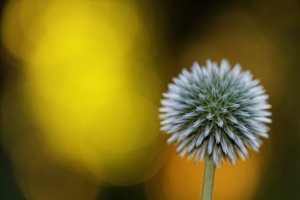
So... as I don't own a cat... (or does the cat 'own' its human?) and therefore I cannot post the obligatory 'cat on internet image'... will the following do?
Recent photo with my 7D @ 100mm, but not the Sigma 50-100mm, rather the Canon 100mm USM macro. Reference point for 'what 100mm can look like'

Paul
Attachments
Upvote
0

9VIII said:cpreston said:Most of the reviews I have seen have not mentioned the focus breathing of the lens. The lens is only a 50-100mm at infinity. When focused to it's minimum distance of about .9m, it's actually closer to a 75mm to 150mm.
That's actually really good to hear, I love using telephoto lenses for closup and near-macro type shots, Sigma seems to be designing with this in mind.
It also means they're using a similar design to the Canon 70-200f2.8, which lets you shoot tight headshots, as opposed to the Nikon 70-200 which breathes in the opposite direction and reduces your ability to focus on small objects.
+1
If I recall, a few years ago Matt Granger had a pretty solid roundup of 70-200s including Canon, Nikon, and (at the time) the new Tamron that had a particular test that highlighted this really well.
Either way, I agree, I like when the focus breathing works in that direction for portrait shots.
Upvote
0

This is not "my" lens but I think Sigma is cool to do this great stuff for APS-C.
And - once again - thank you, Dustin, for puting that lens in the spotlight which it deserves.
And - once again - thank you, Dustin, for puting that lens in the spotlight which it deserves.
Upvote
0
Maximilian said:This is not "my" lens but I think Sigma is cool to do this great stuff for APS-C.
And - once again - thank you, Dustin, for puting that lens in the spotlight which it deserves.
I'm in the same boat. I don't shoot APS-C much, but I'm glad such lenses exist. It might save some people an unnecessary move to full frame, and APS-C bodies do offer a lot of bang for the buck.
Upvote
0

I mostly use my 10-18 and 35 2.0 IS. Would love a 50 because I do like that perspective a lot, but it's too close to 35 to spend the money (IMHO). I LOVE using my 85 1.8, but it's a little long in some cases and in other cases a little more might be nice.
Do I sound like maybe a candidate for this lens? Also, any quick subjective comparison at 85 to the Canon 85 1.8? I do like how Sigma renders colors and contrast and this one does seem like the ****.
Thanks for any insight as I ponder putting my 85 on ebay.
Do I sound like maybe a candidate for this lens? Also, any quick subjective comparison at 85 to the Canon 85 1.8? I do like how Sigma renders colors and contrast and this one does seem like the ****.
Thanks for any insight as I ponder putting my 85 on ebay.
Upvote
0
Cory said:I mostly use my 10-18 and 35 2.0 IS. Would love a 50 because I do like that perspective a lot, but it's too close to 35 to spend the money (IMHO). I LOVE using my 85 1.8, but it's a little long in some cases and in other cases a little more might be nice.
Do I sound like maybe a candidate for this lens? Also, any quick subjective comparison at 85 to the Canon 85 1.8? I do like how Sigma renders colors and contrast and this one does seem like the ****.
Thanks for any insight as I ponder putting my 85 on ebay.
I would say yes, but just be aware that you are moving into a very different size class of lens. It produces beautiful results, but you are going to feel it in your wrists compared to your other class.
Upvote
0
Similar threads
- Replies
- 0
- Views
- 419

- Replies
- 23
- Views
- 3K
D
- Replies
- 3
- Views
- 2K

- Replies
- 28
- Views
- 6K
