
I am going to Africa in February and I know I will need a long range lens for my Canon T2i. I have a 70-200mm f/4 IS USM. Weight is an issue on the trip. I thought about renting a 100-400mm f/4.5-5.6 IS USM but I hate to leave the 70-200 at home since I own it. I would be willing to buy an extender for the 70-200 but I wonder which will give me better wildlife photos. In other words, is the difference (if any) between my 70-200 with an extender and a 100-400 so pronounced that I should rent the 100-400 and leave the 70-200 at home? Also, if the extender route is acceptable, which one should I get? Thanks.π
You are using an out of date browser. It may not display this or other websites correctly.
You should upgrade or use an alternative browser.
You should upgrade or use an alternative browser.
100-400mm f/4.5-5.6 IS USM vs. 70-200mm f/4 IS USM w/ estender
- Thread starter spamis
- Start date
- Status
- Not open for further replies.

Consider renting. The 300mm f4 is pretty awesome with or without the 1.4X, and is noticeably less weight than a 70-200 f2.8. If you have more cash than that rent the 300mm f2.8 and both 1.4X and 2.0X extenders.
Upvote
0

Some of this depends on what camera body you have. I own both lenses and have a 1.4iii extender. The 70-200 f/4 IS is a wonderful lens. It is sharp and can produce wonderful images. With the 1.4x, it is still, in my hands, pretty good. This will slow the focus a bit and will, perhaps, make the viewfinder a bit darker.
The 100-400 will give you more reach than the 70-200 + 1.4 (becomes the reach equivalent of 98-280) and that might be important. I've not used the 2x converter but the effect on IQ would be more significant and even though the effective reach becomes 140-400, the fastest aperture is now f/8 with the 2x. Not all cameras will autofocus with an f/8, and the viewfinder will be even darker, if that is important to you.
There are some lenses that are a bit sharper than the 100-400 but the utility this lens offers for something like a safari is important. And this lens will most than likely autofocus on your camera (although in low light at 400 it does hunt a bit at times - this can be greatly helped by some "prefocusing).
Bottom line, I'd rent the 100-400 or a fixed 400 or fixed 300 rather than using an extender on the 70-200 for this trip.
JP
The 100-400 will give you more reach than the 70-200 + 1.4 (becomes the reach equivalent of 98-280) and that might be important. I've not used the 2x converter but the effect on IQ would be more significant and even though the effective reach becomes 140-400, the fastest aperture is now f/8 with the 2x. Not all cameras will autofocus with an f/8, and the viewfinder will be even darker, if that is important to you.
There are some lenses that are a bit sharper than the 100-400 but the utility this lens offers for something like a safari is important. And this lens will most than likely autofocus on your camera (although in low light at 400 it does hunt a bit at times - this can be greatly helped by some "prefocusing).
Bottom line, I'd rent the 100-400 or a fixed 400 or fixed 300 rather than using an extender on the 70-200 for this trip.
JP
Upvote
0

You must have a zoom on safari. My one and only safari got marvellous photos using just a 7D and the 70-200mm f/4 IS. That combo was too short for bird photos but perfect for animals. A fixed 400mm or 300mm 200 would have been disaster as the only lens. The 70-200 works very well with the 1.4xTC and is quite good with the new 2xTC, but the f/8 won't focus on your camera. I now have the 100-400, and that would be my lens of choice if you have to take a single telephoto lens with you. I don't have the 70-300 L, but it seems a really good lens. You won't be disappointed with using the 1.4x on your 70-200mm.
Of course, a lot depends on where you safari. The more commercial ones will take you very close to the wild life, and the shorter telephotos are necessary. For more specialist safaris where you don't get close, 500 or 600 mm are required, but they will be too long for the more usual trips.
An afterthought. The trips leave at dawn in the morning, and the evening ones return at dusk. In poor light, the super sharp 70-200mm f/4 with 4 stops of IS will run rings around the slower, less sharp and less IS 100-400. Take the 70-200 with you anyway if you are using a crop camera. The 100-400 is better on the FF than crop.
Of course, a lot depends on where you safari. The more commercial ones will take you very close to the wild life, and the shorter telephotos are necessary. For more specialist safaris where you don't get close, 500 or 600 mm are required, but they will be too long for the more usual trips.
An afterthought. The trips leave at dawn in the morning, and the evening ones return at dusk. In poor light, the super sharp 70-200mm f/4 with 4 stops of IS will run rings around the slower, less sharp and less IS 100-400. Take the 70-200 with you anyway if you are using a crop camera. The 100-400 is better on the FF than crop.
Upvote
0

TrabimanUK
In the words of Brian Johnson - "Shoot to thrill!"
February? Intersting time. The grass should be quite high and green, meaning plenty of prey, meaning plenty of predators!
I'm on my 4th next September, and having upgraded for each in terms of cameras and lenses, I would thoroughly recommend the 100-400, as the extra 100mm+ is invaluable. It has quick enough focussing and plenty of reach. I appreciate this is heavier than the 70-200f4, but so worth it. If you start adding extenders to the 70-200, you don't even get 300mm and you start wandering into the realms of lower IQ and smaller apertures, longer exposures and "that killer shot" being blurred, as animals tend not to respond to requests for recomposing a shot, and I've not yet met a hyena that responds to "sit" (I have tried).
My advice would be:
[list type=decimal]
[*]Zoom not prime, as it gives you much greater flexibility.
[*]BUY a used 100-400, use it and then sell it - cheaper than renting, and we made a profit both times, and even if you lose money it will be less than renting and insuring the rented lens.
[*]Get a shoulder stap, e.g. Sun Sniper as that will take the weight off your neck
[*]Get a cheap second body and stick a wide-angle zoom (24-70 or 17-85, even the 18-55 if you've not got a lot of cash) on it as aminals have a habit of sneaking up on you when you've got the wrong lens, and if you are going to Kenya you're likely to get within a few feet, also great for sunsets.
[*]Spend time looking with your eyes, not your camera.
[*]Don't where black or blue if you're going to a tsetse fly area.
[*]ENJOY!
[/list]
At the end of the day, you can never have a long enough lens. I was chatting to a guy last year who was running a 600mm on a 7D. As far as he was concened that was too short (effective 600x1.6 crop = 960mm)!
Grant
I'm on my 4th next September, and having upgraded for each in terms of cameras and lenses, I would thoroughly recommend the 100-400, as the extra 100mm+ is invaluable. It has quick enough focussing and plenty of reach. I appreciate this is heavier than the 70-200f4, but so worth it. If you start adding extenders to the 70-200, you don't even get 300mm and you start wandering into the realms of lower IQ and smaller apertures, longer exposures and "that killer shot" being blurred, as animals tend not to respond to requests for recomposing a shot, and I've not yet met a hyena that responds to "sit" (I have tried).
My advice would be:
[list type=decimal]
[*]Zoom not prime, as it gives you much greater flexibility.
[*]BUY a used 100-400, use it and then sell it - cheaper than renting, and we made a profit both times, and even if you lose money it will be less than renting and insuring the rented lens.
[*]Get a shoulder stap, e.g. Sun Sniper as that will take the weight off your neck
[*]Get a cheap second body and stick a wide-angle zoom (24-70 or 17-85, even the 18-55 if you've not got a lot of cash) on it as aminals have a habit of sneaking up on you when you've got the wrong lens, and if you are going to Kenya you're likely to get within a few feet, also great for sunsets.
[*]Spend time looking with your eyes, not your camera.
[*]Don't where black or blue if you're going to a tsetse fly area.
[*]ENJOY!
[/list]
At the end of the day, you can never have a long enough lens. I was chatting to a guy last year who was running a 600mm on a 7D. As far as he was concened that was too short (effective 600x1.6 crop = 960mm)!
Grant
Upvote
0
TrabimanUK said:February? Intersting time. The grass should be quite high and green, meaning plenty of prey, meaning plenty of predators!
I'm on my 4th next September, and having upgraded for each in terms of cameras and lenses, I would thoroughly recommend the 100-400, as the extra 100mm+ is invaluable. It has quick enough focussing and plenty of reach. I appreciate this is heavier than the 70-200f4, but so worth it. If you start adding extenders to the 70-200, you don't even get 300mm and you start wandering into the realms of lower IQ and smaller apertures, longer exposures and "that killer shot" being blurred, as animals tend not to respond to requests for recomposing a shot, and I've not yet met a hyena that responds to "sit" (I have tried).
My advice would be:
[list type=decimal]
[*]Zoom not prime, as it gives you much greater flexibility.
[*]BUY a used 100-400, use it and then sell it - cheaper than renting, and we made a profit both times, and even if you lose money it will be less than renting and insuring the rented lens.
[*]Get a shoulder stap, e.g. Sun Sniper as that will take the weight off your neck
[*]Get a cheap second body and stick a wide-angle zoom (24-70 or 17-85, even the 18-55 if you've not got a lot of cash) on it as aminals have a habit of sneaking up on you when you've got the wrong lens, and if you are going to Kenya you're likely to get within a few feet, also great for sunsets.
[*]Spend time looking with your eyes, not your camera.
[*]Don't where black or blue if you're going to a tsetse fly area.
[*]ENJOY!
[/list]
At the end of the day, you can never have a long enough lens. I was chatting to a guy last year who was running a 600mm on a 7D. As far as he was concened that was too short (effective 600x1.6 crop = 960mm)!
Grant
I would add a couple of points.
1. Do not buy a 100-400mm without testing it first or seeing very carefully images from it. The good ones are very good, but there are some lemons.
2. The camera and telephoto lens make a very good telescope and I use them a lot for that.
3. The 70-200mm f/4 IS with a 1.4xTC is f/5.6 at 280mm, the same as the 100-400 at 300mm.
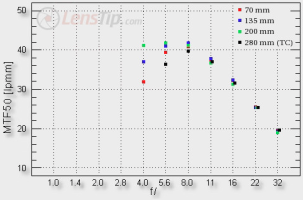
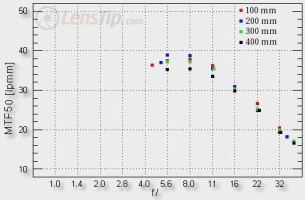
4. The IQ of my copy of the 70-200mm is excellent with the Canon 1.4xTC III, just like that tested in http://www.lenstip.com/25.4-Lens_review-Canon_EF_70-200_mm_f_4L_IS_USM_Image_resolution.html
and is better than the 100-400mm at 300mm, and significantly better at 400mm
http://www.lenstip.com/25.4-Lens_review-Canon_EF_70-200_mm_f_4L_IS_USM_Image_resolution.html
which is what I have found for my two lenses.
I would next time also take two bodies and a 600mm, but that is not the question the op is asking: the question is about the 70-200mm + extended vs the 100-400mm.
Upvote
0
L
Loswr
Guest
AlanF said:4. The IQ of my copy of the 70-200mm is excellent with the Canon 1.4xTC III, just like that tested in http://www.lenstip.com/25.4-Lens_review-Canon_EF_70-200_mm_f_4L_IS_USM_Image_resolution.html
and is better than the 100-400mm at 300mm, and significantly better at 400mm
http://www.lenstip.com/25.4-Lens_review-Canon_EF_70-200_mm_f_4L_IS_USM_Image_resolution.html
One thing to bear in mind when interpreting lens test results in terms of practical application is that lenses perform differently at different subject distances. Lab tests using ISO 12233-type charts are shot at the required distance to fill the frame with the test chart. I'm not sure what chart Lenstip uses, but for most lenses TDP uses a large chart that is framed at ~13 m for a 400mm lens. If you're comparing lenses at significantly different distances, the results may differ.
Also, on which data are you basing the statement, "...and is better than the 100-400mm at 300mm, and significantly better at 400mm?"
When I look at the resolution data at Lenstip, I see that the 70-200/4 IS + 1.4x @ 280mm f/5.6 yields ~36 LP/mm, while the 100-400 @ 400mm f/5.6 is also ~36 LP/mm and at 300mm f/5.6 is ~37 LP/mm. Where does 'significantly better' apply? I'd call them pretty much the same, based on that test - and given that, I'd take the ability to zoom from 100mm to 400mm and hit 400mm natively over a more restriced zoom range and the ability to hit not-quite-300mm with the additional step of adding a TC.
The bare 70-200/4L IS does deliver better resolution than the 100-400L, but not if you have to crop the resulting image down to 25% of it's original size to achieve the framing of a 400mm lens.
Attachments
Upvote
0
The graphs you presented are for MTF charts, not the iso 12223 charts. I don't like the TDP tests with iso charts when they are done at different distances, as I have also written in other threads. You can see clearly from those MTF charts that the 70-200 at f/8 is significantly sharper. I have both lenses and I have no bias. If I want a really sharp image I use the 70-200, if I want maximum length, I take out the 100-400mm. On my one safari, I found the 70-200 on a crop camera just right, as our ranger always got sufficiently close.
Upvote
0
I see this is your first post, so not sure if photography is a big hobby for you, or you are asking for your trip.
I would answer your question like this, it depends on what part of the world you are in. If I were going it would be a rare trip for me. I have looked in to a few safari and they would cost the wife and I in excess of $20k. It would probably be a life time trip for us as there are other similar trips we want to take to.
That said I would rent the 300mm f/2.8 II with both extenders. Since it is a one time trip that cost quit a bit, renting a nice lens is small in comparison. Plus photography is my passion.
If it isn't a life time trip, or if your just looking for a good lens I would go with the 100-400mm. I would prefer the better IQ at the long end.
I would also consider the 70-300mm L, it is more compact however you are not supposed to use an extender on it.
I would answer your question like this, it depends on what part of the world you are in. If I were going it would be a rare trip for me. I have looked in to a few safari and they would cost the wife and I in excess of $20k. It would probably be a life time trip for us as there are other similar trips we want to take to.
That said I would rent the 300mm f/2.8 II with both extenders. Since it is a one time trip that cost quit a bit, renting a nice lens is small in comparison. Plus photography is my passion.
If it isn't a life time trip, or if your just looking for a good lens I would go with the 100-400mm. I would prefer the better IQ at the long end.
I would also consider the 70-300mm L, it is more compact however you are not supposed to use an extender on it.
Upvote
0

I'm currently shooting with a 60D at the moment. The first telephoto lens I purchased was the 50-250. I enjoyed that lens so much I decided to buy another lens of even more reach. I looked at the 300 F4, 100-400, and the 400 F5.6. Being that photography is a hobby for me. I made my decision based soley on photos I could capture vs so-called image quality. From all the research I did the 300 F4 has the best IQ, followed by the 400 F5.6, then the 100-400. Now to be honest there are more than a few SHARP 100-400 floating around out there. I came across a few photos that were sharper than the 400 F5.6 and the 300 F4.
It just depends on who you talk to and what information you come across the web. Now back to my statement about photos I could capture vs. image quality. I'm into all wildlife, so being able to shoot at 100mm in one second then zoom all the way out to 400mm is really an advantage to me versues being at a fixed prime. Of course I'm not knocking primes and would jump on a used 500mm F4 IS for a good price in a heartbeat, but right now I'm doing more than good with the 100-400.
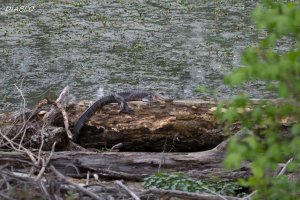
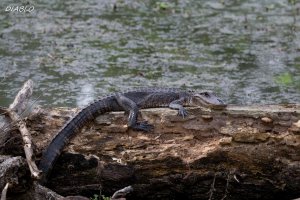
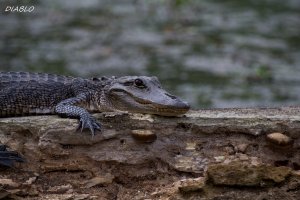
Being able to zoom out to find a bird, lion, etc, then zoom in to 400mm really comes in handy. But don't take my word for it. Look at these photos of an alligator I walked up on. All photos are not cropped.
Plus you can still zoom with your feet. So if 100mm is too tight move back. If 400mm is still to short move up if you can. Thats what I did with this alligator. I took photos at different distances while zooming.
It just depends on who you talk to and what information you come across the web. Now back to my statement about photos I could capture vs. image quality. I'm into all wildlife, so being able to shoot at 100mm in one second then zoom all the way out to 400mm is really an advantage to me versues being at a fixed prime. Of course I'm not knocking primes and would jump on a used 500mm F4 IS for a good price in a heartbeat, but right now I'm doing more than good with the 100-400.
Being able to zoom out to find a bird, lion, etc, then zoom in to 400mm really comes in handy. But don't take my word for it. Look at these photos of an alligator I walked up on. All photos are not cropped.
Plus you can still zoom with your feet. So if 100mm is too tight move back. If 400mm is still to short move up if you can. Thats what I did with this alligator. I took photos at different distances while zooming.
Attachments
Upvote
0
takesome1 said:I see this is your first post, so not sure if photography is a big hobby for you, or you are asking for your trip.
I would answer your question like this, it depends on what part of the world you are in. If I were going it would be a rare trip for me. I have looked in to a few safari and they would cost the wife and I in excess of $20k. It would probably be a life time trip for us as there are other similar trips we want to take to.
That said I would rent the 300mm f/2.8 II with both extenders. Since it is a one time trip that cost quit a bit, renting a nice lens is small in comparison. Plus photography is my passion.
If it isn't a life time trip, or if your just looking for a good lens I would go with the 100-400mm. I would prefer the better IQ at the long end.
I would also consider the 70-300mm L, it is more compact however you are not supposed to use an extender on it.
If you have not been on safari and you do not know what the practicalities are, you should not give advice. Sorry to be blunt, but you could spoil someone's safari. I have the 300mm f/2.8 II with both extenders and I certainly would not take that as my sole lens system. For much of the time you would not have the flexibility to take closer subjects. You MUST take a zoom on safari. Next time I go I will take my 100-400mm and the 300mm + 2xTC with two bodies. That set up would give me the flexibility of zoom, and a wide aperture f/2.8 for low light, and 600mm for birds and distant wild life. If I am restricted to one body and one zoom, it will be a toss up between my 100-400mm and my 70-200mm f/4 plus extenders. If I had the 70-200 f/2.8 + 2xTC, I would take that for use at dawn and dusk at f/2.8 and a lens not far off the 100-400mm with the extender.
Upvote
0
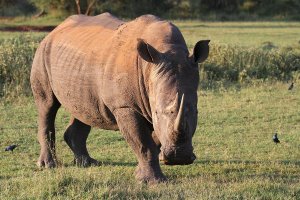
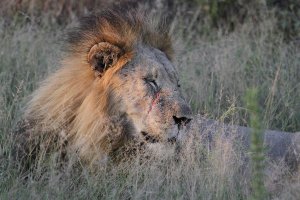
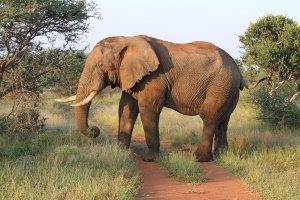
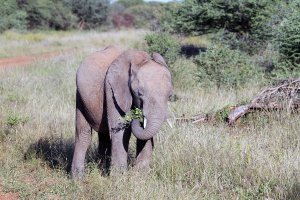
Here are some examples where a 300mm focal length on a crop would have been a disaster. I took these with the Canon 7D and the 70-200mm f/4 IS, in the days before I joined CR and learned how to use the camera! A good ranger gets you very close. All are ar 200mm apart from the baby elephant at 144mm. These are in the wild and not a zoo. The 100-400mm would have been just as good for these, but I was very happy with just the 70-200, The 70-300 L would have been excellent as well, and I might have bought that rather than the 70-200 had it been then available. I am not selling the 70-200 as occasionally I need its quality.
edit: they are all the uncropped image just reduced in pixel size.
edit: they are all the uncropped image just reduced in pixel size.
Attachments
Upvote
0

I have the 70-200 f4 IS USM lens and used it with the 1.4 Extender vs ll all the time. I used the 2X vs ll and found the pics to be a bit soft. I could usually sharpen enough in PS and get good prints. Using a tripod and live view worked better but was not as easy as I would have liked. I bought the 100-400 and am extremely happy with the pics I am getting with it on my 7D. I recommend getting the 7D or 70D and the 100-400 zoom. You could then take 2 cameras and use whatever lenses give you the results you are looking for. If you go with the 70-200 and 1.4 Extender you could crop your
pics and get larger images of your subjects. I would try this before you buy a new lens as you may find this gives you the results you are after.
pics and get larger images of your subjects. I would try this before you buy a new lens as you may find this gives you the results you are after.
Upvote
0
AlanF said:takesome1 said:I see this is your first post, so not sure if photography is a big hobby for you, or you are asking for your trip.
I would answer your question like this, it depends on what part of the world you are in. If I were going it would be a rare trip for me. I have looked in to a few safari and they would cost the wife and I in excess of $20k. It would probably be a life time trip for us as there are other similar trips we want to take to.
That said I would rent the 300mm f/2.8 II with both extenders. Since it is a one time trip that cost quit a bit, renting a nice lens is small in comparison. Plus photography is my passion.
If it isn't a life time trip, or if your just looking for a good lens I would go with the 100-400mm. I would prefer the better IQ at the long end.
I would also consider the 70-300mm L, it is more compact however you are not supposed to use an extender on it.
If you have not been on safari and you do not know what the practicalities are, you should not give advice. Sorry to be blunt, but you could spoil someone's safari. I have the 300mm f/2.8 II with both extenders and I certainly would not take that as my sole lens system. For much of the time you would not have the flexibility to take closer subjects. You MUST take a zoom on safari. Next time I go I will take my 100-400mm and the 300mm + 2xTC with two bodies. That set up would give me the flexibility of zoom, and a wide aperture f/2.8 for low light, and 600mm for birds and distant wild life. If I am restricted to one body and one zoom, it will be a toss up between my 100-400mm and my 70-200mm f/4 plus extenders. If I had the 70-200 f/2.8 + 2xTC, I would take that for use at dawn and dusk at f/2.8 and a lens not far off the 100-400mm with the extender.
I didn't claim to have gone, only that if going on a trip such as this I wouldn't skimp on the gear. For what it cost to go I think that is sound advice. You can take your arrogance elsewhere.
I have done the research through several outfitters. While you may have experience a certain type of safari it doesn't mean your have experience in all. The best source for information would be your guide. The guides I researched were geared for photographers and guided by photographers. They were partially by vehicle but portions of the trip were backpack and backcountry. The recommendations were for a lens like the 300mm with a second body and shorter zoom for the close up ad wide angle shots. Carry both with you at once, after all you are a photographer right?
Now I do not care if I am going to Africa or walking down the street to take pictures of rabbits at the park, there is no way I am using the 100-400mm over the 300mm f/2.8L just because the 100-400mm is a zoom. I will give up the few pictures I miss because they are to close, anything on the long end I can crop and get better results. I seldom take memories, the hobby for me is the photograph itself and the 300mm will do the job.
Never been but this is the list I would take. If this list spoils his safari then he isn't much of a photographer.
Three bodies, 5D III, 1D IV and the T4i for the wife. I would take 4 lenses the 300mm, 70-200mm f/2.8L II, 35mm f/1.4 and 24mm f/1.4. I would take the wife and we would share this load. Monopod and a tripod as well, would tailor the tripod to the trip. Backpacks for both of us to share the load.
So my primary advice is don't skimp if photography is your passion. If you are collecting memories the 100-400mm is a fine lens for doing that and it will make almost all non-photographers happy no matter where you go. In fact it will make many photographers very happy.
Upvote
0

Without jumping into the fray, you can't usually crop with your feet on safari. There are few opportunities to get out of the vehicle, and when you do, you need to get permission. When in camp, you need an armed guard!
I again strongly advise you to DO YOUR HOMEWORK! Check with your safari company, and get them to connect you with prior customers who are into photography. They will be a great resource to gauge optimal length needed. Time of year/location, type of vehicles, number in party, weight restrictions, etc., all critical. Gear costs $$ and that also factors in to the whole thing as well.
I've been twice to Tanzania: March, August-two way different experiences, and needed way different gear.
My advice (well worth what you will pay for it)- take two bodies to minimize lens changes in the field- one on the short side, and one with a long lens. Get the best glass you can afford. Practice using the gear in all conditions, including at night (you may go on a night drive which is way cool). Get familiar with a bean bag.
The other thing about two bodies, if one dies, you won't get stuck missing out on the shot of a lifetime.
I know that this didn't answer your question, but hope it gives you something to think about.
I have a 70-200 f4 is and the 2.8 II version. I actually loved the f4 better- lighter, smaller, easier to tote (saves critical weight and space), and excellent images. I wouldn't put a TC on it (my personal opinion, not advice on that), as I didn't need it. On a crop body, it gives good range except when animals get right up to vehicle.
Enjoy, and keep us up to date so we can vicariously enjoy your safari.
Scott.
I again strongly advise you to DO YOUR HOMEWORK! Check with your safari company, and get them to connect you with prior customers who are into photography. They will be a great resource to gauge optimal length needed. Time of year/location, type of vehicles, number in party, weight restrictions, etc., all critical. Gear costs $$ and that also factors in to the whole thing as well.
I've been twice to Tanzania: March, August-two way different experiences, and needed way different gear.
My advice (well worth what you will pay for it)- take two bodies to minimize lens changes in the field- one on the short side, and one with a long lens. Get the best glass you can afford. Practice using the gear in all conditions, including at night (you may go on a night drive which is way cool). Get familiar with a bean bag.
The other thing about two bodies, if one dies, you won't get stuck missing out on the shot of a lifetime.
I know that this didn't answer your question, but hope it gives you something to think about.
I have a 70-200 f4 is and the 2.8 II version. I actually loved the f4 better- lighter, smaller, easier to tote (saves critical weight and space), and excellent images. I wouldn't put a TC on it (my personal opinion, not advice on that), as I didn't need it. On a crop body, it gives good range except when animals get right up to vehicle.
Enjoy, and keep us up to date so we can vicariously enjoy your safari.
Scott.
takesome1 said:AlanF said:takesome1 said:I see this is your first post, so not sure if photography is a big hobby for you, or you are asking for your trip.
I would answer your question like this, it depends on what part of the world you are in. If I were going it would be a rare trip for me. I have looked in to a few safari and they would cost the wife and I in excess of $20k. It would probably be a life time trip for us as there are other similar trips we want to take to.
That said I would rent the 300mm f/2.8 II with both extenders. Since it is a one time trip that cost quit a bit, renting a nice lens is small in comparison. Plus photography is my passion.
If it isn't a life time trip, or if your just looking for a good lens I would go with the 100-400mm. I would prefer the better IQ at the long end.
I would also consider the 70-300mm L, it is more compact however you are not supposed to use an extender on it.
If you have not been on safari and you do not know what the practicalities are, you should not give advice. Sorry to be blunt, but you could spoil someone's safari. I have the 300mm f/2.8 II with both extenders and I certainly would not take that as my sole lens system. For much of the time you would not have the flexibility to take closer subjects. You MUST take a zoom on safari. Next time I go I will take my 100-400mm and the 300mm + 2xTC with two bodies. That set up would give me the flexibility of zoom, and a wide aperture f/2.8 for low light, and 600mm for birds and distant wild life. If I am restricted to one body and one zoom, it will be a toss up between my 100-400mm and my 70-200mm f/4 plus extenders. If I had the 70-200 f/2.8 + 2xTC, I would take that for use at dawn and dusk at f/2.8 and a lens not far off the 100-400mm with the extender.
I didn't claim to have gone, only that if going on a trip such as this I wouldn't skimp on the gear. For what it cost to go I think that is sound advice. You can take your arrogance elsewhere.
I have done the research through several outfitters. While you may have experience a certain type of safari it doesn't mean your have experience in all. The best source for information would be your guide. The guides I researched were geared for photographers and guided by photographers. They were partially by vehicle but portions of the trip were backpack and backcountry. The recommendations were for a lens like the 300mm with a second body and shorter zoom for the close up ad wide angle shots. Carry both with you at once, after all you are a photographer right?
Now I do not care if I am going to Africa or walking down the street to take pictures of rabbits at the park, there is no way I am using the 100-400mm over the 300mm f/2.8L just because the 100-400mm is a zoom. I will give up the few pictures I miss because they are to close, anything on the long end I can crop and get better results. I seldom take memories, the hobby for me is the photograph itself and the 300mm will do the job.
Never been but this is the list I would take. If this list spoils his safari then he isn't much of a photographer.
Three bodies, 5D III, 1D IV and the T4i for the wife. I would take 4 lenses the 300mm, 70-200mm f/2.8L II, 35mm f/1.4 and 24mm f/1.4. I would take the wife and we would share this load. Monopod and a tripod as well, would tailor the tripod to the trip. Backpacks for both of us to share the load.
So my primary advice is don't skimp if photography is your passion. If you are collecting memories the 100-400mm is a fine lens for doing that and it will make almost all non-photographers happy no matter where you go. In fact it will make many photographers very happy.
Upvote
0
L
Loswr
Guest
AlanF said:The graphs you presented are for MTF charts, not the iso 12223 charts. I don't like the TDP tests with iso charts when they are done at different distances, as I have also written in other threads. You can see clearly from those MTF charts that the 70-200 at f/8 is significantly sharper. I have both lenses and I have no bias. If I want a really sharp image I use the 70-200, if I want maximum length, I take out the 100-400mm. On my one safari, I found the 70-200 on a crop camera just right, as our ranger always got sufficiently close.
Yes, they're MTF - sorry for the assumption about what chart(s) Lenstip uses, with the ISO 12233-type charts that TDP has (and I have, as well), one can measure MTF using Imatest since they have the slant-edge features needed for that type of analysis.
If you have sufficient light for f/8, that's fine - at midday on a safari there's usually plenty of light...and not much action.
For a 'safari' at the San Diego Zoo Safari Park (formerly SD Wild Animal Park, when I lived in the area), a 70-200mm would be idea. Focal length needs depend on where your safari is...in Ngorongoro Crater, a 16-35mm lens on FF would have been fine for some shots, as the lions walked right up to the Land Rover. But on the open Serengeti where a cheetah is chasing a gazelle, 400mm wasn't long enough (even on APS-C).
Definitely agree with the suggestion of asking the guide/outfitter for advice - they will have the most direct knowledge about how close you're likely to get.
Upvote
0
scottkinfw said:I again strongly advise you to DO YOUR HOMEWORK! Check with your safari company, and get them to connect you with prior customers who are into photography. They will be a great resource to gauge optimal length needed.
+1 Best advice given so far
Upvote
0
- Status
- Not open for further replies.
Similar threads

- Replies
- 42
- Views
- 4K


- Replies
- 10
- Views
- 1K
- Replies
- 40
- Views
- 11K
- Replies
- 1
- Views
- 2K