
You are using an out of date browser. It may not display this or other websites correctly.
You should upgrade or use an alternative browser.
You should upgrade or use an alternative browser.
EF 400mm f/4 DO ii in 2025?
- Thread starter Frodo
- Start date

So there was a bunny sitting relatively still in my backyard, thought it'd be a nice opportunity to get a quick lens comparison
70-200 Z + RF 2x at 400, with a roughly 2x crop
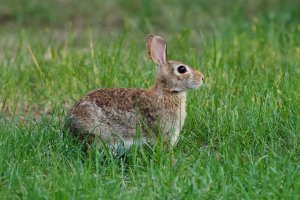
400 DO II + EF 2X III uncropped downsampled to the same size

The 70-200 with the tele seems a good bit sharper despite having 4x as many pixels with the DO+tele (albeit at higher ISO since that's what's necessary to maintain the same exposure). Since a 2x crop is still usable with the R5II and the DO + tele doesn't really seem to be capturing more detail, I find myself wondering if I really need to keep this lens.
I'll need to try some comparisons with the 100-500 as well. But perhaps it is time to downsize my collection a bit.
70-200 Z + RF 2x at 400, with a roughly 2x crop
400 DO II + EF 2X III uncropped downsampled to the same size
The 70-200 with the tele seems a good bit sharper despite having 4x as many pixels with the DO+tele (albeit at higher ISO since that's what's necessary to maintain the same exposure). Since a 2x crop is still usable with the R5II and the DO + tele doesn't really seem to be capturing more detail, I find myself wondering if I really need to keep this lens.
I'll need to try some comparisons with the 100-500 as well. But perhaps it is time to downsize my collection a bit.

Upvote
0
My two copies of the EF 400mm f/4 DOii with the EF 2xTCiii were of similar sharpness to the RF 200-800mm at 800mm, and I always considered the DOs to be slightly soft. The-Digital-Picture's copy seems softer and needs stopping down to f/11 to be sharp. I can buy the 70-200Z new for less than a used DOii, and that would be far more useful for me. I might get one. Thanks for the comparison.So there was a bunny sitting relatively still in my backyard, thought it'd be a nice opportunity to get a quick lens comparison
70-200 Z + RF 2x at 400, with a roughly 2x crop
View attachment 225357
400 DO II + EF 2X III uncropped downsampled to the same size
View attachment 225356
The 70-200 with the tele seems a good bit sharper despite having 4x as many pixels with the DO+tele (albeit at higher ISO since that's what's necessary to maintain the same exposure). Since a 2x crop is still usable with the R5II and the DO + tele doesn't really seem to be capturing more detail, I find myself wondering if I really need to keep this lens.
I'll need to try some comparisons with the 100-500 as well. But perhaps it is time to downsize my collection a bit.
Upvote
0
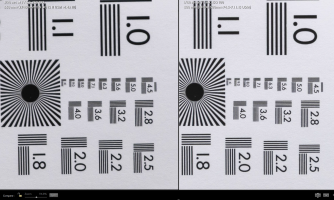
I understand that the 400 DO ii doesn't work well with the 2x teleconverter. I'm very happy with the performance bare and with the 1.4x iii. Here is a comparison of the EF 400 DO ii with the 1.4x iii (560mm) and the RF 100-500 @ 500mm, both wide open. 400 DO at 100%, RF 100-500 at 117% to make sizes comparable). I think they are pretty close, which is good as (at least my copy of) the RF 100-500 is very sharp. The 400 DO plus 1.4x improves a smidgeon half a stop.
Upvote
0
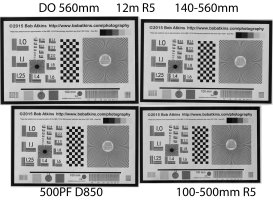
Here is a similar chart I did 5 years ago comparing the 400mm DO ii +1.4xTC vs EF 100-400mm + 1.4xTC vs RF 100-500mm on the R5 vs Nikon 500mm on the D850. The 560mm should outresolve the 500mm by 12%. The DO ii is a smidgeon better than the 100-500mm. The Nikon system is the winner, I'm afraid. But, it doesn't zoom, like the DO ii.
Last edited:
Upvote
0
Hi Alan, your objective analysis (pun intended) is always appreciated.Here is a similar chart I did 5 years ago comparing the 400mm DO ii +1.4xTC vs EF 100-400mm + 1.4xTC vs RF 100-500mm on the R5 vs Nikon 500mm on the D850. The 560mm should outresolve the 500mm by 12%. The DO ii is a smidgeon better than the 100-500mm. The Nikon system is the winner, I'm afraid. But, it doesn't zoom, like the DO ii.
View attachment 225370
One thing that shouldn't be forgotten is the maximum aperture of these lenses.
500/7.1, 500/5.6, 560/8, and the 400 DO at 560/5.6. I sold my RF 100-500 for the increase in aperture of the 400 DO, without the huge expense and bulk of a 400/2.8. I shoot birds in forests and often hit ISO 12,800, which the highest I am prepared to go (processed in PureRaw). The extra stop in shutter speed is important for image sharpness in terms of camera shake snd, especially, subject movement. That the 400 DO plus 1.4x is as sharp as the RF 100-500 at 500mm in good light (!) is a bonus.
Upvote
0
"400 DO II + EF 2X III uncropped downsampled to the same size".So there was a bunny sitting relatively still in my backyard, thought it'd be a nice opportunity to get a quick lens comparison
70-200 Z + RF 2x at 400, with a roughly 2x crop
400 DO II + EF 2X III uncropped downsampled to the same size
The 70-200 with the tele seems a good bit sharper despite having 4x as many pixels with the DO+tele (albeit at higher ISO since that's what's necessary to maintain the same exposure). Since a 2x crop is still usable with the R5II and the DO + tele doesn't really seem to be capturing more detail, I find myself wondering if I really need to keep this lens.
I'll need to try some comparisons with the 100-500 as well. But perhaps it is time to downsize my collection a bit.
Why not the bare lens to compare to the 400mm of the 70-200 and 2x? Then no need to downsample and a better comparison.
Upvote
0
If you measure the diameter of its front lens you will find it to be 95mm (as I did), not the 100mm you would expect for a 400mm f/4. The Canon patent describes it as 392.6mm f/4.12 and diameter 95.6mm. DxOmark has measured the T-stop of the DO to be 5.0, 0.64 stops lower than f/4.0. Conventional lenses like the EF 100-400mm ii (or RF 100-500mm) lose generally about 0.3 stops. So, the DO ii is only 2/3rds stop faster. So, the 400 DO II at 560mm has a T-stop of 7.1 and the RF 100-500mm 8.0. I brought this up in a thread 4 years ago.Hi Alan, your objective analysis (pun intended) is always appreciated.
One thing that shouldn't be forgotten is the maximum aperture of these lenses.
500/7.1, 500/5.6, 560/8, and the 400 DO at 560/5.6. I sold my RF 100-500 for the increase in aperture of the 400 DO, without the huge expense and bulk of a 400/2.8. I shoot birds in forests and often hit ISO 12,800, which the highest I am prepared to go (processed in PureRaw). The extra stop in shutter speed is important for image sharpness in terms of camera shake snd, especially, subject movement. That the 400 DO plus 1.4x is as sharp as the RF 100-500 at 500mm in good light (!) is a bonus.
I should start by saying if this has been discussed here elsewhere please send me to the thread, but an initial search didn't throw anything up. My question is really, is anyone aware of any broad standardised test of T Stops across lenses? It's not meant to be an idle question, I've been to the DxO site which gives the scores for quite a few lenses (although not obviously mapped to EV unless it's a 1:1 mapping?). I'll attach a screen grab which shows (I think) that the Canon EF 24-70mm f2.8L ii USM and the Canon EF 24-70mm f2.8L USM seem to have 1/2EV of different amounts of light hitting...
- MonsMeg
- Replies: 35
- Forum: Canon Lenses
Upvote
0
Because if I'm shooting at 400mm, the 70-200 + 2x is preferable to me. Perfectly sharp, lighter, better AF, better IS. The main purpose the 400 would fit at that point is if I can use a teleconverter to capture even more detail."400 DO II + EF 2X III uncropped downsampled to the same size".
Why not the bare lens to compare to the 400mm of the 70-200 and 2x? Then no need to downsample and a better comparison.
Upvote
0
You make an important point Alan.If you measure the diameter of its front lens you will find it to be 95mm (as I did), not the 100mm you would expect for a 400mm f/4. The Canon patent describes it as 392.6mm f/4.12 and diameter 95.6mm. DxOmark has measured the T-stop of the DO to be 5.0, 0.64 stops lower than f/4.0. Conventional lenses like the EF 100-400mm ii (or RF 100-500mm) lose generally about 0.3 stops. So, the DO ii is only 2/3rds stop faster. So, the 400 DO II at 560mm has a T-stop of 7.1 and the RF 100-500mm 8.0. I brought this up in a thread 4 years ago.
I should start by saying if this has been discussed here elsewhere please send me to the thread, but an initial search didn't throw anything up. My question is really, is anyone aware of any broad standardised test of T Stops across lenses? It's not meant to be an idle question, I've been to the DxO site which gives the scores for quite a few lenses (although not obviously mapped to EV unless it's a 1:1 mapping?). I'll attach a screen grab which shows (I think) that the Canon EF 24-70mm f2.8L ii USM and the Canon EF 24-70mm f2.8L USM seem to have 1/2EV of different amounts of light hitting...
- MonsMeg
- Replies: 35
- Forum: Canon Lenses
I did a quick comparison of my 400 DO with my RF 70-200/4 lens at 200mm (my only other f/4 lens), shooting an A1 cutting mat filling the frames of both lenses under constant sunlight conditions. I shot several images, swapping back and forth between lenses, in aperture priority mode, wide open, ISO 100.
The exposure (shutter speed) was identical in all photos, suggesting the T-stop of both lenses is the same (or at least similar).
Upvote
0
The RF 70-200mm/4 is a mistaken choice for a comparison. It has high vignetting ie significant light loss at midframe to edges. So, what you have done is to show that your DO is as bad as a vignetting lens for transmission. (By the way, the vignetting of the DO 400mm ii is similar to RF 100-500mm at 500mm.)You make an important point Alan.
I did a quick comparison of my 400 DO with my RF 70-200/4 lens at 200mm (my only other f/4 lens), shooting an A1 cutting mat filling the frames of both lenses under constant sunlight conditions. I shot several images, swapping back and forth between lenses, in aperture priority mode, wide open, ISO 100.
The exposure (shutter speed) was identical in all photos, suggesting the T-stop of both lenses is the same (or at least similar).
https://www.the-digital-picture.com...Comp=0&LensComp=1529&CameraComp=1508&Lens=962
The basic problem is that a diffractive optic element has lower transmission, typically 70-95% than a refractive element, typically greater than 98%. The DOii has two elements. The reasons for the light loss are:
- Diffraction Efficiency: Not all light is diffracted into the desired order; some is lost to higher orders or absorbed. This is especially true for binary (2-level) or coarse diffractive structures.
- Fabrication Losses: Etching, nano-structuring, or laser writing used to make diffractive elements may introduce roughness and defects that scatter light.
- Wavelength Dependence: Diffractive optics are designed for specific wavelengths; even small deviations can reduce transmission drastically.
It is better to accept the results from a lab that is set up to do the measurements.
Upvote
0
Very useful information! The reason I sold my RF 100-500L was for the extra light of an f/4 lens. Given the loss of flexibility, increase in weight and occasional issues with specular highlights, the trade-off is marginal. I'm at a photography conference for the rest of the week, so might have the chance to compare with an RF 400/2.8 in terms of sharpness and light transmission.
Upvote
0
The RF 400/2.8 is the answer if you want light gathering (as well as sharpness). I keep having to talk myself out of buying what would be a 3rd 400mm DO ii, and these discussions are useful for me! If I needed a wider lens I would be tempted by the RF 100-300mm f/2.8, and if it was half the price I'd get one anyway.Very useful information! The reason I sold my RF 100-500L was for the extra light of an f/4 lens. Given the loss of flexibility, increase in weight and occasional issues with specular highlights, the trade-off is marginal. I'm at a photography conference for the rest of the week, so might have the chance to compare with an RF 400/2.8 in terms of sharpness and light transmission.
Upvote
0
An RF 400/2.8 is not on my horizon because of size (I wouldn't take it on opportunistic trips and when travelling) and price (wildlife is just one genre I shoot). I definitely wouldn't get EF i and ii versions because of weight. I often shoot with a friend with a Sony 400/2.8 so am well aware of the bulk.
Here are some photos from a week ago, all shot wide open at ISO 12800. So I am definitely light limited - the last one was on the forest floor and very dark. Two friends with Z 100-400 f/4.5-5.6 lenses really struggled in these conditions. An extra stop makes a huge difference between 1/250 and 1/125 sec. The friend with the Sony 400/2.8 didn't get any small bird shots like these, possibly because being more difficult to handhold.


 .
.
Here are some photos from a week ago, all shot wide open at ISO 12800. So I am definitely light limited - the last one was on the forest floor and very dark. Two friends with Z 100-400 f/4.5-5.6 lenses really struggled in these conditions. An extra stop makes a huge difference between 1/250 and 1/125 sec. The friend with the Sony 400/2.8 didn't get any small bird shots like these, possibly because being more difficult to handhold.
.
Last edited:
Upvote
0
Comparing your results with some unshown images from undisclosed Nikon cameras with unknown sensor noise characteristics is rather enigmatic to say the least. Here are some direct comparisons from some years of a male Bell Bird hidden deep in a New Zealand forest with just some green light. The first is from my EOS 5DIV with the 400mm DO ii at f/4, 1/250s iso 12800, pushed in post to +0.5 so equivalent to iso 18000. The second is of the same bird from my wife's EOS 5DSR (a body not famous for low light work) with the EF 100-400mm ii at 400mm and f/5.6, 1/200 s at its maximum iso of 6400 pushed through +1.5 in post so also equivalent to iso 18000 (downsized to that of the lower mpx camera). They are even more dimly lit than yours and the 100-400mm f/5.6 is at a minimally longer exposure of 1/200s vs 1/250s to give the same overall effective exposure at a stop higher f-number than f/4 . That pair was enough to convince me that the DO ii loses the best part of a stop in transmission compared to the EF. It's good you have jogged my memory.


Upvote
0
"Comparing your results with some unshown images from undisclosed Nikon cameras with unknown sensor noise characteristics is rather enigmatic to say the least".
That comment does you no credit, Alan.
I did not intend to make an objective comparison of other cameras, but simply to say how light limiting conditions are. Having photographed in NZ forest you know that. For what its worth here is a photo from a Z9 with a Z 100-400 taken at the same time, but this doesn't prove anything.
That comment does you no credit, Alan.
I did not intend to make an objective comparison of other cameras, but simply to say how light limiting conditions are. Having photographed in NZ forest you know that. For what its worth here is a photo from a Z9 with a Z 100-400 taken at the same time, but this doesn't prove anything.
Attachments

Upvote
0
Postprocessing of that photo could be improved…… For what its worth here is a photo from a Z9 with a Z 100-400 taken at the same time, but this doesn't prove anything.
Upvote
0
There appears to have been no attempt at noise reduction. Even application of Topaz Denoise to that jpeg at this late stage improves it remarkably. The original RAW processed with DxO, Adobe AI noise reduction or Topaz directly to RAW would give an acceptable image.Postprocessing of that photo could be improved…
Attachments

Upvote
0
The whole point of my reply was to provide a direct demonstration to you (and any other reader) about the lower transmission of the DO lens (as measured by DxOMark) lowering its effective aperture by the best part of a stop in order to help you (and anyone else) choose between lenses, which information you appear to have ignored."Comparing your results with some unshown images from undisclosed Nikon cameras with unknown sensor noise characteristics is rather enigmatic to say the least".
That comment does you no credit, Alan.
I did not intend to make an objective comparison of other cameras, but simply to say how light limiting conditions are. Having photographed in NZ forest you know that. For what its worth here is a photo from a Z9 with a Z 100-400 taken at the same time, but this doesn't prove anything.
Upvote
0
"which information you appear to have ignored".
Earlier I wrote in response to you: "Very useful information!" This has given something to think about and I hope to provide an objective comparison later this week between the 400 DO and an RF 400/2.8.
Earlier I wrote in response to you: "Very useful information!" This has given something to think about and I hope to provide an objective comparison later this week between the 400 DO and an RF 400/2.8.
Upvote
0
Similar threads


- Replies
- 40
- Views
- 11K

- Replies
- 1
- Views
- 681

- Replies
- 30
- Views
- 9K
