16-35F4 L IS, Any good?

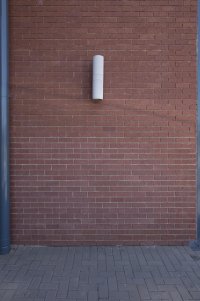
Well here is one shot from many tests doen today...24mmm at f8. The shops 6D camera, mirror lift, Af on, 2sec self timer and IS off...very weird oof pattern...

The intensity and size of the oof area on the right of the horizontal photos vary between close and distant shots and of course apertures and focal length...but at best it seems slight soft on right at 16mm and at worst its like the sample enclosed here....

Moral is test before you buy!
 

Attachments
  • 24mm-at-f8-9736-test-to-mail-smallest.jpg
    24mm-at-f8-9736-test-to-mail-smallest.jpg
    1.2 MB · Views: 253
Upvote 0
Ivan, thanks for this thread; it was very helpful. I had the 16-35 f2.8 and now have the version II but I don't really use it as it doesn't excite me. I see a trade in the near future. Thanks to everyone else who contributed on the 16-35 f4.
 
Upvote 0
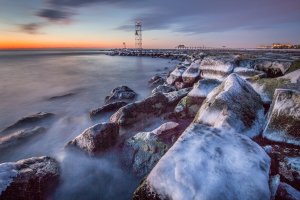
I bought the 16-35mm F/4 IS last year and never looked back. The IS is crazy, I didn't think I'd use it much on a wide-angle lens, but I've been going out to shoot landscapes in the blue hour after sunset and I haven't even had to use my tripod. I get my tripod out of my car and carry it to my location, and then end up pulling my camera off it and getting creative with my angles. To be able to shoot at 1/2 of a second handheld at 16mm and still get sharp photos without a tripod is truly freeing, and you don't have to worry about adjusting your tripod or repositioning for the next shot.

You can get much better photos out of the 16-35mm F/4 IS just because you won't need to use a tripod nearly as often. The IS keeps the frame steady and makes composing handheld a lot easier. Plus, the angles you can find when you're not attached to a tripod can make some really interesting results.

And all of that's ignoring the absolutely stellar image quality-- I'd say it's in leagues with my 70-200mm F/2.8 IS II
 
Upvote 0
Here's what impresses me most about this lens. It's about as good wide open as it is stopped down. The corners don't have much improvement because there's not much better they can be even at f4.

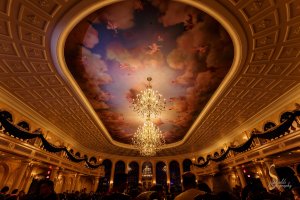
#1) Beast's Castle (Magic Kingdom, Disneyworld)
@16mm, Wide open at f4. ISO 100. 3/4 second exposure. Tabletop tripod. IS disengaged. Remote trigger. Canon 6D

People move, so don't go by the bottom of the frame. Look at the edges of the ceiling. Granted it's a 1MB scaled down JPG file from the RAW original.

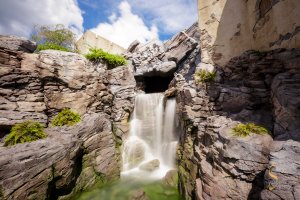
#2) Waterfalls a the Maelstrom in Epcot, Disneyworld.
@16mm, f11, ISO 100, 15 sec exposure. 10 Stop ND Filter + BW Kassemann Cir Pol (Appx 2 more stops of ND) IS disengaged. Manfrotto tripod. Remote trigger. Canon 6D
 

Attachments

  • Disney2014-235.jpg
    Disney2014-235.jpg
    1 MB · Views: 233
  • Disney2014-149.jpg
    Disney2014-149.jpg
    1.2 MB · Views: 257
Upvote 0
Aww, you guys! Just when I was so sure to get the f2.8L everyone on the internet says that the f4L IS absolutely blows it out of the water. :( Back to the drawing board (do I really need IS? is the 1-stop DOF very noticeable?) :o :'(
 
Upvote 0
jhaces said:
Aww, you guys! Just when I was so sure to get the f2.8L everyone on the internet says that the f4L IS absolutely blows it out of the water. :( Back to the drawing board (do I really need IS? is the 1-stop DOF very noticeable?) :o :'(

One stop on a wide? No. I know, I know.... there are some people on here who will argue how the extra stop saved this shot and blah blah. But with IS, your extra 1 stop is largely mitigated ESPECIALLY on a wide. Why? Because the DOF on a wide lens is already comparably huge to say a 50mm or other standard focal length. 2.8 to 4 is not going to be a load of difference on a wide unless you're shooting a lot of things very close up with it. Most people are looking at this focal length for landscapes where your focus will tend to favor points farther from the sensor plane than they will closer, making DOF even less a problem. So again, I'll tout the "Get the lens with the BEST edge to edge sharpness when hunting for a wide" opinion. If you really want shallow DOF for effect, then shooting a wide zoom like these isn't what you want anyway. a 24mm 1.4 prime would probably better suit you.
 
Upvote 0
PureClassA said:
If you really want shallow DOF for effect, then shooting a wide zoom like these isn't what you want anyway. a 24mm 1.4 prime would probably better suit you.
Yeah, I was thinking more about the 1 stop in terms of speed, to be honest. Subject isolation is hard at that fdistance. And for what I read, the IS on this one is a beast. I guess I was already pretty sold on the f4, perhaps my last hurdle is just plain old "waaaaah but-but-but the other lens goes all the way to 2.8! :'( "

Sorry, GAS makes me irrational :D
 
Upvote 0
JDS said:
Can anyone please post sunburst shots of the 16-35 F4 at f16 or f22? I want to see how it stacks up to that of the 2.8 II version :)
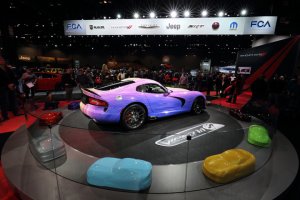
Here is an example at f/16. I think this will be my go-to lens for car shows.

I find the 16-35mm f/4 to be sharper at the edges than my 17-40mm. I enjoyed my 17-40mm, but now I have a hard time justifying keeping it. I thought I would miss the extra 5mm at the long end, but I don't. Now to sell my 17-40mm. Too bad it sounds like the prices have taken a hit since people are switching to the 16-35mm f/4.
 

Attachments

  • 1635f4cr.jpg
    1635f4cr.jpg
    293.4 KB · Views: 238
Upvote 0
Aww, you guys! Just when I was so sure to get the f2.8L everyone on the internet says that the f4L IS absolutely blows it out of the water. :( Back to the drawing board (do I really need IS? is the 1-stop DOF very noticeable?) :o :'(

One stop on a wide? No. I know, I know.... there are some people on here who will argue how the extra stop saved this shot and blah blah. But with IS, your extra 1 stop is largely mitigated ESPECIALLY on a wide. Why? Because the DOF on a wide lens is already comparably huge to say a 50mm or other standard focal length. 2.8 to 4 is not going to be a load of difference on a wide unless you're shooting a lot of things very close up with it. Most people are looking at this focal length for landscapes where your focus will tend to favor points farther from the sensor plane than they will closer, making DOF even less a problem. So again, I'll tout the "Get the lens with the BEST edge to edge sharpness when hunting for a wide" opinion. If you really want shallow DOF for effect, then shooting a wide zoom like these isn't what you want anyway. a 24mm 1.4 prime would probably better suit you.

Specking from a pro landscaper's prospective, extreme low lighting situations is where the extra stop of light is most likely to be missed. Landscape's that include the Milky Way are regularly shot with wide angle lenses, wide open at high ISO's, the extra stop would mean capturing images at say ISO 6400 rather than ISO 3200, which obviously has a knock on effect on noise levels in images where it is already problematic.
 
Upvote 0
I sold my f/2.8 to buy my f/4. (Even trade for a better lens!...that never happens.). No looking back...If you have used both you just put one down and use the other because it's so much better. I know that I did! 8)
 
Upvote 0
bitm2007 said:
Aww, you guys! Just when I was so sure to get the f2.8L everyone on the internet says that the f4L IS absolutely blows it out of the water. :( Back to the drawing board (do I really need IS? is the 1-stop DOF very noticeable?) :o :'(

One stop on a wide? No. I know, I know.... there are some people on here who will argue how the extra stop saved this shot and blah blah. But with IS, your extra 1 stop is largely mitigated ESPECIALLY on a wide. Why? Because the DOF on a wide lens is already comparably huge to say a 50mm or other standard focal length. 2.8 to 4 is not going to be a load of difference on a wide unless you're shooting a lot of things very close up with it. Most people are looking at this focal length for landscapes where your focus will tend to favor points farther from the sensor plane than they will closer, making DOF even less a problem. So again, I'll tout the "Get the lens with the BEST edge to edge sharpness when hunting for a wide" opinion. If you really want shallow DOF for effect, then shooting a wide zoom like these isn't what you want anyway. a 24mm 1.4 prime would probably better suit you.

Specking from a pro landscaper's prospective, extreme low lighting situations is where the extra stop of light is most likely to be missed. Landscape's that include the Milky Way are regularly shot with wide angle lenses, wide open at high ISO's, the extra stop would mean capturing images at say ISO 6400 rather than ISO 3200, which obviously has a knock on effect on noise levels in images where it is already problematic.

Well, sure... but if you're really trying to shoot for astro (as we mentioned earlier) 2.8 is still too slow. You can still do it, yes....but I'm reaching for f1.4 if I'm shooting sky. That new Sig 24mm 1.4 will sell like crazy for it. I really don't think a major intended purpose of either Canon wide zoom is really astro.
 
Upvote 0
slclick said:
Except for specialized shooting situations, I have yet to find anyone who isn't at the very least satisfied with the 16-35 f/4L. Lenses like this don't come along very often.

+1, it's REALLY good. I notice a slightly lower hitrate in my indoor shots when tracking, I guess because of the f4. But I would use the 2470 there anyway. Went out with it for the first time today and it's fantastic!

I was too close and my son kicked the lens/camera and gave me a black eye, but it wasn't even a scratch on the gear.

A split second after the hit, shot at 1/1000s.
smash.jpg


1635_3.jpg
 
Upvote 0
jhaces said:
Aww, you guys! Just when I was so sure to get the f2.8L everyone on the internet says that the f4L IS absolutely blows it out of the water. :( Back to the drawing board (do I really need IS? is the 1-stop DOF very noticeable?) :o :'(

You're not going to be getting a very shallow depth of field at these focal lengths, anyways. The IS would trump the usefulness of f/2.8 in most cases.

If you must have f/2.8, get the Tokina 16-28. It's easily sharper than the Canon f/2.8 II and can be had for less than half the price! I had one and it was easily sharper than 2 copies of the Canon f/2.8 II had (which is also notorious for a high degree of copy-copy variation). It's image quality is close to that of the F/4 IS. Its only weaknesses are that it's heavier, doesn't take conventional filters and is prone to flare.

Tokina made a very underrated lens, but it made no sense for me to keep it after I got the Canon f/4 IS.
 
Upvote 0
Well, sure... but if you're really trying to shoot for astro (as we mentioned earlier) 2.8 is still too slow. You can still do it, yes....but I'm reaching for f1.4 if I'm shooting sky. That new Sig 24mm 1.4 will sell like crazy for it. I really don't think a major intended purpose of either Canon wide zoom is really astro

True and the 16-35mm f4 complimented by a fast prime is the option I've opted for, but primes aren't to everybody's taste. If you prefer zooms f2.8 is the fastest option available for full frame camera's.
 
Upvote 0