24-70/2.8 Canon or Tamron: Which did you choose and why?

Radiating said:
The problem with this lens is the bokeh, contrast and color. They're terrible.

Notice the mushiness?

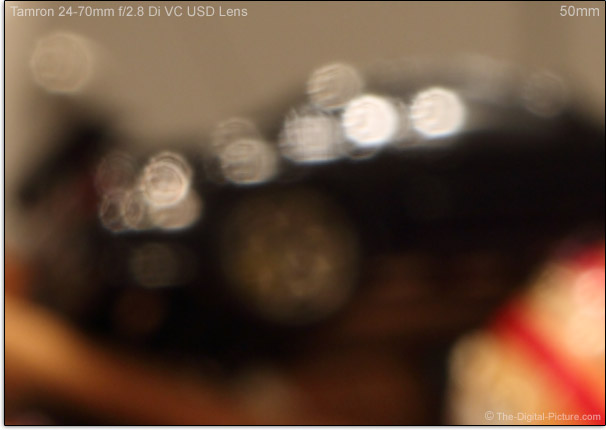
What I notice most is the particularly crappy OOF highlights on the Tamron 24-70. The comparison you posted is making the argument against you.

Radiating said:
The 24-70mm II makes bad photos.

Yes, in the wrong hands it certainly can make bad photos. That's not the fault of the lens, but rather the person holding the camera. It seems that, unfortunately, you couldn't manage to use the lens to its full potential.

Radiating said:
Hope that helps, from somebody who's chose between the two regardless of price.

Since the Canon 24-70 II costs far more than the Tamron, anyone who chose the Canon could obviously have afforded the Tamron, and made that choice regardless of price.

The Tamron seems to be a good lens, and if you require a 24-70/2.8 with image stabilization, or require a 24-70/2.8 but can't afford the Canon MkII, the Tamron is a great choice.
 
Upvote 0
Radiating said:
JumboShrimp said:
I am so much on the fence between the Canon 24-70/2.8L II and the Tamron 24-70/2.8 VC. Would love to hear why you chose one over the other and if you are still happy with your decision. I am very aware of the physical differences between the two and the various test reports out there, but I am more interested in "how they feel and taste", if you know what I mean ... Comments?

I'm probably on the other side of the fence from most people here, as for me I'm not on a budget. I just chose the best lenses that are available.

I started out with the Canon 24-70mm f/2.8 II, this lens had been so hyped up that I was one of the first to line up to buy it. After all such an expensive lens had to be good.

It's worth mentioning that the 24-70mm f/2.8 II is the only apochromatic normal zoom lens made for full frame cameras. Apochromatic lenses are usually reserved for lenses you've heard a friend of a friend try at a show. They tend to cost $5,000+ and are made of pure moon rock's - I've heard. I hate color fringing and it's my least favorite image quality facet and so I jumped on the 24-70mm f/2.8 II like a kid in a candy store.

The 24-70mm II makes bad photos.

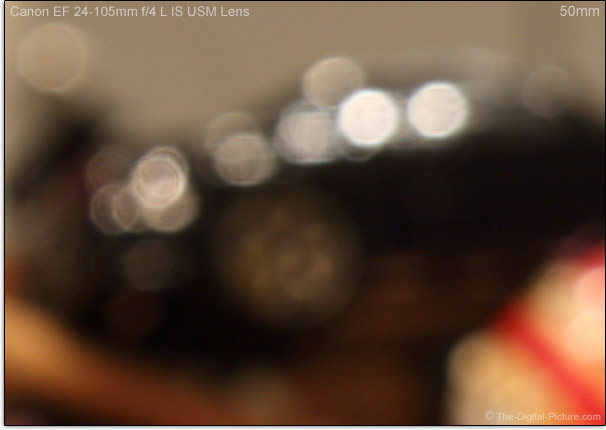
The problem with this lens is the bokeh, contrast and color. They're terrible. When they designed the lens, they messed up the correction for spherical aberration. This causes the bokeh to melt into it's surroundings and areas that are slightly out of focus to be mushy. You can notice a visible lack of contrast and color comparisons between this lenses bokeh and any other lens in this range.

Canon 24-70mm II:

Canon-24-70mm-II-Lens-50mm.jpg


24-70mm Tamron:

Tamron-24-70mm-Lens-50mm.jpg


24-105mm Canon

Canon-24-105mm-Lens-50mm.jpg


Notice the mushiness?

I have never seen a lens make scenes look so bleached and ugly.

If you look at sample photos you can see this same effect.

Images from this lens look flat.

The 24-70mm mk I f/2.8 from Canon was worse as it has weird bokeh and the Nikon 24-70mm f/2.8 isn't much better (though it's the best out of the 3), but the Tamron 24-70mm VC really has this look that pops. It has more pop than the Canon 24-105mm, which is a lens that has a lot of pop.

The Tamron 24-70mm VC just has better color contrast and pop than any other normal zoom on the planet. Images from it simply look better.

Images from the Canon BORE me. They look pathetically lame and make me want to throw up. I'm a pro photo editor (I edited for Harper's Bazaar before I ever touched a DSLR) and I can manipulate color and contrast and character and texture extremely well so I can fix the flatness issue, but again the flatness is only in the slightly out of the focus to very out of focus areas. That means that to fix it you need to adjust these areas independently. The Tamron does not have this problem and so delivers good images without spot editing.

In the end it was easier to fix the Tamron's color fringing over the Canon's poor rendering of everything more than slightly out of focus, so I went with the Tamron.

If you have any doubts in what I'm saying take a look at this image:

<image used by Radiating without permission, removed by mod at copyright holder's request>

Here we have a dog. Notice how his fur is perfectly contrasty and has nice sharp edges. Now notice the grass. Notice the dark areas of the grass. They are grey. The Canon 24-70mm f/2.8 II is a bad lens that makes bad photos. You should not buy it.

I bought the Tamron as a backup lens to use in emergency low light situations that required f/2.8 with VC and to stay in the bag 99% of the time and the Canon as my pride and joy. The Canon actually took such unusually bad photos that I had to stop, wait a second and think to myself "what in the world is wrong with this lens that is supposed to be amazing?". I wasn't even prepared to think that the Canon 24-70mm II took bad photos but they were so bad, I couldn't avoid noticing the problem, despite already making up my mind that I liked it. And the Tamron schooled it so badly that I actually preferred it after I had used a label maker to label it "For emergency low light use only".

Hope that helps, from somebody who's chose between the two regardless of price.

wow...i can't tell if you work for nikon or tamron....probably tamron. sure, the tamron is a nice lens, but to say the canon is "bad"...you make your bias so obvious.
 
Upvote 0
My last post was not an opinion. It is a fact that is easily demonstrated in back to back comparisons:

2470vcvsii.jpg


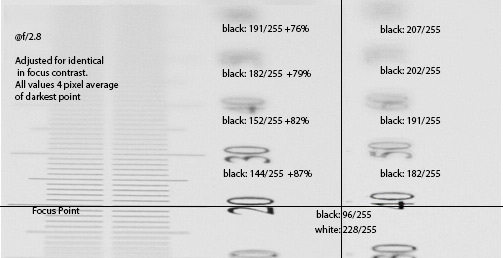
Right image is from the 24-70mm f/2.8 II L, left image is for comparison to illustrate the problem.

The Canon 24-70mm f/2.8 II L has nearly half as much pop than a comparable lens in the out of focus areas, when the in focus areas are set to an identical level of contrast. That last part is important because out of camera images will show different initial levels of contrast, but every image editor has contrast adjustment so it's easy to adjust the in focus areas. Notice how each number retains a similar level of detail, so we're not experiencing more blur we're experiencing substantial glowiness and lack of pop in the out of focus areas in the Canon 24-70mm f/2.8 II. This makes images look bland or forces you to crunch the subject, and the fact that this effect creeps up so incredibly quickly with the first number in the background already showing glow, means even areas that are slightly out of focus will basically lose half their contrast. It's a very significant effect.

Note for the math impaired: we subtract the black level from the white level to calculate contrast in the above diagram.

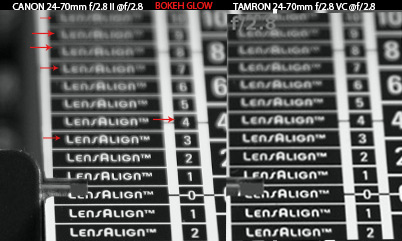
Another example of the bokeh glow that I threw together in two seconds, of the reduced pop on the Canon 24-70mm f/2.8 II, again adjusted so that the contrast of the in focus area matches:

2470iivstam.jpg


Note, both of these are @70mm f/2.8

Again these are both at f/2.8 and we are not changing the amount of background blur, if you look at the 10 and 8 they both have the same level of detail, but the Canon adds a "halo" around transitions between contrasting areas, which should not be there. (It may be worth mentioning that in comparisons I noticed slightly less of this effect between ultra wide and wide focal lengths - ie the Canon showed slightly less problems between 24-29mm)

As for those people who are saying that the Tamron's out of focus HIGHLIGHT circles are bad, yes they are worse, but in practice this means very little. Unlike telephoto lenses normal lenses render OOF highlights much smaller, so we need magnification to even see their details usually (such as the previous post's examples). Only OOF highlights that aren't blown out will show any texture so really we are talking about something that is rarely seen. To even see OOF highlight texture issues on the Tamron I had to focus all the way down to macro distance and take pictures of chandeliers and then adjust the exposure so the OOF highlight wasn't blown out and wasn't too dim (which is a very narrow range, and changes drastically if you move the camera slightly), and even then I had to zoom in to see the details, they weren't visible in that test at screen resolution. When I was testing the issue it took a lot of work to make it appear and it's just not that common in the real world. I can't even remember taking a photo with the issue in the last 3 months. That's a much more specific problem than the issue with the Canon, which is basically everywhere, and the Canon has some significant onion bokeh too

You can chose to ignore this issue or you may even like it, but I notice it in most photos I see from the Canon f/2.8 II. It's a very unusual issue not found in many other lenses. (Also it isn't as bad between 24-29mm for the record) It's up to you, but I have a very strong preference and I think seeing unusual amounts of grey and strong glow in the background makes things look very washed out.
 
Upvote 0
I chose the Canon but somewhat regret not getting the Tamron instead. I believe the Canon does produces better images, and from what I have seen from 95% of comparisons, it does.

However, IQ aside, my biggest gripe with the Canon is the quality control for this particular lens. I am on my fourth copy and it's still far from perfect. My first copy had a decentered element; my second copy clicked while zooming; my third copy clicked and I wasn't happy with its image quality; and now my fourth copy has a slight clicking sound as well.

I have given up trying to get one without any flaws because I don't believe they exist.


Another issue I have with Canon is their increasingly poor customer service. I spoke with a lady on the phone from Canon Canada after I sent my first copy of the 24-70 in for repair because of the decentered element and had it returned completely the same, and she basically told me I was wasting her time and Canon's technicians' time, claiming that I could never possibly test a lens as accurately as their technicians could.

My experience told me that Canon's customer service cannot be trusted. Now, to the misfortune of my local camera store, I now thoroughly test any lens immediately after purchase to make sure its within spec and I am 100% satisfied; if I am not happy it simply goes back and I get them to give me another copy, and I repeat this until I am happy. I feel dirty doing this because its not the store's fault that I'm obliterating their inventory, but it's really my only recourse to protect myself when dealing with a company like Canon now.

Tamron offers a substantially better warranty, is half the cost, and has a much faster turn-around time for repairs. I know Tamron has had their on quality control issues with their 24-70, but I really wonder if I would really have had to go through four different copies of their lens to be happy.
 
Upvote 0
adhocphotographer said:
Neither... I kept my 24-105, and bought a 24 f/1.4. I am keeping my zoom for travel/ease, and getting primes for quality! :) Though I can see that once i get all my primes (just a couple more) I will be facing the same dilemma! :)

+1 But I can't see myself getting a 24-70 unless my needs drastically change which I expect they won't.
 
Upvote 0
Radiating said:
My last post was not an opinion. It is a fact that is easily demonstrated in back to back comparisons:

2470vcvsii.jpg


Right image is from the 24-70mm f/2.8 II L, left image is for comparison to illustrate the problem.

The Canon 24-70mm f/2.8 II L has nearly half as much pop than a comparable lens in the out of focus areas, when the in focus areas are set to an identical level of contrast. That last part is important because out of camera images will show different initial levels of contrast, but every image editor has contrast adjustment so it's easy to adjust the in focus areas. Notice how each number retains a similar level of detail, so we're not experiencing more blur we're experiencing substantial glowiness and lack of pop in the out of focus areas in the Canon 24-70mm f/2.8 II. This makes images look bland or forces you to crunch the subject, and the fact that this effect creeps up so incredibly quickly with the first number in the background already showing glow, means even areas that are slightly out of focus will basically lose half their contrast. It's a very significant effect.

Note for the math impaired: we subtract the black level from the white level to calculate contrast in the above diagram.

Another example of the bokeh glow that I threw together in two seconds, of the reduced pop on the Canon 24-70mm f/2.8 II, again adjusted so that the contrast of the in focus area matches:

2470iivstam.jpg


Note, both of these are @70mm f/2.8

Again these are both at f/2.8 and we are not changing the amount of background blur, if you look at the 10 and 8 they both have the same level of detail, but the Canon adds a "halo" around transitions between contrasting areas, which should not be there. (It may be worth mentioning that in comparisons I noticed slightly less of this effect between ultra wide and wide focal lengths - ie the Canon showed slightly less problems between 24-29mm)

As for those people who are saying that the Tamron's out of focus HIGHLIGHT circles are bad, yes they are worse, but in practice this means very little. Unlike telephoto lenses normal lenses render OOF highlights much smaller, so we need magnification to even see their details usually (such as the previous post's examples). Only OOF highlights that aren't blown out will show any texture so really we are talking about something that is rarely seen. To even see OOF highlight texture issues on the Tamron I had to focus all the way down to macro distance and take pictures of chandeliers and then adjust the exposure so the OOF highlight wasn't blown out and wasn't too dim (which is a very narrow range, and changes drastically if you move the camera slightly), and even then I had to zoom in to see the details, they weren't visible in that test at screen resolution. When I was testing the issue it took a lot of work to make it appear and it's just not that common in the real world. I can't even remember taking a photo with the issue in the last 3 months. That's a much more specific problem than the issue with the Canon, which is basically everywhere, and the Canon has some significant onion bokeh too

You can chose to ignore this issue or you may even like it, but I notice it in most photos I see from the Canon f/2.8 II. It's a very unusual issue not found in many other lenses. (Also it isn't as bad between 24-29mm for the record) It's up to you, but I have a very strong preference and I think seeing unusual amounts of grey and strong glow in the background makes things look very washed out.

Some people really hate glow. Diffractive optics can produce this type of effect as well, one reason I would not consider the 70-300DO for instance: http://www.the-digital-picture.com/Reviews/Canon-EF-70-300mm-f-4.5-5.6-DO-IS-USM-Lens-Review.aspx
 
Upvote 0
Radiating said:
My last post was not an opinion. It is a fact that is easily demonstrated in back to back comparisons:

2470vcvsii.jpg


Right image is from the 24-70mm f/2.8 II L, left image is for comparison to illustrate the problem.

The Canon 24-70mm f/2.8 II L has nearly half as much pop than a comparable lens in the out of focus areas, when the in focus areas are set to an identical level of contrast. That last part is important because out of camera images will show different initial levels of contrast, but every image editor has contrast adjustment so it's easy to adjust the in focus areas. Notice how each number retains a similar level of detail, so we're not experiencing more blur we're experiencing substantial glowiness and lack of pop in the out of focus areas in the Canon 24-70mm f/2.8 II. This makes images look bland or forces you to crunch the subject, and the fact that this effect creeps up so incredibly quickly with the first number in the background already showing glow, means even areas that are slightly out of focus will basically lose half their contrast. It's a very significant effect.

Note for the math impaired: we subtract the black level from the white level to calculate contrast in the above diagram.

Another example of the bokeh glow that I threw together in two seconds, of the reduced pop on the Canon 24-70mm f/2.8 II, again adjusted so that the contrast of the in focus area matches:

2470iivstam.jpg


Note, both of these are @70mm f/2.8

Again these are both at f/2.8 and we are not changing the amount of background blur, if you look at the 10 and 8 they both have the same level of detail, but the Canon adds a "halo" around transitions between contrasting areas, which should not be there. (It may be worth mentioning that in comparisons I noticed slightly less of this effect between ultra wide and wide focal lengths - ie the Canon showed slightly less problems between 24-29mm)

As for those people who are saying that the Tamron's out of focus HIGHLIGHT circles are bad, yes they are worse, but in practice this means very little. Unlike telephoto lenses normal lenses render OOF highlights much smaller, so we need magnification to even see their details usually (such as the previous post's examples). Only OOF highlights that aren't blown out will show any texture so really we are talking about something that is rarely seen. To even see OOF highlight texture issues on the Tamron I had to focus all the way down to macro distance and take pictures of chandeliers and then adjust the exposure so the OOF highlight wasn't blown out and wasn't too dim (which is a very narrow range, and changes drastically if you move the camera slightly), and even then I had to zoom in to see the details, they weren't visible in that test at screen resolution. When I was testing the issue it took a lot of work to make it appear and it's just not that common in the real world. I can't even remember taking a photo with the issue in the last 3 months. That's a much more specific problem than the issue with the Canon, which is basically everywhere, and the Canon has some significant onion bokeh too

You can chose to ignore this issue or you may even like it, but I notice it in most photos I see from the Canon f/2.8 II. It's a very unusual issue not found in many other lenses. (Also it isn't as bad between 24-29mm for the record) It's up to you, but I have a very strong preference and I think seeing unusual amounts of grey and strong glow in the background makes things look very washed out.

This is one of the weirdest arguments I´ve ever come across. I totally disagree and think you have made a grave mistake in your concept. Why should high contrast in unsharp areas be a quality sign? Quite the contrary. A lens with good bokeh should exactly do what you describe and show in this image: To soften shapes quickly and blend them with uniform brightness distribution. Sure this will lower contrast. This is exactly what helps in focus objects "pop". I see in your image a much quicker transition into softness in the Canon which is good and which for me is one thing Canon generally does well - high MTF in the sharpness plane AND a soft bokeh. The Tamron clearly has worse bokeh, or maybe it has a smaller effective aperture than the Canon with more depth of field.
 
Upvote 0
Radiating said:
My last post was not an opinion. It is a fact that is easily demonstrated in back to back comparisons:

2470vcvsii.jpg


Right image is from the 24-70mm f/2.8 II L, left image is for comparison to illustrate the problem.

The Canon 24-70mm f/2.8 II L has nearly half as much pop than a comparable lens in the out of focus areas, when the in focus areas are set to an identical level of contrast. That last part is important because out of camera images will show different initial levels of contrast, but every image editor has contrast adjustment so it's easy to adjust the in focus areas. Notice how each number retains a similar level of detail, so we're not experiencing more blur we're experiencing substantial glowiness and lack of pop in the out of focus areas in the Canon 24-70mm f/2.8 II. This makes images look bland or forces you to crunch the subject, and the fact that this effect creeps up so incredibly quickly with the first number in the background already showing glow, means even areas that are slightly out of focus will basically lose half their contrast. It's a very significant effect.

Note for the math impaired: we subtract the black level from the white level to calculate contrast in the above diagram.

Another example of the bokeh glow that I threw together in two seconds, of the reduced pop on the Canon 24-70mm f/2.8 II, again adjusted so that the contrast of the in focus area matches:

2470iivstam.jpg


Note, both of these are @70mm f/2.8

Again these are both at f/2.8 and we are not changing the amount of background blur, if you look at the 10 and 8 they both have the same level of detail, but the Canon adds a "halo" around transitions between contrasting areas, which should not be there. (It may be worth mentioning that in comparisons I noticed slightly less of this effect between ultra wide and wide focal lengths - ie the Canon showed slightly less problems between 24-29mm)

As for those people who are saying that the Tamron's out of focus HIGHLIGHT circles are bad, yes they are worse, but in practice this means very little. Unlike telephoto lenses normal lenses render OOF highlights much smaller, so we need magnification to even see their details usually (such as the previous post's examples). Only OOF highlights that aren't blown out will show any texture so really we are talking about something that is rarely seen. To even see OOF highlight texture issues on the Tamron I had to focus all the way down to macro distance and take pictures of chandeliers and then adjust the exposure so the OOF highlight wasn't blown out and wasn't too dim (which is a very narrow range, and changes drastically if you move the camera slightly), and even then I had to zoom in to see the details, they weren't visible in that test at screen resolution. When I was testing the issue it took a lot of work to make it appear and it's just not that common in the real world. I can't even remember taking a photo with the issue in the last 3 months. That's a much more specific problem than the issue with the Canon, which is basically everywhere, and the Canon has some significant onion bokeh too

You can chose to ignore this issue or you may even like it, but I notice it in most photos I see from the Canon f/2.8 II. It's a very unusual issue not found in many other lenses. (Also it isn't as bad between 24-29mm for the record) It's up to you, but I have a very strong preference and I think seeing unusual amounts of grey and strong glow in the background makes things look very washed out.

http://matthewduclos.files.wordpress.com/2013/10/cinema-eos-lenses.pdf

and here is a paper by Larry Thorpe on the design of Canon´s high end cinema lenses, on page 5 there is some interesting stuff which is in line with my argument above.
 
Upvote 0
The polarization in this topic to me clearly shows that there is a big difference in people's personal preference when it comes to subjective lens qualities that determine the way a lens 'draws'. Sometimes a lens that is technically imperfect makes better pictures, something that is personal and difficult to quantify. Maybe the 24-70 II is too perfect, too clinical?
 
Upvote 0
If both lenses were exactly the same price, chances are you'd go with the Canon.

You don't need my opinion on the product's performance as there's some pretty comprehensive reviews on the lens with one caveat I'll mention later.

I went for the Canon. Why? Well, do L series lenses ever actually lose out in terms of re-sale value? The MKi's are selling here in South Africa for basically the same price they were purchased new.

Onto the review caveat...we do not know how future Canon firmware / peripheral releases impacts on 3rd party lenses. I'm in a 2000+ strong photography community and the belief about 3rd party zoom lenses is that they do not perform as well as 3rd party primes.

The Canon EF 24-70 f/2.8 mkii is probably the best lens released between 2012 & 2013. My opinion, the Tamron is more a financial consideration with the IS being the singular plus it holds over the Canon.
 
Upvote 0
mrsfotografie said:
The polarization in this topic to me clearly shows that there is a big difference in people's personal preference when it comes to subjective lens qualities that determine the way a lens 'draws'. Sometimes a lens that is technically imperfect makes better pictures, something that is personal and difficult to quantify. Maybe the 24-70 II is too perfect, too clinical?

Rent both and see which one suits you best? crappy advice i know, but I find it helps to see what you think of the lenses IN YOUR OWN HANDS! :) Rent both for a weekend, and do your own impressions.
 
Upvote 0
Radiating said:
Notice the mushiness?

I have never seen a lens make scenes look so bleached and ugly.

Images from the Canon BORE me. They look pathetically lame and make me want to throw up.

This is all subjective, of course (despite your attempt to prove that it's a "fact" in a later post), but what immediately struck me in the three comparative images you provided was how horrible the bokeh was on the white things (whatever they are) on the Tamron image, inappropriately contrasty and harsh. I'm not wild about any of the three images, but I dislike the 24-105's the least; based on the evidence you provide, I wouldn't use any of them if I wanted attractive background blur at 50mm. (Luckily, I don't find 24-70mm lenses very appealing, regardless of price, so I don't have to decide....)
 
Upvote 0
Radiating said:
My last post was not an opinion. It is a fact that is easily demonstrated in back to back comparisons:

2470vcvsii.jpg


Right image is from the 24-70mm f/2.8 II L, left image is for comparison to illustrate the problem.

The Canon 24-70mm f/2.8 II L has nearly half as much pop than a comparable lens in the out of focus areas, when the in focus areas are set to an identical level of contrast. That last part is important because out of camera images will show different initial levels of contrast, but every image editor has contrast adjustment so it's easy to adjust the in focus areas. Notice how each number retains a similar level of detail, so we're not experiencing more blur we're experiencing substantial glowiness and lack of pop in the out of focus areas in the Canon 24-70mm f/2.8 II. This makes images look bland or forces you to crunch the subject, and the fact that this effect creeps up so incredibly quickly with the first number in the background already showing glow, means even areas that are slightly out of focus will basically lose half their contrast. It's a very significant effect.

Note for the math impaired: we subtract the black level from the white level to calculate contrast in the above diagram.

Another example of the bokeh glow that I threw together in two seconds, of the reduced pop on the Canon 24-70mm f/2.8 II, again adjusted so that the contrast of the in focus area matches:

2470iivstam.jpg


Note, both of these are @70mm f/2.8

Again these are both at f/2.8 and we are not changing the amount of background blur, if you look at the 10 and 8 they both have the same level of detail, but the Canon adds a "halo" around transitions between contrasting areas, which should not be there. (It may be worth mentioning that in comparisons I noticed slightly less of this effect between ultra wide and wide focal lengths - ie the Canon showed slightly less problems between 24-29mm)

As for those people who are saying that the Tamron's out of focus HIGHLIGHT circles are bad, yes they are worse, but in practice this means very little. Unlike telephoto lenses normal lenses render OOF highlights much smaller, so we need magnification to even see their details usually (such as the previous post's examples). Only OOF highlights that aren't blown out will show any texture so really we are talking about something that is rarely seen. To even see OOF highlight texture issues on the Tamron I had to focus all the way down to macro distance and take pictures of chandeliers and then adjust the exposure so the OOF highlight wasn't blown out and wasn't too dim (which is a very narrow range, and changes drastically if you move the camera slightly), and even then I had to zoom in to see the details, they weren't visible in that test at screen resolution. When I was testing the issue it took a lot of work to make it appear and it's just not that common in the real world. I can't even remember taking a photo with the issue in the last 3 months. That's a much more specific problem than the issue with the Canon, which is basically everywhere, and the Canon has some significant onion bokeh too

You can chose to ignore this issue or you may even like it, but I notice it in most photos I see from the Canon f/2.8 II. It's a very unusual issue not found in many other lenses. (Also it isn't as bad between 24-29mm for the record) It's up to you, but I have a very strong preference and I think seeing unusual amounts of grey and strong glow in the background makes things look very washed out.

That has to be the dumbest "proof" ever.

You are totally mixing up the ability to blur white and black bands, thereby creating grey, with lack of contrast, this is a spurious argument. That the Canon lens blurs the black and white bars faster than the others proves it has smoother out of focus blur. The fact that the dog picture didn't contain any black pixels whatsoever even though it has a black nose is a processing issue not proof that the lens has no contrast.

To prove your idea you'd have to show that a correctly exposed full spectrum image with areas in the background that are, 1, black, 2, out of focus, 3, large enough to not be affected by the range of tones around them. Your Bridget's dog image would have been a good example, had it not been for the fact that the black levels were raised to the level that they were no longer black, or even close to it. It isn't difficult to prove there is no black after you take it all out.
 
Upvote 0
mrsfotografie said:
Radiating said:
...
Images from this lens look flat.

The 24-70mm mk I f/2.8 from Canon was worse as it has weird bokeh and the Nikon 24-70mm f/2.8 isn't much better (though it's the best out of the 3), but the Tamron 24-70mm VC really has this look that pops. It has more pop than the Canon 24-105mm, which is a lens that has a lot of pop.

The Tamron 24-70mm VC just has better color contrast and pop than any other normal zoom on the planet. Images from it simply look better.

Images from the Canon BORE me. ...

I think you may have found an explanation why I don't like the Canon 24-70's. They're boring, and I think I know why - they're probably not intended as creative lenses but instead are reliable news photographer's tools. The lens that gets the shot 'safely' right every time because it is sharp and has a large aperture. I agree that from what I've seen the Tamron gives the best 'creative' photos and for that it would be my 24-70 of choice. But then as you said (and I agree) the 24-105 has a lot of 'pop' too and this, to me is important. I gladly add the extended zoom range at cost of a stop of light.

That is pretentious twaddle. I'd challenge pretty much anybody to tell the difference between the 24-70 f2.8 @f4 and the 24-105 @f4 when using images like this.
 
Upvote 0
privatebydesign said:
mrsfotografie said:
Radiating said:
...
Images from this lens look flat.

The 24-70mm mk I f/2.8 from Canon was worse as it has weird bokeh and the Nikon 24-70mm f/2.8 isn't much better (though it's the best out of the 3), but the Tamron 24-70mm VC really has this look that pops. It has more pop than the Canon 24-105mm, which is a lens that has a lot of pop.

The Tamron 24-70mm VC just has better color contrast and pop than any other normal zoom on the planet. Images from it simply look better.

Images from the Canon BORE me. ...

I think you may have found an explanation why I don't like the Canon 24-70's. They're boring, and I think I know why - they're probably not intended as creative lenses but instead are reliable news photographer's tools. The lens that gets the shot 'safely' right every time because it is sharp and has a large aperture. I agree that from what I've seen the Tamron gives the best 'creative' photos and for that it would be my 24-70 of choice. But then as you said (and I agree) the 24-105 has a lot of 'pop' too and this, to me is important. I gladly add the extended zoom range at cost of a stop of light.

That is pretentious twaddle. I'd challenge pretty much anybody to tell the difference between the 24-70 f2.8 @f4 and the 24-105 @f4 when using images like this.


I'll need a brick wall comparison, STAT!
 
Upvote 0
privatebydesign said:
That has to be the dumbest "proof" ever.

You are totally mixing up the ability to blur white and black bands, thereby creating grey, with lack of contrast, this is a spurious argument. That the Canon lens blurs the black and white bars faster than the others proves it has smoother out of focus blur. The fact that the dog picture didn't contain any black pixels whatsoever even though it has a black nose is a processing issue not proof that the lens has no contrast.

To prove your idea you'd have to show that a correctly exposed full spectrum image with areas in the background that are, 1, black, 2, out of focus, 3, large enough to not be affected by the range of tones around them. Your Bridget's dog image would have been a good example, had it not been for the fact that the black levels were raised to the level that they were no longer black, or even close to it. It isn't difficult to prove there is no black after you take it all out.

A few years ago I worked making content and creating characters for video games. I'm responsible for implementing the first bokeh effects into a best selling video game. I'm personally responsible for creating some of the most iconic CG images of the last decade, and in doing so I consulted a few people on bokeh which consisted of dozens of optics experts that researched for universities. I'm certainly glad you set the record straight. For years, I've been foolish enough to believe that Ivy League professors were legitimate and knew what they were talking about.

There is no such thing as "blurring faster" when comparing identical apertures and focal lengths. The diameter of the circle of confusion is identical, and your statement is mathematically impossible. The Canon adds glow to objects that are out of focus. This is a very simple concept to understand and is not debatable.

You can decide if you like this glow or if you do not like this glow personally. However I can tell you that it is an unusual feature. Basically all of the common pro Canon, Nikon or third party lenses do not exhibit this behavior.

Hope that helps.
 
Upvote 0
adhocphotographer said:
mrsfotografie said:
The polarization in this topic to me clearly shows that there is a big difference in people's personal preference when it comes to subjective lens qualities that determine the way a lens 'draws'. Sometimes a lens that is technically imperfect makes better pictures, something that is personal and difficult to quantify. Maybe the 24-70 II is too perfect, too clinical?

Rent both and see which one suits you best? crappy advice i know, but I find it helps to see what you think of the lenses IN YOUR OWN HANDS! :) Rent both for a weekend, and do your own impressions.

That's sound advice, but not applicable for me - I prefer my current setup of 24-105L and a set of primes ;)
 
Upvote 0