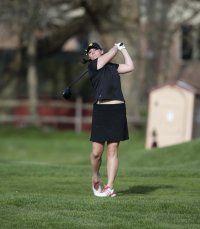
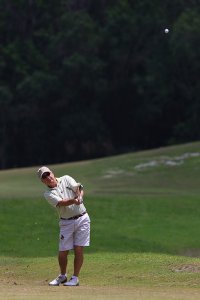
300 f/2.8L and 400 f/2.8 at f/2.8

Status
Not open for further replies.
Hey guys,

I shot track this weekend at the Jesse Owens Classic for AU, Denison, Eastern Kentucky, and Michigan State. I didn't back down and dove right in with the 400mm v1 anyways, and made some changes in my autofocus settings and technique. I will have those results tonight.

I'm not sure if the 400 focuses slow, but it definitely does "slower" vs. the 300. I'm serious, as I've noticed this even before you asked. I did shoot some of the runners the SAME distance as with my 300 just to see, and then filled the frame, and had the same trouble with both. I made some changes, however, which I'll explain.

I went back to AF 101 and just used a single point, one vertical position above center, and two vertical positions if needed. I then locked onto the runners face, and did so on the right edge of the face, and sort of let the face come into the AF point just a slight bit more before firing the shutter. The hit rate went up. I also changed to tracking case #2, instead of using 2, 5, and 6. Not sure if this makes sense, but again, the hit rate is signficantly higher than last week.

You can do EC with auto ISO with the 1DX, however, you have to shoot in Tv or Av mode. You can fool it into doing the shutter and aperture you want, by setting upper and lower limits on each. Then just turn the dial to + or - whatever you want.

An example. The 70-200 f/2.8L II IS lens widest is f/2.8. Set the 1DX to Tv mode, at 1/500s, and EC to +2/3. Then sit max aperture to f/1.0, and min to f/2.8. ISO is auto. You force the aperture to be at f/2.8 at all times. Of course if you want a narrower aperture, it can get tricky. The short answer is no, and the long asterisk answer is yes, sort of.

Thanks for the help everyone. I feel as though I gained enough to start fixing my problems. Again, thanks.
 
Upvote 0
bdunbar79 said:
I'm not sure if the 400 focuses slow, but it definitely does "slower" vs. the 300. I'm serious, as I've noticed this even before you asked.

I think you're right, that the 300mm focuses faster than the 400mm. The 400mm is no dog, but I remember being surprised at how much quicker the AF of the 300mm felt, when I played with it some time ago.
I can't recall which body I used, but it could be on my old 50D (your 1Dx can drive the AF motor faster due to the higher battery voltage).
 
Upvote 0
The 400 v1 definitely focuses slower than the 300 v1, even on the 1Dx. The 400 is much more difficult to use. I've learned that in servo mode with the 400, if you don't specifically focus on the athlete's face, especially at wider apertures, you're not getting it as sharp as the 300.
 
Upvote 0
bdunbar79 said:
The 400 v1 definitely focuses slower than the 300 v1, even on the 1Dx. The 400 is much more difficult to use. I've learned that in servo mode with the 400, if you don't specifically focus on the athlete's face, especially at wider apertures, you're not getting it as sharp as the 300.

Yes, my own experience tells me that as well, the 300 focuses much faster than the 400 or the 600, I did have all 3 Lenses into Canon Singapore for the new Firmware Upgrade, saw some improvement for sure, less OOF shots, but for what ever reasons the 300 outshines the 400, that's not to say the 400 isn't an amazing Lens, it is, but that 300f/2.8 L V2, Magic in a white Tube.
 
Upvote 0
eml58 said:
bdunbar79 said:
The 400 v1 definitely focuses slower than the 300 v1, even on the 1Dx. The 400 is much more difficult to use. I've learned that in servo mode with the 400, if you don't specifically focus on the athlete's face, especially at wider apertures, you're not getting it as sharp as the 300.

Yes, my own experience tells me that as well, the 300 focuses much faster than the 400 or the 600, I did have all 3 Lenses into Canon Singapore for the new Firmware Upgrade, saw some improvement for sure, less OOF shots, but for what ever reasons the 300 outshines the 400, that's not to say the 400 isn't an amazing Lens, it is, but that 300f/2.8 L V2, Magic in a white Tube.

Sorry Guys, wasn't concentrating, I see your discussing V1, not V2, so the Firmware Upgrade may not apply.
 
Upvote 0
bdunbar, I'm glad your hit rate went up! Again, I suspect the 400 is inherently slower to focus. The version 2 is probably faster, but at much higher cost. Sounds like you had the right attitude, and made it work. That's part of being a great photographer, it seems to me! The point is, you as the photographer are compensating for whatever your tools lack, and getting the job done. When the job is done and you get the shots you want, the problem is solved!

Thanks, yes I know about fooling it in manual mode, but then you wind up with under or overexposed shots that you have no control over. Sounds like the 1DX works the same as my camera. I know the whole point of manual mode, is that the user is responsible for getting the correct exposure...I just feel like, being able to use EC in this mode, with auto ISO, wouldn't be that difficult for Canon to implement, if they wanted to. Maybe it is, I don't know.

Some of my work consists of shooting at 1/2000 shutter in bright daylight, and I like to close the aperture to f/8 to f/10. I defined the ISO range in auto (which only left me with choosing ISO 800 or 1600 as the upper limit...I wish it would have let me choose finer increments, like ISO 1000). My shoot went fine...it worked...but sometimes there are "less important" highlights that get blown out a bit more than I like (and I prefer to not use HTP, because it seems to add even more noise in shadows, than a slight underexposure and lift later in post, achieves). But in ISO auto in Manual mode, there is no control over exposure. It will fire if it goes under or over by a bit (where in tv mode, it might not...assuming the shot happens at the edge of, or outside the specified ISO range in auto).

My shots at ISO 1600 are more than clean enough for my purposes anyway via the 6D, so I guess I'm just being a control freak. Cheers!
 
Upvote 0
CarlTN said:
I prefer to not use HTP, because it seems to add even more noise in shadows, than a slight underexposure and lift later in post, achieves.

HTP actually does nothing more than set the analog amplifiers on the sensor to one stop lower than what you set on the camera. If you're shooting JPEG, the onboard raw processing engine applies one stop of digital push. If you're shooting raw, it turns on the HTP flag in the metadata and most raw processors upon seeing that flag will silently apply one stop of digital push in addition to whatever else they do.

ISO 50 is the exact same thing but in the opposite direction.

Both are most useful for JPEG shooters, as it allows in-camera ETTR and ETTL shooting. If you're shooting raw, they're worth considering if you're going to do one stop of ETTR or ETTL as it gives you a properly-compensated back-of-the-camera preview.

Other than that, they're nothing you can't do by simply setting the native ISO value yourself.

Incidentally, the H ISO settings are also digital expansions. The same considerations apply for JPEG and raw shooters both.

Cheers,

b&
 
Upvote 0
Thanks trumpet, that's good to know. I already knew about the "h" range being a digital expansion. I didn't realize the HTP was a full stop of effectively cutting the exposure, though. I know it says something to that effect in the owners' manual. I guess that explains why it adds more noise to shadows than I like, haha. I do mostly shoot in RAW. Again, my main complaint, besides the lack of EC in manual mode (while ISO is in auto)...is that the limits of ISO while in auto, are not allowed in fine enough increments. I basically can see how much compensation I need, based on the subject matter...but if I can't control EC, oh well. It might have worked better to just use Av mode, and specify ISO 1000 (rather than auto). Every shot may not be 1/2000, though...just as if I had used Tv mode and set ISO 1000 (rather than auto), some shots may have gone down to f/7.1, to achieve 1/2000. However, if I just shot everything at minus 1/3 EC in either Av or Tv, that might have fixed either potential problem. I guess I am just too hung up on the novelty of actually being able to use auto ISO, without winding up with more noise than I can tolerate (as was the case with my crop camera). The reason I used 1/2000, is because below that, there is too much motion blur potential, and above that...is kind of wasted shutter speed, and thus would give me more noise needlessly.
 
Upvote 0
Carl, your difficulties with autoexposure are exactly why I never use it. Though, granted, I rarely shoot in light that changes very fast.

If you're shooting outdoors, unless it's a partly cloudy day with fast winds aloft, chances are good that autoexposure is going to be much more trouble than it's worth. The light just doesn't change fast enough that you can't keep up with it just fine by yourself.

And at least the full-frame cameras these days have so much dynamic range that, so long as you're shooting raw and the exposure is in the ballpark and you haven't clipped highlights you actually care about, you can recover almost anything.

(If you've missed the exposure by several stops, or if you're looking to turn shadows into highlights, or any of the other insane and wacky things the D800 fans keep bragging they can do, you might have problems. But otherwise, exposure these days is very forgiving, especially at lower ISO settings.)

Cheers,

b&
 
Upvote 0
Hi All,

A late thank you to applecider for the helpfull suggestions. I didn't have the lens and camera long enough and the weather was poor so I didn't get many examples that could be helpful in relating to my questions on sharpness of the 300 2.8.

I honestly don't believe I was getting any shots up to the level of your wood duck. It's beginning to grate on me, but still no word whether Canon even got my stuff let alone if they're working on it. Since it was shipped via the dealer 3 weeks ago, I'm only concerned about the timing since our late spring is slowly drawing the early birds and my purchase had been timed to give me ample preparation for that. Oh well.

I'll post when there is some action out my way. Thanks to all who contribute to this forum - I'll keep reading all I can (and espcially those 1Dx shots such as eml58 that are beyond amazing).

Jack
 
Upvote 0
I'm doing better. I wanted to update you guys. The 400 f/2.8L I IS requires a LOT of skill, care, and expertise. I shot at f/3.2 all day at the GLIAC golf tournament. I need to edit these later, but had to get 3 quick out to Jeff at GLIAC and just thought I'd share. I used AF Case 1, and used an AF point two up vertical from center, and was very, very careful to focus directly on their faces through the shot sequence "burst."
 

Attachments

  • 01_GVSU W Golf GLIAC.JPG
    01_GVSU W Golf GLIAC.JPG
    441.3 KB · Views: 440
  • 02_Ashland U W Golf GLIAC.JPG
    02_Ashland U W Golf GLIAC.JPG
    396.9 KB · Views: 451
  • 03_ferris State W Golf GLIAC.JPG
    03_ferris State W Golf GLIAC.JPG
    413.8 KB · Views: 448
Upvote 0
Hey bdunbar,

I was shooting golf on Friday. I was using the 300 f2.8 IS MkI with and without the 1.4TC MkIII on a 1Ds MkIII. For this type of thing I shoot one shot, not servo. I have found that to be perfectly fine with a 420mm at f4 and a 300 at f3.2. Knowing how the body rolls during the swing I focus on the belly with one point and no expansion, either center point or one any direction off center depending on framing, this gives me a very good keeper rate.

But I am surprised at your images, I don't get why their feet are so blurred, the faces sharp, but the grass well in front of their feet is sharp too. I'd check your lens very carefully for an alignment issue.

Look at the feet of the guy putting, I know it is a different, and much slower, action, but the head feet relationship is similar and your grass should look like mine.
 

Attachments

  • 6678.jpg
    6678.jpg
    94 KB · Views: 492
  • 6767.jpg
    6767.jpg
    80.8 KB · Views: 477
Upvote 0
bdunbar79 said:
You're right, that is very strange. I didn't notice that before. How do you check it and/or get it fixed? Thanks.

I was just noticing the same thing, going "that's odd....". My gut feeling is that this could be misalignment of some elements inside the lens.
As for testing it, I guess you could take some shots on a test chart and analyse them with imatest, but I don't expect you to have that available. Baring that, I'd talk to CPS and show them some pictures to explain the issue. From reading Roger Cicala's blog, I understand that it can be difficult to get CPS to fix issues like these unless you show them exact the problem.
 
Upvote 0
This is how I have done it.

Set up your tripod facing a flat wall at normal working distance, silly putty a small mirror at the same height as your lens to the wall and get your camera perfectly squared off to the wall, when the reflection through the viewfinder is just the lens you are good. Then tape some newspaper to the wall at the corners of your frame, the center, and anywhere else you have suspicions about.

Take some images at different apertures and see how the resolution is, it should be good all around, all corners similar sharpness, if one or two is much different than the others you have an element misalignment and it needs to go to Canon.
 
Upvote 0
kaihp said:
bdunbar79 said:
You're right, that is very strange. I didn't notice that before. How do you check it and/or get it fixed? Thanks.

I was just noticing the same thing, going "that's odd....". My gut feeling is that this could be misalignment of some elements inside the lens.
As for testing it, I guess you could take some shots on a test chart and analyse them with imatest, but I don't expect you to have that available. Baring that, I'd talk to CPS and show them some pictures to explain the issue. From reading Roger Cicala's blog, I understand that it can be difficult to get CPS to fix issues like these unless you show them exact the problem.

My experiences of sending in test images to Canon is they don't even look at them, I have had unopened CD's returned to me with the lenses! They do their own bench test with the lens and it either meets spec or it doesn't, if it doesn't then they replace stuff until it does.
 
Upvote 0
bdunbar79 said:
I'm doing better. I wanted to update you guys. The 400 f/2.8L I IS requires a LOT of skill, care, and expertise. I shot at f/3.2 all day at the GLIAC golf tournament. I need to edit these later, but had to get 3 quick out to Jeff at GLIAC and just thought I'd share. I used AF Case 1, and used an AF point two up vertical from center, and was very, very careful to focus directly on their faces through the shot sequence "burst."

Are you shooting down hill?

Will T.
 
Upvote 0
Status
Not open for further replies.