35mm f2 IS for city photography at night?

Saffier said:
Why the 35? It offers me IS and 1 stop of light compared to the 16-35 and it offers me 2 stops of light compared to the 24-105. ... Finally the 35 can also be a nice low-light addition to my wife's set of lenses, but that will not be the decisive argument.

I don't quite understand this reasoning (plus that of the following posters), unless the intention is to always use the lens at maximum aperture, i.e. wide open. I mean, once you're "stopping down" the lens, all that extra "stops of light" just goes poof! and whether you're using an f/1.4 or an f/2 or an f/2.8 or an f/5.6 lens becomes irrelevant. ???
 
Upvote 0
Sella174 said:
I don't quite understand this reasoning (plus that of the following posters), unless the intention is to always use the lens at maximum aperture, i.e. wide open. I mean, once you're "stopping down" the lens, all that extra "stops of light" just goes poof! and whether you're using an f/1.4 or an f/2 or an f/2.8 or an f/5.6 lens becomes irrelevant. ???

That is correct, but two things will still hold
[list type=decimal]
[*]at night and hand held, you will shoot open aperture or you won't get the shot, period. That's where large aperture and IS are a real benefit, not on a sunny summer day around noon.
[*]If you have to stop down to 5.6 for whatever reason (DOF, sharpness), IS will still help you get sharp images with the resulting longer exposure times.
[/list]
 
Upvote 0
I have and will use most of my lenses at most apertures at various times for various scenes and lighting requirements.
The logic that if I mostly shot landscapes I wouldn't need any fast glass is absurd. And the converse stated in the previous posts as well.
 
Upvote 0
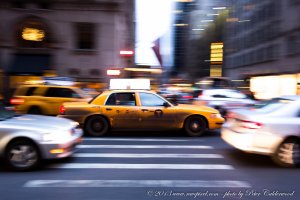
This picture was taken at dusk with a Canon 35mm F/2 IS on a Canon 6D in NYC.

Also I think the 35mm f/2 IS and 16-35mm f/2.8 II is a great combo for night city shooting. Maybe also throw the 85mm f/1.8 in the bag in case you want to do any night portraits?
 

Attachments

  • IMG_0463.jpg
    IMG_0463.jpg
    1.4 MB · Views: 998
Upvote 0
The 35/2 IS is by far the cheapest yet most versatile lens in my bag.

If you need the DOF of 1.4 and can find a good copy to marry with your 6d, can't go wrong with the Sigma.

However, based on what you have said, for $599, the Canon can't be beat. It performs quite well at f/2 and the IS is superb. I routinely shoot at 1/10 in less than optimal lighting conditions and I don't consider myself to have very steady hands.
 
Upvote 0
Rudeofus said:
That is correct, but two things will still hold
[list type=decimal]
[*]at night and hand held, you will shoot open aperture or you won't get the shot, period. That's where large aperture and IS are a real benefit, not on a sunny summer day around noon.
[*]If you have to stop down to 5.6 for whatever reason (DOF, sharpness), IS will still help you get sharp images with the resulting longer exposure times.
[/list]

Precisely. In my reasoning, if you do "low-light" photography, then IS and high ISO are your friends; not aperture.
 
Upvote 0
I bought the 35 f/2 IS a month ago and used it with success in DC. It is very sharp wide open and I have no hesitation shooting at f/2 for a nice shallow depth of field. The Sigma would be better, but that lens is much larger and heavier. It is much smaller and lighter and less conspicuous than the 24-105 and I find walking around with the 35mm to be a revelation and this is a big plus when travelling. I'm considering getting an 85mm f/1.8 to match it. The IS seems better than on the 24-105, but I haven't tested it. I took some nice longish exposures of waves handheld, so its also a good waterscape lens. However, coma is an issue. I took a milky way shot and coma from city lights at the bottom edge (portrait format) was very noticeable. My Samyang 14mm f/2.8 is much, much better. If you need night lights near the edge of the frame and are critical, then this lens is not for you.
But I'm very happy with my purchase.
 
Upvote 0
Frodo said:
However, coma is an issue. I took a milky way shot and coma from city lights at the bottom edge (portrait format) was very noticeable.
Is it possible for you to post this picture? I took a look at lenstip.com but I'm interested in a real life example of this coma issue at F2.0. That would really help in the decision I want to make.
 
Upvote 0
Rudeofus said:
Sella174 said:
I don't quite understand this reasoning (plus that of the following posters), unless the intention is to always use the lens at maximum aperture, i.e. wide open. I mean, once you're "stopping down" the lens, all that extra "stops of light" just goes poof! and whether you're using an f/1.4 or an f/2 or an f/2.8 or an f/5.6 lens becomes irrelevant. ???

That is correct, but two things will still hold
[list type=decimal]
[*]at night and hand held, you will shoot open aperture or you won't get the shot, period. That's where large aperture and IS are a real benefit, not on a sunny summer day around noon.
[*]If you have to stop down to 5.6 for whatever reason (DOF, sharpness), IS will still help you get sharp images with the resulting longer exposure times.
[/list]

+1

Another thought: The 24-70/4L IS may be a good option. It covers the 35mm focal length, has IS, and gives the flexibility of a zoom. It's obviously more expensive than the 35/2 IS, but weather sealed and comparable in price to the 35/1.4L

Personally, I prefer a depth of field scale for stopping down, so I'm saving up for a 35/2 IS as a companion to my 24/2.8 IS. A modern full frame sensor in combination with IS means that wide apertures only come into play for selective focus.

I was tempted by the zoom option with the red ring, but decided against it.

 
Upvote 0
e17paul said:
Rudeofus said:
Sella174 said:
I don't quite understand this reasoning (plus that of the following posters), unless the intention is to always use the lens at maximum aperture, i.e. wide open. I mean, once you're "stopping down" the lens, all that extra "stops of light" just goes poof! and whether you're using an f/1.4 or an f/2 or an f/2.8 or an f/5.6 lens becomes irrelevant. ???

That is correct, but two things will still hold
[list type=decimal]
[*]at night and hand held, you will shoot open aperture or you won't get the shot, period. That's where large aperture and IS are a real benefit, not on a sunny summer day around noon.
[*]If you have to stop down to 5.6 for whatever reason (DOF, sharpness), IS will still help you get sharp images with the resulting longer exposure times.
[/list]

+1

Another thought: The 24-70/4L IS may be a good option. It covers the 35mm focal length, has IS, and gives the flexibility of a zoom. It's obviously more expensive than the 35/2 IS, but weather sealed and comparable in price to the 35/1.4L

Personally, I prefer a depth of field scale for stopping down, so I'm saving up for a 35/2 IS as a companion to my 24/2.8 IS. A modern full frame sensor in combination with IS means that wide apertures only come into play for selective focus.

I was tempted by the zoom option with the red ring, but decided against it.

Plus it's one of the next best things to a Macro lens in a pinch.
 
Upvote 0
e17paul said:
Another thought: The 24-70/4L IS may be a good option. It covers the 35mm focal length, has IS, and gives the flexibility of a zoom. It's obviously more expensive than the 35/2 IS, but weather sealed and comparable in price to the 35/1.4L

The TO has the 24-105 F/4 IS, so adding the 24-70 F/4 IS to his kit would be a bit redundant ...
 
Upvote 0
Rudeofus said:
e17paul said:
Another thought: The 24-70/4L IS may be a good option. It covers the 35mm focal length, has IS, and gives the flexibility of a zoom. It's obviously more expensive than the 35/2 IS, but weather sealed and comparable in price to the 35/1.4L

The TO has the 24-105 F/4 IS, so adding the 24-70 F/4 IS to his kit would be a bit redundant ...

Right, especially in low light where any slight improvement in corner sharpness etc. the newer lens might have will surely get lost. As for whether slow apertures are a hinderance at night when you're not trying to freeze action, a couple of months ago I posted some photos I took on a snowy dusk/night in NY with the 70-300L (which has IS, of course) attached to my 5DIII - so no fast apertures and pretty high ISOs and, if I remember right, I didn't apply any noise reduction when converting the RAW files. If interested, you can go here:

http://www.canonrumors.com/forum/index.php?topic=285.msg347693#msg347693
 
Upvote 0
I suspect that although f2 is not always necessary, the OP would like to have it available to him/his wife when they want it. Personally, I have never been fond of having an f4 max normal'ish focal length lens to use as a general purpose walk around.

The 35/2 IS is the fastest normal FL lens with IS that Canon offers currently which makes it very unique in it's qualities.

The OP also mentioned that the lens may/will be added to his wife's bag at some point. We have no idea how she will be using it. However, I suspect that having an f2 vs f4 probably gives her much more utility as she already has slow zooms in her bag.

OP already has 24-105 so the 24-70/4 would be absolutely redundant. The only real additional features would be slightly better IQ and a .74 magnification for macro (all at f4 max) at $1500 which is absurd. Even at 1000-1200, I'd say that the OP would be doing much better at $599 for a much faster prime with IS.
 
Upvote 0
This lens is wonderful for static pictures at night! And even moved objects, if you don't have problems with it. (car light stripes etc).
1/4sec is nearly 100% possible, 1/3 or 1/2 you have to try 2-3 times, but it works. So you don't have to use always f/2.0, you can use 5.6 (with ISO800) or so for deeper DOF, because handheld ISO100 at night isn't needed in all cases. ;-)

I love this lens very much.
 
Upvote 0
Saffier said:
Frodo said:
However, coma is an issue. I took a milky way shot and coma from city lights at the bottom edge (portrait format) was very noticeable.
Is it possible for you to post this picture? I took a look at lenstip.com but I'm interested in a real life example of this coma issue at F2.0. That would really help in the decision I want to make.

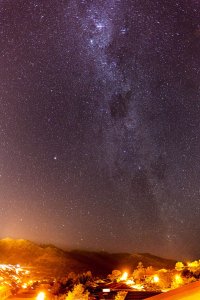
Here you are. I took this quickly off a table top tripod. Details 5DmkII, 35mmf/2IS, 15 sec @ f2, ISO 1600. The max aperture of f/2 allowed me to shoot at 15 seconds avoiding star trails. However, you can see the coma in the lights on the bottom left and stars in the top. Stars are sharp and coma free in the centre of the photo.
 

Attachments

  • IMG_6222.jpg
    IMG_6222.jpg
    912.8 KB · Views: 598
Upvote 0
@ frodo: thanks a lot. Coma is indeed an issue at f2.0
@ sdsr: I looked at your pictures. I love the "winter-ish" look and feel. You showed me that f4 isn't an obstacle for hand-held night pictures.
@ davidcl0nel: Looked at flickr. Great pictures. Compliments.
@ Ravepixel: your suggestion of taking the 85 f1.8 on the streets for night portraits has been noted, thanks for that.
@ all others: thanks for your comments and suggestions. I have no experience with Sigma and have some reservations for the unknown...

Time for me to wrap-up: My 24-105 should be able to do the job with ISO up to approx. 8000. However, the 35 f2 IS is a very capable and sharp lens which several of you love for city pictures at night. I think it is going to serve me well. My conclusion is that the 35 will be a nice addition to my set, but that I have to be aware of possible coma-issues at 2.0. In that case the 24-105 comes into place. And last but not least, my wife cannot wait to put the 35 on her SL1 :)
 
Upvote 0
Frodo said:
Saffier said:
Frodo said:
However, coma is an issue. I took a milky way shot and coma from city lights at the bottom edge (portrait format) was very noticeable.
Is it possible for you to post this picture? I took a look at lenstip.com but I'm interested in a real life example of this coma issue at F2.0. That would really help in the decision I want to make.

Here you are. I took this quickly off a table top tripod. Details 5DmkII, 35mmf/2IS, 15 sec @ f2, ISO 1600. The max aperture of f/2 allowed me to shoot at 15 seconds avoiding star trails. However, you can see the coma in the lights on the bottom left and stars in the top. Stars are sharp and coma free in the centre of the photo.

Wow! That coma is really bad! I had no idea...
 
Upvote 0