4 stop push: 5DS vs 5D Mk III

Tom,being very inexperienced, I'm trying to understand. Is the tonality difference between the long and short exposure shots a result of the shot or how it has be PP'd. One looks somewhat lush the other almost desert like. Is that simply the cast of the ND filter you refer to?

Jack
 
Upvote 0
I was thinking the same as Jack and would also like to know about the colour variation Tom, I have an even cheaper unused Phottix variable ND so I'm interested in the answer!
I actually like the movement in the bushes, it's the UK and it was a sunny day for goodness sake, we usually rejoice at any sign of sunshine ;D
 
Upvote 0
Jack Douglas said:
I like to hear and reflect on the various opinions and think it's great when the person who is the focus of the opinions can handle that. It is personal and it is good to try different shots and not to be bound by convention. Friendly, constructive back and forth criticism is healthy and helpful. :)

Jack

Famateur said:
scyrene said:
dilbert said:
I don't mind the blurry sky so much as the wind blown bushes in the bottom left. Ugh.

All that just to get a smooth lake?

Tough crowd!

I was thinking the same thing...

Admirably handled, Tom. I'm glad to be a part of a forum with people like yourself. Thanks for sharing such beautiful photographs!

Jack Douglas said:
Tom,being very inexperienced, I'm trying to understand. Is the tonality difference between the long and short exposure shots a result of the shot or how it has be PP'd. One looks somewhat lush the other almost desert like. Is that simply the cast of the ND filter you refer to?

Jack

Stewart K said:
I was thinking the same as Jack and would also like to know about the colour variation Tom, I have an even cheaper unused Phottix variable ND so I'm interested in the answer!
I actually like the movement in the bushes, it's the UK and it was a sunny day for goodness sake, we usually rejoice at any sign of sunshine ;D

Thank you for all your comments. I don't generally get offended by comments they are all fair and photography is not a perfect field and all is down to personal preference. I will try to answer all your questions.

Internet forums generally focus on the technical side of photography which is fine. My background is fine art photography and I'm classically trained in that respect. Unfortunately its very difficult to make a living from that side of photography so I ventured into commercial because I enjoy that as much. Theres not ever a right or wrong answer to any image just different techniques and tastes, but one piece of advice I can give is that never let your creative ability be hindered by opinion or technology. You have to give your images artistic licence and build your own style and being experimental is the key. It also makes your images stand out from the crowd, often it gives differing opinion because its different.

The title of the thread is a good point of this, arguing about 4 stop pushes in theory that is the difference between black and white pretty much seeing in the dark. Expectation of photographic technology is getting very high and the technique and skill in the field is less important, relying on cameras and software to be able to sort these situations. That sort of latitude in images can give unreal results or very very surreal but again is down to personal preference. I have used both and have got images I'm proud of from both techniques.

You can't shoot an image for 30 second to 4 minutes and not have any movement, if there is no movement then the image looks very surreal. When I see images like that which have been shot as multiple exposures and blended theres nothing wrong with that and I've done it myself, but its not true to the way the image was shot and you can decide to do either, I always shoot to allow myself to cover all boundaries incase the client doesn't like the image saves time going back again.

When I say surreal, I'm not meaning that its bad. I like surreal and I think a 10 stop ND gives quite surreal results as you would never see this effect with the naked eye. But there are different types that I like and dislike.

At the same time leaving the movement gives the image more dynamism, I do think the ferns moved a lot and they do draw the eye a little but you can't control the wind. When your shooting at 1000ft and the wind is howling down the valley theres not much control. But to me it adds more, it looks different and thats what I like. Also when your shooting with a 10 stop ND you can't help but shoot the same exposures just to get enough light and the same cast to blend the scene so the likelihood of it happening again is quite high its a problem when you limit that much light in a scene. If I shot the scene at 1/200 instead of 30 seconds then yes I could but with an ND the ISO would have probably been in the 6400-12800 range not 640.

10 stop ND filters are different to variable NDs. Its like welders glass and enables you to shoot in bright daylight to allow movement. Generally great for landscapes or seascapes to add more drama, which can look quite surreal. But they can also be used to create more interesting effects say a bridge in daylight with a lot of traffic you can make the scene seem empty and like a ghost town. Useful in touristy places too, I recently traveled to Peru and shot Machu Picchu. I used the ND to ensure there were no people in my images but I also shot them with people to add a human aspect.

The problem with 10 stop ND filters is that unless you spend serious money like £100-200 on a high end filter they generally give a cast. Some are worse than others and I bought mine a long time ago without any research and this one gives a very strong red cast and its almost impossible to remove. But the difference between the two images is that the second was shot with a circular polariser which hasn't really affected the white balance just added more contract and saturation in the sky and landscape. The first images is so red simply because of the cast of the filter. Moving the white balance slider to normalise creates unpredictable results the tonality goes to pot and you get very storage green to purple gradients, the green foliage turns a golden brown colour its almost like an infrared effect.

If the images aren't compared side by side the red tint doesn't look so bad especially when you shooting a sunset it adds rather than takes away but in any other situation its very difficult and it doesn't get much use. I do intend on buying a much more neutral ND but again the good ones are very expensive and in high demand.

Heres a good resource from Bryan at The Digital Picture

http://www.the-digital-picture.com/Reviews/10-Stop-Neutral-Density-Filter.aspx

Mine is the Tiffen if you scroll over the image you will see how bad the cast is.

 
Upvote 0
WOW Tom, you deserve an award for providing all that information. I have soaked it up and will be trying some of this soon. To the present, if I wasn't shooting wildlife I'd do the odd landscape but it's new to me so they've been more "snapshots" than anything, and I regret that.

Agree 100% that all of this is personal preference and we must simply grow a thicker skin so that the well meaning but sometimes slightly negative comments don't distract us from experimenting and doing what some like but others don't like.

In another thread I had asked about how I should frame my bird poses. I got lots of great advice from many kind folk and that thread helped me get straight with "these are not rules, they are guidelines". I bought the suggested Freeman book, The Photographer's Eye, which I'm loving!! I was so ignorant and now I'm a little less ignorant! ;)

Jack
 
Upvote 0
Hi Jack.
Rules are for the guidance of wise men and the blind obedience of fools. :)
Some rules I'm wise enough to bend, some rules I'm wise enough not to. ::)

Cheers, Graham.

Jack Douglas said:
I got lots of great advice from many kind folk and that thread helped me get straight with "these are not rules, they are guidelines".

Jack
 
Upvote 0
Stewart - No problem great to know it will help :)

Jack - Again no problem, the thing is the advice you get will help in all aspects of your photography. Negative comments only give you another opinion to think about. Its not ignorance its just learning and what nice about photography is that you never stop.

Agree with everything Valvebounce has said :)
 
Upvote 0
I quite like the movement. Landscapes frequently have movement; it's not often you have a totally still day, as the 'you must have 16 stops of DR' brigade keep pointing out.

In this case I feel the clouds moving away have added some energy to the picture which appealing.
 
Upvote 0
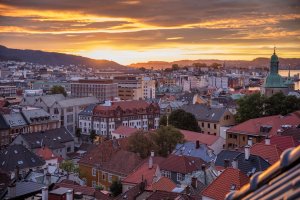
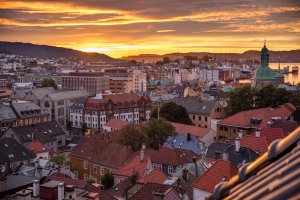
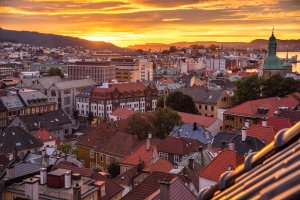
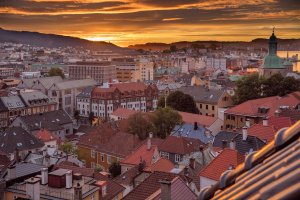
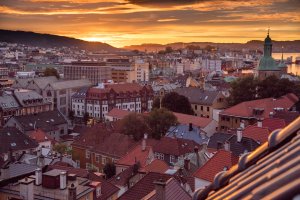
I got my new Canon 5DS yesterday. Curious about its performance (after selling my 6D) I took six shots just after sunset from our balcony, with normal (camera chosen) exposure, and the others with exposure comp minus 1, 2, 3, 4 and 5. I didn't intend to make a post of it when I took the pictures. I didn't use a tripod, and focus and framing was a little different in each shot. Further, the post processing could be done better and more carefully, especially with regards to the white balance. Note also that all pictures are edited to taste. I have not applied the same settings. I could reduce the highlights more especially in the -4 and -5 pictures, but I applied highlight reduction to my taste.

One thing that I found in this test, is that I really can get a lot out of a normal exposure. Further, I am very happy about the results with the picture taken with exposure comp -3. At -4, and pushed it still holds up pretty good. The -5 picture when pushed to taste, the noise is pretty bad at 100 % view, but with noise reduction and downsizing, I think it looks quite good.

The other thing I found, is that I really don´t see (in this scene) the point in preserving more highlights than what I can do with a -3 exposure comp. It could be different if the sun was higher. Anyway, this adds to my experience from my 6D, it is very uncommon for me to want to push a picture more than 3 stops, which both the 5DS and the 6D does very good.

To keep the file size down, the jpgs are downsized to 4000 pixels wide, and saved with a rather poor quality. (60 out of 100 in Lightroom.)

I didn´t post the -1 picture, due to file size restrictions.

So far I am very happy with the performance of the 5DS. It certainly is more demanding on the lenses, when viewing at 100%, but the 24-70 f/2.8 L II and the 16-35f/4L (which I have used so far) holds up very good, with a little weaker corners than I am used to from the 6D.

I would like to note that I like the metering system, which I also am used to from the 7DII. It may be a little more unpredictable than the one on the 6D, but I find it very good to preserve both highlights and shadows, leaving a lot of room for editing.
 

Attachments

  • 3P2A0256.jpg
    3P2A0256.jpg
    1.3 MB · Views: 211
  • 3P2A0258.jpg
    3P2A0258.jpg
    1.2 MB · Views: 208
  • 3P2A0259.jpg
    3P2A0259.jpg
    1.7 MB · Views: 212
  • 3P2A0260.jpg
    3P2A0260.jpg
    1.5 MB · Views: 223
  • 3P2A0261.jpg
    3P2A0261.jpg
    1.5 MB · Views: 225
Upvote 0
Really only taken a few shots with the Canon 5DS as it was only purchased this past weekend. Now Ive corrected my import mistakes in Lightroom the test shots I took on Sunday are an early mixed bag. When viewed at 100% its easy to notice vibration issues (all the shots were taken on a Mafrotto aluminium tripod and Arca-Swiss head this combo Ive used for two years with the 6D in Devon). I used the mirror delay set to two seconds in minimise mirror vibrations. It was very windy not uncommon at the coast or Dartmoor and I found about half the shots at 100% viewing had vibration induced slight softness the others were all razor sharp. At normal magnification on the screen and printing A3 prints with high gloss finish the majority look sharp a couple were to me unaceptable but my wife & daughter thought they looked fine. I accept its very early days we all need to learn how to use new tools and I think the metering is a big improvement over the 6D (which I will retain).
The verdict on 50MP is still out as far as Im concerned difraction lowering the best effective DOF to f7 as opposed to f11 / 16 because of the smaller pixels is something Ive got to adjust to and its certainly noticeable the increase in noise pushing the camera 4 stops over the 6D which by comparison is clean. However these early shots really show the improved sharpness when you get it right and they make everything else come alive regarding the way the colours look & detail and that makes me want to go out and use it again quickly.
 
Upvote 0
tomscott said:
unfocused said:
Eldar and TomScott: I'm curious about your assessment of the 5DS vs. 5D III at higher ISOs. I assumed that the 5DIII still performs better at higher ISOs in terms of noise. Do you disagree? It sounds to me like the 5DIII is still slightly better, but not as significantly better as one might expect, given the higher resolution (smaller pixels).

Because of the subjects I have to shoot, dynamic range is much less important to me than high ISO performance. I'm just curious how you guys would characterize the differences.

It also sounds as though, from your experience, the improved performance of the 5DS may mean the 5DIV could be a real beast if they keep the megapixel count at 24 or so.

I don't own a 5DS yet and I'm in a similar position to Eldar before he pulled the trigger.

Ugh, digging through this thread looking for nuggets of first hand information I was reading Tom's long winded post only to see he doesn't own the camera his giving opinion on.

Unfocused, I have the 5Ds R and its extremely noisy. JPEGs out of camera are cleaned up nicely . In LR it cleans up nicely as well. I downloaded LR6 and I haven't run the comparison to see if it is LR6 or the 5Ds R but I have been able to push files just short of 3 stops and recover shadows on top of it. Unfortunate I have no 5D III to compare but I can tell you it is substantially better at recovering shadows, blown highlights and cleaning up noise than the 5D II.
 
Upvote 0