
5D Mk III with 50mm f/1.8 II - bad images?

Status
Not open for further replies.
Lighting can make or break you. I was having a grand time at the Big Ten track meet, bright sunny day, then suddenly a big cold front moved in and it started misting/raining and got really dark. Even with a 1Dx and 70-200 f/2.8L II IS lens and seemingly "correct" exposure, I got this really bad photo:

P.S. The more you understand lighting and WB, the better off you'll be.
 

Attachments
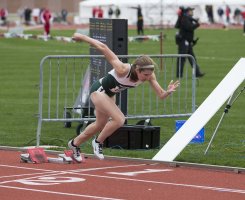
  • 72 MSU at Big Ten Day 3.JPG
    72 MSU at Big Ten Day 3.JPG
    547 KB · Views: 959
Upvote 0
Harry Muff said:
You bought a £2,300 camera and put a £80 on it?

Keep saving for an L lens and you'll see a big difference.

If he had taken the same photos with a 50L or 24-70 LII, what are the "big differences" we would see? There's nothing wrong with these photos that a "better" lens would fix.
 
Upvote 0
get some good raw processing software life Adobe Lightroom. Then spend a lot of time learning how to extract the best from your images.

5d3 + 50 1.8 can get some great results. just don't expect the world from either auto jpeg, or unprocessed RAW.

Ultimately though. shoot, shoot. shoot. You can only ever learn from mistakes
 
Upvote 0
Thank everyone for your great tips. I kind of figured that lighting is paramount to capture great photos. I just thought that the high ISO boost would be able to aid me but I guess not.

Also, I am of course using post, those photos didnt come straight out of the camera nor do I expect perfect pictures even if I shoot RAW.

I don't know why, but the best pictures right now are the ones I take outside, and that are close ups. Taking landscape pictures, they become really unattractive (don't know how exactly to describe it), but perhaps it's because this is a portrait lens?

2yuezac.jpg

dq2p21.jpg


I had a Canon 7D for 30 days but I returned it so I could buy the 5D Mark III (I wanted full frame), and I think it took better food pictures indoors (and I thought 5D couldnt be worse than 7D):

oic5c2.jpg
 
Upvote 0
Getting the color right on indoor shots is not as easy as it sounds. It helps to throw something white (like a sheet of paper, or even better, a colour balancing card) into the picture, shoot it, and then take the picture again without it... Use the test shot and your RAW file to figure out what the color balance should be, and then use the same settings on the second shot.
 
Upvote 0
well, the 50mm on fullframe is that a good starter as it has approximately the same field of view than the human eye.
An image begins in the head, by just looking at things with your plain eyes (not throuh the viewfinder). When you see something, imagine what the photography of it should look like, and if it might work, take out the camera and try to get exactly what you imagined.
Ken Rockwell uses the term "FART" for any creative process: http://www.kenrockwell.com/tech/fart.htm

He has also some stuff about composition, there he talks all about "SEX", simplification and exclusion: http://www.kenrockwell.com/tech/composition.htm
 
Upvote 0
Status
Not open for further replies.