5D2 + 17-40mm or 500D + 10-22mm?

Status
Not open for further replies.
Just recently, I'm thinking of buying a 17-40mm L lens. I intend to upgrade to either 5D2 or 6D after sometime. My question is, is it really better than just having an APS-C + 10-22mm lens? This will be used for landscape photography. I'm also into macro photography but perfectly happy with a 500D + 100mm F2.8 USM lens. Should I just forget going FF and go for APS-C? I'm confused because I really love both macro and landscape photography. I'm planning to complete the set by next year March since summer starts in my place during that month.
 
I just moved up to the 5D3 with a 17-40 after using a T2i/550D with a 10-22. They are very similar but there are some differences... the 10-22 has a variable aperture from f/3.5 to f/4.5 whereas the 17-40 has a constant f/4 aperture. The 17-40 has better control of chromatic aberration in the corners, better build quality and weather sealing around the rear element. At 10mm on APS-C the angle of view of 107.5˚ which is roughly equivalent to 16mm on full frame (108.2˚). The 17-40 is not quite as wide as either when at 17mm (the angle of view is 104˚) but it's still quite wide. Personally I decided to get the 17-40 over the 16-35 II because it's lighter, smaller, cheaper and it takes 77mm filters like nearly every other lens I have. I'm still comparing the photo quality to the 10-22 but haven't done side-by-side comparisons to look for significant differences. I'm happy with both. I would say don't upgrade to FF solely for the 17-40, but consider moving to FF for other reasons. The Samyang 14mm is another option which provides an amazing 114˚ angle of view on FF...
 
Upvote 0
I sort of preferred my t2i and 11-16mm Tokina cominbation to my 5D3 17-40mm combination, but like...not by a lot. IQ was similar and the t2i was smaller with a little less distortion.

The 17-40mm doesn't make that much sense on APS-C since the 17-55mm f2.8 IS is just better. But on FF it's fine. I think it's too wide for most landscapes, but that's a matter of taste, and I can't stand the lack of shift, tbh, so I'd far prefer the 24mm tse, but the price....
 
Upvote 0
If I did mostly landscapes and macros, i wouldn't go with FF. Also, I think the 10-22 is sharper than 17-40, although not sure. But with smaller sensors you can use bigger apertures and still get a lot of depth of field, which is what matters in landscape. Slow shutter speed, using tripod and low isos, there isn't a dramatic difference in picture. I'd buy full frame for shallow dof images and better high iso performance.
 
Upvote 0
I'd think macro and landscape would be the very reason to go FF. Think, if you are shooting 1:1 macro, you can capture something as big as 35mm x 24mm (ok, almost). With an APS-C, you fill up your sensor with smaller magnifications.
On the landscape front- resolution, DoF (a lot of people think everything should always be in focus for landscapes), image quality, superior performance at low ISOs are compelling reasons to go FF.
The 5DII is a fantastic camera (and that's still an understatement), and since going from T2i to 5DII you won't feel any of the latter's shortcomings (with respect to fps, AF, metering, build quality as in case of 7D-->5DII), an upgrade is a no-brainer.
On the other hand, I've had mixed feelings about the 17-40. It didn't strike me as a sharp, contrasty lens. I like the 10-22 on my 7D much better than the 17-40 on an otherwise excellent 5DII but your mileage may vary. The 17-40 on the T2i would be very mediocre, no doubt about that bit in any case- so I hope you upgrade soon if you end up buying the 17-40.

jabbott said:
I would say don't upgrade to FF solely for the 17-40, but consider moving to FF for other reasons. The Samyang 14mm is another option which provides an amazing 114˚ angle of view on FF...

+1. Or, I'd save for the 16-35mm...
 
Upvote 0
For landscape FF is the way to go. More control of your DOF than you have with a crop body. The sensor of the 5D II will give you better results on similar framed subjects. If you are real serious, the 17-40 will be your starting place, primes and the Tilt Shifts later on.
 
Upvote 0
Thanks for all the replies. Now, another question, is it 17-40 or 16-35? I'm taking mostly landscape photos using a tripod and long shutter speed. Is the 16-35 a lot better than 17-40 @ F/8 and above for example? I don't worry about low-light. I've got primes to take care of that.
 
Upvote 0
I have used both: 550d + 10-22 and now a 5d2 + 17-40L. I can unreservedly say the 17-40 handles flare much better and I prefer the IQ/detail of the latter. I have pixel peeped heavily and it is unmistakable. As for comparison with 16-35, for landscapes 17-40 would be a better option - lighter and just as good at f8. Both are softish at the edges anyway - there's no getting around that. I find my 17-40 images are incredibly sharp across most of the frame and would highly recommend it. It's a bargain for what it is.

The 10-22 is excellent but I think the 17-40 marginally outclasses it, IQ-wise. The camera could have something to do with that as well but that's inevitably part of the comparison.
 
Upvote 0
sweetcancer said:
If I did mostly landscapes and macros, i wouldn't go with FF. Also, I think the 10-22 is sharper than 17-40, although not sure. But with smaller sensors you can use bigger apertures and still get a lot of depth of field, which is what matters in landscape. Slow shutter speed, using tripod and low isos, there isn't a dramatic difference in picture. I'd buy full frame for shallow dof images and better high iso performance.

Unless you shoot at f/8 to f/11 at 17mm, with the 17-40mm on the 5DII, the corners turn to mush. I guess you could say that lens is not the sharpest tool in the shed....
You don't have as much of a problem with that lens with the 7D, as it only uses the centre sweet spot.
While the 17-40mm is a reasonable walkabout lens on the 7D (or other crop frame), with the 5DII, it is only really good for landscapes shot from a tripod (unless you have enough light to achieve f/8 hand-held).
 
Upvote 0
Think about it this way, if you have APS-C your only real UW options are the 10-22, and various other UWZ from third parties, and the Canon 14mm f2.8 or 15-85 (if you can even count them as UW).

If you go to FF, suddenly a whole lot more lenses become wide enough. You can go with 20 and 24mm primes. As well as non-Canon 17mm and 18mm primes. When you think about the UW lens, it's primarily for landscapes, so lightness will be a big advantage, now a 5/6 with prime will probably end up lighter than a APS-C + UWZ.

So overall while FF closes the EF-S door, it opens a whole lot more.
 
Upvote 0
Crop sensors do what the name suggests. They effectively chop off more of the outer image because the sensor is smaller. This means that soft corners and vignetting are less of a problem on a crop sensor camera.
For example, you have to remember that a 30mm lens on a crop is NOT the same as a 50mm on a full frame - even though you get a similar field of view. You will have a 30mm field of view chopped down. This means that on a crop sensor at 10mm, you will get slightly more distortion of verticals than with 16mm on a FF camera. But then again with a FF camera you get more light on to the sensor and better bokeh, more vignetting, possibly softer corners and so on.
I own the 10-22mm and like it a lot. I don't like the variable aperture though.
So effectively the 10-22mm isn't necessarily "better" even though you may get better corners. Depends what you overall needs are.
 
Upvote 0
I mostly do F8 night photography and landscapes with my 17-40 on tripod or sometimes hand held. I print them and sell them at quite large sizes in exhibits etc. Whilst the difference between both lenses is not huge I can say corner softness is overrated as an issue IMHO. I went through a Zeiss 21 phase and then came to enjoy the versatility of the zoom (for guerilla style night work). On FF, corners can be soft but it's not really that much of an issue for me nor I suspect 99.5% of the people who view/buy my work. Note: I can report equally soft edges on the 10-22 for some images, despite the crop factor.

I think it's easy to get worked up about this but in reality it's just an extension of obsessive pixel peeping. You can't have everything with UWA zooms. Corners are just the drawback if one cares to view it that way.
 
Upvote 0
robbinzo said:
This means that on a crop sensor at 10mm, you will get slightly more distortion of verticals than with 16mm on a FF camera.
That's ony true if you're talking about the exact same lens, i.e. a 10mm lens with a FF-sized image circle. When you compare different lenses...

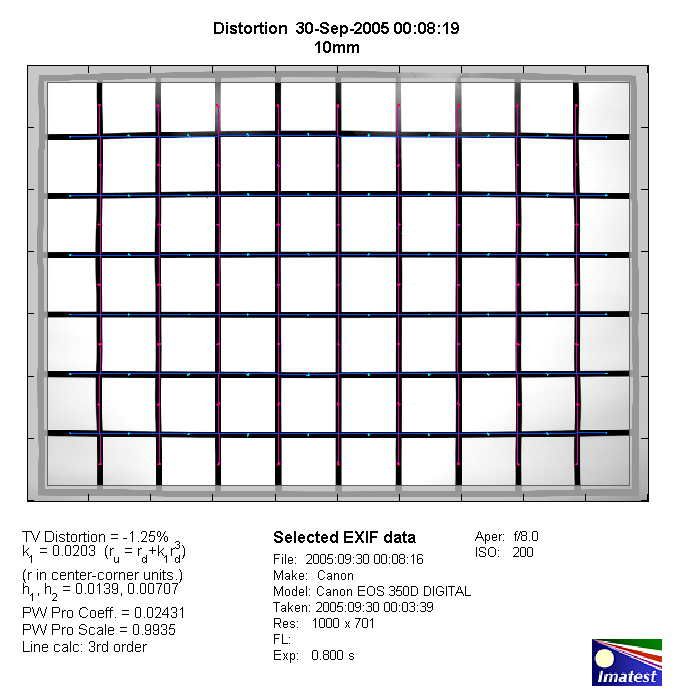
EF-S 10-22mm @ 10mm on APS-C
10mm_distortion.png


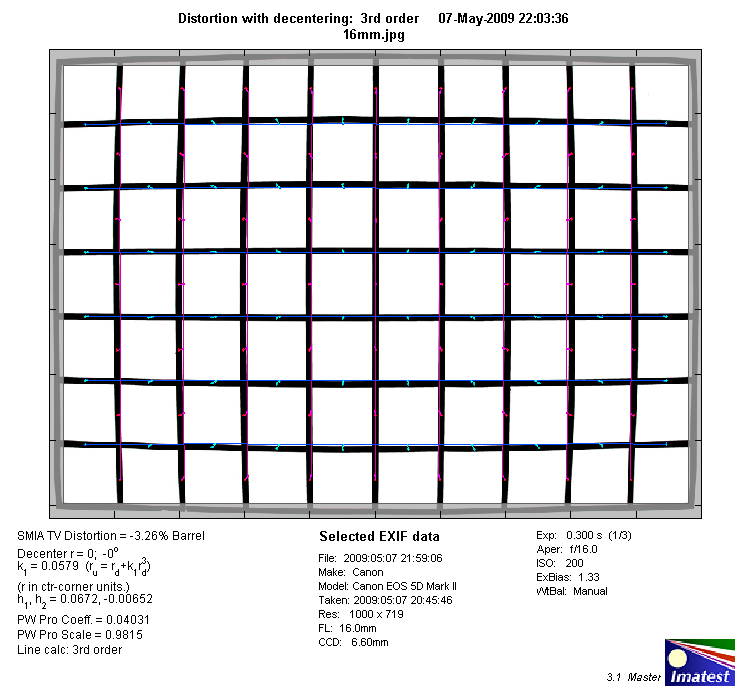
EF 16-35mm f/2.8L II @ 16mm on FF
16mm_distortion.png


1.25% distortion on APS-C vs. 3.26% distortion on FF. Note that that's with the 16-35 II - the distortion on the 17-40L @ 17mm is even worse.

verysimplejason said:
Now, another question, is it 17-40 or 16-35? I'm taking mostly landscape photos using a tripod and long shutter speed. Is the 16-35 a lot better than 17-40 @ F/8 and above for example? I don't worry about low-light. I've got primes to take care of that.

In that case, no - the 17-40mm would be the way to go. I got the 16-35L II because I did want to use it in low light, e.g.:


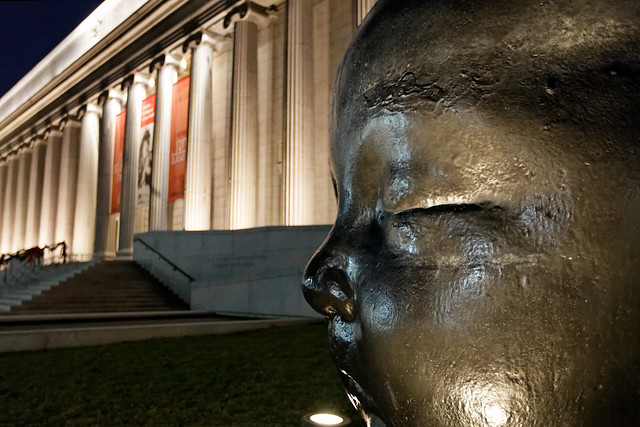
EOS 5D Mark II, EF 16-35mm f/2.8L II USM @ 27mm, 1/25 s, f/2.8, ISO 3200
 
Upvote 0
verysimplejason said:
Thanks for all the replies. Now, another question, is it 17-40 or 16-35? I'm taking mostly landscape photos using a tripod and long shutter speed. Is the 16-35 a lot better than 17-40 @ F/8 and above for example? I don't worry about low-light. I've got primes to take care of that.

If you shoot from f8-11, I would go for 17-40, why waste money on f2.8 if you don't need it. I went for 16-35 II, better in low light and a bit wider ;D.....still waiting for Canon to release 14-24 at least as good as Nikon or better.
 
Upvote 0
Neuro brings up a good point... the 17-40 is indeed quite a bit worse in terms of distortion than the 10-22. If you are using Lightroom you can apply a lens correction profile which does a good job of cleaning it up. I first noticed the distortion when taking a photo of a door near the edge of the frame, and noticing that the door was noticeably bowed.
 
Upvote 0
jabbott said:
Neuro brings up a good point... the 17-40 is indeed quite a bit worse in terms of distortion than the 10-22. If you are using Lightroom you can apply a lens correction profile which does a good job of cleaning it up. I first noticed the distortion when taking a photo of a door near the edge of the frame, and noticing that the door was noticeably bowed.

Yep - and of course, while that distortion can be corrected, that correction further reduces corner sharpness (in this case, maybe 'further increases corner softness' is the better phrasing).
 
Upvote 0
neuroanatomist said:
verysimplejason said:
Now, another question, is it 17-40 or 16-35? I'm taking mostly landscape photos using a tripod and long shutter speed. Is the 16-35 a lot better than 17-40 @ F/8 and above for example? I don't worry about low-light. I've got primes to take care of that.

In that case, no - the 17-40mm would be the way to go. I got the 16-35L II because I did want to use it in low light


While I agree that the 16-35mm may not be $800 worth of IQ compared to the 17-40, there are non-Canon UWA zooms that I like far more than the underwhelming 17-40. I would particularly look at the excellent Tokina 16-28mm f/2.8. The fast aperture will give you additional flexibility for DoF and low lights if you need it some day.
 
Upvote 0
Gosh. Am I the only champion for this "underwhelming" lens? Where I am it's an $800 L lens. It's not the sexiest beast by any stretch but as I said I have found it slightly better than the 10-22. I agree it has more distortion than the former- marginally - but anyone who is concerned about correction of this affecting corner performance should take a reality check. I'm all for pixel peeping - believe me I'm obsessed - but I know enough to know that correcting in LR makes no discernable difference at all in reality. We can choose to ignore that fact for the same of spending $$$$ more for no 'real' difference or we can just roll with it. I spend a lot of time mulling over the former but generally settle on the latter: reality.

I too will be keen to look at the new alleged UWA zoom in the pipeline but for now the 17-40 is doing a perfectly good job for me. I also appreciate the extra length relative to the 10-22 (or by comparison the 16-35).

Interestingly I used my 24-70l quite a bit on a recent trip and I found I was getting just as much distortion and in some instances more out of it than my 17-40 for certain shots. Which surprised me.
 
Upvote 0
neuroanatomist said:
robbinzo said:
This means that on a crop sensor at 10mm, you will get slightly more distortion of verticals than with 16mm on a FF camera.
That's ony true if you're talking about the exact same lens, i.e. a 10mm lens with a FF-sized image circle. When you compare different lenses...

EF-S 10-22mm @ 10mm on APS-C
10mm_distortion.png


EF 16-35mm f/2.8L II @ 16mm on FF
16mm_distortion.png


1.25% distortion on APS-C vs. 3.26% distortion on FF. Note that that's with the 16-35 II - the distortion on the 17-40L @ 17mm is even worse.

verysimplejason said:
Now, another question, is it 17-40 or 16-35? I'm taking mostly landscape photos using a tripod and long shutter speed. Is the 16-35 a lot better than 17-40 @ F/8 and above for example? I don't worry about low-light. I've got primes to take care of that.

In that case, no - the 17-40mm would be the way to go. I got the 16-35L II because I did want to use it in low light, e.g.:


EOS 5D Mark II, EF 16-35mm f/2.8L II USM @ 27mm, 1/25 s, f/2.8, ISO 3200

Good info. Thanks!
 
Upvote 0
Status
Not open for further replies.