"Affordable" telephoto lens for wildlife

Status
Not open for further replies.
Another vote for the 70-300mm L lens - on a APS-C body (eg 7D) - it is a wonderful portable wildlife combo.

As the OP didn't state that more range was needed, but better sharpness (esp in poor light) - I can attest the 70-300mm L is great, sharp, contrasty - also in low light - AF works well, 4 stop IS a real bonus.

Paul
 
Upvote 0
Depends on what you shoot - and when. In good light, or with fast subjects, not having IS isn't an issue. I often don't have enough light for 400mm f/5.6, 1/640 s at ISO 3200 on a 7D - being able to use 1/250 s handheld is a big deal...for me.

As for reach, OP mentions raptors in fall/winter. You can never have enough reach. I'm now at 1200mm f/8 and still cropping sometimes.
 
Upvote 0
Being a rumors site, I'll just mention that a Tamron 150-600 was discussed recently. If it becomes reality, I'll be keen to hear confirmation, reviews and pricing on that. There are also persistent rumors of the Canon 400 f/5.6 being upgraded to include IS. Personally, the only long lens that I've used is the 400 f/5.6. Its a good lens at an ok price. But you give up the flexibility of a zoom and the IS of the 100-400. During early morning and late afternoon, when you're likely to get great photos, IS can be handy (although, obviously is doesn't stop subject movement).

Lately, I've gone a different path. Realising that I can't really justify what I really want (or need?) - a 500mm or 600mm - I'm using smaller lenses and trying to get in closer or having more background to portray wildlife in their natural environment. While its no good for birds in flight, it is much better on the back and wallet. Alternatively, for a small outlay, you can hook a Panasonic 100-300 on to a Micro Four Thirds body. This gives you an image stabilised 200-600 equivalent.
 
Upvote 0
Thanks to everyone for the great feedback on this thread, I will agree with neuroanatomist that to get the "professional" looking tack sharp images you can never have enough reach but I feel that my skill level is not up to that point yet. I want to hone my skills getting closer to the wildlife and I have seen quite a bit of action during my deer hunting days of the past including a hawk swooping in to pickup a chipmunk at less than 100yards from me. Maybe by that time the 600mm version 3 will be out - who knows. for now 400mm should be adequate for me.

I spent a couple of hours looking at photos that I took of the peak of half dome from glacier point between the 100-400L and 70-300 during the Canon photography in the parks - Yosemite program and there is a bit of improvement with the 100-400 but not much difference because I was probably shooting at a stone surface in broad daylight.

I will head into one of the local "big" stores and see if I can try out the different lenses and see if I can notice any differences right away.
 
Upvote 0
Rat said:
balaji said:
Rat said:
balaji said:
I have a 70-200 f4 IS USM lens and I am planning to shoot some bird shots next month (during my vacation). Is there a compatible teleconverter? Canon support person told me that he thinks only f2.8 lens are compatible with 1.4x or 2x teleconverters but does not know for sure if I can use the teleconverter with f4 and manually focus?

Please advise.
I have the 5D3, a 70-200/4 IS and a 1.4x mark II and they play together very well, including reasonably fast AF. The 2x TC's will fit as well, but you will have to focus manually. That's a firmware measure: you get yourself a Kenko 2x TC and you should be able to use AF on f/8. In that case, though, you better be prepared for very slow AF with lots of hunting ;)

Thanks for your quick response. Will there be an IQ difference between Canon and Kenko?
Sure there is, and normally you'd pick Canon over Kenko. Kenko, however, has a whole series of TC's, some pretty good, some pretty bad, most of 'em cheaper than their Canon counterparts. I picked up a 2nd hand 1.7x which is very 'not very good' (but it was cheap though!), I hear their top ones are between Canon's mark II and mark III, IQ-wise. However, I cannot speak from experience.

Thanks RC and Scrappydog
 
Upvote 0
Certainly there are many situations a photographer finds oneself in, and wants "more reach! more reach!" :P

I have found that using patience and getting closer (or as close as possible) to the actual wildlife (including small birds in flight) is important. But obviously this isn't always possible!

In addition to great sharpness wide open (at full tele on a zoom), great IS and fast, reliable USM focus are crucial criteria when I consider a telephoto lens. ;)

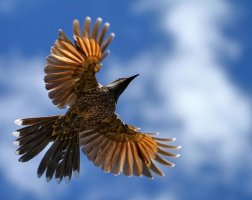
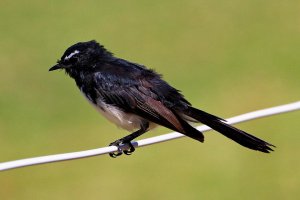
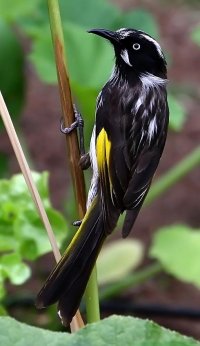
Here are a few examples of what I've managed to achieve using the 70-300mm L on a 7D, handheld.

Paul 8)
 

Attachments

  • Wattlebird #1.JPG
    Wattlebird #1.JPG
    84.5 KB · Views: 1,388
  • Willy Wagtail #1.jpg
    Willy Wagtail #1.jpg
    85.2 KB · Views: 1,614
  • NewHolland #1.JPG
    NewHolland #1.JPG
    64.4 KB · Views: 1,507
Upvote 0
Look at the lenstip site analysis of lenses where they give the resolution in lines per mm. At f/5.6 and 300 mm, the 70-300mm is 30 lppm, the 300 (f/4) is 39, and the 100-400 is 37. At 420 mm and f/5.6 with a 1.4xTC on the 300, its resolution drops to a poor 29 whereas the 100-400 still resolves 35 lpmm. The 300 f/4 is great at 300 mm but is weak with the TC, as generally found by experience. Remarkably, the ancient 100-400 mm well outperforms the 70-300.
 
Upvote 0
pj1974 said:
As the OP didn't state that more range was needed, but better sharpness (esp in poor light) - I can attest the 70-300mm L is great, sharp, contrasty - also in low light - AF works well, 4 stop IS a real bonus.

I really like my 70-300L and would recommend it without hesitation, but I have to say one drawback is that (at least with my 60d) the af precision @300mm is lacking in low light simply because the lens then is @f5.6. This doesn't really matter because in these cases you cannot get good images with the current aps-c sensor anyway, but it should be mentioned that this is a good-light outdoor lens.

And the IS may be marketed as 4 stop, but I'd rather say it's max 2 stop in real life and to get guaranteed sharp shots @100% crop you still have to use high shutter speeds.
 
Upvote 0
scrappydog said:
I'm not sure what times of day that you intend to do your shooting, but I found that sometimes a faster lens is absolutely critical.

.. but since the op was asking about *tele* lenses: if you add a tc to the 70-200/2.8 for more reach it's only f4 or f5.6, too and the af speed degrades.

And at least for what and when I'm shooting with the 70-300L, I discovered either that it works just fine (in good light) or that the light at very cloudy days, dawn or sunset is so bad that 1 stop more wouldn't help anyway. These are cases for another category of fast tele primes, and well beyond my (and the op's) budget.

Btw: It is debatable if the 70-200/2.8L IS can be still counted as "affordable", I'd only say that for the non-IS version but IS is very handy for stabilizing the frame esp. in tele shots.
 
Upvote 0
scrappydog said:
I'm not sure what times of day that you intend to do your shooting, but I found that sometimes a faster lens is absolutely critical. I bought my 70-200 f/2.8 II because my 70-200 f/4 IS was not fast enough in early dawn light to capture the raptors in my area before they left the nest to hunt.

That also depends on the body. An f/2.8 lens on a 7D shot at ISO 3200 wil have more noise in the inage than an f/4 lens on a 5DIII shot at ISO 8000. The ~1.5-stop better ISO performance actually more than makes up for the loss of that stop in the lens.
 
Upvote 0
The 7D with 400 f5.6 is a good combination. I don't find that a lack of IS is too much of an issue, if you are shooting from a hide I use a tripod, down to 1/250 I can get sharp shots with a tripod. Your limited by the quick movement of the birds anyways so often need a higher shutter speed to freeze movement. Shooting handheld with a slow or stationary subject it where you'll find the benefit of IS.

Have a look at my Birds set of Flickr to see the results of this combination. http://www.flickr.com/photos/eimajm/sets/72157624573654777/

If you really want IS 100-400 is a popular lens, and good for general wildlife/nature due to the zoom, but more expensive that the 400 bare.

Have fun with whatever you decide.
 
Upvote 0
The title of the thread is "affordable" for wildlife - this limits the choices to likely the 100-400L, 400 5.6L or 70-200 f4L.
I have the 70-200 f4L IS and it is without a doubt one fantastic lens - but it is unacceptable for servo focusing on in-flight birds or other fast moving subjects.
Of the other 2 choices, the 400 f5.6 would be my choice for the application requested because of its light weight, maneuverability and very fast AF/servo. You will rarely, if ever, find yourself having to "back-off" because you're too close to something with a 400mm fixed lens for wildlife - on the contrary, you will still be performing post cropping even on a crop-body camera. I reach for this lens more than 50% of the time for various uses such as birds-in-flight, general wildlife and action such as surfing, kite surfing, etc.
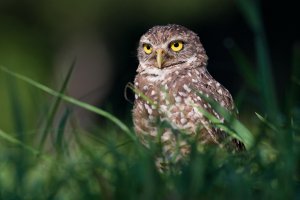
Here's a couple wildlife images taken with the 400mm f5.6L . . .
 

Attachments

  • IMG_5153b.jpg
    IMG_5153b.jpg
    216.1 KB · Views: 1,658
  • IMG_7649b.jpg
    IMG_7649b.jpg
    408.3 KB · Views: 1,671
Upvote 0
Nice bird shots, triggermike, can you tell us if in taking them you hand held or used a tripod with your 400 f5.6? Either way, what's your overall take on IS vs no IS with this lens and why do you prefer it over the 100-400L?
 
Upvote 0
Not having used any of these lenses (except for a few exposures with the 400 /5.6) but having read a lot of reviews my take on the subject is:

I would also say 400 /5.6.

Shutterspeeds for birds should be high anyway, and IS would not make a huge difference. Glass is very sharp, colours are great and contrasty.

Second choise would be 100-400 because of IS, if you would like to use the lens for other things than wildlife. This is also a sharp lens, but lacks contrast compared to the 400 prime.

Third choise, and IMO the best choise if budget allows , is Sigma 120-300 /2.8 OS (there is a new version comming out that should have better AF because of a focus limiter but no reviews yet). That baby takes 2x converters while keeping AF on non pro bodies. You can do the math but I really enjoy writing 600 /5.6 OS so much that I write it anyway. 600 /5.6 OS. Oh and it seems (some of you are going to hate me for stating this) that if you need more focal lenght this lens is a better choise than 70-200 /2.8 + 1.4 or 2.0 extender, unless you compare in the far corners. This is because you are always one stop faster >200 mm and that usually gives better pictures when photographing birds in flight. Also, at approx. 300 mm you have the 1.4x on the 70-200 but no extender on the 120-300, @ 300-400 mm you have the 2x extender on the 70-200 and start to take a hit while you only have the much better 1.4x on the 120-300. Then of course, @> 400 mm the Sigma goes on for another 200 mm up to 600mm, something the 70-200 can not do.

so @ focal lengths of 70-200 the canon wins, on all other they are tied or the sigma is better, then > 400 mm the canon is out. And reach is king for birds.

This argument comes from my studies of sample shots at

http://the-digital-picture.com/Reviews/ISO-12233-Sample-Crops.aspx?Lens=803&Camera=453&Sample=0&FLI=0&API=0&LensComp=687&CameraComp=0&FLIComp=0&APIComp=0

You may not come to the same conclution and I will not defend my statement in endless debate. We all have our favourites and criterias for what will make "the perfect lens". A drawback on the Sigma is its bulk and weight - making it unsuteble for portraits and events where the 70-200 shines.

The Sigma is probably my next lens, btw.

good luck with your choise.

 
Upvote 0
Both handheld, though the owl shot was done while laying on the ground (still plenty of light.)
As one of the previous posters noted, when photographing moving objects, a faster shutter speed is required - thus IS doesn't really play into the process (unless you happen to get a nice, even panning situation like cars or land animal?)
I have not really found times when I couldn't use this lens. For still wildlife, especially when far away (like an eagles nest or something like that) I usually use a tripod anyways with a remote release. I use this lens for watersports as well with great results . . .
 

Attachments

  • IMG_3423a.jpg
    IMG_3423a.jpg
    522.2 KB · Views: 1,445
Upvote 0
I'd like to also state that all the images posted on this thread are amazing - thanks to all who shared!

for birds and small animals I end up doing a lot of cropping at 300mm so I suspect that I will be shooting at 400mm more often than not. I do shoot other type of photography (macro being my favorite) so I am covered on shorter focal lengths (my 100L macro is my goto lens lately for portraits of people and insects....).

from what I have seen here, the 400mm5.6 is starting to look like my next lens, but I will not make any purchase until I've had a chance to shoot all of the previously mentioned lenses at my local store... also need to wait for things to get back to normal after Sandy's aftermath here in new york.

of course like most of the folks on this forum, I do hope that one day I end up with a "complete set" of bodies and lenses but other priorities do come first as this is a hobby for me and not a profession.
 
Upvote 0
yes, I agree... I currently shoot a rebelXT (8MP from 2005) so anything is an upgrade. I did try the 5D3 with the 24-70 (original) on the same Canon program this past summer and I found the image quality to be excellent at ISO 3200 and minimal noise at 6400.

too bad the 5d3 is on a roller coaster ride with these prices....
 
Upvote 0
neuroanatomist said:
Depends on what you shoot - and when. In good light, or with fast subjects, not having IS isn't an issue. I often don't have enough light for 400mm f/5.6, 1/640 s at ISO 3200 on a 7D - being able to use 1/250 s handheld is a big deal...for me.

As for reach, OP mentions raptors in fall/winter. You can never have enough reach. I'm now at 1200mm f/8 and still cropping sometimes.
+1
You can't have a lens that is too long for birds and wildlife unless you are shooting in a zoo. Light is the big issue. I use my 580 EX II plus a Better beamer. It makes a huge difference when in shadows or low light.
http://www.naturescapes.net/store/visual-echoes/
Here is a image with the better beamer in good light, it elimated the shadow which otherwise covered the birds head.
1. Fill light with Better Beamer in relatively good light, 100-400mmL at 400mm
20100426-EMW_8631-L.jpg
 
Upvote 0
depending on your definition of "Affordable"
the sigma 120-300 f2.8 looks awesome i'm waiting for the new one though

if thats too steep the canon 300 f4L IS is really great even if its old the IS makes clunk noises but its still a very nice lens and can be found reasonably cheaply second hand I only paid $800 for mine!
 
Upvote 0
Status
Not open for further replies.