
You are using an out of date browser. It may not display this or other websites correctly.
You should upgrade or use an alternative browser.
You should upgrade or use an alternative browser.
Beautiful sunsets
- Thread starter Pitbullo
- Start date


"The root cause is that the foreground is just way, way too bright. As a result, overall scene contrast is way too low. Humans are very sensitive to light that isn't right, which makes real composites really hard - you have to get the light to match in the two frames you're combining."
Hi Jon, I think Lee Jay may have put in words what I was feeling. There is this loss of sense of the direction of the lighting and for me I also seem to like areas where it's just plain dark and lacking in detail - maybe that creates contrast that contributes to a sense of awe. My bias seems to be towards under exposed. While your composition may be "unnatural" that doesn't mean it isn't impressive and just what the doctor ordered for those who don't share my bias.
:-[ I only use DPP and as I said am not the one to judge. However, this got me wondering about my prior tendency that I've largely abbandoned, that is, pulling more detail from the shadows of my fairly correctly exposed bird shots (up for blacks, down for blown whites (decreases contrast)). Any thoughts?
Jack
Hi Jon, I think Lee Jay may have put in words what I was feeling. There is this loss of sense of the direction of the lighting and for me I also seem to like areas where it's just plain dark and lacking in detail - maybe that creates contrast that contributes to a sense of awe. My bias seems to be towards under exposed. While your composition may be "unnatural" that doesn't mean it isn't impressive and just what the doctor ordered for those who don't share my bias.
:-[ I only use DPP and as I said am not the one to judge. However, this got me wondering about my prior tendency that I've largely abbandoned, that is, pulling more detail from the shadows of my fairly correctly exposed bird shots (up for blacks, down for blown whites (decreases contrast)). Any thoughts?
Jack
Upvote
0
Happened to notice this on the 7D2 thread and I guess it descibes what I was falling into and maybe sheds light on the flower lighting debate.
Jack
Woody said:Diltiazem said:When i first got my D600 I was lifting shadows right, left and center (and more). It was like an obsession. I was intentionally looking for scenes that would need shadow lifting. After some time it wasn't fun anymore. Soon though, couple of things occurred to me. a) I wasn't doing photography anymore, I wad doing experiments only. b) In my kind of photography I very rarely needed extreme shadow lifting that Canon couldn't handle. After the realization fun in photography has returned and more than 90% of the time they are done with Canon gears.
So, I would say if someone's work involves lot's of shadow lifting and if someone is not willing to do other techniques (filter, exposure blending etc), then Exmor will do a much better job than Canon. But don't expect miracles. Better doesn't mean perfect.
100% in agreement
Also, I find that for flower photos, the best ones usually are side-lit or front lit in order to make the colors pop. Sunflowers tend to face the east, so sunrise photos make most sense. Sunset photos of sunflowers are typically dull because the colors are washed out. Unless there's some compelling background, I don't see any benefit to shoot into the sun for sunflower shots; such is the case for the posted photos.
Jack
Upvote
0

@Jack and Lee Jay: You guys should go stand out in a sunflower field some time, and tell me how bright the foreground looks compared to the sky and sun. The sunflowers, despite facing away from the sun, don't look dark and deeply shaded...they are much brighter. I may have them just a little too bright in this photo...but I think you guys are looking for a photo that is not actually representative of reality when you ask for the foreground to be so much darker.
I remember the shading of the foreground...there were no deep black shadows at all...the ground underneath the flowers was clearly visible. There were no very dark shadows underneath the upper leaves, etc. The only real major difference here is that the sky to my eyes was not nearly as colorful. It was more washed out in reality, however I prefer the more colorful version I have in my photos.
Anyway, I don't expect everyone to like these photos. I haven't finished processing them yet...I have about half a dozen and I have to do HDR on all of them. I'll post them all when I'm done, as I'd like to hear your thoughts. However I think you should try to photograph sunflowers into a sunset sometime, and let me know what you think. You might be surprised at what your eyes see vs. what the camera sees.
I remember the shading of the foreground...there were no deep black shadows at all...the ground underneath the flowers was clearly visible. There were no very dark shadows underneath the upper leaves, etc. The only real major difference here is that the sky to my eyes was not nearly as colorful. It was more washed out in reality, however I prefer the more colorful version I have in my photos.
Anyway, I don't expect everyone to like these photos. I haven't finished processing them yet...I have about half a dozen and I have to do HDR on all of them. I'll post them all when I'm done, as I'd like to hear your thoughts. However I think you should try to photograph sunflowers into a sunset sometime, and let me know what you think. You might be surprised at what your eyes see vs. what the camera sees.
Upvote
0
Lee Jay said:I have sunflowers right outside my office.
In very rough terms, this is how I think your image should look, compared to yours. I didn't mess with the sky or colors, just the tonality.

I agree that my image should probably have a slightly darker foreground, but I do think that your version is much too dark in the shadows. I like to replicate what I see, and what I saw wasn't so contrasty. I think contrast is often largely a matter of taste, so I understand not everyone will like every photo. I'm working on some other HDR photos from this same field...when I'm done with them, I'll touch up this one, and share them all.
Upvote
0

Jon, beauty is in the eye of the beholder and that's the way it must be. In so far as it's closer to what you recall seeing, I agree with your interpretation. I certainly don't dislike it! Keep em coming.
Jack
Keep em coming.Jack
Upvote
0
Jack Douglas said:mustafaakarsu, lovely! Wish I was there that moment.
Jack
Thanks Jack. It was a really nice point and timing was very good.

Upvote
0


Ah, I understand your question now. I think it's just that your not seeing the benefits of the HDR at full size. Here is a comparison of the HDR in the "shadows" (not really shadows, it's definitely midtones, since it's the sunflowers, which are the primary subject of the image), and a single-frame shadow pull:

If I wanted to print this (I do, actually), the single-frame shadow pull is entirely unacceptable for that purpose. I already have people who want prints of this, family and friends, and I'm sure others will as well. At 13x19, the size I usually print at home, the difference in detail and detail clarity between the HDR and the shadow pull is totally obvious. There is a huge difference in detail, the HDR version has TONS more, and it's crisper and sharper and has more color fidelity. For larger prints, even gallery wraps up to 48x36", the better detail of the HDR is that much more important, because of the need to upsample.
[/quote]
Thank you jrista for your comprehensive and lushly illustrated and demo'd breakdown of your fantastic HDR image. As I fancy shooting at night or indoor under subdued lighting I have been eager to incorporate hdr into my workflow but haven't been able to grasp the technique by reading up, you-tubing, kelbying, and ps-usering the subject. Your verbosity, along with the gifs and annotated gifs have opened my eyes quite a bit more than before. Thanks much...
If I wanted to print this (I do, actually), the single-frame shadow pull is entirely unacceptable for that purpose. I already have people who want prints of this, family and friends, and I'm sure others will as well. At 13x19, the size I usually print at home, the difference in detail and detail clarity between the HDR and the shadow pull is totally obvious. There is a huge difference in detail, the HDR version has TONS more, and it's crisper and sharper and has more color fidelity. For larger prints, even gallery wraps up to 48x36", the better detail of the HDR is that much more important, because of the need to upsample.
[/quote]
Thank you jrista for your comprehensive and lushly illustrated and demo'd breakdown of your fantastic HDR image. As I fancy shooting at night or indoor under subdued lighting I have been eager to incorporate hdr into my workflow but haven't been able to grasp the technique by reading up, you-tubing, kelbying, and ps-usering the subject. Your verbosity, along with the gifs and annotated gifs have opened my eyes quite a bit more than before. Thanks much...
Upvote
0

You absolutely do not need HDR techniques for shooting "indoor under subdued lighting" and rarely for "shooting at night" either. HDR is not about getting detail in a dark image, it is about getting detail when there is a big difference between the lightest parts of the image and the darkest.mdmphoto said:Thank you jrista for your comprehensive and lushly illustrated and demo'd breakdown of your fantastic HDR image. As I fancy shooting at night or indoor under subdued lighting I have been eager to incorporate hdr into my workflow but haven't been able to grasp the technique by reading up, you-tubing, kelbying, and ps-usering the subject. Your verbosity, along with the gifs and annotated gifs have opened my eyes quite a bit more than before. Thanks much...
Upvote
0

An oldie from 2009, taken from the Grassy Lake Dam right on the border between Yellowstone and Grand Tetons NP.
EOS 30D with EF-S 17-85 @ 17mm, ISO 200, 1/320, f/11, handheld
Upvote
0

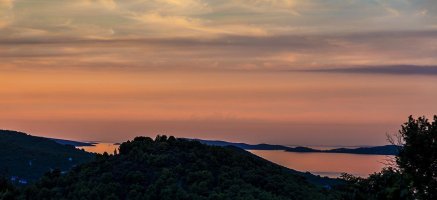
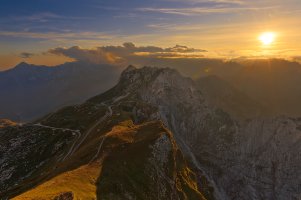

climber said:2x 4 shots manually blended. Both two sets were same, except in second 4 shots I put my hand in front of the sun to prevent the flare. (It almost worked)
Love the light and velvety texture in the foreground.
Upvote
0

climber said:2x 4 shots manually blended. Both two sets were same, except in second 4 shots I put my hand in front of the sun to prevent the flare. (It almost worked)
Lovely picture, you seems to be knocking out some lovely atmospheric shors at the moment !
Upvote
0
Similar threads

- Replies
- 33
- Views
- 3K
- Replies
- 28
- Views
- 3K

- Replies
- 0
- Views
- 397
