
You are using an out of date browser. It may not display this or other websites correctly.
You should upgrade or use an alternative browser.
You should upgrade or use an alternative browser.
Can multiple (or dual) native iso technology be applied to photography?
- Thread starter Cryve
- Start date

In digital photography, ISO settings are just changing the gain of the transistors that amplify the signals output from the sensor. You effectively change the ISO in post production by adjusting exposure settings.
I'm not certain what you mean by the quiestion.
In some very specialized camera film, there were layers of emulsion that acted like a filter to create a wider dynamic range, when brighter light hit one area, the 2nd or even 3rd layer was exposed. This was used to film atomic explosions where extremely high DR was required.
The ability to selectively change ISO, pixel by pixel for digital photography is possible, but so far impractical. You can take quick successive images of a scene at different exposures by changing whatever parameters your camera allows.
And, finally, the dual pixel technology actually produces two images, one from each half of the pixel. Those images have a slightly different exposure (ISO?) due to their position. They can be combined along with the combined image output by the camera to increase DR and it works, but is normally not worth the hassle. Google DPR Split.
If I misunderstood the question, perhaps a explanation with more details might get me on the right track.
I'm not certain what you mean by the quiestion.
In some very specialized camera film, there were layers of emulsion that acted like a filter to create a wider dynamic range, when brighter light hit one area, the 2nd or even 3rd layer was exposed. This was used to film atomic explosions where extremely high DR was required.
The ability to selectively change ISO, pixel by pixel for digital photography is possible, but so far impractical. You can take quick successive images of a scene at different exposures by changing whatever parameters your camera allows.
And, finally, the dual pixel technology actually produces two images, one from each half of the pixel. Those images have a slightly different exposure (ISO?) due to their position. They can be combined along with the combined image output by the camera to increase DR and it works, but is normally not worth the hassle. Google DPR Split.
If I misunderstood the question, perhaps a explanation with more details might get me on the right track.
Upvote
0
Thank you for your response.
To my understanding the native iso is the lowest iso setting. It is also the cleanest.
I think a good analogy is if you imagine someone talking into a megaphone.
The speaking is the native iso and the megaphone is the gain applied.
If you talk softly and then amplify that a lot with the megaphone it is gonna sound very bad at high volume (high iso)
But when you talk very loud (high nativr iso like 2500) and then amplify that, it wont sound that bad because it doest have to be amplified that much to reach the same high volume.
So far most cameras had only one native iso (usualy 100 / = soft speaking) but some newer video cameras have dual native iso where they have a circuit for a lower iso setting like 100 but also one for a higher iso like 2500.
The effect is that those cameras have very clean high iso.
So far i have only seen this in video cameras. My question is if this tech can also be used for photogeaphy.
To my understanding the native iso is the lowest iso setting. It is also the cleanest.
I think a good analogy is if you imagine someone talking into a megaphone.
The speaking is the native iso and the megaphone is the gain applied.
If you talk softly and then amplify that a lot with the megaphone it is gonna sound very bad at high volume (high iso)
But when you talk very loud (high nativr iso like 2500) and then amplify that, it wont sound that bad because it doest have to be amplified that much to reach the same high volume.
So far most cameras had only one native iso (usualy 100 / = soft speaking) but some newer video cameras have dual native iso where they have a circuit for a lower iso setting like 100 but also one for a higher iso like 2500.
The effect is that those cameras have very clean high iso.
So far i have only seen this in video cameras. My question is if this tech can also be used for photogeaphy.
Last edited:
Upvote
0

So far most cameras had only one native iso (usualy 100 / = soft speaking) but some newer video cameras have dual native iso where they have a circuit for a lower iso setting like 100 but also one for a higher iso like 2500.
The effect is that those cameras have very clean high iso.
So far i have only seen this in video cameras. My question is if this tech can also be used for photogeaphy.
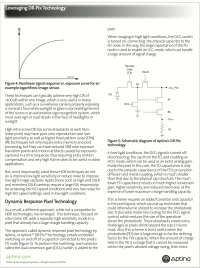
Many stills oriented camera sensors (those in for example the Sony a7rii, a7riii, a7iii, nikon D850, and presumably some Panasonic and Fuji cameras but I haven’t looked) utilize (under license) a design owned by Aptina they call DR-Pix to achieve two separate analog conversion gains at the pixel level. They have a single circuit, but they switch a capacitor in or out depending on whether they want low or high conversion gain. Theoretically you could chain additional capacitors to affect more than two base conversion gains.
Attachments
Upvote
0
Many stills oriented camera sensors (those in for example the Sony a7rii, a7riii, a7iii, nikon D850, and presumably some Panasonic and Fuji cameras but I haven’t looked) utilize (under license) a design owned by Aptina they call DR-Pix to achieve two separate analog conversion gains at the pixel level. They have a single circuit, but they switch a capacitor in or out depending on whether they want low or high conversion gain. Theoretically you could chain additional capacitors to affect more than two base conversion gains.
thanks, i didnt know that.
that mostly answers my question.
Do you know if canon also uses this technology?
Upvote
0
From what I've read of Canon patents and publications, the concept of native ISO and gains are a greatly simplified explanation based on a high level view of the sensor performance.
I'm certain that improvements can and will happen, but only as technology allows it to happen for low cost mass production. There is little doubt that Sony has some very sophisticated sensor production technology, producing multi layered sensors is incredibly difficult.
Canon's dual pixel technology works very well, but it may also make some aspects of sensor production more difficult. The rumored Canon 75 mp dual pixel sensor needs control for 150 mp, at least in part, so, in that sense. its a leading technology. I think that Canon may move toward using different ISO's for each half of a dual pixel to increase DR, but its not something that I actually know anything about, just a logical next step.
I'm certain that improvements can and will happen, but only as technology allows it to happen for low cost mass production. There is little doubt that Sony has some very sophisticated sensor production technology, producing multi layered sensors is incredibly difficult.
Canon's dual pixel technology works very well, but it may also make some aspects of sensor production more difficult. The rumored Canon 75 mp dual pixel sensor needs control for 150 mp, at least in part, so, in that sense. its a leading technology. I think that Canon may move toward using different ISO's for each half of a dual pixel to increase DR, but its not something that I actually know anything about, just a logical next step.
Upvote
0
Thank you for your response.
To my understanding the native iso is the lowest iso setting. It is also the cleanest.
I think a good analogy is if you imagine someone talking into a megaphone.
The speaking is the native iso and the megaphone is the gain applied.
If you talk softly and then amplify that a lot with the megaphone it is gonna sound very bad at high volume (high iso)
But when you talk very loud (high nativr iso like 2500) and then amplify that, it wont sound that bad because it doest have to be amplified that much to reach the same high volume.
So far most cameras had only one native iso (usualy 100 / = soft speaking) but some newer video cameras have dual native iso where they have a circuit for a lower iso setting like 100 but also one for a higher iso like 2500.
The effect is that those cameras have very clean high iso.
So far i have only seen this in video cameras. My question is if this tech can also be used for photogeaphy.
I don't understand why having a native iso of 2500 helps. At that level, the noise is caused by fluctuations in the number of photons and the circuit noise from the amplifiers is negligible. Please explain why it helps. The megaphone analogy is wrong for the best Canon, Nikon and Sony sensors because they are isoinvariant - you have the same S/N if you change the iso by x ev or by pushing in post by x ev, or in your analogy shouting twice as loud gives the same clarity as doubling the amplification.
Upvote
0
I don't understand why having a native iso of 2500 helps. At that level, the noise is caused by fluctuations in the number of photons and the circuit noise from the amplifiers is negligible. Please explain why it helps. The megaphone analogy is wrong for the best Canon, Nikon and Sony sensors because they are isoinvariant - you have the same S/N if you change the iso by x ev or by pushing in post by x ev, or in your analogy shouting twice as loud gives the same clarity as doubling the amplification.
Thanks for clarifying that. i dont have a deep understanding of the matters discussed, hence my asking.
Cameras like the panasonic gh5s and the cinema cameras from panasonic have dual native iso technology with the claimed effect that it reduces noise at high iso dramaticaly. i thought this could be applied to photos aswell.
If you say that most of the noise comes from photonfluctuations, does that mean that we basicaly have reached almost the best high iso possible regarding noise?
Upvote
0
At present we appear to be stuck with the S/N for high isos. Basically all the good sensors have the same S/N at higher isos for a given size of sensor - the larger the sensor the better S/N because the larger the photon flux. There needs to be a breakthrough in the quantum efficiency of sensors to increase signal to noise at higher isos, but that could give only another stop or so. Thanks for raising the issue - all well meaning questions raise useful discussion.Thanks for clarifying that. i dont have deep understanding of the matters discussed, hence my asking.
If you say that most of the noise comes from photonfluctuations, does that mean that we basicaly have reached almost the best high iso possible regarding noise?
Upvote
0
thanks, i didnt know that.
that mostly answers my question.
Do you know if canon also uses this technology?
Not to my knowledge. You can see it fairly distinctly if you look at dynamic range charts at photonstophotos.net. The sony cameras here switch the capacitors out at 640ISO, and there is a resulting increase in dynamic range. Recent canon cameras don't exhibit such a reversal.
It’s not hugely significant in the sony cameras charged. It buys you basically a half stop higher ISO without a DR penalty.
http://photonstophotos.net/Charts/PDR.htm#Canon EOS 1D X Mark II,Canon EOS 5D Mark IV,Sony ILCE-7M3,Sony ILCE-7RM2,Sony ILCE-7RM3
Edit: looks like the Panasonic GH5S switches at 800 with a similar marginal improvement.
http://photonstophotos.net/Charts/PDR.htm#Panasonic Lumix DC-GH5S
Last edited:
Upvote
0

Actually, I had problem with the dual ISO in Panasonic (setting dual iso to AUTO) that when moving from a dark to lighter environment (e.g. room and outside), even with a fixed aperture lens, I was getting fluctuating exposure that was quite noticeable in video. It seems that the switching between circuitry did not only affect the noise but also exposure.
Upvote
0
With the usual warning and caveat - have you looked at MagicLantern? I've run dual-ISO in my 5D3 with ML, and gotten some interesting results. In some cases it works great, in others not as good. Now that I've had the sensor replaced, mainboard replaced, and a full-spectrum mod, I'm debating putting it back on there to see how it behaves.
Upvote
0

Unfortunately for us, most sensors in the 80 to 90 percent efficiency range and there are very little gains to be made there. About the only real improvement that I can imagine is if you could somehow get each photocell to count photons and that way avoid having an A/D circuit.At present we appear to be stuck with the S/N for high isos. Basically all the good sensors have the same S/N at higher isos for a given size of sensor - the larger the sensor the better S/N because the larger the photon flux. There needs to be a breakthrough in the quantum efficiency of sensors to increase signal to noise at higher isos, but that could give only another stop or so. Thanks for raising the issue - all well meaning questions raise useful discussion.
Upvote
0
Unfortunately for us, most sensors in the 80 to 90 percent efficiency range and there are very little gains to be made there. About the only real improvement that I can imagine is if you could somehow get each photocell to count photons and that way avoid having an A/D circuit.
The figure of 80-90% is for a narrow band of wavelengths around lambda(max), ie at the wavelength at the peak of the curve, and is not the real overall efficiency, which depends on integrating the area under the curve of QE vs lambda plus other factors. So, what is important is the effective quantum efficiency, which is much lower - explained here: http://www.strollswithmydog.com/the-difference-between-peak-and-effective-quantum-efficiency/ and very nice discussion here: https://www.strollswithmydog.com/effective-quantum-efficiency-of-sensor/
Upvote
0
Similar threads
D
- Replies
- 32
- Views
- 5K

- Replies
- 20
- Views
- 3K


- Replies
- 14
- Views
- 2K

- Replies
- 108
- Views
- 23K