Canon 5Ds-r Martin Parr / Magnum - Just use it on Program Mode !

sanj said:
krisbell said:
I have enjoyed reading this thread - and in particular Tinky's responses that have made me think a little deeper about what 'art' is and as such the below statements are largely directed for you.

In your reference to Kanye West you say you could not deny he is an artist even though you dont like anything he produces. Surely there must be a cut off somewhere? Does any person that claims or wishes to be thought of as an artist have an automatic shield whereby from that point onwards no-one can deny he/she is an artist because art is subjective and divisive and just because you dont get it does not mean they arent an artist? I'm not trying to be clever, it is a question I struggle with and leads me on to my next point...

...much of the weight behind Martin Parr being an undeniable artist is his featuring in numerous galleries, selling lots of prints, receiving lots of awards, memberships etc. Surely this is no proof or even evidence of art credentials by the same logic as you have used about what makes art so undefinable. All these points indicate is that someone has achieved popular status. Whether that is to do with clever marketing, right product/place/time, luck, influential friends/family, bribery or actual artistic merit is up to debate (and I suspect in reality will be a combination of the above). Most of the 'artists' you see selling millions of records are effectively blank canvas dolls that do not write their own music, are told what to wear and where to appear and what to say by their record marketing departments (i'm thinking Taylor Swift et al.). Does their meteoric success have any bearing on how much of an artist they are? I see people on an almost daily basis on the London underground with better voices, greater playing skills, more original musical ideas etc etc

At the Tate Modern in London you can view highly acclaimed pieces of art that comprise a canvas painted entirely black. To some it represents deep, insightful social commentary or an introspective expose on the state of mind of the artist at one point in time. To me it is nonsense and to elevate it to art status means anything anyone has ever produced through a creative process is art - surely this is too broad a definition?

And I'll leave you with one final, highly amusing link....

https://www.youtube.com/watch?v=nwN6dPNXklg

Yessssss!

Me same.

The photographer we discussing is not 'nonsense' at all, just not the type that produces, to me, 'high art' photos.
+1
+1
+1

:)
 
Upvote 0
There are 3 examples of his photos posted on this tread to prove he is 'hi art' and am assuming are amongst his best.
1. The first photo is interesting ONLY because it is a top angle.
2. The second photo is a 'tourist' photo seen dime a dozen. Taken dime a dozen. Slice of life but nothing special.
3. The third photo is what my daughter and her friends take when having fun. Art?? Please!

But lets not make this discussion akin to religion. Different people like different things. Different people find different photos 'high' art.

We should not call anyone ignorant or stupid because of their choices, that kicks of a heated debate.
 
Upvote 0
Mt Spokane Photography said:
Give his images a few dozens or a hundred years, and then see if they are still considered as influential art. I'm not judging them, but the test of time is one method of judging art.
We won't be around in a few hundreds years (probably) but I think Martin Parr's work will stand the test of time. His work says alot about our age and especially about British society. I've no idea if he is technically proficient with a camera but he has some brilliant pictures (some funny, some sarcastic, some very cutting). His books are well worth looking at. People glance at this work and dimiss it but give it a second or third look and you see the meaning in his pictures. The are not lucky pictures they are a matter of a photographer being in the right place and time for the decisive moment. That type of photography is not to everyones taste, but I do think its photography that matters. It holds a mirror to our society and its not always pretty.
 
Upvote 0
Tinky said:
........But what comes out any of them still wont be art.
This really is an interesting thread, and this is the difference between Martin Parr and us? he has overwhelming self-belief!! (i'm not suggesting you don't Tinky :) )
I do not follow art or artists at all, fine art or whatever; but I think I can understand what Tinky is saying and suggesting in his defence of Martin Parr, he is a fan and that in itself means to him that Mr Parr is a fine art artist.
In reference to the Kanye comment, again he’s (definitely) not to my taste, but he sells out stadiums and is a platinum artist, because I simply can’t stand the genre does that mean he’s not an artist?
Likewise, I have been an devoted Metallica fan since 1985 and I’ve seen then 14 times, if a Kanye fan was to be made to listen to them back to back he’d be saying the same thing I just said above.
It’s all horses for courses…………………and I’d never seen a single piece of Martin Parr art until Tinky posted those examples!!
I must admit that I can see the humour in his work, the abstract beach sunbathers with the Disney characters facing the viewer, the irony of the fully clothed Muslim women at the beach where flesh is the norm, and finally the number of people “holding up” the leaning tower taken from a funny angle showing how silly they look; I must admit, that one made me LOL.
 
Upvote 0
Hector1970 said:
Mt Spokane Photography said:
Give his images a few dozens or a hundred years, and then see if they are still considered as influential art. I'm not judging them, but the test of time is one method of judging art.
We won't be around in a few hundreds years (probably) but I think Martin Parr's work will stand the test of time. His work says alot about our age and especially about British society. I've no idea if he is technically proficient with a camera but he has some brilliant pictures (some funny, some sarcastic, some very cutting). His books are well worth looking at. People glance at this work and dimiss it but give it a second or third look and you see the meaning in his pictures. The are not lucky pictures they are a matter of a photographer being in the right place and time for the decisive moment. That type of photography is not to everyones taste, but I do think its photography that matters. It holds a mirror to our society and its not always pretty.

Sure. Agree. I think he is a fine, twisted journalistic photographer. But 'high' art?
 
Upvote 0
sanj said:
There are 3 examples of his photos posted on this tread to prove he is 'hi art' and am assuming are amongst his best.
1. The first photo is interesting ONLY because it is a top angle.
2. The second photo is a 'tourist' photo seen dime a dozen. Taken dime a dozen. Slice of life but nothing special.
3. The third photo is what my daughter and her friends take when having fun. Art?? Please!

But lets not make this discussion akin to religion. Different people like different things. Different people find different photos 'high' art.

We should not call anyone ignorant or stupid because of their choices, that kicks of a heated debate.

1. Bricolage. Patterns. Composition. Colour. Abstract (assisted by the POV) detached (it's not part of it, it's not a holiday makers snap, it's observing, and so inviting you to observe.

2. Each to their own. I take it as a comment on islamaphobia. In the west we are increasingly encouraged to view muslims as all being very serious and pious at best, or Isis extremists at worst. This pinpricks that perception. It's actually great fun.

3. It's a familiar scene. And there are tourists within it. All doing the funny leaning tower thing.
But thats not what he's captured. He's captured a group all doing the same thing. Not one is actually in line with the tower, he's capturing a moment of everybody elses captured moment. It is the anti-photo-bomb, the anti-selfie. And again, mocks the human condition. It's not the snap you would take of a friend of or loved one.
It's an observation on you taking the snap. En masse. I think it is very simple and very very funny.

I don't want to be the evangelist for Parrs work, each can make up their own mind, but I simply warn not to dismiss it as art simply because it is not to your taste, that is what is in danger of seeming stupid.
 
Upvote 0
I travel to Islamic countries often and live in a country teaming with Muslims. Such sights are common place in Gulf and here. Does not have any impact to me. And is not fine art.

Yes I get the humor in the tower photo but not the fine (high) art.

I conclude your and my definition of high art is different. Simple.

Calling these photos high art is what is in danger of seeming stupid.
 
Upvote 0
Martin Parr seams to be very good at what he is doing. The most important skill in business is always marketing! He created a brand and he can sell his ideas. If an artist is successful enough then he can sell mundane stuff for prices nobody would pay without knowing about the brand. I'm not saying he is one of those but I just wanna share a few thought to think about.
 
Upvote 0
Hello all,

Me again. I think the nub of this "Parr: art-or-not" debate may simply boil down to Tinky's view that Parr's work is high art. His use of the word "high" differentiates it from, for want of a better expression, "run-of-the-mill art".

Isn't it time we attempted to defined this etheral term? I'm not suggesting this is the absolute last word in definitions (I found it on the web, for crying out loud), but it seems a workable description for our purposes - http://www.thefreedictionary.com/High+Art -

"art which deals with lofty and dignified subjects and is characterized by an elevated style avoiding all meretricious display."

So based on that definition, is Parr high art? I haven't said his work isn't art, just he is in no way, shape or form, high art.

It was suggested earlier I should perhaps visit a gallery to broaden my views. I did mention on page 2 of this thread that I'd just returned from the National Gallery in Edinburgh. Perhaps not arty enough for some?

I expect this thread will run for a little while longer until someone invokes the "this is how Nazi Germany started" get-out clause for all internet arguments, but until then, ponder this: recently on the BBC's Countryfile (Sunday nights if you want to tune in), they followed Parr around a local county fair as he spoke about his work etc. Though I forget the exact figures, he said he'd often take hundreds, if not thousands of shots, just to get a handful of keepers. On that particular day, I think he said he'd taken 300 or 400. I suspect we could all get the same hit rate if we applied ourselves.

Finally, just a quick observation from my trip to Edinburgh on Saturday - walking along the street there was a couple with a dog talking to someone. The person was bending down, offering a titbit to the dog. From my perspective with the dog facing directly away from me, it appeared as if the person was offering the food to the dog's behind. I could've taken a quick snap but chose not to. A cheap gag. Not art. Not even high art.

Regards.
 
Upvote 0
High-art as an abbreviation of high concept art. Art with an intention, with an agenda, other than to say 'ooh thats a nice picture'. There is no skill in blending in to the point where you are invisible enough to get natural candids? Theres no skill in hitting that decisive moment? Even if it is one frame in 200. Maybe you have a higher hit rate. Maybe Parr is looking for something that you just can't see.

The way you describe Parrs working methods we could as easily dismiss any street photographer as a happy snapper. Which is fine, if you like.

The National Gallery is of course utterly fantastic, and the quality of the curation without doubt, there is to my mind a bias towards the historical, I prefer the collection policy of somewhere like Aberdeen, who's curators work almost exclusively in the zeitgeist.

To know where we have been is of course of value, but historically art has been from the commissions or collections of the powerful, a point on which I'm with Karl Popper, I'm not as interested in the history of the great as I am in a response to today through an ordinary persons eyes. Thats why Parr appeals to me so much.

But this is not the nub of my rub.

It's that dismissal of something entirely because it is not to your taste.
 
Upvote 0
Tinky, you are a brave soul to try so hard to bring enlightenment to those who do not wish to be enlightened.

Sanj, I'm deeply disappointed in your comments. You are a good photographer and your close-minded comments are really beneath you.

I went through some of my books to see if I could find something that would enlighten people and explain Parr's vision. I suspect it is useless because those who do not wish to see and grow have already closed their minds off to learning.

Nonetheless, I think the description of Parr in "The Genius of Photography" is particularly good. I won't quote it in its entirety but, it reads in part:

Another passionate advocate of the photobook is Martin Parr, and, although single images in The Last Resort (1986) have become contemporary classics, Parr would argue that it is in the context of the book that they flourish to their fullest extent. The Last Resort was his first book in colour and represents a significant moment in both British and European photography – a major body of documentary photography in colour rather than monochrome.

The 'resort' in question is New Brighton in the Wirral...once the No. 1 holiday resort in the north-west of England...It was in decline when Parr began photographing it, but it was still a popular day-out destination on weekends and bank holidays...

...people left a lot of litter, and it was this, plus his rather clear-eyed, unsentimental view and sharp, lucid colour, that ensured a mixed reaction to the work. Photographs of screaming babies, children with ice cream on their faces, in a litter-strewn environment, led to Parr, a middle-class boy from Surrey, being accused of cynicism.

...While it is true that the combination of biting colour and flash in Parr's vision can be merciless, there is also a great deal of gentle humour and affection in his view of New Brighton.

...Parr's project was about a great deal more than that. It was about an industry and community in decline, a way of life threatened by cheap air travel. Above all, it was about Britishness, about how the British muddle through, how they make the best of things despite crowds, bad weather and litter-strewn promenades.

...Parr has taken a similar unsentimental yet ultimately affectionate view of the British middle classes, of tourists, of the fashion world, and of the eccentricities and foibles of many other groups...

It should be remembered that he is a documentary photographer, that is to say, he has a personal vision, but his view of any individual is not personal...If his work is harsh at times, it is also empathetic at times, and any critique is directed at the culture, not the individual.

So, in summary, Parr works in the tradition of documentary photographers going back to Walker Evans, W. Eugene Smith, Mary Ellen Mark, Dorothea Lange, Lewis Hine, Robert Frank, Henri Cartier Bresson, and many, many others.

If you do not believe that documentary photography is art, then you will reject Parr and all others. But, there is a long tradition of documentary photography as high art and in fact, a good argument can be made that photography is the best medium for raising documentation to the level of art.

A key component of documentary photography is that no single image can really do justice to the story the photographer is trying to tell. This can be confusing to people who are used to seeing documentary photographers' work in some sort of "best of" collection. But the reality is that almost all of these photographs are part of a larger work that is more representative of the photographer's vision. You may be aware of an iconic image from Minamata but to really appreciate the work, you need to see Smith's entire book.

Thus, while individual images from Parr's works are interesting, to fully appreciate his genius, one would need to see his images in context, as he intended them.

As noted, Parr was one of the first documentarions to work in color and, more importantly, to use color as an integral part of his images. It is one thing to take a picture in color, it is quite another to master color to the extent that it intensifies the personal vision. Even today, there are many documentary photographers who have been unable to successfully incorporate color into their work.

Finally, it is important to understand what art is all about. If you believe art is only about creating pretty pictures then you will never "get" most of modern art photography. But, frankly, Ansel Adams created enough pretty pictures to satisfy the world and many artists and others moved on decades ago from that aesthetic.

Will Parr earn a place in the great pantheon of art? I don't know. Usually, those spots are reserved for artists whose vision changes the world. People like Paul Strand, whose "White Fence" completely upended the photographic world in 1916 -- destroying the popular aesthetic and creating an entirely new way of seeing that was true to the unique and intrinsic nature of photography. Or people like Robert Frank who completely upended the documentary tradition with a vision that was perfectly attuned to the second half of the 20th century.

I like Parr and I love the way he sees the world. He is an innovator and because of that innovation he rightly deserves a spot in the history of photography, but where that ranking may be only time will tell. I suspect that someone like Andreas Gursky (another artist often maligned on these pages) may ultimately be recognized as a more important figure in the history of photography because Gursky invented something new in the way we see the world.

 
Upvote 0
Tinky.
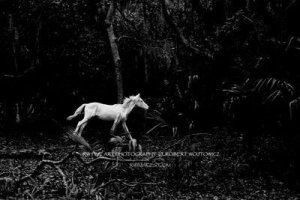
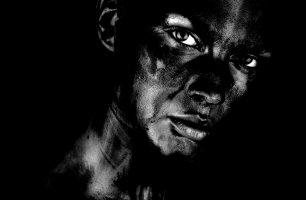
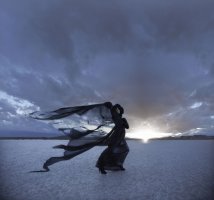
I respect your posts and posting some photos I found on internet to indicate what is 'high' art photography to ME. Posting so that you know I am not creating an argument.
I know they are 'dry' but high art tends to be that.

Mods: Delete this post if you find it inappropriate.
 

Attachments

  • 197-7556-9_SPIRIT_OF_CUMBERLAND_ISLAND_medium.jpg
    197-7556-9_SPIRIT_OF_CUMBERLAND_ISLAND_medium.jpg
    21.8 KB · Views: 326
  • dirty_portrait_black_photography_eyes_art_high_contrast_hd-wallpaper-1394017.jpg
    dirty_portrait_black_photography_eyes_art_high_contrast_hd-wallpaper-1394017.jpg
    249.6 KB · Views: 148
  • winter_8374-1c_gr.jpg
    winter_8374-1c_gr.jpg
    248.9 KB · Views: 175
Upvote 0
unfocused said:
Tinky, you are a brave soul to try so hard to bring enlightenment to those who do not wish to be enlightened.

Sanj, I'm deeply disappointed in your comments. You are a good photographer and your close-minded comments are really beneath you.

I went through some of my books to see if I could find something that would enlighten people and explain Parr's vision. I suspect it is useless because those who do not wish to see and grow have already closed their minds off to learning.

Nonetheless, I think the description of Parr in "The Genius of Photography" is particularly good. I won't quote it in its entirety but, it reads in part:

Another passionate advocate of the photobook is Martin Parr, and, although single images in The Last Resort (1986) have become contemporary classics, Parr would argue that it is in the context of the book that they flourish to their fullest extent. The Last Resort was his first book in colour and represents a significant moment in both British and European photography – a major body of documentary photography in colour rather than monochrome.

The 'resort' in question is New Brighton in the Wirral...once the No. 1 holiday resort in the north-west of England...It was in decline when Parr began photographing it, but it was still a popular day-out destination on weekends and bank holidays...

...people left a lot of litter, and it was this, plus his rather clear-eyed, unsentimental view and sharp, lucid colour, that ensured a mixed reaction to the work. Photographs of screaming babies, children with ice cream on their faces, in a litter-strewn environment, led to Parr, a middle-class boy from Surrey, being accused of cynicism.

...While it is true that the combination of biting colour and flash in Parr's vision can be merciless, there is also a great deal of gentle humour and affection in his view of New Brighton.

...Parr's project was about a great deal more than that. It was about an industry and community in decline, a way of life threatened by cheap air travel. Above all, it was about Britishness, about how the British muddle through, how they make the best of things despite crowds, bad weather and litter-strewn promenades.

...Parr has taken a similar unsentimental yet ultimately affectionate view of the British middle classes, of tourists, of the fashion world, and of the eccentricities and foibles of many other groups...

It should be remembered that he is a documentary photographer, that is to say, he has a personal vision, but his view of any individual is not personal...If his work is harsh at times, it is also empathetic at times, and any critique is directed at the culture, not the individual.

So, in summary, Parr works in the tradition of documentary photographers going back to Walker Evans, W. Eugene Smith, Mary Ellen Mark, Dorothea Lange, Lewis Hine, Robert Frank, Henri Cartier Bresson, and many, many others.

If you do not believe that documentary photography is art, then you will reject Parr and all others. But, there is a long tradition of documentary photography as high art and in fact, a good argument can be made that photography is the best medium for raising documentation to the level of art.

A key component of documentary photography is that no single image can really do justice to the story the photographer is trying to tell. This can be confusing to people who are used to seeing documentary photographers' work in some sort of "best of" collection. But the reality is that almost all of these photographs are part of a larger work that is more representative of the photographer's vision. You may be aware of an iconic image from Minamata but to really appreciate the work, you need to see Smith's entire book.

Thus, while individual images from Parr's works are interesting, to fully appreciate his genius, one would need to see his images in context, as he intended them.

As noted, Parr was one of the first documentarions to work in color and, more importantly, to use color as an integral part of his images. It is one thing to take a picture in color, it is quite another to master color to the extent that it intensifies the personal vision. Even today, there are many documentary photographers who have been unable to successfully incorporate color into their work.

Finally, it is important to understand what art is all about. If you believe art is only about creating pretty pictures then you will never "get" most of modern art photography. But, frankly, Ansel Adams created enough pretty pictures to satisfy the world and many artists and others moved on decades ago from that aesthetic.

Will Parr earn a place in the great pantheon of art? I don't know. Usually, those spots are reserved for artists whose vision changes the world. People like Paul Strand, whose "White Fence" completely upended the photographic world in 1916 -- destroying the popular aesthetic and creating an entirely new way of seeing that was true to the unique and intrinsic nature of photography. Or people like Robert Frank who completely upended the documentary tradition with a vision that was perfectly attuned to the second half of the 20th century.

I like Parr and I love the way he sees the world. He is an innovator and because of that innovation he rightly deserves a spot in the history of photography, but where that ranking may be only time will tell. I suspect that someone like Andreas Gursky (another artist often maligned on these pages) may ultimately be recognized as a more important figure in the history of photography because Gursky invented something new in the way we see the world.

Hi Unfocused. I am trying hard to put things in perspective here and learn. I am not putting down anyone if that is what is coming across. I am saying the photographer takes interesting slice of life, humorous, documentary photos. But as hard as I try, I can't place these photos in 'high' art category. That is something else to me. And thanks for the compliment, I feel the same towards you. :)
 
Upvote 0
I didn't read through the thread if anyone said this before but I believe there is no 5DsR necessary to shoot a bunch of drunk girls or wrinkly butts. There is absolutely no aspect of "art" in these pics and maybe I'm too young or something but I honestly don't know what this article is doing on Canons website. Oh and on the sidenote, taking that wrinkly butt shot at f/16 completely ruins the resolution advantage due to diffraction blur.
 
Upvote 0
lichtmalen said:
I didn't read through the thread - You should.

if anyone said this before but I believe there is no 5DsR necessary to shoot a bunch of drunk girls or wrinkly butts.
- how does it matter which camera?

There is absolutely no aspect of "art" - no aspect of 'high' art. It has it's own category of art.

in these pics and maybe I'm too young or something - age has nothing to do with understanding or art. A guy called Mozart comes to mind...

but I honestly don't know what this article is doing on Canons website. - Why not? It discusses photography.

Oh and on the sidenote, taking that wrinkly butt shot at f/16 completely ruins the resolution advantage due to diffraction blur. - Now you sounding young and bookish. Diffraction does not come in the way of story telling.
 
Upvote 0
lichtmalen said:
Sorry, don't care enough. It's just a bunch of snapshots that could've been done with some point and shoot.

Like any street photography then?


I mean, mona lisa, thats just some oil on a bit of cloth, any competent high school art student could do something similar. Those Henry Moore sculptures... it's just plaster of paris shaped into some curves innit?
 
Upvote 0
sanj said:
Tinky.
I respect your posts and posting some photos I found on internet to indicate what is 'high' art photography to ME.

With all due respect, my point is that it is the intent of the creator that makes something high concept or not.
Regardless of whether anybody else likes or gets it.

It's clear from the many interviews with Martin Parr that there is serious considered intent in his work.

That is what makes it high art.

The fact that critics, gallerys and collectors opinions tend to back him up is evidence that he has sufficient credence in his intent and output, that informed readers of the text see the intent to be taken seriously...

Whether you like the art or not, whether you or I consider it high concept or not is entirely a moot point.
 
Upvote 0