Canon EF 11-24mm f/4L USM

1982chris911 said:
privatebydesign said:
1982chris911 said:
It will get really interesting how this works once I get my 5DsR ... the diffraction limit is way lower than with the 5D MKIII ... really a big question mark how much f16 kills details on the 5DsR as with the 5d MkIII it is not that bad

At the same size enlargement the diffraction will be identical.

Not really as f16 (Diameter of Airy Disk: 21.3 µm) is above the diffraction limit of the 5d Mk III (Maximum Circle of Confusion @f16: 15.67 µm )but way above the diffraction limit of the 5DsR (Maximum Circle of Confusion @f16: 10.39 µm) ... the added details of the 50,6MP 5DsR would not have any benefit if that effect cancels out all additional details ...

That's not correct. (See pbd's post above).

I'm surprised at how many do not understand this concept fully. There is ALWAYS something to gain and if you claim that you get worse photo quality simply because you increase pixel density, all else equal then that just means you don't understand the concept.

Please read this quoted response by member chromophore on April 26:

"The concern over the effects of diffraction for high resolution sensors is completely misplaced.

You don't lose sharpness to diffraction by increasing pixel density, because the size of the diffraction effect is strictly determined by the lens. To understand why, suppose you have two camera systems that are identical in every respect except that one has twice the linear pixel density than the other (i.e., every pixel in the low-resolution sensor is split into four pixels in a 2x2 arrangement in the high-resolution sensor). Ignoring the effect this has on noise (and noise on perceived resolution), it is true that, as an increasing function of f-number, the higher resolution sensor will be able to reveal the effect of diffraction sooner than the low-resolution sensor. But the reason for this is because the low-resolution sensor is unable to resolve that effect, not that the effect is stronger in the high-resolution sensor. The Airy disks are IDENTICAL in the two systems because the lens is identical.

Therefore, increasing sensor resolution does not confer any disadvantage with respect to diffraction. You always have something to gain, and you never do any worse than the low-resolution sensor. You might not gain as much as you theoretically could (i.e., a high-resolution sensor might not realize the full sharpness in the sharpest plane of focus at f/16 compared to when it is shot at with a near-ideal lens at f/2.8 ), but you won't do worse than a low-resolution sensor that couldn't SEE the diffraction at f/16 in the first place.

The hesitation to go with higher resolution because of fears of diffraction reveals a complete misunderstanding of the phenomenon. If you said "I don't want high resolution because I want better dynamic range," then I can be on board with that statement. But if you said "I don't want high resolution because I would be more severely diffraction-limited," I would tell you that you don't understand what you're talking about."
 
Upvote 0
bdunbar79 said:
1982chris911 said:
privatebydesign said:
1982chris911 said:
It will get really interesting how this works once I get my 5DsR ... the diffraction limit is way lower than with the 5D MKIII ... really a big question mark how much f16 kills details on the 5DsR as with the 5d MkIII it is not that bad

At the same size enlargement the diffraction will be identical.

Not really as f16 (Diameter of Airy Disk: 21.3 µm) is above the diffraction limit of the 5d Mk III (Maximum Circle of Confusion @f16: 15.67 µm )but way above the diffraction limit of the 5DsR (Maximum Circle of Confusion @f16: 10.39 µm) ... the added details of the 50,6MP 5DsR would not have any benefit if that effect cancels out all additional details ...

That's not correct. (See pbd's post above).

I'm surprised at how many do not understand this concept fully. There is ALWAYS something to gain and if you claim that you get worse photo quality simply because you increase pixel density, all else equal then that just means you don't understand the concept.

Please read this quoted response by member chromophore on April 26:

"The concern over the effects of diffraction for high resolution sensors is completely misplaced.

You don't lose sharpness to diffraction by increasing pixel density, because the size of the diffraction effect is strictly determined by the lens. To understand why, suppose you have two camera systems that are identical in every respect except that one has twice the linear pixel density than the other (i.e., every pixel in the low-resolution sensor is split into four pixels in a 2x2 arrangement in the high-resolution sensor). Ignoring the effect this has on noise (and noise on perceived resolution), it is true that, as an increasing function of f-number, the higher resolution sensor will be able to reveal the effect of diffraction sooner than the low-resolution sensor. But the reason for this is because the low-resolution sensor is unable to resolve that effect, not that the effect is stronger in the high-resolution sensor. The Airy disks are IDENTICAL in the two systems because the lens is identical.

Therefore, increasing sensor resolution does not confer any disadvantage with respect to diffraction. You always have something to gain, and you never do any worse than the low-resolution sensor. You might not gain as much as you theoretically could (i.e., a high-resolution sensor might not realize the full sharpness in the sharpest plane of focus at f/16 compared to when it is shot at with a near-ideal lens at f/2.8 ), but you won't do worse than a low-resolution sensor that couldn't SEE the diffraction at f/16 in the first place.

The hesitation to go with higher resolution because of fears of diffraction reveals a complete misunderstanding of the phenomenon. If you said "I don't want high resolution because I want better dynamic range," then I can be on board with that statement. But if you said "I don't want high resolution because I would be more severely diffraction-limited," I would tell you that you don't understand what you're talking about."


I did not mean to loose any detail over the 5D MKIII - just that at some point I just won't gain anything from the 5DsR sensor over the 5DIII ... bc more pixel are within the airy disk (1x1 , 2x2 , 3x3 , 4x4 , 5x5).
When I use the Cambridgeincolor tool (http://www.cambridgeincolour.com/tutorials/diffraction-photography.htm#calculator) the 5d MKIII shows 3x3 pixels are in the circle while with 7d (about same pixel size as 5DSR ) its more like 4x4 or slightly 5x5 are influenced. My gains in so far would be that I get the same information in a smaller file with MAYBE and that is a BIG MAYBE more sharpness on the 100% level ...

I will find out anyway when my 5DsR finally makes it here... F16 is also sth. I don't use too many times and at f8 to f11 it won't play so much of a role anyway ...
 
Upvote 0
1982chris911 said:
bdunbar79 said:
1982chris911 said:
privatebydesign said:
1982chris911 said:
It will get really interesting how this works once I get my 5DsR ... the diffraction limit is way lower than with the 5D MKIII ... really a big question mark how much f16 kills details on the 5DsR as with the 5d MkIII it is not that bad

At the same size enlargement the diffraction will be identical.

Not really as f16 (Diameter of Airy Disk: 21.3 µm) is above the diffraction limit of the 5d Mk III (Maximum Circle of Confusion @f16: 15.67 µm )but way above the diffraction limit of the 5DsR (Maximum Circle of Confusion @f16: 10.39 µm) ... the added details of the 50,6MP 5DsR would not have any benefit if that effect cancels out all additional details ...

That's not correct. (See pbd's post above).

I'm surprised at how many do not understand this concept fully. There is ALWAYS something to gain and if you claim that you get worse photo quality simply because you increase pixel density, all else equal then that just means you don't understand the concept.

Please read this quoted response by member chromophore on April 26:

"The concern over the effects of diffraction for high resolution sensors is completely misplaced.

You don't lose sharpness to diffraction by increasing pixel density, because the size of the diffraction effect is strictly determined by the lens. To understand why, suppose you have two camera systems that are identical in every respect except that one has twice the linear pixel density than the other (i.e., every pixel in the low-resolution sensor is split into four pixels in a 2x2 arrangement in the high-resolution sensor). Ignoring the effect this has on noise (and noise on perceived resolution), it is true that, as an increasing function of f-number, the higher resolution sensor will be able to reveal the effect of diffraction sooner than the low-resolution sensor. But the reason for this is because the low-resolution sensor is unable to resolve that effect, not that the effect is stronger in the high-resolution sensor. The Airy disks are IDENTICAL in the two systems because the lens is identical.

Therefore, increasing sensor resolution does not confer any disadvantage with respect to diffraction. You always have something to gain, and you never do any worse than the low-resolution sensor. You might not gain as much as you theoretically could (i.e., a high-resolution sensor might not realize the full sharpness in the sharpest plane of focus at f/16 compared to when it is shot at with a near-ideal lens at f/2.8 ), but you won't do worse than a low-resolution sensor that couldn't SEE the diffraction at f/16 in the first place.

The hesitation to go with higher resolution because of fears of diffraction reveals a complete misunderstanding of the phenomenon. If you said "I don't want high resolution because I want better dynamic range," then I can be on board with that statement. But if you said "I don't want high resolution because I would be more severely diffraction-limited," I would tell you that you don't understand what you're talking about."


I did not mean to loose any detail over the 5D MKIII - just that at some point I just won't gain anything from the 5DsR sensor over the 5DIII ... bc more pixel are within the airy disk (1x1 , 2x2 , 3x3 , 4x4 , 5x5).
When I use the Cambridgeincolor tool (http://www.cambridgeincolour.com/tutorials/diffraction-photography.htm#calculator) the 5d MKIII shows 3x3 pixels are in the circle while with 7d (about same pixel size as 5DSR ) its more like 4x4 or slightly 5x5 are influenced. My gains in so far would be that I get the same information in a smaller file with MAYBE and that is a BIG MAYBE more sharpness on the 100% level which is of course sth. you would only see on the Monitor and not in print where the opposite should be true with the bigger files being better in all regards

I will find out anyway when my 5DsR finally makes it here... F16 is also sth. I don't use too many times and at f8 to f11 it won't play so much of a role anyway ...
 
Upvote 0
Eldar said:
1982chris911 said:
To better illustrate what I mean you should look at the flare characteristics at f16, where the 11-24 looks by far the best to me.
Agree. I don't remember the last time I went all the way to f16 though, but that's certainly something I can change.

Well playing around with the lens all the time I also find it very hard to get a feeling for relative size in the frame ... I tend to make the things in the middle of the frame too small in regards to the outer frame and background ...
Reminds me of what they told us in a presentation here:" This lens if you are not careful will create a lot of EMPTY space in the picture"- that is very true ... also leveling it with the horizon is more critical than ever ...
 
Upvote 0
Here´s a (for me) different use of this lens. I wanted to show the concentration of a proper fly-fisher, when casting, at the same time as I got enough of the surroundings included in the frame. My fishing buddy became a bit distorted, but I still thing it works pretty well.

5DSR, @11mm, 1/320s, f10, ISO100
 

Attachments

Upvote 0
1982chris911 said:
Sony said:
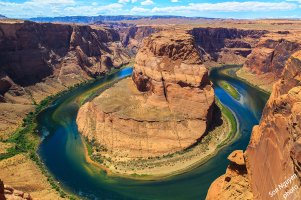
My pic taken with 5D MK III and 11-24mm f/4

This one is wonderful. As I am going to visit Antelope Canyon also this year two questions about your picture: Did you make an exposure blending here or is it a single file ? Also how did you experience the problem with the sky being too bright and therefore nearly impossible to include in the frame while in Antelope Canyon? The 5DIII seems to make a quite good job here.

1/ It was a single file. I took 3 bracketings with 2/3 f/stop in increments then chose the best one to post process in CR. I did not do HDR.
2/ If you want to include the sky you should come in early morning (8:30 AM), but the sand stones could be less of color. I came at 10:30 AM so the stones were colorful, but I could not include the sky. I had to avoid it.
If you have time, you should visit both the canyons. If you have to choose one, just visit the Lower.
Tips: use 11-24mm for the Upper if you have one; use 24-70mm for the Lower. You must bring tripod, and should practice using it very well at home before leaving for the canyons. Use AV mode as you have no time to think; just watch, frame, and shoot. Do not forget a remote switch; it's very useful.
Good luck and have fune. Do not forget to visit Horseshoe Bend.
 

Attachments

  • 1Y2A1474.jpg
    1Y2A1474.jpg
    1.5 MB · Views: 248
Upvote 0
I´ve seen some real jaw droppers, made by others, with this lens. But To stop this thread from stopping ...

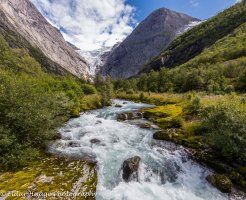
I have just started on a 2 week trip up the northwest coast of Norway. Today we passed Trollveggen, where all the base jumpers wants to go and ended up in this hotel. This shot is from the garden (there are Trolls in these mountains and trouts in this river!!). Does not look like my garden ...

5DSR, 1/50s, f7.1 ISO320
 

Attachments

Upvote 0
Eldar said:
I´ve seen some real jaw droppers, made by others, with this lens. But To stop this thread from stopping ...

I have just started on a 2 week trip up the northwest coast of Norway. Today we passed Trollveggen, where all the base jumpers wants to go and ended up in this hotel. This shot is from the garden (there are Trolls in these mountains and trouts in this river!!). Does not look like my garden ...

5DSR, 1/50s, f7.1 ISO320

So I guess those mountains are really towering above you ! I'm really liking the colour definition your getting with the 5Ds. Your shot on the other thread of Trollveggen looks like something straight out of Tolkien.
 
Upvote 0
Sporgon said:
Eldar said:
I´ve seen some real jaw droppers, made by others, with this lens. But To stop this thread from stopping ...

I have just started on a 2 week trip up the northwest coast of Norway. Today we passed Trollveggen, where all the base jumpers wants to go and ended up in this hotel. This shot is from the garden (there are Trolls in these mountains and trouts in this river!!). Does not look like my garden ...

5DSR, 1/50s, f7.1 ISO320

So I guess those mountains are really towering above you ! I'm really liking the colour definition your getting with the 5Ds. Your shot on the other thread of Trollveggen looks like something straight out of Tolkien.
Sporgon, that´s funny. I just commented on another forum that in that picture I was looking for Gandalf on his white horse, being chased by a bunch of orks ;)
 
Upvote 0
Nice capture Eldar! ...This feel very medium-format, both in perspective (like a nice 30mm) and with the level of detail/contrast that you have pulled out of it (and the 1x1 of course :-). Edit: The only thing I find distracting, and that was at 100% in photoshop, is the aberrations (fringing); have you left it here to show the lens' raw output? Thank you for sharing.
 
Upvote 0
AE-1Burnham said:
Nice capture Eldar! ...This feel very medium-format, both in perspective (like a nice 30mm) and with the level of detail/contrast that you have pulled out of it (and the 1x1 of course :-). Edit: The only thing I find distracting, and that was at 100% in photoshop, is the aberrations (fringing); have you left it here to show the lens' raw output? Thank you for sharing.
Thanks.
I am on travel, so this was a very fast processing. Just minor shadow/highlight and minor color adjustments, done on a laptop. I'll look more closely when I get home.
 
Upvote 0
AE-1Burnham said:
Nice capture Eldar! ...This feel very medium-format, both in perspective (like a nice 30mm) and with the level of detail/contrast that you have pulled out of it (and the 1x1 of course :-). Edit: The only thing I find distracting, and that was at 100% in photoshop, is the aberrations (fringing); have you left it here to show the lens' raw output? Thank you for sharing.
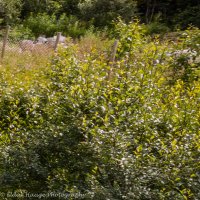
Just got home and checked the files. I see that the one I posted indeed has some fringing, especially on the leaves in the lower right corner. However I do not see any of that on the raw-file, so it must be something that happens during the export to the lower resolution jpeg-file. I´m sure there are some experts on CR who can explain this.

Below is a very small crop from that area.
 

Attachments

  • _23A1914.jpg
    _23A1914.jpg
    882.4 KB · Views: 201
Upvote 0