Hjalmarg1 said:kobeson said:Phenix205 said:To me, IS is a great feature that a larger aperture cannot provide. Imagine shooting a moving train in a metro station like the one in Washington DC. You want the train to be blurry while keeping the unique architecture sharp. F2.8 is not gonna help. You need that fantastic IS. I had a 16-35 I, and seldom shot at 2.8. For low light shooting 2.8 is just not fast enough.
A tripod can do the same thing. However - a tripod cannot get you an extra stop of light.
Yes, a tripod will do the same thing when you can use it or want to carry it. The big advantage of the f2.8L II is the ability to stop action under dimmed light (weddings, events, etc) that can not be achieved with the f4L IS.
If you have static objects 4-stop IS will help you a lot more than 1-stop of aperture, this is a better travel lens.
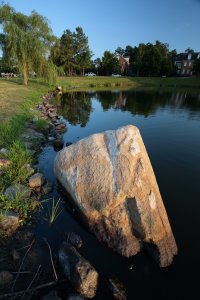
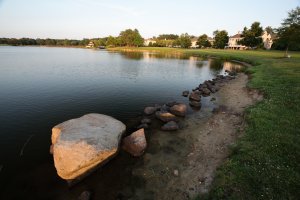
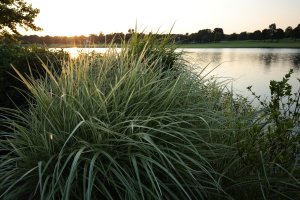
I am waiting for my new 16-35mm f4L IS lens to be delivered tomorrow (I already sold the f2.8L II), then I will post some pictures.
The f/4 IS does look to be a superlative travel or landscape lens due to its sharpness at f/4 and above. But, as an "all around" professional lens, the 16-35 f/2.8L II simply offers better adaptability for any situation and still delivers excellent IQ, though for sharpness you need to stop down to f/11 if you want to match the 16-35 f/4 IS. However, if you are doing landscapes this is generally not too much of an issue as f/11 is the sweet spot for sharpness/DOF - but the increased sharpness of f/4-f/8 on the f/4 IS does give you significant extra flexibility as a landscape photographer for f/4-f/5.6, for instance.
The main issue with losing f/2.8 is that unlike IS it cannot be emulated in several ways:
1) High shutter speeds - for moving subjects the shutter needs to be at bare minimum 1/60 for very slow subjects (i.e. slow walking) and 1/100 for anything faster than that. With an f/4 lens in dim light you will either need to double your ISO to match what f/2.8 could do, otherwise you will get reduced shutter speed that will result in motion blur; recall that f/4 lets in half the light of f/2.8. And, given the dim environments of many events, f/2.8 will often require ISO 3200-6400 - thus f/4 can push ISOs into five digits that will greatly damage picture quality across the whole frame, eons more picture quality loss than you'd gain in corner sharpness.
2) Depth of field - while it is true 16mm offers tons of DOF, the ability to throw the background out of focus is still there with close subjects and distant backgrouns - even moreso with 35mm. Remember, this is a 16-35mm lens, not a 16mm prime. Thus, with a lens that can only do f/4 it means you will have less subject isolation ability, especially when taking candids at 35mm for example.
IS does buy you the ability to use 1- or 2- stops slower shutter speed than reciprocal focal length without, but note that a tripod can emulate this on a non-IS lens. Also note that with a 16-35 the shutter speed already can go as low as 1/15 on the wide end or 1/30 on the tele end with decent technique due to the wide angle - already very slow without IS. Finally, for some reason (I don't know the science) Canon's IS is less effective on wide angle lenses like the 16-35mm than tele lenses like the 70-200; while the latter meets the advertised 4-stops of IS, the former in practice only delivers 1- or 2- stops before the image starts to lose significant sharpness. In my experience, at 1/8 or slower you will get much better sharpness using a tripod than IS. A tripod is not always available, but it is worth considering how often 1/8 or slower shutter speed is required w/ IS and no tripod is available - versus how often you need to retain a high shutter speed in dim light to stop motion blur through f/2.8 aperture.
In any case, I don't want this to appear as if the f/4 IS is a bad lens. It is not, it is a spectacular lens. But it is not a replacement for the 16-35 f/2.8L II as some are stating, the f/4 IS is simply aimed at a different market (strict landscapers/travel) - if you are going to be photographing moving subjects in potentially dim light at any point or simply want the flexibility to do so, you definitely would want to get the 16-35 f/2.8L II. And, while the 16-35 f/2.8L II does not have the corner sharpness of the f/4 IS for landscape from f/4-f/8 (though f/8 is close), by stopping down to f/11 the 16-35 f/2.8L II is comparable.
The lens to select depends on your needs, as usual.
Upvote
0


 . Only switch it on when you need it !