Canon EF 16-35 f/4L IS Sample Images

Hjalmarg1 said:
kobeson said:
Phenix205 said:
To me, IS is a great feature that a larger aperture cannot provide. Imagine shooting a moving train in a metro station like the one in Washington DC. You want the train to be blurry while keeping the unique architecture sharp. F2.8 is not gonna help. You need that fantastic IS. I had a 16-35 I, and seldom shot at 2.8. For low light shooting 2.8 is just not fast enough.

A tripod can do the same thing. However - a tripod cannot get you an extra stop of light.

Yes, a tripod will do the same thing when you can use it or want to carry it. The big advantage of the f2.8L II is the ability to stop action under dimmed light (weddings, events, etc) that can not be achieved with the f4L IS.
If you have static objects 4-stop IS will help you a lot more than 1-stop of aperture, this is a better travel lens.
I am waiting for my new 16-35mm f4L IS lens to be delivered tomorrow (I already sold the f2.8L II), then I will post some pictures.

The f/4 IS does look to be a superlative travel or landscape lens due to its sharpness at f/4 and above. But, as an "all around" professional lens, the 16-35 f/2.8L II simply offers better adaptability for any situation and still delivers excellent IQ, though for sharpness you need to stop down to f/11 if you want to match the 16-35 f/4 IS. However, if you are doing landscapes this is generally not too much of an issue as f/11 is the sweet spot for sharpness/DOF - but the increased sharpness of f/4-f/8 on the f/4 IS does give you significant extra flexibility as a landscape photographer for f/4-f/5.6, for instance.

The main issue with losing f/2.8 is that unlike IS it cannot be emulated in several ways:
1) High shutter speeds - for moving subjects the shutter needs to be at bare minimum 1/60 for very slow subjects (i.e. slow walking) and 1/100 for anything faster than that. With an f/4 lens in dim light you will either need to double your ISO to match what f/2.8 could do, otherwise you will get reduced shutter speed that will result in motion blur; recall that f/4 lets in half the light of f/2.8. And, given the dim environments of many events, f/2.8 will often require ISO 3200-6400 - thus f/4 can push ISOs into five digits that will greatly damage picture quality across the whole frame, eons more picture quality loss than you'd gain in corner sharpness.
2) Depth of field - while it is true 16mm offers tons of DOF, the ability to throw the background out of focus is still there with close subjects and distant backgrouns - even moreso with 35mm. Remember, this is a 16-35mm lens, not a 16mm prime. Thus, with a lens that can only do f/4 it means you will have less subject isolation ability, especially when taking candids at 35mm for example.

IS does buy you the ability to use 1- or 2- stops slower shutter speed than reciprocal focal length without, but note that a tripod can emulate this on a non-IS lens. Also note that with a 16-35 the shutter speed already can go as low as 1/15 on the wide end or 1/30 on the tele end with decent technique due to the wide angle - already very slow without IS. Finally, for some reason (I don't know the science) Canon's IS is less effective on wide angle lenses like the 16-35mm than tele lenses like the 70-200; while the latter meets the advertised 4-stops of IS, the former in practice only delivers 1- or 2- stops before the image starts to lose significant sharpness. In my experience, at 1/8 or slower you will get much better sharpness using a tripod than IS. A tripod is not always available, but it is worth considering how often 1/8 or slower shutter speed is required w/ IS and no tripod is available - versus how often you need to retain a high shutter speed in dim light to stop motion blur through f/2.8 aperture.

In any case, I don't want this to appear as if the f/4 IS is a bad lens. It is not, it is a spectacular lens. But it is not a replacement for the 16-35 f/2.8L II as some are stating, the f/4 IS is simply aimed at a different market (strict landscapers/travel) - if you are going to be photographing moving subjects in potentially dim light at any point or simply want the flexibility to do so, you definitely would want to get the 16-35 f/2.8L II. And, while the 16-35 f/2.8L II does not have the corner sharpness of the f/4 IS for landscape from f/4-f/8 (though f/8 is close), by stopping down to f/11 the 16-35 f/2.8L II is comparable.

The lens to select depends on your needs, as usual.
 
Upvote 0
Phenix205 said:
In the end, I think we all agree to disagreements. We choose the lens that suits our shooting needs the most. But objectively, the new 16-35 4L IS is a sharper lens, has IS, and sells for lower price.

Objectively it also is unable to do f/2.8 at all, which is the whole point and quite significant, as well as the fact that at f/11 the sharpness is similar to the 16-35 f/2.8L II - the importance/usefulness of this should not be ignored when advising on which lens to pick :)
 
Upvote 0
Ruined said:
Phenix205 said:
In the end, I think we all agree to disagreements. We choose the lens that suits our shooting needs the most. But objectively, the new 16-35 4L IS is a sharper lens, has IS, and sells for lower price.

Objectively it also is unable to do f/2.8 at all, which is the whole point and quite significant, as well as the fact that at f/11 the sharpness is similar to the 16-35 f/2.8L II - the importance/usefulness of this should not be ignored when advising on which lens to pick :)

Yeah, and you've been sure to state this across 3 different threads now. We know, 4.0 is not the same as 2.8.
http://www.canonrumors.com/forum/index.php?action=post;quote=410385;topic=21594.0;last_msg=410473
http://www.canonrumors.com/forum/index.php?topic=21530.msg410346#msg410346

Guess what, though? That 2.8 aperture isn't a 1.4! Good luck freezing action as well as a prime lens.

People have different needs. I'd argue that for most people, it doesn't matter. This lens has a million different purposes, and the difference between 2.8 and 4.0 is a deal breaker for very few of them.
 
Upvote 0
AtSea said:
Guess what, though? That 2.8 aperture isn't a 1.4! Good luck freezing action as well as a prime lens.

Exactly my thinking for not waiting on a unicorn and pulling the wallet out right now.

Most of the gearsheads around here probably have a 1.4 in that focal range in their kit. I did very well with my 35 art when i needed to. 2.8 is nice but is it worth the 1k USD to my particular shooting? Probably not. Your results may differ.
 
Upvote 0
AtSea said:
Ruined said:
Phenix205 said:
In the end, I think we all agree to disagreements. We choose the lens that suits our shooting needs the most. But objectively, the new 16-35 4L IS is a sharper lens, has IS, and sells for lower price.

Objectively it also is unable to do f/2.8 at all, which is the whole point and quite significant, as well as the fact that at f/11 the sharpness is similar to the 16-35 f/2.8L II - the importance/usefulness of this should not be ignored when advising on which lens to pick :)

Yeah, and you've been sure to state this across 3 different threads now. We know, 4.0 is not the same as 2.8.
http://www.canonrumors.com/forum/index.php?action=post;quote=410385;topic=21594.0;last_msg=410473
http://www.canonrumors.com/forum/index.php?topic=21530.msg410346#msg410346

Guess what, though? That 2.8 aperture isn't a 1.4! Good luck freezing action as well as a prime lens.

People have different needs. I'd argue that for most people, it doesn't matter. This lens has a million different purposes, and the difference between 2.8 and 4.0 is a deal breaker for very few of them.

True, but no one makes a 16mm f1.4 lens yet. 24mm isn't THAT wide compared to a 16mm.
Another issue with an image stabiliser is that it takes a few seconds to settle. If you just point and snap, there a possibility that the gyros and elements haven't settled and you get soft images. I used to get this a lot with my 70-200 f4 LIS until I switched off the IS most of the time or I allowed the IS unit to settle under half pressure on the shutter release.
 
Upvote 0
GMCPhotographics said:
Another issue with an image stabiliser is that it takes a few seconds to settle. If you just point and snap, there a possibility that the gyros and elements haven't settled and you get soft images.

This is really scraping the barrel when it comes to points against IS ! ;). Only switch it on when you need it !
Personally I'm all for IS in standard / wide angle focal lengths. I have absolutely no desire to carry a tripod to some of the places I go, and inevitably I end up shooting landscapes in low, fading ( or ascending ) light. I'm still old fashioned enough to not want to wack ASA up, so IS often enables me to get the shot with suitable dof and no ( at least damaging) shake.

However I'm fully aware that a shot taken in this way will not be as critically sharp as one from a solid platform.
 
Upvote 0
GMCPhotographics said:
Another issue with an image stabiliser is that it takes a few seconds to settle. If you just point and snap, there a possibility that the gyros and elements haven't settled and you get soft images.

If you had tried the IS on this lens and 70-200 II, you probably would not have made this statement. The IS is almost instantaneous on the 16-35 4L.
 
Upvote 0
Phenix205 said:
GMCPhotographics said:
Another issue with an image stabiliser is that it takes a few seconds to settle. If you just point and snap, there a possibility that the gyros and elements haven't settled and you get soft images.

If you had tried the IS on this lens and 70-200 II, you probably would not have made this statement. The IS is almost instantaneous on the 16-35 4L.

I have both 70-200 lenses and use them professionally...and there is still a slight delay.
 
Upvote 0
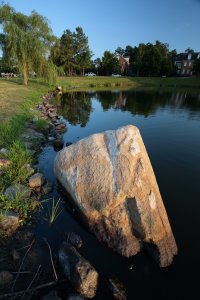
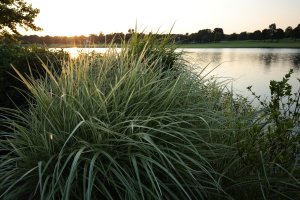
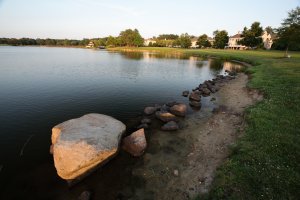
Some quick casual shots for testing while taking the kids for a walk yesterday evening. All handheld. I am very happy with the corner and edge sharpness this lens produces. IS worked very nicely for the last shot (1/8 sec).
 

Attachments

  • 20140701_195024_ss.JPG
    20140701_195024_ss.JPG
    1.1 MB · Views: 576
  • 20140701_195450_ss.JPG
    20140701_195450_ss.JPG
    958.6 KB · Views: 526
  • 20140701_200234_ss.JPG
    20140701_200234_ss.JPG
    1.1 MB · Views: 572
Upvote 0
Hello Friends,

May be I am missing something but, I just got my Canon 16-35 f/4. I shot some images, and when import them in Lightroom, somehow Lightroom doesn't get full image, it cuts from both sides.

Is there any setting that I am missing? Sorry for my newbie question.

Thanks
Darshan
 
Upvote 0
dpclicks said:
Hello Friends,

May be I am missing something but, I just got my Canon 16-35 f/4. I shot some images, and when import them in Lightroom, somehow Lightroom doesn't get full image, it cuts from both sides.

Is there any setting that I am missing? Sorry for my newbie question.

Thanks
Darshan
Hi Darshan, is it possible you put your hood on 90 degrees off from the way it's supposed to go? If you do that, you get black on the sides.
 
Upvote 0
Ruined said:
IS does buy you the ability to use 1- or 2- stops slower shutter speed than reciprocal focal length without, but note that a tripod can emulate this on a non-IS lens. Also note that with a 16-35 the shutter speed already can go as low as 1/15 on the wide end or 1/30 on the tele end with decent technique due to the wide angle - already very slow without IS. Finally, for some reason (I don't know the science) Canon's IS is less effective on wide angle lenses like the 16-35mm than tele lenses like the 70-200; while the latter meets the advertised 4-stops of IS, the former in practice only delivers 1- or 2- stops before the image starts to lose significant sharpness. In my experience, at 1/8 or slower you will get much better sharpness using a tripod than IS. A tripod is not always available, but it is worth considering how often 1/8 or slower shutter speed is required w/ IS and no tripod is available - versus how often you need to retain a high shutter speed in dim light to stop motion blur through f/2.8 aperture.

Yeah I have to say that I'm struggling to get as much help from the IS from this 16-35 IS lens as many claim to be. It seems that when I am both very careful and lucky I can get low enough that the IS struggles to help much more since it's not as effective at low speeds. I'm truly giving my best shots to non-IS tries and then when I turn on IS I'm just not seeming to get more than about 2/3rds of a stop at 16mm and 1 stop higher up the range. I just can't seem to do it. I don't know how some are claiming they are getting 2 stops or even more crazily 3 stops with ease. Are they truly giving a best effort to their without IS attempts? Or subtly dogging it on those quick without IS trials without even realizing it? Some peculiarity about how I shake when I shake? Maybe I need to test it in a more typical run around mode when arms and legs are tired and I'm more running and gunning and not being so careful or when there is wind around, etc.

With 70-300L I seem to get 1 stop easily out of the IS and I can manage 2 stops even.

The one where I can do really well with IS, OUT of the macro range, is the 100L, where I think I can sometimes get almost 3 stops out of it, more than with any other IS lens, maybe because it has that ultra fancy IS unit in it. At 1:1 it's much less, but it can still be just enough to let you get one totally crisp shot out of a burst, of course macro is often shot so stopped down you still need very good light even then, but still, it is a bonus since you can get some good light natural light shots that would've just required you to move higher in ISO than you want for macro.

In any case, I don't want this to appear as if the f/4 IS is a bad lens. It is not, it is a spectacular lens. But it is not a replacement for the 16-35 f/2.8L II as some are stating, the f/4 IS is simply aimed at a different market (strict landscapers/travel) - if you are going to be photographing moving subjects in potentially dim light at any point or simply want the flexibility to do so, you definitely would want to get the 16-35 f/2.8L II. And, while the 16-35 f/2.8L II does not have the corner sharpness of the f/4 IS for landscape from f/4-f/8 (though f/8 is close), by stopping down to f/11 the 16-35 f/2.8L II is comparable.

The lens to select depends on your needs, as usual.
[/quote]
 
Upvote 0
Ruined said:
Phenix205 said:
In the end, I think we all agree to disagreements. We choose the lens that suits our shooting needs the most. But objectively, the new 16-35 4L IS is a sharper lens, has IS, and sells for lower price.

Objectively it also is unable to do f/2.8 at all, which is the whole point and quite significant, as well as the fact that at f/11 the sharpness is similar to the 16-35 f/2.8L II - the importance/usefulness of this should not be ignored when advising on which lens to pick :)

As you say it depends what you shoot and how. I bet that a LOT more people could make use of even just nearing 1 stop IS and much better CA control (especially longitudinal) and overall somewhat sharper, especially on the wider end at this UWA to WA range than need f/2.8 there. Of course some like yourself prefer the f/2.8 over all of that, but I bet for an UWA zoom, rather more make out better with the new lens. Plus the new lens is like roughly $500 or so less too.
 
Upvote 0
LetTheRightLensIn said:
Ruined said:
Phenix205 said:
In the end, I think we all agree to disagreements. We choose the lens that suits our shooting needs the most. But objectively, the new 16-35 4L IS is a sharper lens, has IS, and sells for lower price.

Objectively it also is unable to do f/2.8 at all, which is the whole point and quite significant, as well as the fact that at f/11 the sharpness is similar to the 16-35 f/2.8L II - the importance/usefulness of this should not be ignored when advising on which lens to pick :)

As you say it depends what you shoot and how. I bet that a LOT more people could make use of even just nearing 1 stop IS and much better CA control (especially longitudinal) and overall somewhat sharper, especially on the wider end at this UWA to WA range than need f/2.8 there. Of course some like yourself prefer the f/2.8 over all of that, but I bet for an UWA zoom, rather more make out better with the new lens. Plus the new lens is like roughly $500 or so less too.

I don't disagree with any of what you are saying. Most people probably will benefit from the improvements of the new 16-35 f/4 IS, as this lens focal length probably racks up the most sales for landscape or non-demanding "general use." The increased corner sharpness and lower price will help these two groups respectively.

On the other hand, most professionals who sell their services for cash in places they have little control of the ambience will likely benefit more from (or outright require) f/2.8. But, that group is probably a smaller percentage of the lens-buying population. If someone is paying you to do something, you don't want to be in a situation where the shot desired is not doable because your lens is not wide enough or not fast enough. Also, those who are more into shooting people indoors, even casually, will benefit more from f/2.8; a shot with obvious motion blur, high ISO noise levels, or compromised framing due to lack of a wide enough angle - all are much worse than decreased corner sharpness. Recall, f/2.8 lets in twice as much light; in many cases where you don't have the option to drop shutter speed due to motion, that extra light will actually add to increased resolution as you can use lower ISO and in turn lower (or no) resolution-reducing DNR.

Which all goes back to - the new 16-35 f/4 IS is awesome and a much needed upgrade for the 17-40 f/4, but it is most definitely not a replacement for the 16-35 f/2.8 II as some are proclaiming.
 
Upvote 0
Ruined said:
LetTheRightLensIn said:
Ruined said:
Phenix205 said:
In the end, I think we all agree to disagreements. We choose the lens that suits our shooting needs the most. But objectively, the new 16-35 4L IS is a sharper lens, has IS, and sells for lower price.

Objectively it also is unable to do f/2.8 at all, which is the whole point and quite significant, as well as the fact that at f/11 the sharpness is similar to the 16-35 f/2.8L II - the importance/usefulness of this should not be ignored when advising on which lens to pick :)

As you say it depends what you shoot and how. I bet that a LOT more people could make use of even just nearing 1 stop IS and much better CA control (especially longitudinal) and overall somewhat sharper, especially on the wider end at this UWA to WA range than need f/2.8 there. Of course some like yourself prefer the f/2.8 over all of that, but I bet for an UWA zoom, rather more make out better with the new lens. Plus the new lens is like roughly $500 or so less too.

I don't disagree with any of what you are saying. Most people probably will benefit from the improvements of the new 16-35 f/4 IS, as this lens focal length probably racks up the most sales for landscape or non-demanding "general use." The increased corner sharpness and lower price will help these two groups respectively.

On the other hand, most professionals who sell their services for cash in places they have little control of the ambience will likely benefit more from (or outright require) f/2.8. But, that group is probably a smaller percentage of the lens-buying population. If someone is paying you to do something, you don't want to be in a situation where the shot desired is not doable because your lens is not wide enough or not fast enough. Also, those who are more into shooting people indoors, even casually, will benefit more from f/2.8; a shot with obvious motion blur, high ISO noise levels, or compromised framing due to lack of a wide enough angle - all are much worse than decreased corner sharpness. Recall, f/2.8 lets in twice as much light; in many cases where you don't have the option to drop shutter speed due to motion, that extra light will actually add to increased resolution as you can use lower ISO and in turn lower (or no) resolution-reducing DNR.

Which all goes back to - the new 16-35 f/4 IS is awesome and a much needed upgrade for the 17-40 f/4, but it is most definitely not a replacement for the 16-35 f/2.8 II as some are proclaiming.

You are quite right, it's a replacement fro the 17-40 f4 L not the 16-35 f2.8 II L. Which leads many of us to think that the rumoured f2.8 replacement will cover a very different range. A 12-24mm f2.8 for example would be fun. But ultimatly, if one needs the extra stop of light and the 1 stop slower shutter speed offered by the new f4 IS version can't be made to work with the IS unit, then the f2.8 is still the best option in that situation....which I why I haven't swapped out mine.
While a 12-24mm f2.8 would be fun, for group shots, I would prefer the 16-35mm range.
I use my 16-35 f2.8 II L along side a 35L and 85IIL on three cams for my wedding work. If I chose the new f4 version, there is a huge difference in light gathering between my ultra wide and my primes. it's a bit too much for my needs, but this new f4 lens is a fantastic piece of kit and I'm sure Canon will sell bucket loads. For 80% of the full frame photographic community, this is the right lens for them.
 
Upvote 0
The lens is a hiker's dream lens. I could imagine a great lightweight landscape kit composed of 6D, 16-35 f/4L IS, and one or two other lenses depending on shooting style - 70-200 f/4L IS, or 85mm f/1.8 +/- 50 f/1.8 II.
 
Upvote 0