Canon EF 16-35 f/4L IS Sample Images

MrPhotoEditor said:
Pros
Minimal - and I mean it - CA (you can hardly spot them)
Excellent sharpness from center to corner
Very low barrel distortion for an ultrawide zoom lens
Simply unbelievable resistance to flare - reminded me the 24-70II (perhaps even better)
Very nice ergonomics - built quality - smooth focus/zoom rings
IS only a fraction louder than the one inside 24/28/35 IS USM
Beautiful bokeh!

Cons
Vignetting at f/4 at 24mm and especially at 35mm

Definitely a classic!!!

1st shot 16mm, f/11

2nd shot 16mm, f/8.
The 2nd shot comes with details from bottom left and top right to help you evaluate how minimal the CA are... I haven't correct them..

3rd shot 16mm, f/5.6.

It's great to hear about the flare control, one point though...in my photos, the current 16-35IIL is far better in handling flare than the new 24-70 f2.8 II L. Especially when pointing directly at the sun to create a sun star (f16-f22), the 24-70 isn't that great in this regard but the older 16-35IIL is really good...so I'm hoping this new f4 version is a bit better.
 
Upvote 0
Well, first of all I apologize because I made a small error... Vignetting is obvious at maximum aperture only of 28mm (not 24mm) and a bit more at 35mm

For those asking about AF accuracy:
The lens show a tendency to back focusing a little, something you spot when focusing from 1-1.5 feet or less at maximum aperture. I made a microadjustment of -8 and everything is perfect!

Do I find the IS useful in a UWA lens?
Absolutely. On one hand you get huge advantage when you shoot still (or near-still) subjects. On the other hand don't forget that this lens target videographers as well. The IS is extremely smooth and you can only notice it (hear) when it's turning on or off, not while working.

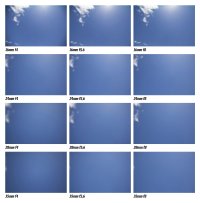
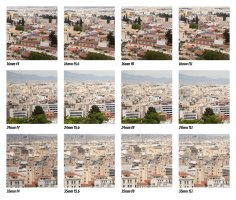
In the following images you can see the vignetting - which I consider to be of less importance as it is easily fixed - from f/4 to f/8 at 16/24/28/35mm, and the great resolution achieved at the corners of the image (detail from 100% crop) at 16/24/35mm. It's worth mentioning that I haven't correct vignetting and CA, just some tonal values.

All in all it's a magnificent lens guys. Just placed it on top of my list!
 

Attachments

  • ola.jpg
    ola.jpg
    302 KB · Views: 5,113
  • ola2.jpg
    ola2.jpg
    1.1 MB · Views: 5,385
Upvote 0
MrPhotoEditor said:
Well, first of all I apologize because I made a small error... Vignetting is obvious at maximum aperture only of 28mm (not 24mm) and a bit more at 35mm

For those asking about AF accuracy:
The lens show a tendency to back focusing a little, something you spot when focusing from 1-1.5 feet or less at maximum aperture. I made a microadjustment of -8 and everything is perfect!

Do I find the IS useful in a UWA lens?
Absolutely. On one hand you get huge advantage when you shoot still (or near-still) subjects. On the other hand don't forget that this lens target videographers as well. The IS is extremely smooth and you can only notice it (hear) when it's turning on or off, not while working.

In the following images you can see the vignetting - which I consider to be of less importance as it is easily fixed - from f/4 to f/8 at 16/24/28/35mm, and the great resolution achieved at the corners of the image (detail from 100% crop) at 16/24/35mm. It's worth mentioning that I haven't correct vignetting and CA, just some tonal values.

All in all it's a magnificent lens guys. Just placed it on top of my list!

Thank you so much for this information. Very, very useful. I already placed the order last week. Looking forward to get this lens and use it.
 
Upvote 0
mackguyver said:
It looks like we have about 5-6 weeks now...debating whether to sell my 16-35II now or wait to use it for comparisons...

Me too, although in my case it would be the 17-40L I would be selling. From the data and samples so far available it seems like this lens will blow away my 17-40, so really it should be no contest. I've never been very happy with the 17-40, and I did consider the 16-35II as an upgrade. But I don't feel the need for f/2.8 at this FL, and the IQ is not enough of an improvement to tempt me even with the current rebates.

I had therefore been waiting patiently for the rumored 12/14-24 to be announced, but this new 16-35 f/4 is probably a better option for me. I quite often find myself trying to capture poorly lit interiors of historical buildings while on vacation, where the use of a tripod is generally prohibited. In a large building f/2.8 can limit the DOF too much even at 16mm, so I suspect that IS would be of more benefit to me than the extra stop. I don't find myself zooming all the way out to 17mm very often either, so 12 or 14mm might go unused while the greater range at the long end would be handy.

A quick check of completed listings on eBay shows that used 17-40s are still fetching around $600. That's actually not a whole lot less than I paid for my copy new a few years ago - Canon resale values are good enough that it can almost seem like putting down a deposit for a long term loan rather than actually purchasing them! ;D So essentially I would be paying $600 for a huge IQ upgrade, which is very attractive indeed. The only question in my mind is whether the new 16-35 will come down in price over the next few months, but since Canon has chosen to launch it at a much more reasonable price than some other recent lenses maybe the price drop will be less significant?

 
Upvote 0
DigitalDivide said:
mackguyver said:
It looks like we have about 5-6 weeks now...debating whether to sell my 16-35II now or wait to use it for comparisons...

Me too, although in my case it would be the 17-40L I would be selling. From the data and samples so far available it seems like this lens will blow away my 17-40, so really it should be no contest. I've never been very happy with the 17-40, and I did consider the 16-35II as an upgrade. But I don't feel the need for f/2.8 at this FL, and the IQ is not enough of an improvement to tempt me even with the current rebates.

I had therefore been waiting patiently for the rumored 12/14-24 to be announced, but this new 16-35 f/4 is probably a better option for me. I quite often find myself trying to capture poorly lit interiors of historical buildings while on vacation, where the use of a tripod is generally prohibited. In a large building f/2.8 can limit the DOF too much even at 16mm, so I suspect that IS would be of more benefit to me than the extra stop. I don't find myself zooming all the way out to 17mm very often either, so 12 or 14mm might go unused while the greater range at the long end would be handy.

A quick check of completed listings on eBay shows that used 17-40s are still fetching around $600. That's actually not a whole lot less than I paid for my copy new a few years ago - Canon resale values are good enough that it can almost seem like putting down a deposit for a long term loan rather than actually purchasing them! ;D So essentially I would be paying $600 for a huge IQ upgrade, which is very attractive indeed. The only question in my mind is whether the new 16-35 will come down in price over the next few months, but since Canon has chosen to launch it at a much more reasonable price than some other recent lenses maybe the price drop will be less significant?

Everybody needs to emotionally justify their purchases....and lenses really do fall into that bracket. Just look how emotional Nikon or Canon forums get when a new camera gets launched!
But don't think that this lens will make you a better photographer...or that it will "blow the old one away". No it will be a little sharper wide open, it'll have slightly better flare resistance and slightly more contrast. It'll be new and shiny (unlike my very very beaten up 16-35IIL) which will really add to it's initial emotional feeling. There is little more this lens can do that the old one can't do, it's just a bit better in most respects.
It's a little like the new 24-70IIL. An excellent lens to be sure and of someone hasn't already got a good copy of the mk1 then there is a real need to get one. But someone who's already got a very good copy of the mk1....then the side grade to a mk2 isn't so easy. What does it do for the extra outlay? it's a bit lighter and a bit sharper....hmmm....for some that's the ultimate priority. But for others who make money out of their kit, there's not so much of an obvious benefit.
 
Upvote 0
I agree with both of you and while I was actually hoping for a 12-24 f/4 (no IS) or 14-40 or something like that, the f/2.8 aperture (and IS) were the least of my concerns. I bought the 16-35II because of the marginally better IQ, but sort of like the 24-70 Mk I, I liked, but never loved the lens. Since buying the 24-70 II, I find myself using it far more than the old one and hope that this will be the same here. Little things like lighter weight, smaller hood size, and less CA go a long way for me, and I find the ergonomics of the 24-70 II are a big reason why I like it and use it so much more. Did I get lots of great photos with the Mk I? Yes. Did I love the lens? No. I hope that will repeat itself here with this lens. The sample shots look like a move in the right direction and I shoot a lot of stuff in bright contrasty light, so the lower CA will help me a ton.

The lens won't make me or anyone else a better photographer, but if it improves the quality of my work, especially in large prints, than the loss from selling the 16-35II will be worthwhile. If I can sell two 20x30 prints, one 40x60 print, or just one more photo in a commissioned shoot, it will have paid for itself :)
 
Upvote 0
AtSea said:
rrcphoto said:
AtSea said:
If there's especially bad vignetting at F/4 @ 24/35mm then what's it like at 16mm? :-\

are you putting words in people's mouths?
PhotoEditor wrote:
"Cons
Vignetting at f/4 at 24mm and especially at 35mm"

Seems like you're just confused

no you are, he didn't say it was "especially bad" - just said it was a con.
 
Upvote 0
GMCPhotographics said:
Everybody needs to emotionally justify their purchases....and lenses really do fall into that bracket. Just look how emotional Nikon or Canon forums get when a new camera gets launched!
But don't think that this lens will make you a better photographer...or that it will "blow the old one away". No it will be a little sharper wide open, it'll have slightly better flare resistance and slightly more contrast. It'll be new and shiny (unlike my very very beaten up 16-35IIL) which will really add to it's initial emotional feeling. There is little more this lens can do that the old one can't do, it's just a bit better in most respects.
It's a little like the new 24-70IIL. An excellent lens to be sure and of someone hasn't already got a good copy of the mk1 then there is a real need to get one. But someone who's already got a very good copy of the mk1....then the side grade to a mk2 isn't so easy. What does it do for the extra outlay? it's a bit lighter and a bit sharper....hmmm....for some that's the ultimate priority. But for others who make money out of their kit, there's not so much of an obvious benefit.

Yep, I'm with you on that, and I will admit to suffering from GAS (gear acquisition syndrome) from time to time! ;D It is tempting to think that all that is keeping one from being a better photog is the equipment. But as I've upgraded my lenses from consumer grade to enthusiast and then pro grade over the last few years, I've found that it is certainly not the case. In fact my experience with the 70-200 f/2.8L IS II shows that it can actually be the opposite. Having taken thousands of shots over the years with a very mediocre 100-300 f/4.5-5.6 (bought sometime around 1992 I believe), I faced a definite learning curve with the 70-200, and it took me a while to figure out how to get the best out of it (or at least the best that I as an amateur am capable of).

Am I a better photographer because I have a shiny new lens? Of course not, but the f/2.8 has certainly made it possible for me to get some cool shots that were just not feasible with my crappy old lens, and the technical quality of my photos is markedly improved when I get the technique right. I also find that seeing how good the photos with a great lens can be when I get everything right encourages me to take more pictures and to try out new things. So in that sense new equipment can help me improve my technique, albeit not right away. (It is also difficult to blame my gear when things don't turn out as I'd like, since many great photogs are getting amazing results with the same equipment! :o ).

My expectations for the new 16-35 f/4 IS are similar. I'm looking forward to better contrast and less distortion in my photos, while the IS may improve my keeper rate in poor light and may allow me to take pictures in some situations where I simply couldn't before. The difference between my 17-40L and the new lens is not likely to be as dramatic as in the extreme comparison above, however.
 
Upvote 0
Vignetting at 16mm looks quite good... Much better than the 17-40, from what I can tell. This is good, as when I use the 17-40 for commercial work I generally work in low light situations and stop down only to reduce vingetting, not really increase sharpness.

This lens is looking so good. I am glad I got my pre-order in very quickly at two different vendors (around 6:45am EST the morning they went up for preorder on B&H). Can't wait!

Plan to sell my 17-40 which is only a few weeks old after this weekend...
 
Upvote 0
MrPhotoEditor said:
Well, first of all I apologize because I made a small error... Vignetting is obvious at maximum aperture only of 28mm (not 24mm) and a bit more at 35mm

For those asking about AF accuracy:
The lens show a tendency to back focusing a little, something you spot when focusing from 1-1.5 feet or less at maximum aperture. I made a microadjustment of -8 and everything is perfect!

Do I find the IS useful in a UWA lens?
Absolutely. On one hand you get huge advantage when you shoot still (or near-still) subjects. On the other hand don't forget that this lens target videographers as well. The IS is extremely smooth and you can only notice it (hear) when it's turning on or off, not while working.

In the following images you can see the vignetting - which I consider to be of less importance as it is easily fixed - from f/4 to f/8 at 16/24/28/35mm, and the great resolution achieved at the corners of the image (detail from 100% crop) at 16/24/35mm. It's worth mentioning that I haven't correct vignetting and CA, just some tonal values.

All in all it's a magnificent lens guys. Just placed it on top of my list!
the resolution in the corners, lack of CA and even distortion - this lens is a jaw dropper.
 
Upvote 0
GMCPhotographics said:
Everybody needs to emotionally justify their purchases....and lenses really do fall into that bracket.

I think you fail to realize that applies at least as much to those who stick with old equipment, they need to minimize any benefit from anything new. ;)

It's a little like the new 24-70IIL. An excellent lens to be sure and of someone hasn't already got a good copy of the mk1 then there is a real need to get one. But someone who's already got a very good copy of the mk1....then the side grade to a mk2 isn't so easy. What does it do for the extra outlay? it's a bit lighter and a bit sharper....hmmm....for some that's the ultimate priority.

If you do landscape shooting it is more than side grade! It gives a much nicer 24mm f/8 on FF for finely detailed edge to edge landscape work. And it's not about justifying a purchase if you've had been begging for a zoom that could deliver top high density FF quality at the wide end. People were hoping and asking for that before they even made the purchase.

It is actually quite a bit crisper at f/2.8 too. And it has a new focusing engine that allows it to focus much more precisely (when paired with a 5D3 or 1DX). It is also just about an APO lens so it doesn't get nasty purple fringing (purple/green front/back longitudinal CA).

But for others who make money out of their kit, there's not so much of an obvious benefit.

Yeah that's a different game. If all the matter is raw money and ROI that is one thing, but for some it's not all about the money and whether I can get an extra dime out of something.
 
Upvote 0
Why the first picture have so much blur? There should not be that much if it was F11 @16mm as you mentioned
MrPhotoEditor said:
Pros
Minimal - and I mean it - CA (you can hardly spot them)
Excellent sharpness from center to corner
Very low barrel distortion for an ultrawide zoom lens
Simply unbelievable resistance to flare - reminded me the 24-70II (perhaps even better)
Very nice ergonomics - built quality - smooth focus/zoom rings
IS only a fraction louder than the one inside 24/28/35 IS USM
Beautiful bokeh!

Cons
Vignetting at f/4 at 24mm and especially at 35mm

Definitely a classic!!!

1st shot 16mm, f/11

2nd shot 16mm, f/8.
The 2nd shot comes with details from bottom left and top right to help you evaluate how minimal the CA are... I haven't correct them..

3rd shot 16mm, f/5.6.
 
Upvote 0
Hallucinate said:
Why the first picture have so much blur? There should not be that much if it was F11 @16mm as you mentioned
MrPhotoEditor said:
Pros
Minimal - and I mean it - CA (you can hardly spot them)
Excellent sharpness from center to corner
Very low barrel distortion for an ultrawide zoom lens
Simply unbelievable resistance to flare - reminded me the 24-70II (perhaps even better)
Very nice ergonomics - built quality - smooth focus/zoom rings
IS only a fraction louder than the one inside 24/28/35 IS USM
Beautiful bokeh!

Cons
Vignetting at f/4 at 24mm and especially at 35mm

Definitely a classic!!!

1st shot 16mm, f/11

2nd shot 16mm, f/8.
The 2nd shot comes with details from bottom left and top right to help you evaluate how minimal the CA are... I haven't correct them..

3rd shot 16mm, f/5.6.

The depth of field in the first picture is really shallow because it was shot from a distance around 30-35cm. Even with a 16mm at f/11 you can still produce enough blur.
 
Upvote 0