Canon EOS R7 Mark II to Have Stacked 40MP Sensor?

D

That part i sent was the best decided factor, I thought. I can't send the whole file as I don't want to blow all my data this close to the beginning of the month, I may have labeled them wrong, the difference in time was about ten minutes as we went to the car to switch out cameras, as you can see a cloud developed on the r3, both at 800 iso f11. Sorry if I'm waisting your time when you're arguing me. :D
From my point of view there is no arguing... the evidence you provided does not support your claims. Simple as that.
It's all good fun though, I'm not bothered at all 😅
 
  • Like
Reactions: 1 user
Upvote 0
Meanwhile...


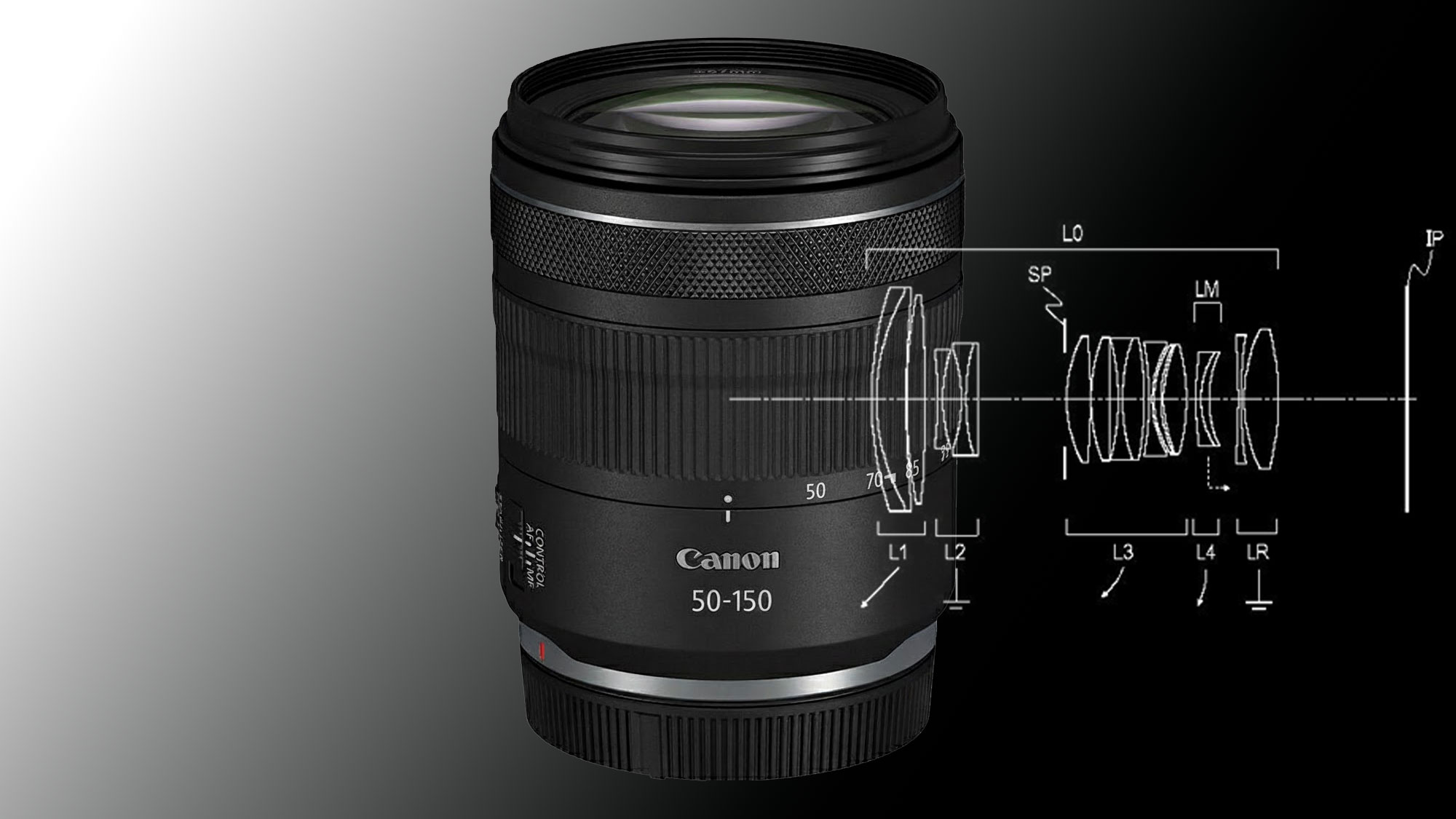
Hey, lookie here! It's almost exactly the lens so many were adamant that Canon would never make! (hey, I'm surprised too).

Interestingly, it's not an RF-S lens, which makes sense I suppose - if it doesn't benefit from being smaller for APS-C, they might as well make it full frame. On an APS-C body that'd give you a 80-240mm effective field of view (at f4.5 equivalent depth of field). Not exactly, but close to the 70-200mm commonly used for indoor sports and events. More usable on the wide end than the 112mm field of view that a 70-200mm would have for closer subjects.

Likewise for full frame users I could see this being used by those on a budget, pairing it with bodies like older R6 versions, R8, and the like, for events and indoor sports. Probably good for volleyball. 50mm would be good for more "environmental" portraits, and longer lengths would be good for torso and head portraits. The

It's an STM, which I hope provides fast enough autofocus to keep up with the action this lens would likely often be used for. The image posted in the article is probably just an estimate, but it looks compact and light.
 
Upvote 0
D

That part i sent was the best decided factor, I thought. I can't send the whole file as I don't want to blow all my data this close to the beginning of the month, I may have labeled them wrong, the difference in time was about ten minutes as we went to the car to switch out cameras, as you can see a cloud developed on the r3, both at 800 iso f11. Sorry if I'm waisting your time when you're arguing me. :D
Yes, you were playing the fool. The R3 and R5 images were not "may" have been labeled wrong, they were, deliberately. In fact, they almost certainly weren't taken on an R3/R5 pair. They are most likely the same image scaled and exposure altered, with the lower pixel one R5 for an extra laugh. Right?
 
  • Wow
Reactions: 1 user
Upvote 0
Hey, lookie here! It's almost exactly the lens so many were adamant that Canon would never make! (hey, I'm surprised too).

Interestingly, it's not an RF-S lens, which makes sense I suppose - if it doesn't benefit from being smaller for APS-C, they might as well make it full frame.
I can’t speak for all of those people, but I thought it extremely unlikely that Canon would make an f/2.8 RF-S lens providing an FoV similar to 70-200 on FF…and this patent doesn’t suggest I’m wrong.

Your claim/request was explicitly for an APS-C lens.

Sony users have long lamented the lack of a ~45-135mm f2.8 APS-C lens to match the common 70-200m f2.8 telephoto zoom. I think once upon a time Sigma was rumored to be working on one, but clearly that never came to be. Fuji has a 50-140mm f2.8, but they're the only APS-C maker to do so. Now that there's potentially 4 mounts (X, E, Z, RF-S), maybe it'll finally make sense for Sigma or whomever to make one.

This design could become the third lens completing the non-L f/2.8 STM zoom trinity along with the RF 16-28/2.8 and RF 28-70/2.8. All of those lenses give something up compared to their f/2.8 L counterparts, and they also give something up (in addition to the stop of light) compared to their f/4L counterparts though they’re closer in price to the latter.
 
Upvote 0
I think they are reading way too much into the meaning of the numbers.

1 is top.
5 is midrange.
9 is the theoretical bottom, before we head into the double-digit APS-C camera range.
There are a bunch of numbers in between.
None of this tells us what specific features a camera will have, but we can go back to history for existing model names.

My whole point is just because single digit numbers exist does not mean Canon MUST make a camera model for that number.
 
  • Like
Reactions: 1 user
Upvote 0
Thank you for showing me that you really only want to look for the mistakes, but not the meaning of an argumentation. :rolleyes:

Please tell me your method, how to compare two RAW files with a minimum of PP correction, so that they are almost what one can call "SOOC".
Maybe I can learn from you...
But maybe you are just not willing to think about what I saw with my own eyes and tried to describe here with just a few words instead of a "white paper" 30 pages long, containing all constraints including my blood type :sick:

Open the same raw "image" with several different raw processing applications and you will get several different images from the same raw data. Which of those varied interpretations do you propose to call the SOOC "raw image"?

Raw sensor data is just that. Raw sensor data. It must be processed to create a color image viewable on your screen that is anything more than a white blob. The in camera settings that control how the raw data is processed to create the JPEG preview image you see on the back of the camera can be altered before taking the photo. The result will be changed by the difference in processing instructions, even though the actual raw data will be identical. What you see on a screen anytime you open a "raw" image is one of a near infinite possible valid interpretations of the raw data captured by the sensor.

There's no such thing as a SOOC raw image. There's only an interpretation of the raw data captured by the camera which may be determined by the in camera settings or the default settings of the opening application.
 
Upvote 0