
Canon EOS R6 Mark III & RF 45 F1.2 STM November 6

Probably my second most used lens is an EF 70-200mm f/2.8 L IS II bought in 2010. ... And it's sharper than the RF 70-200mm f/2.8 L IS according to most online tests I've seen.
I had the former, and I have the latter. Not sure which online tests you're referring to, the RF version is certainly sharper than the EF MkII in the TDP comparison, especially away from the center. Granted, that's one copy of each lens and different camera bodies.

But here is a comparison of another copy of each lens (docsmith's EF MkII on top since I'd already sold mine, my RF on bottom) shot by him with his R5.
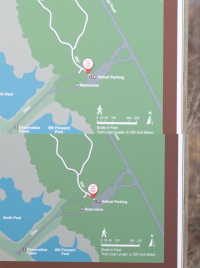
70-200 EF vs RF sharpness.png

The bokeh of the RF version (bottom) is more pleasing (to me), as well...smoother, less nervous.
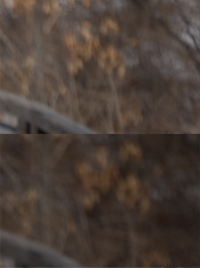
70-200 EF vs RF bokeh.png

Both are great lenses, but the above examples are 'real world' shots (not controlled shots of a test chart) and to me the RF is clearly the better of the two in terms of sharpness, contrast and bokeh.
 
  • Like
Reactions: 1 user
Upvote 0
I categorically do not agree with that statement. Sometimes it is "better". Sometimes it is not.

If gear from a system recently removed from a manufacturer's catalog that still qualifies for warranty/repair work meets a buyers needs at a much lower cost than the brightest, shiniest, expensive new products then I think the better choice is the older system. I've cameras and lenses from the EOS EF system that have not been produced in well over a decade. They all still work as well as when they were new and are sometimes as good a choice as any of my newer gear for many use cases.

One of my most used lenses to this day is the EF 24-70mm f/2.8 L discontinued in 2012. Is it as clinically sharp as the 2012 replacement EF 24-70mm f/2.8 L II? No, it isn't. But unless you've got the later on a camera mounted on a tripod using mirror lockup and wired cable release you can rarely tell the difference in real world usage. The difference in resolution between the two, assuming both are in proper optical alignment, is less than what you lose shooting handheld in medium or marginal light.

Probably my second most used lens is an EF 70-200mm f/2.8 L IS II bought in 2010. It was discontinued in 2018. I had the IS unit replaced in 2019 when it began to vibrate in certain orientations with respect to gravity. The repair cost around $400 from CPS. Today it's as sharp, maybe even slightly sharper, than when it was brand new over 15 years ago. And it's sharper than the RF 70-200mm f/2.8 L IS according to most online tests I've seen. It isn't as light or as compact when zoomed out to 70mm as the newer RF model, but that's never bothered me.
Fine, we agree to disagree then.

I shoot with a dead system (Hasselblad HC) and I'm under no illusion that it is not indeed dead. I have accepted the risks and limitations which come with using a dead system because it offers me something I value, although that will not last forever.

If you do not want to call EF "dead" that's your prerogative. I know I won't convince you otherwise, as you will not convince me that EF is not dead. Your 70-200 (I had the same lens by the way and liked it a lot, but eventually switched to mostly primes and sold it to reduce the cost of a EF 200 f/2L IS) was repaired while it was still a supported lens - it'd be interesting to see the costs to do the same kind of repairs once 7 years have passed from the discontinuation date (maybe it has happened already?)
 
  • Like
Reactions: 1 user
Upvote 0
I had the former, and I have the latter. Not sure which online tests you're referring to, the RF version is certainly sharper than the EF MkII in the TDP comparison, especially away from the center. Granted, that's one copy of each lens and different camera bodies.

But here is a comparison of another copy of each lens (docsmith's EF MkII on top since I'd already sold mine, my RF on bottom) shot by him with his R5.

View attachment 227032

The bokeh of the RF version (bottom) is more pleasing (to me), as well...smoother, less nervous.

View attachment 227033

Both are great lenses, but the above examples are 'real world' shots (not controlled shots of a test chart) and to me the RF is clearly the better of the two in terms of sharpness, contrast and bokeh.

I should have been more specific. My copy of the EF 70-200mm f/2.8 L IS II seems to me to be sharper than any online tests/revues of either the RF 70-200mm f/2.8 L IS or the EF 70-200mm f/2.8 L IS II I have seen.

I count myself lucky in that regard. I feel like I won the lottery when I bought that lens back in 2010.

And yes, as I have more than once stated here and elsewhere, the bokeh of the EF 70-200mm f/2.8 L IS II (and III) can be more than a bit harsh. That's why I'll usually choose the EF 135mm f/2 L over the EF 70-200mm f/2.8 L IS II when I know I can get away with using only 135mm focal length. The 135/2 is not quite as sharp (though it is no slouch), but it renders three dimensional space smoothly in a way the 70-200/2.8 does not. But we were talking about acutance in the above comments, not bokeh.

Very few online tests/reviews test more than one copy of a lens. The results of measurements DxO Mark did of the EF 70-200mm f/2.8 L IS II, for example, are significantly substandard compared to other tests of the same lens model published elsewhere online. They seem to have tested a flyer. Or maybe the lens they tested got knocked out of alignment when shipped to them?

Roger Cicala has more than once pointed out in his blog that wide aperture telephoto zooms, even the really expensive ones, tend to have a higher copy to copy variation than other types of zoom lenses, not to mention how they compare to much lower variability between different copies of higher end prime lenses. The more complex the optical formula and the more complex the various movements of different elements/groups in relation to one another as a lens is zoomed/focused, the greater likelihood of compounding variability.

Things You Don't Want To Know about Zoom Lenses

In the above blog he shows that among ten copies the one that is far and away the "best" at 200mm and f/2.8 is below average at 70mm and f/2.8. He also shows that another lens which looks really good at 200mm in the sagittal graph looks nowhere near as good in the tangential graph, and thus has much worse astigmatism than most of the other copies.

In this blog entry comparing field curvature and tilt between various copies of Canon EF 70-200mm f/2.8 L IS II lens model he says:

We ran 13 copies of the lens through field curvature tests at these three focal lengths. Two of them had flat fields at all three test lengths, and two more were nearly so. But neither of those two had the best MTF, they didn’t resolve as well as most of the tilted lenses I just showed you, although, again, they were acceptable. If we had tested some other things – rotational variation, lateral chromatic aberration, MTF at various focal lengths, etc. every lens would have been slightly different from every other one in those measurements, too.

Earlier in the same blog he made a point to explain that the EF 70-200mm f/2.8 L IS II fares better than average for 70-200mm f/2.8 lenses from all manufacturers.

We chose Canon 70-200 f/2.8 IS II lenses because they are excellent. So you fanboys that want to take this out of context and say Canon 70-200 f/2.8 IS II lenses have tilt variation, trust me, it’s less than the zoom you are a fan off. Every zoom lens made is like this.

All of that to say that 70-200mm f/2.8 lenses can vary highly from one copy to the next for MTF, astigmatism, field curvature, tilt, and just about anything else one can measure on a test bench.
 
Upvote 0
I should have been more specific. My copy of the EF 70-200mm f/2.8 L IS II seems to me to be sharper than any online tests/revues of either the RF 70-200mm f/2.8 L IS or the EF 70-200mm f/2.8 L IS II I have seen.
I'm curious, how do you compare your copy of a lens to online tests of other copies or different lenses? People use different cameras, and take pictures of different things. Some of them do it better than others.

The only time I was confidently able to say that my copy of a lens was sharper than an online test was with my EF-M 18-150, where Bryan/TDP posted the usual shots of his 'enhanced ISO-12233' charts and I tested my copy of that lens on an equivalent camera (M2 vs M, essentially the same sensor), and I have the same charts that he uses. In that case, he bought another copy and tested that and it gave results similar to mine (i.e. better than his first copy). Even though I have the same charts, he uses a 45-50 MP 5-series camera for his testing, and I don't. Comparing the sharpness of even the same test chart shot with an R1 vs. an R5 won't enable me to determine the relative sharpness of my copy of an RF or EF lens vs. his.

It's not too difficult to spot results from a poor copy of a lens, but IMO confidently distinguishing between 'good' copies of a lens or comparing one lens to another requires testing both lenses under the same conditions. I don't see how one can take pictures with their lens and declare that their lens is sharper than other copies based on pictures posted by someone else online (the pictures may be sharper, but there is more that goes into a picture posted online than just the lens...subject, focus, processing, downsampling, etc.).

All of that to say that 70-200mm f/2.8 lenses can vary highly from one copy to the next for MTF, astigmatism, field curvature, tilt, and just about anything else one can measure on a test bench.
If you put your copy of the 70-200/2.8 II on an optical bench and quantified parameters like MTF, field curvature, etc., and compared those to data published by LensRentals for multiple copies of the same lens, that would be a valid comparison demonstrating that your lens is sharper.
 
  • Like
Reactions: 1 users
Upvote 0
I'm curious, how do you compare your copy of a lens to online tests of other copies or different lenses? People use different cameras, and take pictures of different things. Some of them do it better than others.

The only time I was confidently able to say that my copy of a lens was sharper than an online test was with my EF-M 18-150, where Bryan/TDP posted the usual shots of his 'enhanced ISO-12233' charts and I tested my copy of that lens on an equivalent camera (M2 vs M, essentially the same sensor), and I have the same charts that he uses. In that case, he bought another copy and tested that and it gave results similar to mine (i.e. better than his first copy). Even though I have the same charts, he uses a 45-50 MP 5-series camera for his testing, and I don't. Comparing the sharpness of even the same test chart shot with an R1 vs. an R5 won't enable me to determine the relative sharpness of my copy of an RF or EF lens vs. his.

It's not too difficult to spot results from a poor copy of a lens, but IMO confidently distinguishing between 'good' copies of a lens or comparing one lens to another requires testing both lenses under the same conditions. I don't see how one can take pictures with their lens and declare that their lens is sharper than other copies based on pictures posted by someone else online (the pictures may be sharper, but there is more that goes into a picture posted online than just the lens...subject, focus, processing, downsampling, etc.).


If you put your copy of the 70-200/2.8 II on an optical bench and quantified parameters like MTF, field curvature, etc., and compared those to data published by LensRentals for multiple copies of the same lens, that would be a valid comparison demonstrating that your lens is sharper.
I agree, I have a few lenses that are outrageously sharp. They far out resolve the sensors on my R6ii and R5, even with teleconverters. This aligns with their respective theoretical MFT curves. However, I would never say that any of my lenses are sharper than their theoretical MFT chart scores. How would I validate it without lab testing my lenses and a large range of other lenses also? However, it is reasonable for me to estimate, seeing my results in Lightroom, I can say that they are probably close or similar to that value.

I also have a copy of the ef 70-200/2.8 LIS II, I bought it new back when it was a "just released" new model and it cost me a fair penny. It's a specific lens that I am very familiar with. On my 5DII/III it was an amazingly sharp lens. I also loved it's contrast, colour rendition, it's superlative AF and excellent IS. Great with a 1.4x TC III but not so great with a 2x TC III. It always needed a whole extra stop of aperture to sharpen up that lens to acceptable levels. It's image quality seemed to deteriorate close to it's Min focus distance than at infinity focus. Which is something that's rarely noted in lens reviews. I used it a lot with my old 5DIII's with their softer and less resolved sensor. I still have this lens and I use it far less than I used to. It's still nice to use on My R6ii and R5. It's big and heavy, I'm not using that aperture / focal length much these days. I really should get around to side grading it to a RF lens, maybe I'd use it more. However, It's no where near as sharp as my ef 100-400mm II LIS at 400mm. With a 1.4x TC it's nearly as sharp at 300mm and natively it's as sharp at 200mm. But I'd never say that it was "wozers" sharp! So for my copy, I can hand on heart say that it out resolved the 5DIII sensor. But the R6ii substantially out resolves the 5DIII and my R5 comfortably out resolves every sensor except the 5DSR. I can honestly say that the ef 70-200/2.8 LIS II is a sharp lens, probably as sharp as it's RF counterpart. However, there are a lot of copy variations and most of these have substantially lower MFT curves than their theoretical plots might suggest. The new RF 70-200mm f2.8 Z lens looks very impressive, I'm sure this is a lens that also follows closely to it's theoretical chart scores.
I have lenses like my EF 400mm f2.8 LIS II and EF 100-400mm f5.6 LIS II which seem seems to align with their theoretical MFT plots and lead me to belive these lenses are built very close to their theoretical values. However, one major caveat..... my sensors are not yet matching or exceeding the resolution of these lenses. Where as the 5DIII (and I suggest the R3) are hardly taxing their lenses much at all compared to what a R5/R5ii will.

It reminds me of recent conversation i had with a "professional" events photographer that was hired by a family and came to my local Church (even though I run the photography for this particular parish). He reliably informed me that his ef 70-200mm f2.8 LIS was one of the sharpest lenses Canon had ever made and his particaulr one was cherry picked and was one of the sharpest. He was also running 5DIII's and I didn't dare show him my kit bag or lens inventory. However, he ended up using a lot of my images in his portfolio he sent to his client (I made them available for him for free).
I never got to see his magic unicorn sharp lens....I suspect that I never will. I'll take measured MFT's as a guide over hyperboles every time. However, what he did do for me is to remind me that I needed to "up the quality" of my business cards....lol!
 
Upvote 0