Canon High End Mirrorless Camera Talk [CR2]

jolyonralph said:
dak723 said:
Sorry, you can mention it all you want, but as others have pointed out, there are problems with short flange distances. Yes, it is not the flange distance itself that is the problem, but when camera makers have used the short flange distance, it is to create a smaller camera/lens package.

And yet Sony/Zeiss seem to have achieved the impossible with their 35mm f/2.8 and 55mm f/1.8 lenses then.

Have you actually tried these lenses?

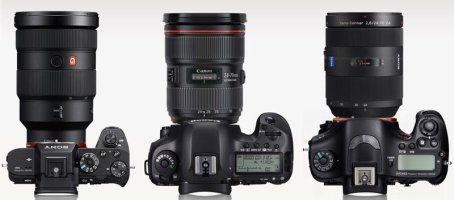
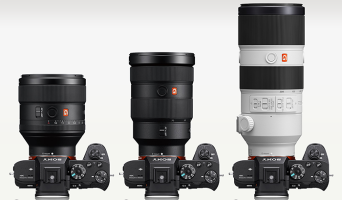
And what about Sony GM series lenses? 24-70/2.8, 70-200/2.8 or 100-400 GM? How exactly are they benefitting from shorter flange distance? Are they smaller than EF counterparts? Or lighter for that matter? Or are they somehow as big and as heavy as their DSLR counterparts? See, physics :)
 
Upvote 0
"...The Sony 24-70 f2.8 GM lens is hollow on the camera attachment side, the flange distance increased... That distance is basically an inbuilt lens adapter and totally increases the size of the lens itself. Take a look at all the GM lenses mounted on Sony A7 Bodies..."

https://www.dpreview.com/forums/thread/4067584
 

Attachments

  • 1.jpg
    1.jpg
    71.7 KB · Views: 139
  • 2.png
    2.png
    198.1 KB · Views: 491
Upvote 0
Don Haines said:
jolyonralph said:
dak723 said:
Sorry, you can mention it all you want, but as others have pointed out, there are problems with short flange distances. Yes, it is not the flange distance itself that is the problem, but when camera makers have used the short flange distance, it is to create a smaller camera/lens package.

And yet Sony/Zeiss seem to have achieved the impossible with their 35mm f/2.8 and 55mm f/1.8 lenses then.

Have you actually tried these lenses?

Wide angle lenses benefit from a short flange distance, just as long lenses suffer..... it's back to that problem of design compromises.....

Granted, my experience with the Sony lenses as mentioned earlier is limited to two copies of their 28-70 kit lens. Away from the center, the performance was arguably the worst lens I have ever owned. - not counting wide angle lenses. Further research led me to the review of their higher-end kit lens, which had similar comments about it on the imaging resource review. Further research led me to the following articles, which touch on some of the same issues that others have mentioned regarding the need to make many of the lenses larger - essentially having a built-in adapter - as SecureGSM has pointed out.

http://ilovehatephoto.com/2015/02/23/3-detailed-reasons-not-to-switch-to-sony-full-frame-mirrorless-system/

https://petapixel.com/2016/04/04/sonys-full-frame-pro-mirrorless-fatal-mistake/

I have nothing against Sony or their products. When I bought the A7 II, it was to replace my 6D, but that didn't happen - not because of some sort of Canon loyalty, but simply because the Canon seemed better in virtually every category that was important to me.

As Don Haines points out, the short flange distance is a plus for wide angle lenses, so there are always compromises and there is no perfect solution, but if some of the comments regarding the Sony flange distance are correct (don't know if they have ever been verified) the camera was originally going to be APS-C and then was changed mid-stream to FF. If this is true, then the 18mm flange distance is a mistake - and the fact that Sony has had to build larger lenses to compensate makes it seem like other camera makers considering FF mirrorless should not repeat that mistake.
 
Upvote 0
Khalai said:
And what about Sony GM series lenses? 24-70/2.8, 70-200/2.8 or 100-400 GM? How exactly are they benefitting from shorter flange distance? Are they smaller than EF counterparts? Or lighter for that matter? Or are they somehow as big and as heavy as their DSLR counterparts? See, physics :)

They're not benefiting at all, but they're no worse, are they?

So, you have benefits with some lenses (eg primes) being more compact, and other lenses (eg 2.8 zooms) are just as good as they are on a system with a longer flange distance.

So again, why is having a shorter flange distance such a huge problem? If you really don't like it stick an EF adaptor on, glue one on if you're really that stubborn.
 
Upvote 0
Hakejo said:
I really wish Canon would move a little bit faster with their fullframe mirrorless. I wonder why they are so reluctant to make a move?

At this point, Canon is lagging mostly in the introduction of a full frame electronic viewfinder. Other pieces of a Canon mirrorless system are in place, largely based on dual pixel technology, such as sensor-based phase detect autofocus and touchscreen focussing. These features can be used in Liveview in both the 5DIV and the 6DII.
 
Upvote 0
jolyonralph said:
Khalai said:
And what about Sony GM series lenses? 24-70/2.8, 70-200/2.8 or 100-400 GM? How exactly are they benefitting from shorter flange distance? Are they smaller than EF counterparts? Or lighter for that matter? Or are they somehow as big and as heavy as their DSLR counterparts? See, physics :)

They're not benefiting at all, but they're no worse, are they?

So, you have benefits with some lenses (eg primes) being more compact, and other lenses (eg 2.8 zooms) are just as good as they are on a system with a longer flange distance.

So again, why is having a shorter flange distance such a huge problem? If you really don't like it stick an EF adaptor on, glue one on if you're really that stubborn.

canon has the perception of 120 million reasons not to. they are also the market leader.

both make for bad reasons.
 
Upvote 0
rrcphoto said:
BillB said:
Hakejo said:
I really wish Canon would move a little bit faster with their fullframe mirrorless. I wonder why they are so reluctant to make a move?

At this point, Canon is lagging mostly in the introduction of a full frame electronic viewfinder.

there's no difference between a full frame viewfinder and an APS-C electronic viewfinder.

True enough. My intended point was they had not introduced a full frame camera with an electronic viewfinder, not that there were any specific development issues associated with doing so.
 
Upvote 0
jolyonralph said:
If you really don't like it stick an EF adaptor on, glue one on if you're really that stubborn.

I will never trust an adapter to be as durable and reliable as a native mount. If you get your way on this, I'll get a 5D4 and run it into the ground, then see where we are in a decade or two.
 
Upvote 0
Pure gold...I am thinking of doing the same but only for next 3-4 years until Canon is onto the next 5D level body.

LonelyBoy said:
jolyonralph said:
If you really don't like it stick an EF adaptor on, glue one on if you're really that stubborn.

I will never trust an adapter to be as durable and reliable as a native mount. If you get your way on this, I'll get a 5D4 and run it into the ground, then see where we are in a decade or two.
 
Upvote 0
LonelyBoy said:
jolyonralph said:
If you really don't like it stick an EF adaptor on, glue one on if you're really that stubborn.

I will never trust an adapter to be as durable and reliable as a native mount. If you get your way on this, I'll get a 5D4 and run it into the ground, then see where we are in a decade or two.

A full frame mirrorless may be smaller and lighter than a fullframe DSLR, but it will be heavier and larger than an APS-C mirrorless. My guess is that Canon's full frame mirrorless will stick with the EF mount. The technical and production issues associated with forcing the widespread use of adapters might be relatively minor, but the marketing people aren't going to want to go anywhere near a strategy based on widespread use of adapters. They have plenty of experience with the consumer reaction to EF-M adapters already. APS-C (or smaller) mirrorless cameras are the smaller and lighter solution.
 
Upvote 0
Mirrorless cameras that can take standard EF lenses are inevitable. As technology improves the drawbacks of a mirror system (eg vibration, complexity) will inevitably drive canon to abandon the mirror entirely - maybe not for another decade, but it will be gone eventually.

The real question is not whether Canon will do a compact (ef-m style) mirrorless full frame, or a larger mirrorless full-frame that only takes EF lenses, but whether they will do both.

Personally I'd love to abandon the Sony A7RII and move over to a compact Canon EF-M full-frame camera. I do hope that a FF EOS M style camera is on the way, but I also understand it's not for everyone.

That's why I'm sure there is room for both.
 
Upvote 0
jolyonralph said:
Mirrorless cameras that can take standard EF lenses are inevitable. As technology improves the drawbacks of a mirror system (eg vibration, complexity) will inevitably drive canon to abandon the mirror entirely - maybe not for another decade, but it will be gone eventually.

The real question is not whether Canon will do a compact (ef-m style) mirrorless full frame, or a larger mirrorless full-frame that only takes EF lenses, but whether they will do both.

Personally I'd love to abandon the Sony A7RII and move over to a compact Canon EF-M full-frame camera. I do hope that a FF EOS M style camera is on the way, but I also understand it's not for everyone.

That's why I'm sure there is room for both.

Would it be possible to design lenses for the EF mount that sat deeper into a mirrorless camera? Could that be a way to make some size reductions?
 
Upvote 0
BillB said:
jolyonralph said:
Mirrorless cameras that can take standard EF lenses are inevitable. As technology improves the drawbacks of a mirror system (eg vibration, complexity) will inevitably drive canon to abandon the mirror entirely - maybe not for another decade, but it will be gone eventually.

The real question is not whether Canon will do a compact (ef-m style) mirrorless full frame, or a larger mirrorless full-frame that only takes EF lenses, but whether they will do both.

Personally I'd love to abandon the Sony A7RII and move over to a compact Canon EF-M full-frame camera. I do hope that a FF EOS M style camera is on the way, but I also understand it's not for everyone.

That's why I'm sure there is room for both.

Would it be possible to design lenses for the EF mount that sat deeper into a mirrorless camera? Could that be a way to make some size reductions?
Like EF-S, but with a full-frame image circle? Sounds very tricky to me, and you'd get the issue with the vignetting at the corners, because of the far-from-normal angle of incidence of light onto the sensor.
 
Upvote 0
Well, one possible solution is to build a new mount format based around a curved sensor (Canon already have patents for this).

This would allow compact lenses with none of the optical drawbacks of a standard short flange distance mount, and potentially simpler and cheaper high quality lens design.

But it would also pretty much rule out using existing EF lenses, even with an adaptor (except one that had extra glass in it). It would be FD -> EF all over again.

Now, if they could find a way to make a sensor that can be distorted from flat to curved depending on which lens is mounted that would be an ideal solution!
 
Upvote 0
Mt Spokane Photography said:
A more powerful processor to manage the dual pixel autofocus at pro level speeds only adds to battery woes. A hybrid design could retain the current fast enough for many uses level of AF in mirrorless mode and not require a more powerful processor.

Not necessarily. Look what Apple manage to achieve with every generation of the iPhone/iPad. A much more powerful processor but far more efficient resulting in less heat/power consumption.

-=Glyn=-
 
Upvote 0