Canon hurry up! Nikon's face-detection & Sony's Exmor sensors are killing us!

Status
Not open for further replies.
Oh no I'm dying!!! Aughhhh!!

I switched to Canon from Nikon recently and trust me gimmicks like this (e.g. "3D Tracking") never work as well as originally intended and honestly aren't that important. LOL

If you are really this wet over the D800 why don't you switch? I'm tired of hearing the "BUT IM SO INVESTED IN CANON GLASS" bs. I just swapped out my Nikon 24-70, 14-24, 70-200, 50 1.4, 135 2, and 105 micro VR at virtually no loss. If anything the glass is the easiest part to swap because it maintains value the most. Seriously instead of crying here, just switch. Both systems are great and you would become such a better photographer with face detect AF.

Seriously I feel bad for the bride that gets you, if you can't make a reasonable guess at an indoor bounce flash exposure.
 
Upvote 0
if can't expose properly without a function like this, then you shouldn't call yourself a professional (wedding) photographer.

If you claim you are a professional and you do need this, just get the 1dx.
 
Upvote 0
jrista said:
PhotoCat said:

I can't believe D800's sensor is not backlit, seeing its high ISO score on DXOmark...
When 36MEG is scaled down to 8x12, or 8MEG, its noise performance is vy close to D3S.

Well, Canon has to double hurry up, if Sony can achieve this kind of ISO without backlit technology.
Astro, do u have a reference quoting D800 is not using a backlit sensor? Tks!

You have to take DXO data with a grain of salt, and since the advent of D800 print DR results, you have to be EXTREMELY skeptical about it. You also have to realize that "Print DR" is an image that has had post processing. We don't know exactly what DXO is doing to those images, but the idea that you can magically gain additional DR above and beyond what the senor itself is capable of (which is what their Screen DR rating is representative of) is extremely fishy.

Riddle me this: If the D800 SENSOR itself is capable of 13.23 stops of DR, and the scene you are trying to expose has 14.4 stops of DR...will you be able to capture the full scene DR in a single shot? The obvious answer is no. The sensor is only capable of 13.23 stops of DR, and trying to expose all 14.4 stops in one shot is going to either blow highlights or block shadows. There is also the simple math problem. A 14-bit sensor is a 14-stop sensor...you would have to go to at least a 15-bit sensor to achieve more than 14.0 stops of native DR with the sensor itself.

The D800 is NOT as amazing as it sounds, and referring to it as "unbelievable" would be about as accurate an exclamation you can get...it literally is unbelievable. The Canon 1D IV has 11.46 stops of DR. The difference between the D800 and the 1D IV is 1.77 stops, or roughly 1 2/3rds of a stop, of dynamic range. Not 2 stops, not 3 stops. The physical hardware differences are far more moderated than DXO, of whom Nikon is a paying customer and Canon is not, would like you to think.

Print DR == BIIIG Grain of Salt (or a big TUB of salt, whichever tickles your fancy...just make sure you really salt it good.)

wrong. it is all about how you quantize the measurement and what scale you use. They don't have to use a linear scale either.

http://www.canonrumors.com/forum/index.php?topic=4747.120

you can stretch the 14 bits easily to cover more tonal ranges and since the lower bits are usually just pointless random noise, there is still headroom which is why the D800 is so stellar DR wise. I agree that eventually we'll go to 15 or 16 bits once cameras start pushing far beyond 14stops. But the DR of the D800 at base ISO of 14.4 stops as reported by DXO is absolutely amazing regardless, even if it was just 14.0 stops. To correct your point, the difference between the D800 and the 1D4 is over two stops. not trivial at all.

let's stop the famboysm and recognize that nikon has created an amazing sensor and hope canon can match it. instead of whining we should be excited to have canon follow eventually. I'm sure if it had been canon that did this, we'd be all singing praises to DXO and how they are so accurate.
 
Upvote 0
KeithR said:
psolberg said:
Ah yes. Buy more important, the meter on the 5Dmk3 is primitive as hell. Even the most basic Nikon dslr meters color. Only the 1DX does this. A real crippling by canon on the 5D3.

That's a lot of crap right there.

crap? how so? As far as I know, the canon 63 zone sensor is the same old technology canon has been using for decades. meaning it is the color blind sensor you have had for ages. Unlike the 1DX RGB meter sensor which the 5DmkIII lacks. Every nikon body uses an RGB sensor and finally canon has moved to one, but only in their top of the line body so far.

watch it happen, the next few canon bodies will have RGB sensors for metering except for the 5DmkIII.
 
Upvote 0
Straight off the canon website.

"The EOS 5D Mark III features Canon's multi-layer 63-zone iFCL (intelligent Focus Color Luminance) Metering System that integrates the cameras AF system into its readings. By taking into account the color and luminosity surrounding the chosen AF point(s), this new system delivers an entirely new level of accuracy, especially in situations where the light changes quickly. The metering sensor enables evaluative, center weighted, partial and spot metering, plus offers 5-step exposure compensation for perfectly exposed images, every time."

Same system used in the 7D. The point is, they both use COLOR.
 
Upvote 0
mitchell3417 said:
Straight off the canon website.

"The EOS 5D Mark III features Canon's multi-layer 63-zone iFCL (intelligent Focus Color Luminance) Metering System that integrates the cameras AF system into its readings. By taking into account the color and luminosity surrounding the chosen AF point(s), this new system delivers an entirely new level of accuracy, especially in situations where the light changes quickly. The metering sensor enables evaluative, center weighted, partial and spot metering, plus offers 5-step exposure compensation for perfectly exposed images, every time."

Same system used in the 7D. The point is, they both use COLOR.

Not really. Color Luminance != RGB color.

But, anyway. I always thought that I saw thousands of excellent pictures made by photographers. Some of them - with - unbelievable - manual focus. Do you really think face detection will make you work step easier? I doubt so.

By the way, mobile phones have face detection. Buy new Nokia 40Mp+ phone, if pixels and algorithms are the things making ordinary photo excellent :)
 
Upvote 0
i would want to know what the effective shutter lag is going to be when using face detection AF. i imagine it will take longer to AF if it needs to figure out what are the faces within the scene. any significant lag and this feature becomes a useless gimmick. remember eye controlled focusing? what happened to that?

i'm in the camp that doesnt trust auto features and rarely uses them. i am the photographer...i want control over making the photograph. the camera cannot make better decisions than me.

features are nice but in the end with a little effort and practice to hone your skills i have found i take better pictures when i'm doing things manually than when i am relying on automated features. give me a functioning fast AF system and i'm good after that.
 
Upvote 0
mitchell3417 said:
Same system used in the 7D. The point is, they both use COLOR.

Yes, they do. But not RGB. "The metering sensor has 63 measurement zones and is a Dual-layer design with each layer sensitive to different wavelengths of light... one layer sensitive to red/green light and one layer sensitive to blue/green light."

So, Canon's iFCL metering system sees color in the same way as a dog or an old-world monkey sees color - a dichromatic system, not a trichromatic system like the 1D X and us humans use (of course, birds, reptiles and fish are tetrachromatic - four color channels, so it's not like we humans and the 1D X are so special :P ).
 
Upvote 0
Spring is here - our old cameras can still take a good picture without all the technological gizmos - face-detection doesn't really grab me as important and the IQ is more than good enough. My choice of camera is not going to be impacted by the technology

Here is this mornings picture of a kid, taken with an obsolete APS-H camera without iFCL or face detection. The second is even worse - with a camera with a Digic 3 processor!

Second picture:

Camera Model: Canon EOS-1Ds Mark III
Lens: EF24-105mm f/4L IS USM
Image Date: 2012-04-01 12:06:33 (no TZ)
Focal Length: 105.0mm
Aperture: f/8.0
Exposure Time: 0.020 s (1/50)
ISO equiv: 50
Exposure Bias: +0.33 EV
 

Attachments

  • B09G9529.JPG
    B09G9529.JPG
    417.7 KB · Views: 756
  • IMG_4611x.JPG
    IMG_4611x.JPG
    416.8 KB · Views: 803
Upvote 0
briansquibb said:
Spring is here - our old cameras can still take a good picture without all the technological gizmos - face-detection doesn't really grab me as important and the IQ is more than good enough. My choice of camera is not going to be impacted by the technology

Here is this mornings picture of a kid, taken with an obsolete APS-H camera without iFCL or face detection. The second is even worse - with a camera with a Digic 3 processor!

Second picture:

Camera Model: Canon EOS-1Ds Mark III
Lens: EF24-105mm f/4L IS USM
Image Date: 2012-04-01 12:06:33 (no TZ)
Focal Length: 105.0mm
Aperture: f/8.0
Exposure Time: 0.020 s (1/50)
ISO equiv: 50
Exposure Bias: +0.33 EV

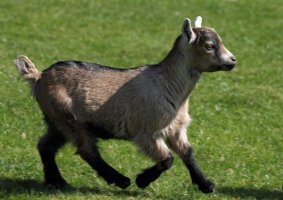
What if I told you I'll make a camera with Goat detection ? ;) would that change your thinking?
 
Upvote 0
ippikiokami said:
briansquibb said:
Spring is here - our old cameras can still take a good picture without all the technological gizmos - face-detection doesn't really grab me as important and the IQ is more than good enough. My choice of camera is not going to be impacted by the technology

Here is this mornings picture of a kid, taken with an obsolete APS-H camera without iFCL or face detection. The second is even worse - with a camera with a Digic 3 processor!

Second picture:

Camera Model: Canon EOS-1Ds Mark III
Lens: EF24-105mm f/4L IS USM
Image Date: 2012-04-01 12:06:33 (no TZ)
Focal Length: 105.0mm
Aperture: f/8.0
Exposure Time: 0.020 s (1/50)
ISO equiv: 50
Exposure Bias: +0.33 EV

What if I told you I'll make a camera with Goat detection ? ;) would that change your thinking?

LOL ;D ;D ;D
 
Upvote 0
scrappydog said:
neuroanatomist said:
So, Canon's iFCL metering system sees color in the same way as a dog or an old-world monkey sees color - a dichromatic system, not a trichromatic system like the 1D X and us humans use...
Does this distinction have any real-world implications in the accuracy and/or quality of the AF system?
Not in the old world :P.
 
Upvote 0
scrappydog said:
neuroanatomist said:
So, Canon's iFCL metering system sees color in the same way as a dog or an old-world monkey sees color - a dichromatic system, not a trichromatic system like the 1D X and us humans use...
Does this distinction have any real-world implications in the accuracy and/or quality of the AF system?

Probably, but really it's more to do with the higher resolution of the tricolor (RGB) metering sensor of the 1D X, which has sufficient resolution to feed additional data to the AF system for tracking. The 2-color iFCL system does feed general color information to the AF system, which is useful in cases where the wavelength of the main illumination is not white (e.g. mercury or sodium lamps). Obvioulsly, it plays a role in metering accuracy, too.
 
Upvote 0
scrappydog said:
neuroanatomist said:
So, Canon's iFCL metering system sees color in the same way as a dog or an old-world monkey sees color - a dichromatic system, not a trichromatic system like the 1D X and us humans use...
Does this distinction have any real-world implications in the accuracy and/or quality of the AF system?

I wouldn't say it has too many real-world implications, probably even less than a biological system.

In human vision, we have two separate "poles" of color sensitivity: blue/yellow and green/magenta. Because of the nature of how our trichromatic sight works, we cannot actually sense both blue and yellow or both green and magenta at the same spatial point at the same moment. If you try, the eye & brain will compensate by oscillating between sensing one color then sensing the other (http://io9.com/5710434/train-yourself-to-see-impossible-colors)...however you will not actually see green (which according to color theory is what you should get when blending blue and yellow). This is generally not a problem, as we have two separate poles of color sensitivity (increasing "color sensitivity resolution"), and our eyes "refresh" some 500 times a second. Dichromatic vision has only a single pole, and therefor has lower color sensitivity resolution. If you had dichromatic vision, you could either sense red or blue, but not both at the same time.

Now, the iFCL sensor is not a biological system, its an electronic system. Silicon is semitransparent to various wavelengths of light. So long as the upper layer is blue sensitive, there is nothing to prevent an electronic sensor from simultaneously sensing blue-green and red-green at the same time. Such a sensor probably still doesn't have as high a color sensitivity resolution as a trichromatic system would since your sensing blue-green and red-green rather than blue, red, and green, but its probably better than a biological dichromatic system.
 
Upvote 0
Status
Not open for further replies.