Canon must hurry up on FF mirrorless, Sony's new A9 is killer

Compromises are inevitable and now the reviews are beginning to come. DSLR killer? We will now get to see the fine print. I watched the "love-in" by B&H last night and one thing stuck out, namely how a female hand was practically wrapped around the camera. That I would not want with a long lens.

http://blog.planet5d.com/2017/05/sony-a9-hands-on-review-and-problems-with-dynamic-range-so-it-isnt-the-perfect-camera-after-all/

Jack
 
Upvote 0
I had a good laugh at this given how the Sony sensors had been the Holy Grail of low ISO DR, and how incredibly important to everyone this was. And if you didn't know how important this was to you then you were clearly in need of enlightenment, and of course there were quite a few Evangelists out there who were prepared to do that for you.

So it's adding a fair amount of read noise eh ? Maybe we have a Sony with good highlight headroom then !
 
Upvote 0
Sporgon said:
I had a good laugh at this given how the Sony sensors had been the Holy Grail of low ISO DR, and how incredibly important to everyone this was. And if you didn't know how important this was to you then you were clearly in need of enlightenment, and of course there were quite a few Evangelists out there who were prepared to do that for you.

12 stops of low ISO DR for the a9, 13.5 stops for the 1D X II. I wonder why Rishi isn't comparing the a9 to it's "best-performing peers" (which is how he referred to the a7RII in the 1D X II testing)? ::)
 
Upvote 0
Sporgon said:
I had a good laugh at this given how the Sony sensors had been the Holy Grail of low ISO DR, and how incredibly important to everyone this was. And if you didn't know how important this was to you then you were clearly in need of enlightenment, and of course there were quite a few Evangelists out there who were prepared to do that for you.

So it's adding a fair amount of read noise eh ? Maybe we have a Sony with good highlight headroom then !

It's hard to believe how certain personalities actually can't perceive this even though it's so blatantly obvious. This shifting of perspective back and forth depending on the manufacturer is close to an art form.

Jack
 
Upvote 0
Jack Douglas said:
Sporgon said:
I had a good laugh at this given how the Sony sensors had been the Holy Grail of low ISO DR, and how incredibly important to everyone this was. And if you didn't know how important this was to you then you were clearly in need of enlightenment, and of course there were quite a few Evangelists out there who were prepared to do that for you.

So it's adding a fair amount of read noise eh ? Maybe we have a Sony with good highlight headroom then !

It's hard to believe how certain personalities actually can't perceive this even though it's so blatantly obvious. This shifting of perspective back and forth depending on the manufacturer is close to an art form.

Jack

I used to love a good DR scrap Jack, it's such a shame that Canon have spoilt all the fun by going to on-chip ADC. To be fair to them they did keep the DR under the Sony level so we could still have a good fight about it but no one seems that bothered now.

You are quite right, the lengths that some went to in producing connived situations in order to demonstrate the important of that extra stop of shadow lift ( often at the expense of highlight head room but we won't go into that) was indeed an art form, and I really miss it :'(
 
Upvote 0
To add to this debate, I note this article on DPReview on the potential problems Canon (and Nikon) face when considering going to mirrorless -- lens compatibility. The article argues that current DSLR lenses are great for phase detection AF systems, but are not for made for the contrast detection systems used in mirrorless cameras.
"It's noticeable, for instance, that Sony makes very little use of ring-type focus motors in the lenses its developing for the E-mount, despite having experience of using them for its DSLR A-mount," the author says.
I have no idea whether this is true or not, but it may explain in part why Canon and Nikon aren't rushing to mirrorless FF cameras, yet. Do you want Canon to have another line of lenses -- or have to buy EF-M lenses for best performance -- or do you want your current lenses to be fully compatible with a Canon FF mirrorless camera?

https://www.dpreview.com/opinion/5187078750/maintaining-a-legacy-or-building-for-mirrorless-who-benefits
 
Upvote 0
Sporgon said:
Jack Douglas said:
Sporgon said:
I had a good laugh at this given how the Sony sensors had been the Holy Grail of low ISO DR, and how incredibly important to everyone this was. And if you didn't know how important this was to you then you were clearly in need of enlightenment, and of course there were quite a few Evangelists out there who were prepared to do that for you.

So it's adding a fair amount of read noise eh ? Maybe we have a Sony with good highlight headroom then !

It's hard to believe how certain personalities actually can't perceive this even though it's so blatantly obvious. This shifting of perspective back and forth depending on the manufacturer is close to an art form.

Jack

I used to love a good DR scrap Jack, it's such a shame that Canon have spoilt all the fun by going to on-chip ADC. To be fair to them they did keep the DR under the Sony level so we could still have a good fight about it but no one seems that bothered now.

You are quite right, the lengths that some went to in producing connived situations in order to demonstrate the important of that extra stop of shadow lift ( often at the expense of highlight head room but we won't go into that) was indeed an art form, and I really miss it :'(

Yes making Rishi jump through hoops to try to defend the indefensible lies he peddled was fun for a while. Amazing how many he jumped through to avoid posting the one image he knew was a complete misrepresentation, kinda miss him along with dilbert and a few others, some interesting and some not so much....
 
Upvote 0
Jaysheldon said:
To add to this debate, I note this article on DPReview on the potential problems Canon (and Nikon) face when considering going to mirrorless -- lens compatibility. The article argues that current DSLR lenses are great for phase detection AF systems, but are not for made for the contrast detection systems used in mirrorless cameras.
"It's noticeable, for instance, that Sony makes very little use of ring-type focus motors in the lenses its developing for the E-mount, despite having experience of using them for its DSLR A-mount," the author says.
I have no idea whether this is true or not, but it may explain in part why Canon and Nikon aren't rushing to mirrorless FF cameras, yet. Do you want Canon to have another line of lenses -- or have to buy EF-M lenses for best performance -- or do you want your current lenses to be fully compatible with a Canon FF mirrorless camera?

https://www.dpreview.com/opinion/5187078750/maintaining-a-legacy-or-building-for-mirrorless-who-benefits

Agree. The same article is linked in the Eos-M sub-forum. What I said there was:

The article brings up some good points regarding using EF lenses on mirrorless. It also may explain why Canon (and Nikon) have not jumped into the FF mirrorless arena yet. Rather than being too conservative, or too slow, or whatever term the usual critics like to use, Canon has a problem that Sony did not have; how to create a FF mirrorless camera that maintains a high level of AF for its existing EF lenses. Sony did not have an existing lens lineup anything like Canon does nor as many users that would be upset at the slower AF speeds when using legacy glass on their new mirrorless offerings. Olympus, while not FF, had many upset users who couldn't use their 4/3rds glass on their new Micro 4/3rds due to slow AF. They tried - somewhat successfully - to allow users to still use their 4/3rds glass on the new E-M1, but it was still slower in the AF department than native lenses. Canon, I would think, wants a seamless transition to mirrorless for those using EF lenses (whether they keep the existing mount or will supply an adapter), so they wait until they can get it right without losing AF speed.
 
Upvote 0
Jaysheldon said:
To add to this debate, I note this article on DPReview on the potential problems Canon (and Nikon) face when considering going to mirrorless -- lens compatibility. The article argues that current DSLR lenses are great for phase detection AF systems, but are not for made for the contrast detection systems used in mirrorless cameras.
"It's noticeable, for instance, that Sony makes very little use of ring-type focus motors in the lenses its developing for the E-mount, despite having experience of using them for its DSLR A-mount," the author says.
I have no idea whether this is true or not, but it may explain in part why Canon and Nikon aren't rushing to mirrorless FF cameras, yet. Do you want Canon to have another line of lenses -- or have to buy EF-M lenses for best performance -- or do you want your current lenses to be fully compatible with a Canon FF mirrorless camera?

https://www.dpreview.com/opinion/5187078750/maintaining-a-legacy-or-building-for-mirrorless-who-benefits

it was full of crap fearmongering especially when it comes to canon's lenses and their DPAF sensors.
 
Upvote 0
Many arguments here are missing a major point, and that is Sony's proven ability to enter a given field and dominate it before the well-established players can play catchup. Look at the PlayStation. Sony wanted a slice of the videogame market that was pretty much owned by Sega and Nintendo, and after a failed partnership with Nintendo they entered the market alone with a piece of hardware that was significantly more powerful than competitors' offerings, bolstered by some very savvy marketing.

The important thing is the established players didn't take Sony seriously. After dominating the market for a number of years between them, Nintendo were sidelined (and largely kept afloat by their GameBoy offerings) while Sega pretty much threw in the towel.

Now, while mirrorless may represent a small proportion of camera sales right now, this will change as Sony get their act together with user interface design and handling. The A7R II already has a serious reputation for both image quality and AF accuracy, and I know several people who've ditched their Canon dSLRs to go down the Sony/Metabones route. The A7R's failings essentially come down to ergonomics but the fundamental imaging technology is already in place, and the A7R's word-of-mouth reputation is a powerful thing.

Most folks here are obviously Canon users, many with a system of lenses and accessories that will keep them tied to the brand. However, if you're new to photography what reasons are there for choosing Canon? Or Nikon? Or Sony? They all have merits but Sony's reputation is in the ascendant, particularly with relation to imaging sensor technologies. Nikon made a very smart move by partnering with Sony, leveraging Sony's R&D and their quick turnaround on silicon fabrication. Canon need to up their game significantly before they lose their reputation as one of the big two go-to, no-brainer camera manufacturers. Anyone citing figures showing mirrorless sytems as having a small market share, let alone Sony's modest market share would do well to look at other incumbent giants who lost their way through complacency. Remember Nokia? They could do no wrong until a lean and hungry Samsung came along and innovated their way to the top (even if the they were blatantly taking design cues from Jony Ives).

So, I think Canon either need to follow the same technological direction as Sony/Nikon to achieve similar noise and dynamic range figures, or (possibly controversial but still interesting) attempt to differentiate themselves by buying or licensing technology from Foveon. Sigma made a dog's dinner of the technology with poor camera design but the end results were undeniably good, potentially miles ahead of conventional sensors equipped with Bayer filters. Just imagine Canon optics and ergonomics mated with a Bayer-free sensor, a sensor where every photosite captures full RGB information. That could be something special indeed. Foveon sensor tech offers a greater technological step forward than on-die A/D convertors and buffer memory etc. that are giving Sony the current edge.
 
Upvote 0
Luds34 said:
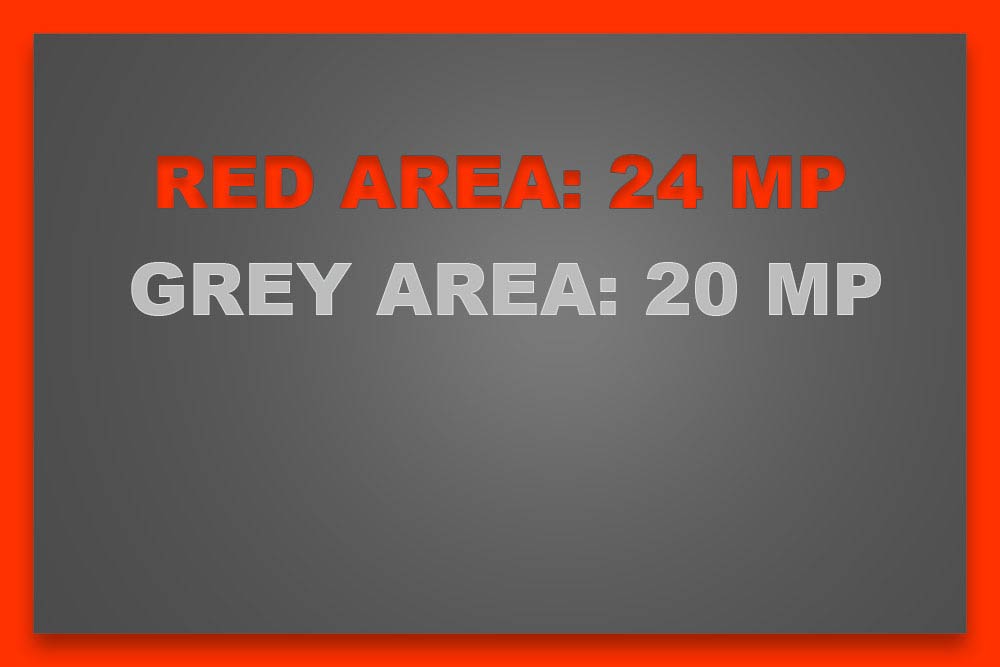
Either way I agree, the difference is negligible.

Yep:

area-difference-red.jpg
 
Upvote 0
Darkly said:
Many arguments here are missing a major point, and that is Sony's proven ability to enter a given field and dominate it before the well-established players can play catchup. Look at the PlayStation. Sony wanted a slice of the videogame market that was pretty much owned by Sega and Nintendo, and after a failed partnership with Nintendo they entered the market alone with a piece of hardware that was significantly more powerful than competitors' offerings, bolstered by some very savvy marketing.

The important thing is the established players didn't take Sony seriously. After dominating the market for a number of years between them, Nintendo were sidelined (and largely kept afloat by their GameBoy offerings) while Sega pretty much threw in the towel.

Now, while mirrorless may represent a small proportion of camera sales right now, this will change as Sony get their act together with user interface design and handling. The A7R II already has a serious reputation for both image quality and AF accuracy, and I know several people who've ditched their Canon dSLRs to go down the Sony/Metabones route. The A7R's failings essentially come down to ergonomics but the fundamental imaging technology is already in place, and the A7R's word-of-mouth reputation is a powerful thing.

Most folks here are obviously Canon users, many with a system of lenses and accessories that will keep them tied to the brand. However, if you're new to photography what reasons are there for choosing Canon? Or Nikon? Or Sony? They all have merits but Sony's reputation is in the ascendant, particularly with relation to imaging sensor technologies. Nikon made a very smart move by partnering with Sony, leveraging Sony's R&D and their quick turnaround on silicon fabrication. Canon need to up their game significantly before they lose their reputation as one of the big two go-to, no-brainer camera manufacturers. Anyone citing figures showing mirrorless sytems as having a small market share, let alone Sony's modest market share would do well to look at other incumbent giants who lost their way through complacency. Remember Nokia? They could do no wrong until a lean and hungry Samsung came along and innovated their way to the top (even if the they were blatantly taking design cues from Jony Ives).

So, I think Canon either need to follow the same technological direction as Sony/Nikon to achieve similar noise and dynamic range figures, or (possibly controversial but still interesting) attempt to differentiate themselves by buying or licensing technology from Foveon. Sigma made a dog's dinner of the technology with poor camera design but the end results were undeniably good, potentially miles ahead of conventional sensors equipped with Bayer filters. Just imagine Canon optics and ergonomics mated with a Bayer-free sensor, a sensor where every photosite captures full RGB information. That could be something special indeed. Foveon sensor tech offers a greater technological step forward than on-die A/D convertors and buffer memory etc. that are giving Sony the current edge.

There are a lot of pieces to this puzzle. Sony also has a history of throwing in the towel on new technologies, along with all the companies you mentioned. One of the big unknowns is what kind of money Sony is making in the photography business. Do they have a workable strategy for making some money, or are they just pumping stuff out and hoping something good will happen? How big will Sony be willing to play in this game?

Another piece of the puzzle is what kind of an edge Sony has in sensor technology at this point. Canon is switching to dual pixel technology with ADC on board the sensor which gets them closer to Sony sensor IQ standards, maybe close enough to be good enough. Dual pixel technology gives Canon interesting autofocus capabilities as well, which may give them some strength in the video end of things.

Then there is the APS-C interchangeable lens camera market, where commitments to camera systems start to get serious. Canon clearly has a serious commitment in this market, and how is Sony going to play in this game?

Another piece
 
Upvote 0
Darkly said:
Many arguments here are missing a major point, and that is Sony's proven ability to enter a given field and dominate it before the well-established players can play catchup. Look at the PlayStation. Sony wanted a slice of the videogame market that was pretty much owned by Sega and Nintendo, and after a failed partnership with Nintendo they entered the market alone with a piece of hardware that was significantly more powerful than competitors' offerings, bolstered by some very savvy marketing.

Betamax, memory stick micro card, DAT, minidisc...

Darkly said:
Nikon made a very smart move by partnering with Sony, leveraging Sony's R&D and their quick turnaround on silicon fabrication.
So why did Nikon stop using Sony sensors?

Darkly said:
The A7R's failings essentially come down to ergonomics but the fundamental imaging technology is already in place, and the A7R's word-of-mouth reputation is a powerful thing.
And part of the reputation is that Sony is poor when it comes to ergonomics. And that is why a significant number of Sony converts end up gong back to Canon/Nikon, or at the very least own both for different uses.
Doesn't it concern you that even after all this time Sony are STILL getting the ergonomics wrong? People don't buy a sensor, they buy a functional camera that makes taking pictures easy, in a body that they enjoy using. So many Canon-is-doomed merchants fail miserably to understand that (including yourself it seems).
To be blunt, any Canon/Nikon/Sony camera will give images that will satisfy a vast majority of users for all they photos. The difference is then down to reputation and how they enjoy using the camera - and that is where Sony often falls down.


Darkly said:
So, I think Canon either need to follow the same technological direction as Sony/Nikon to achieve similar noise and dynamic range figures,

They're pretty close.
You are making the classic error of saying Canon have to do it NOW. Fact is, Sony are ahead of the market. By the time the market really starts moving, Canon will be equal on technology, probably delivering what the market wants.

Darkly said:
a (possibly controversial but still interesting) attempt to differentiate themselves by buying or licensing technology from Foveon. Sigma made a dog's dinner of the technology with poor camera design but the end results were undeniably good, potentially miles ahead of conventional sensors equipped with Bayer filters. Just imagine Canon optics and ergonomics mated with a Bayer-free sensor, a sensor where every photosite captures full RGB information. That could be something special indeed. Foveon sensor tech offers a greater technological step forward than on-die A/D convertors and buffer memory etc. that are giving Sony the current edge.
Sigma has issues beyond camera technology - the Foveon sensors as they stand have limitations in general compared to Bayer technology.


The title of this thread is how canon 'must hurry up'. You, and almost everyone else who holds this view, have failed completely to explain why they must hurry up. Canon has closed the gap significantly in the last 2 years, and it seems with every new generation Canon get closer but Sony are making incremental changes.
Unless there is a significant leap in sensor technology I can't see how Sony can make a jump that will widen the gap again. And if it needs a leap in technology I bet Canon is as well placed as Sony is to develop it.

Yes, Canon need to develop more but the absolute need to catch up with Sony in the next year (or even three years) is vastly overplayed.

 
Upvote 0