Canon Talks 250mp APS-H Image Sensor at ISSCC

Re: Canon Talks 250mp APS-H Image Sensor at ISSC

Pebbles said:
@privatebydesign I often have to bracket and blend in post because I need an extra couple of stops. And yes I shoot as base ISO and pull back as much as I can from the RAW. Can you honestly pretend it isn't an issue? It's just like all the Apple fanboys claiming they didn't want or need a bigger iPhone until one was available and then all buying one. You have your head in the sand my friend.

I don't have my head in the sand, I just don't buy in to all the hyperbole. I shot for years with Fuji Velvia with 6 stops of usable DR, and I don't remember anybody complaining about the DR of the negative emulsions which according to the manufacturers was 12.3, which is very close to where we are now with Canon sensors. Will I embrace it when we get more DR? Sure, but am I constantly running into insurmountable problems because I don't have one or two stops more now? No.

I will not jump on to this years bandwagon of 'needing' more DR, I know that when we get it another random metric will be trumped as the be all and end all of specs, color reproduction or bit depth or something else. If you can't take fantastic images with the current gear from any manufacturer it isn't the sensor that is the issue and I refuse to say it is.
 
Upvote 0
Re: Canon Talks 250mp APS-H Image Sensor at ISSC

privatebydesign said:
Pebbles said:
@privatebydesign I often have to bracket and blend in post because I need an extra couple of stops. And yes I shoot as base ISO and pull back as much as I can from the RAW. Can you honestly pretend it isn't an issue? It's just like all the Apple fanboys claiming they didn't want or need a bigger iPhone until one was available and then all buying one. You have your head in the sand my friend.

I don't have my head in the sand, I just don't buy in to all the hyperbole. I shot for years with Fuji Velvia with 6 stops of usable DR, and I don't remember anybody complaining about the DR of the negative emulsions which according to the manufacturers was 12.3, which is very close to where we are now with Canon sensors. Will I embrace it when we get more DR? Sure, but am I constantly running into insurmountable problems because I don't have one or two stops more now? No.

I will not jump on to this years bandwagon of 'needing' more DR, I know that when we get it another random metric will be trumped as the be all and end all of specs, color reproduction or bit depth or something else. If you can't take fantastic images with the current gear from any manufacturer it isn't the sensor that is the issue and I refuse to say it is.

also ISO invariance and pulling up shadows is really just a "if all else fails" method anyways.

if you bracket, you can usually adjust shutter speed and ISO (if you have auto-ISO enabled) - in other words you aren't force to boost your ISO by (number) of EV in ISO only.

hence by blending / bracketing you can end up with a greater micro-contrast and color.
 
Upvote 0
Re: Canon Talks 250mp APS-H Image Sensor at ISSC

rrcphoto said:
privatebydesign said:
Pebbles said:
@privatebydesign I often have to bracket and blend in post because I need an extra couple of stops. And yes I shoot as base ISO and pull back as much as I can from the RAW. Can you honestly pretend it isn't an issue? It's just like all the Apple fanboys claiming they didn't want or need a bigger iPhone until one was available and then all buying one. You have your head in the sand my friend.

I don't have my head in the sand, I just don't buy in to all the hyperbole. I shot for years with Fuji Velvia with 6 stops of usable DR, and I don't remember anybody complaining about the DR of the negative emulsions which according to the manufacturers was 12.3, which is very close to where we are now with Canon sensors. Will I embrace it when we get more DR? Sure, but am I constantly running into insurmountable problems because I don't have one or two stops more now? No.

I will not jump on to this years bandwagon of 'needing' more DR, I know that when we get it another random metric will be trumped as the be all and end all of specs, color reproduction or bit depth or something else. If you can't take fantastic images with the current gear from any manufacturer it isn't the sensor that is the issue and I refuse to say it is.

also ISO invariance and pulling up shadows is really just a "if all else fails" method anyways.

if you bracket, you can usually adjust shutter speed and ISO (if you have auto-ISO enabled) - in other words you aren't force to boost your ISO by (number) of EV in ISO only.

hence by blending / bracketing you can end up with a greater micro-contrast and color.

that's what i do all the time with any shot i think will need it, but sometimes a A7R can get a acceptable shadow noise when pushed a bit with a single shot while on my 5D3 it would have unacceptable noise for me.

So from what the examples of DR in the 1DX2 show it looks like a big improvement hopefully the 5d4 gets this as well.
 
Upvote 0
isac2isa said:
Canon Rumors said:
Canon is once again talking about their 250mp image sensor that <a href="http://www.canonrumors.com/canon-develops-aps-h-size-cmos-sensor-with-approximately-250-megapixels/" target="_blank">they showcased at the Canon EXPO</a> back in September. This time, they’ve presented a paper at the ISSCC 2016 Conference (All About Sensors).</p>
<p><a href="http://harvestimaging.com/blog/?p=1536" target="_blank">Harvest Imaging</a> has this to say about what Canon presented:</p>
<blockquote><p>Hirofumi Totsuka of Canon presented a 250 Mpixel APS-H size imager : 1.5 um pixel pitch (4 sharing) made in 0.13 um technology node. The device is consuming 1.97 W at full resolution 5fps. An interesting build-in feature of this sensor is the following : ALL pixel signals are converted by column SS-ADCs with a single ramp, but in front of the ADC, each column has its own PGA that can be switched to 4x or 1x gain, depending on the signal level. So when the pixels are sampled, a first check is done to look whether the signal is above or below a particular reference level, and then the right gain of the PGA is set to 1x or 4x. Simple method, but I think that the issues pop up in the reconstruction of the signal at the cross-over point between the two settings of the PGA.</p></blockquote>
<p>This sensor does not mean that the APS-H sensor size is returning. We imagine that whenever the 250mp sensor comes to market, it will be in a full frame application.</p>
<span id="pty_trigger"></span>


Dual gain amplifier is first shown by Kawahito's group at ISSCC 2003. 13 years ago!! Now shows up again as main news and from the work of Canon.This is not a Canon discovery at all

btw, was this you too?

http://image-sensors-world.blogspot.com.co/2016/02/2016-isscc-review-part-2.html?showComment=1454782444409#c4336732922746476312


"Very good job from technical committee ;). Dual gain amplifier first shown by Kawahito's group at ISSCC 2003. 13 years ago!! Now shows up again as main "novelty" from the work of Canon.
Submission rules of ISSCC say novelty is needed, not only nice results. N.O.V.E.L.T.Y.!"
 
Upvote 0
rrcphoto said:
isac2isa said:
Canon Rumors said:
Canon is once again talking about their 250mp image sensor that <a href="http://www.canonrumors.com/canon-develops-aps-h-size-cmos-sensor-with-approximately-250-megapixels/" target="_blank">they showcased at the Canon EXPO</a> back in September. This time, they’ve presented a paper at the ISSCC 2016 Conference (All About Sensors).</p>
<p><a href="http://harvestimaging.com/blog/?p=1536" target="_blank">Harvest Imaging</a> has this to say about what Canon presented:</p>
<blockquote><p>Hirofumi Totsuka of Canon presented a 250 Mpixel APS-H size imager : 1.5 um pixel pitch (4 sharing) made in 0.13 um technology node. The device is consuming 1.97 W at full resolution 5fps. An interesting build-in feature of this sensor is the following : ALL pixel signals are converted by column SS-ADCs with a single ramp, but in front of the ADC, each column has its own PGA that can be switched to 4x or 1x gain, depending on the signal level. So when the pixels are sampled, a first check is done to look whether the signal is above or below a particular reference level, and then the right gain of the PGA is set to 1x or 4x. Simple method, but I think that the issues pop up in the reconstruction of the signal at the cross-over point between the two settings of the PGA.</p></blockquote>
<p>This sensor does not mean that the APS-H sensor size is returning. We imagine that whenever the 250mp sensor comes to market, it will be in a full frame application.</p>
<span id="pty_trigger"></span>


Dual gain amplifier is first shown by Kawahito's group at ISSCC 2003. 13 years ago!! Now shows up again as main news and from the work of Canon.This is not a Canon discovery at all

btw, was this you too?

http://image-sensors-world.blogspot.com.co/2016/02/2016-isscc-review-part-2.html?showComment=1454782444409#c4336732922746476312


"Very good job from technical committee ;). Dual gain amplifier first shown by Kawahito's group at ISSCC 2003. 13 years ago!! Now shows up again as main "novelty" from the work of Canon.
Submission rules of ISSCC say novelty is needed, not only nice results. N.O.V.E.L.T.Y.!"

Yep, it is MR. That is exactly what he said in DPR including "N.O.V.E.L.T.Y."
I used to think DPR was the only place where MR loved to spread his Canon hate. I was wrong it seems.
Obsessive Compulsive Canon Hatred.
 
Upvote 0
Re: Canon Talks 250mp APS-H Image Sensor at ISSC

rrcphoto said:
emko said:
the 5d4 gets this as well.

I think we can all agree with that, as with any future "prosumer" camera body. not sure the rebels need it, but 70D, 7D, 6D, 5D series all certainly should get it.
I would say, Rebels are the ones needed this extra DR. I struggle a lot when my kid is standing in a shade during bright sunny day. I just randomly shoot with different EC. Small bright light in frame which I never notice, screws up whole exposure for me.

Thanks
 
Upvote 0
thetechhimself said:
neuroanatomist said:
3kramd5 said:
gregory4000 said:
Good DR is needed every time you shoot outdoors on a sunny day...

Can you please define "good DR?"

More than Canon offers, duh! ::)

In fact, he was more specific - two more stops of (low ISO) DR than Canon offers. That is just exactly enough. 14 stops is sufficient for every outdoor shot on a sunny day. 12 stops is completely inadequate for any such shot.

::) ::) ::)

I do find the 12 stops on my M3 to be a big step up from the 10 from the G1X II; it's not just a DXO benchmark, it has impact on my bright lit scenarios, but, I do find the M3 to be sufficient in this regard.

14? Would be nice, but eh, not necessary if you're willing to shot RAW you can post-edit stuff, if you've got 11-11.5 DR to play with that is. That may tick some people off that I just said it, but hey, it's one of the scenarios I have to adjust my gammas sometimes. It is a sore spot for Canon at the moment, they know it, that's why they've got those A/D on chip patents out...

I'm more happy to see Canon pursuing 0.13 um fabrication technique, although necessary for a Godzilla megapixel beast, it also means we may be seeing some trickle down from the unused fringes of the die, or at least that's how my buddy describes it... IE FF occupies the center of the die, APS-C next, and things like Powershot sensors on the edges, all of which will be, 0.13 um.

Those DXO numbers are theoretical numbers. According to them D7200 has better DR than even D750. That is not true in real life. D750 has amazing DR. Actual measured DR values published (some one posts it in DPR) are much less. I don't think so it exceeds 12 even for D750. Canon's are around 10 I think.
 
Upvote 0
neuroanatomist said:
3kramd5 said:
gregory4000 said:
Good DR is needed every time you shoot outdoors on a sunny day...

Can you please define "good DR?"

More than Canon offers, duh! ::)

In fact, he was more specific - two more stops of (low ISO) DR than Canon offers. That is just exactly enough. 14 stops is sufficient for every outdoor shot on a sunny day. 12 stops is completely inadequate for any such shot.

::) ::) ::)

Can you spare some 2 or 3 stops? You are doing fine with 10, too 8)
For "complainers", Canon should build some brakes to cut the DR direct in the camera to maximal 12 stops. For hardcores to 10 stops. Some are unable to cope with so many stops!
 
Upvote 0
thetechhimself said:
I'm more happy to see Canon pursuing 0.13 um fabrication technique, although necessary for a Godzilla megapixel beast, it also means we may be seeing some trickle down from the unused fringes of the die, or at least that's how my buddy describes it... IE FF occupies the center of the die, APS-C next, and things like Powershot sensors on the edges, all of which will be, 0.13 um.

Sorry, that's not how semiconductor manufacturing likes to work. You step the same die all over, and dice it (diamond saw) in the vertical and horizontal direction. So what you get/want is dies with exactly the same size.

Sure, you can mix dies on the same wafer, but that's mainly used for prototypes when you want to cut down on the mask cost (MPWs = Multi-Project Wafers).

I've seen MPW mask sets used for initial production just once in my career: Our device took up ~50% of the wafer area and it was purely an economic calculation on when we needed to swap to a (normal) dedicated mask set.

rrcphoto said:
isac2isa said:
no , a smaller design role than 180 nm and Canon must go out side their own sensor lines, it also applies to their 130 nm 250mp sensor

Canon's KrF stepper / scanners go down to 90nm and I do believe that some work down to 65nm design rules.

well far enough under 130nm to stay in house.

not to mention that Canon themselves has lithography equipment capable now of going down to 2nm.

The lithographic alignment step (you need to align to well under 1/4th the minimum feature size) is by far THE most critical step in semiconductor manufacturing - because you're doing once for each mask step and there can easily be 30+ masks in a modern IC fabrication process, and that just one (missed) misalignment will waste the entire wafer.

For those reasons, you keep your stepper in the most well-controlled part of the fab in terms of dust and vibrations. Sending wafers out of your fab to get the stepped somewhere else is sheer lunacy, especially for manufacturing where the stepper is running 24x7 (stepping is a fairly time consuming process, especially if you really need to 'step' each device individually).

I could imagine that for very specific research projects, you could send your wafer to another location for doing the stepping, but anything about 40-45nm would be so common that it wouldn't make sense.

TL;DR: the stepper is in the same fab as everything else.
 
Upvote 0
Re: Canon Talks 250mp APS-H Image Sensor at ISSC

privatebydesign said:
I don't have my head in the sand, I just don't buy in to all the hyperbole. I shot for years with Fuji Velvia with 6 stops of usable DR, and I don't remember anybody complaining about the DR

I do. Forest photographers complained about it all the time and lots of shots they simply couldn't take or had to use negatives and even then plenty could not be done especially those trying to not use really large format cameras and trying with 35mm SLR.

I will not jump on to this years bandwagon of 'needing' more DR,

THIS years???

If you can't take fantastic images with the current gear from any manufacturer it isn't the sensor that is the issue and I refuse to say it is.

The only people who ever say nonsense like that are the people who poo-poo DR or are rampant fanboys and make up this nonsense to put in the mouth's of others. I don't recall any of those you supposedly speak against every saying that you can't take fantastic images with whatever is out there from anyone. The difference is how many different types of shots you can pull off well, but nobody ever said that are not billions of shots where this makes no real difference.
 
Upvote 0
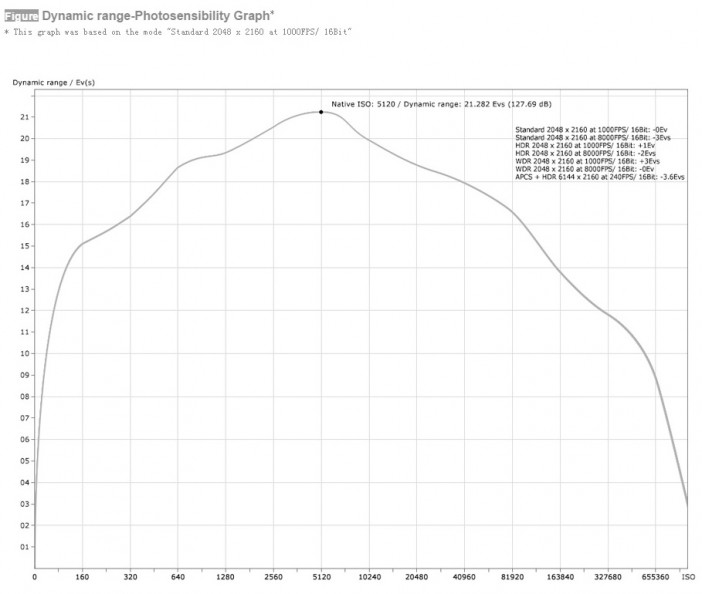
It's ok folks. Sony has already "oo"ed and "aw"ed us. Eventually Canon and Nikon will catch up with DR levels.
....maybe in 10 years we will see a new common standard with DSLRs. Until then, professional cinematography will have the last laugh.

DoP to the director: "At 163,000 ISO, I only have a little less than 14 stops of dynamic range! This will really affect the shot during the scene" :-[ ::) :o How sad!
sony-apcs-dynamic-range-702x594.jpg


Source: http://www.eoshd.com/2014/11/new-sony-sensor-21-stops-dynamic-range-5120-native-iso-destined-high-speed-cinema-camera-smartphone/
 
Upvote 0
Mt Spokane Photography said:
This is obviously needed for those who want 16K Video.

But, of course, by then the complainers will be bitching about how bad Canon is due to there being no 64K/480Hz video on their entry level cameras.

There will always be the bitching folk, and meanwhile the rest of us just get on with taking great photos using good Canon cameras and lenses.
 
Upvote 0
davidmurray said:
Mt Spokane Photography said:
This is obviously needed for those who want 16K Video.

But, of course, by then the complainers will be bitching about how bad Canon is due to there being no 64K/480Hz video on their entry level cameras.

There will always be the bitching folk, and meanwhile the rest of us just get on with taking great photos using good Canon cameras and lenses.
applaus-gif.gif
 
Upvote 0
et31 said:
davidmurray said:
Mt Spokane Photography said:
This is obviously needed for those who want 16K Video.

But, of course, by then the complainers will be bitching about how bad Canon is due to there being no 64K/480Hz video on their entry level cameras.

There will always be the bitching folk, and meanwhile the rest of us just get on with taking great photos using good Canon cameras and lenses.
applaus-gif.gif
Why don't 3rd guy from left in front, close his mouth.
 
Upvote 0
Really great to hear Canon is manufacturing larger form factor sensors on a 130nm process. The dual gain amp is a nice improvement as well, that should really improve high ISO noise levels and DR. Really wondering if/when these technological improvements will find their way into consumer DSLRs.

The thing that most caught my eye in the linked article was actually this:

Kei Shiraishi of Toshiba presented a stacked sensor with 1.2 e- of noise with a comparator-based multiple sampling PGA. The most important characteristic is the multiple sampling in the analog domain. This goes much faster than the multiple sampling in the digital domain. After 32 samples of each signal, a noise level of 1.2 e- could be reached for 1 M pixels at 20 fps. The device is realized in 65 nm, both for the sensor as well as for the circuit on the second silicon level. It was mentioned in the paper, but I guess that the noise floor without the multiple sampling should be around 5 e- at 30 fps, going down to the 1.2 e- reported at 20 fps.

This is pretty cool, amplifier 32x multisampling of each pixel. That would indeed improve noise levels of the signal coming off each pixel. Seems it is for very small sensors, and you probably couldn't get 20fps with larger pixels, but the noise reduction capability of multisampling pixels should still apply.
 
Upvote 0
jrista said:
Really great to hear Canon is manufacturing larger form factor sensors on a 130nm process. The dual gain amp is a nice improvement as well, that should really improve high ISO noise levels and DR. Really wondering if/when these technological improvements will find their way into consumer DSLRs.

The thing that most caught my eye in the linked article was actually this:

Kei Shiraishi of Toshiba presented a stacked sensor with 1.2 e- of noise with a comparator-based multiple sampling PGA. The most important characteristic is the multiple sampling in the analog domain. This goes much faster than the multiple sampling in the digital domain. After 32 samples of each signal, a noise level of 1.2 e- could be reached for 1 M pixels at 20 fps. The device is realized in 65 nm, both for the sensor as well as for the circuit on the second silicon level. It was mentioned in the paper, but I guess that the noise floor without the multiple sampling should be around 5 e- at 30 fps, going down to the 1.2 e- reported at 20 fps.

This is pretty cool, amplifier 32x multisampling of each pixel. That would indeed improve noise levels of the signal coming off each pixel. Seems it is for very small sensors, and you probably couldn't get 20fps with larger pixels, but the noise reduction capability of multisampling pixels should still apply.

I'm a bit puzzled about what they actually mean by "multisampling". My guess is that they have 32 comparators in parallel, which would be a 5-bit flash-ADC, but it's simply too vague to be sure. If it's really just that, then why don't they say it?

Multisampling and programmable gain doesn't come for free though: you need to match the transistors in not just one but multiple comparators/amplifiers, to avoid systematic errors (fixed pattern noise comes to mind).
I'm not saying it is a bad idea; just saying TANSTAAFL (as always).
 
Upvote 0
kaihp said:
jrista said:
Really great to hear Canon is manufacturing larger form factor sensors on a 130nm process. The dual gain amp is a nice improvement as well, that should really improve high ISO noise levels and DR. Really wondering if/when these technological improvements will find their way into consumer DSLRs.

The thing that most caught my eye in the linked article was actually this:

Kei Shiraishi of Toshiba presented a stacked sensor with 1.2 e- of noise with a comparator-based multiple sampling PGA. The most important characteristic is the multiple sampling in the analog domain. This goes much faster than the multiple sampling in the digital domain. After 32 samples of each signal, a noise level of 1.2 e- could be reached for 1 M pixels at 20 fps. The device is realized in 65 nm, both for the sensor as well as for the circuit on the second silicon level. It was mentioned in the paper, but I guess that the noise floor without the multiple sampling should be around 5 e- at 30 fps, going down to the 1.2 e- reported at 20 fps.

This is pretty cool, amplifier 32x multisampling of each pixel. That would indeed improve noise levels of the signal coming off each pixel. Seems it is for very small sensors, and you probably couldn't get 20fps with larger pixels, but the noise reduction capability of multisampling pixels should still apply.

I'm a bit puzzled about what they actually mean by "multisampling". My guess is that they have 32 comparators in parallel, which would be a 5-bit flash-ADC, but it's simply too vague to be sure. If it's really just that, then why don't they say it?

Multisampling and programmable gain doesn't come for free though: you need to match the transistors in not just one but multiple comparators/amplifiers, to avoid systematic errors (fixed pattern noise comes to mind).
I'm not saying it is a bad idea; just saying TANSTAAFL (as always).

Well, I've only really gotten deeper into this level of the electronics of sensors more recently, so my knowledge isn't particularly extensive, but I read it as the pixel value was run through the comparator 32 times, accumulate the results, and average it for the final lower-noise pixel value. The amp is going to introduce some noise, however every time you sample the pixel and amplify it with the comparator, the noise will be different since it's random. Accumulating and averaging all 32 samples, and you'll reduce noise for that pixel by a factor of ~5.7 (SQRT(32)). Maybe I am reading too much into it?

Even at 65nm, I don't think there is quite enough room on the sensor die for 32 comparators per pixel. Maybe there is only one PGA per column or something like that, in which case that might allow for 5-bit flash ADC, but I agree...if that is what they did, why not just say it? They also explicitly stated the multisampling occurred in analog space, which indicates it;s only amplification, not ADC. Or maybe they stuck the PGA's in the other layer? Now that would be just as interesting...
 
Upvote 0