Canon's Medium Format

Status
Not open for further replies.
privatebydesign said:
The big market for high end gear is not pro photographers, it is wealthy enthusiasts, just look at the "limited edition" Leica market.

Not that I think a Canon MF speculation has legs, I don't believe it does, whereas the Cinema range has an expanding market and they can have leveraged the EF lens tech very well , I was just pointing out the faulty logic of linking gear price to pro use.

Which would be an argument in favour of mirrorless I'd say, the problem Hassleblad have had and the reason for the Sony rebadging is I'd say that there cameras are simply too large to have much appeal to rich amateurs.
 
Upvote 0
Bishop80 said:
Shot with a Hasselblad H4D-40. That is the shot before editing. The final shot was given some mood, and the bits of orange tape were cloned out:

http://collider.com/wp-content/uploads/the-walking-dead-cast-season-two1.jpg

If your response is that the scene could have just as easily been shot with a Canon 5D3, while true, that misses the point.

What is the point? I don't really see anything in that shot which couldn't have been captured with a full frame or even APS-C sensor? Is the "look" the point?
 
Upvote 0
hgraf said:
Bishop80 said:
Shot with a Hasselblad H4D-40. That is the shot before editing. The final shot was given some mood, and the bits of orange tape were cloned out:
http://collider.com/wp-content/uploads/the-walking-dead-cast-season-two1.jpg
If your response is that the scene could have just as easily been shot with a Canon 5D3, while true, that misses the point.
What is the point? I don't really see anything in that shot which couldn't have been captured with a full frame or even APS-C sensor? Is the "look" the point?

Yea I'm a little confused by this comment too. There's clearly a fair bit of perspective distortion going on: look at the relative sizes of the sheriff in front on the two women (one with teddy) at the back. Normally the larger the format the less exaggeration there is, so this was quite a wide lens for MF, looking up. I don't see why you couldn't have produced the identical image using the afore mentioned 5D and a wide shift lens such as the 24 or 17 mil.
 
Upvote 0
Sporgon said:
hgraf said:
Bishop80 said:
Shot with a Hasselblad H4D-40. That is the shot before editing. The final shot was given some mood, and the bits of orange tape were cloned out:
http://collider.com/wp-content/uploads/the-walking-dead-cast-season-two1.jpg
If your response is that the scene could have just as easily been shot with a Canon 5D3, while true, that misses the point.
What is the point? I don't really see anything in that shot which couldn't have been captured with a full frame or even APS-C sensor? Is the "look" the point?

Yea I'm a little confused by this comment too. There's clearly a fair bit of perspective distortion going on: look at the relative sizes of the sheriff in front on the two women (one with teddy) at the back. Normally the larger the format the less exaggeration there is, so this was quite a wide lens for MF, looking up. I don't see why you couldn't have produced the identical image using the afore mentioned 5D and a wide shift lens such as the 24 or 17 mil.

The "point" might be that in a city where 10,000 photographers could have shot exactly the same scene, it makes it easier for the ad agency's art director to simply weed out everyone who doesn't use a Hasselblad.

"Oooh, this guy uses a really big camera, so he must be good." Never mind that most views of the image will be on the IMDB app on iPhones at a maximum size of maybe three inches.
 
Upvote 0
unfocused said:
CarlTN said:
Um, you're missing the point entirely. Why would Canon do it? Because they'd help CREATE the market for it, by building it in the first place. You speak of film...I'm talking about a sensor that is similar in size to the Leica S2. Google it, and get back to me...

I certainly was not talking about what the consumer wants. I was talking about WHAT THE PROFESSIONAL wants.

And, if Canon made a larger sensor in a very slightly larger body than the 5D3 or 1DX, with huge dynamic range (20 stops or more), huge signal to noise ratio, and as many MP as you could ask for (different sensor choices for the same body)...and an autofocus system that exceeds anything in existence today...along with the ability to shoot 8k video...and if they made a full line of lenses (including supertelephoto) that would work with this system...well I would definitely buy into it if I could both afford to and needed it for pro or high quality work.

10 years from now, just see if something like this isn't in widespread use...by PROFESSIONALS...not people taking selfies while driving drunk...

Okay. I'll play along.

I did Google the Leica you are referring to. It is $22,000 body only. For the sake of argument, let's say Canon could produce a similar product for half the cost, that's still $11,000, before lenses.

How would you propose Canon "CREATE" a market for this camera? You say "I was talking about WHAT THE PROFESSIONAL wants."

But what professionals are you referring to? Have you surveyed professionals and found this need? They don't seem to be beating down the door for the Leica, so what would create sudden demand for a Canon version?

About the only professional market that remains today is wedding and event photography and that is very price sensitive and competitive. I don't see most wedding photographers moving to this.

It's not suitable for photojournalists or wildlife photographers. There are almost no professional landscape photographers. High-end commercial studio photographers maybe, but that's a very small market. So again, how would you suggest Canon "create" this market.

Nothing personal, I just don't agree with your original premise. I think Canon is better off concentrating on improvements in their existing formats.

Well, I disagree. Your assumption is that costs would remain high, even at half what the S2 costs. I'm saying that 10 years from now, it's entirely possible that costs will not be any higher than what it costs to build full frame sensors today. Surely you're not suggesting that the main cost of the camera is the body, or the raw material, are you? I had thought you would delve into the physics of being able to make a reflex mirror that is a bit larger, yet still able to fire at 14 fps or more. If you had done that, you would have a better argument against mine. But you can't just assume that costs to produce the image sensor, are going to remain high. Why would they? I'm asserting that if Canon actually starts producing MF in a big way, people will indeed buy into it...especially if the cost is not any higher than what their 1 series and 5 series are today. I'm saying that 10 years from now, full frame 35mm sensors, will be like what aps-c is today.

Now, you could say that the world economy will collapse before then, and thus would put off such innovation and lowering of production and research costs by a generation...and I might be inclined to agree with you. But you can't just speculate how things will be in the future, based only on the past. That's how you're looking at it.

Think of it like stocks and companies...you can't base future earnings on past performance.

Again, if the point of this whole thread is, that Canon must produce MF cameras and lenses today, or else never do it...then I guess I would say they will never do it. But, since they are the world's largest camera company, they don't need to be in a hurry to delve into medium format...they can wait out the demise of the smaller companies. By then they will be ready.
 
Upvote 0
Halfrack said:
The 'pro' mini-medium format already exists - it's the Pentax 645D or a D800/e/A7r setup. The Leica S2/S3 system isn't what I would call a pro setup - there are a few pros shooting S2/S3, but they're not common, and they tend to shoot Hasselblad HC lenses with the adapter.

Wealthy enthusiasts have high expectations on the post-sales service. You're not selling these cameras at Ritz or Best Buy. This is what the Hasselblad Lunar, Stellar and HV are targeted at, but it's a mixed bag - re-branded Sony gear and all.

Canon can't create a market that doesn't leverage existing wares. Or better put, they work conservatively and refuse to push the edge. They 'could' purchase the Sony chip like Nikon and put it into a body, but they don't. Ditto the 33mmx44mm chip, it's 'possible' but they'd be grilled if it didn't perform as folks expected, didn't work with their existing wares, etc. There's always a problem.

Canon has an issue it hasn't figured out how to manage. It has a small percentage of customers who demand that their needs be serviced at a cheap price point. This small percentage is common among all camera makers - people bitch about the Hasselblad and Phase stuff all the time - though it comes down to 'can I see a difference for the price'. Enjoy what you have, if it doesn't do what you need it to, change to what will. Don't have enough money to do it? Figure out a way to make it work - that is what professional photographers are paid to do - troubleshoot and solve problems.

Thanks for the info and thoughts, but still, you're thinking in the present day, not in 10 years, which was my premise. In the here and now, I agree with you. And I do enjoy what I have, a lot...
 
Upvote 0
klickflip said:
CarlTN said:
About the only professional market that remains today is wedding and event photography and that is very price sensitive and competitive. I don't see most wedding photographers moving to this.

It's not suitable for photojournalists or wildlife photographers. There are almost no professional landscape photographers. High-end commercial studio photographers maybe, but that's a very small market. So again, how would you suggest Canon "create" this market.

Bollocks , you don't know you're markets or simply not aware of a huge sector that is advertising- studio is a big section in this and design and corporate that i consider the bulk decent photographers. yes wedding and event is a huge market but only a very small proportion would consider MF as a viable option there. Event and social portraiture / wedding photography is ruled by Nikon D7000's from my experience and would put most of them in the pro hacks category or semi pros straight from college thats why it's very price sensitive and competitive, higher up the ladder it's less so when dealing with agencies and corporations that want quality opposed to the majority of the public purchasing photography services that care more how their hair is looking than image quality or overall scene / light quality.
Some wedding . social and event photographers are really talented but many are just trying to make money from that market with little regard for pushing quality. If this offends some then so.. but any offended would not put themselves in this bracket I'd imagine they would put themselves in the social art photographers bracket which is a different league.

Why did the 1Dx go down to 18mp simply press doesn't need the quality - 1fps 50MP vs 10fs 18MP or so thats what counts there as with wildlife which is a big sector too. landscape is also a big sector but many are hobbyists which will still buy the best equipment because they can and their audience can tell the difference. Also fine art and museum reproduction require the highest quality and there's money there to pay for it.
Wise up there's still many different hi-end niches that command a lot of money within the industry that use MF and would welcome another option.

You are quoting "unfocused", and not me...those are his words you are disagreeing with. It's nice to see, thank you! :P
 
Upvote 0
CarlTN said:
Regarding leaf shutters, sorry if this is an idiotic question...but why can't leaf shutters be designed into the 135 system? Does the physics work against it because of the smaller format and image circle?

Not at all, many smaller formats have had leaf shutters. The fact that the slrs have focal plane shutters isn't a problem either: the Pentax 6x7 was a '35mm' slr on steroids with a normal focal plane shutter, but you could get a standard focal length lens for it with a leaf shutter for high speed flash. The focal plane shutter was just locked open.

Perhaps the biggest issue might be the 'light leak'; is the mating surfaces of the interchangeable lenses good enough to keep light out, though with digital if the sensor isnt charged all the time I guess it would be OK.
 
Upvote 0
An alternative from Canon, where they made a body with a 36x36 size sensor, would be interesting.

That would give a number of advantages:
- 50% area increase
- 27MP with the same pixle size as the 1DX sensor (or 54MP with the same pixle size as the a7r/800)
- All EF lenses would work

If I could get a 40MP-ish sensor, with proper high ISO performance, a fair fps and Canon user interface in a reasonably sized body ... It would put a abrupt stop to my Phase One ambitions ...

I know some will oppose a square image format, but that would be OK with me. Thoughts?
 
Upvote 0
Eldar said:
An alternative from Canon, where they made a body with a 36x36 size sensor, would be interesting.

That would give a number of advantages:
- 50% area increase
- 27MP with the same pixle size as the 1DX sensor (or 54MP with the same pixle size as the a7r/800)
- All EF lenses would work

If I could get a 40MP-ish sensor, with proper high ISO performance, a fair fps and Canon user interface in a reasonably sized body ... It would put a abrupt stop to my Phase One ambitions ...

I know some will oppose a square image format, but that would be OK with me. Thoughts?

There would be absolutely zero point to a 36x36 sensor, you get a 50% increase but have to have new lenses and bodies to do it. EF lenses will not cover a 36mm square sensor, EF lenses don't have the flange distance to cover a 36mm sensor on the vertical side if you use a reflex design.

The idea is a non starter.
 
Upvote 0
privatebydesign said:
There would be absolutely zero point to a 36x36 sensor, you get a 50% increase but have to have new lenses and bodies to do it. EF lenses will not cover a 36mm square sensor, EF lenses don't have the flange distance to cover a 36mm sensor on the vertical side if you use a reflex design.

The idea is a non starter.
I must admit I don´t understand that. Can you please explain why vertical is more of a problem than horizontal, considering that the optical opening of a lens is perfectly round?
 
Upvote 0
Eldar said:
privatebydesign said:
There would be absolutely zero point to a 36x36 sensor, you get a 50% increase but have to have new lenses and bodies to do it. EF lenses will not cover a 36mm square sensor, EF lenses don't have the flange distance to cover a 36mm sensor on the vertical side if you use a reflex design.

The idea is a non starter.
I must admit I don´t understand that. Can you please explain why vertical is more of a problem than horizontal, considering that the optical opening of a lens is perfectly round?

I pretty much flunked geometry, but take a circle and draw a perfect square inside of it and then take that same circle and draw a rectangle inside of it. A rectangle will actually be able to be wider at the long end than the square before it touches the edges of the circle. A lens circle that accommodates a 36mm rectangle cannot at the same time, accommodate a 36mm square.
 
Upvote 0
unfocused said:
Eldar said:
privatebydesign said:
There would be absolutely zero point to a 36x36 sensor, you get a 50% increase but have to have new lenses and bodies to do it. EF lenses will not cover a 36mm square sensor, EF lenses don't have the flange distance to cover a 36mm sensor on the vertical side if you use a reflex design.

The idea is a non starter.
I must admit I don´t understand that. Can you please explain why vertical is more of a problem than horizontal, considering that the optical opening of a lens is perfectly round?

I pretty much flunked geometry, but take a circle and draw a perfect square inside of it and then take that same circle and draw a rectangle inside of it. A rectangle will actually be able to be wider at the long end than the square before it touches the edges of the circle. A lens circle that accommodates a 36mm rectangle cannot at the same time, accommodate a 36mm square.

I read this and said to myself, "No way!" And then my brain kicked in and I realized you are 100% right.
 
Upvote 0
Old Sarge said:
unfocused said:
Eldar said:
privatebydesign said:
There would be absolutely zero point to a 36x36 sensor, you get a 50% increase but have to have new lenses and bodies to do it. EF lenses will not cover a 36mm square sensor, EF lenses don't have the flange distance to cover a 36mm sensor on the vertical side if you use a reflex design.

The idea is a non starter.
I must admit I don´t understand that. Can you please explain why vertical is more of a problem than horizontal, considering that the optical opening of a lens is perfectly round?

I pretty much flunked geometry, but take a circle and draw a perfect square inside of it and then take that same circle and draw a rectangle inside of it. A rectangle will actually be able to be wider at the long end than the square before it touches the edges of the circle. A lens circle that accommodates a 36mm rectangle cannot at the same time, accommodate a 36mm square.

I read this and said to myself, "No way!" And then my brain kicked in and I realized you are 100% right.
That makes perfect sense and should have been pretty obvious :P (What´s worse is that my math grades were actually quite good ::))
 
Upvote 0
Sporgon said:
CarlTN said:
Regarding leaf shutters, sorry if this is an idiotic question...but why can't leaf shutters be designed into the 135 system? Does the physics work against it because of the smaller format and image circle?

Not at all, many smaller formats have had leaf shutters. The fact that the slrs have focal plane shutters isn't a problem either: the Pentax 6x7 was a '35mm' slr on steroids with a normal focal plane shutter, but you could get a standard focal length lens for it with a leaf shutter for high speed flash. The focal plane shutter was just locked open.

Perhaps the biggest issue might be the 'light leak'; is the mating surfaces of the interchangeable lenses good enough to keep light out, though with digital if the sensor isnt charged all the time I guess it would be OK.

Very interesting. I've sold some of my Mom's 67 lenses, never noticed a leaf shutter. But then she didn't use flash anyway, I guess it was an option or something. I'm trying to sell the last working 67 body now on ebay, wanna buy it? Also have one remaining 300mm f/4...it might sell soon, haven't checked in the past couple of hours. Started bidding at only $105 for this last auction.
 
Upvote 0
Eldar said:
An alternative from Canon, where they made a body with a 36x36 size sensor, would be interesting.

That would give a number of advantages:
- 50% area increase
- 27MP with the same pixle size as the 1DX sensor (or 54MP with the same pixle size as the a7r/800)
- All EF lenses would work

If I could get a 40MP-ish sensor, with proper high ISO performance, a fair fps and Canon user interface in a reasonably sized body ... It would put a abrupt stop to my Phase One ambitions ...

I know some will oppose a square image format, but that would be OK with me. Thoughts?

I don't see why that would be any better than just going up a centimeter in each dimension, and making a whole new line of lenses. It's not as if many couldn't afford to buy new lenses. And like I said, 10 years from now, it's quite possible they would be making super telephoto lenses to go along with the new mount and larger image circle. Weight need not be an issue, the physical size of everything would not be much bigger.
 
Upvote 0
CarlTN said:
Eldar said:
An alternative from Canon, where they made a body with a 36x36 size sensor, would be interesting.

That would give a number of advantages:
- 50% area increase
- 27MP with the same pixle size as the 1DX sensor (or 54MP with the same pixle size as the a7r/800)
- All EF lenses would work

If I could get a 40MP-ish sensor, with proper high ISO performance, a fair fps and Canon user interface in a reasonably sized body ... It would put a abrupt stop to my Phase One ambitions ...

I know some will oppose a square image format, but that would be OK with me. Thoughts?

I don't see why that would be any better than just going up a centimeter in each dimension, and making a whole new line of lenses. It's not as if many couldn't afford to buy new lenses. And like I said, 10 years from now, it's quite possible they would be making super telephoto lenses to go along with the new mount and larger image circle. Weight need not be an issue, the physical size of everything would not be much bigger.
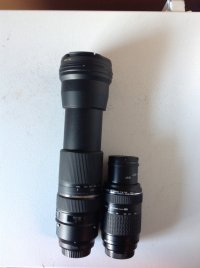
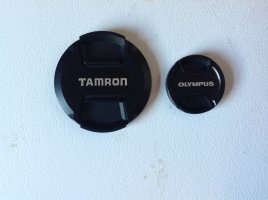
Double the sensor and you cube the weight of the lens to get the same field of view.... That's twice as long, twice as high, twice as wide.... Eight times the weight...

These two lenses have the same field of view and F-stop. The small one is from an Olympus 4/3 system and the big one fits Canon FF....a lot of the width of the small one are the focus motors, just look at the lens caps to get an idea of the difference in the weight of the glass....

I, for one, will not be paying for a lens that dwarfs the Canon "big whites"
 

Attachments

  • image.jpg
    image.jpg
    695 KB · Views: 359
  • image.jpg
    image.jpg
    1.2 MB · Views: 355
Upvote 0
Eldar said:
privatebydesign said:
There would be absolutely zero point to a 36x36 sensor, you get a 50% increase but have to have new lenses and bodies to do it. EF lenses will not cover a 36mm square sensor, EF lenses don't have the flange distance to cover a 36mm sensor on the vertical side if you use a reflex design.

The idea is a non starter.
I must admit I don´t understand that. Can you please explain why vertical is more of a problem than horizontal, considering that the optical opening of a lens is perfectly round?

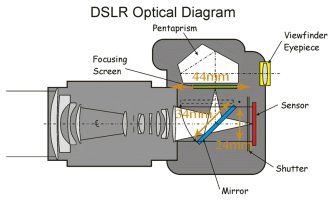
Hi Eldar, as has been pointed out, and you have acknowledged, the EF image circle won't cover a 36mm square sensor. That is the first picture, the orange circle is a 43mm circle, the same as EF lenses projection circle, the purple rectangle 36mm x 24mm, the green square is 36mm x 36mm.

But I made two points, and you asked why vertical is more problematic. Again it is to do with geometry, I have put some figures on a diagram I took from the net. The Flange Focal Distance (the distance from the outer face of the lens mount to the sensor) for EF lenses is 44mm, for a 24mm height image you need a mirror 34mm high at 45º and there is clearly room for it to swing out of the way. If you needed 36mm coverage on the vertical side the mirror would have to be 51mm tall at 45º, obviously that can't fit if it is to swing out of the way. In theory you'd have 8mm to put your shutter, sensor and lens mount if it was a fixed pelical mirror, but that still couldn't deal with the image circle.

Hope this helps.
 

Attachments

  • 4.jpg
    4.jpg
    26.7 KB · Views: 342
  • 3.jpg
    3.jpg
    92.4 KB · Views: 336
Upvote 0
P.S. If my shaky maths is correct the biggest square you can get out of a 43mm diameter circle is just over 30mm, for a total area of 924mm², which is a bigger area than the current 36x24 at 864mm², but I doubt if it would be popular. Though even that would require a 42mm mirror!
 
Upvote 0
Status
Not open for further replies.