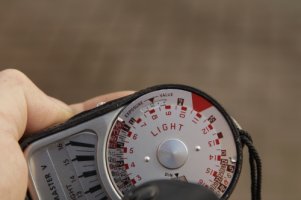
Crop sensors need cropped lenes

Status
Not open for further replies.
Pi said:
"Exposure Value" is a vague term you just invented.

Please, read something before you reply.

Umm...seriously? Why not read a little first yourself before replying: Exposure Value.

I don't know why I am debating with you if you do not even know about exposure value... ???

Pi said:
The source of the (photon) noise is not the pixels, it is the photon nature of light.

http://www.josephjamesphotography.com/equivalence/#shot

I never said anything about the source of photon shot noise. Only that it is higher with smaller pixels due to their reduced full well capacity (maximum signal strength, which has a direct impact on per-pixel SNR, and therefor a direct impact on poisson, or shot, noise, which is the square root of the signal strength). If you have an APS-C sensor with pixels half the pitch of an FF sensor, averaging four of them together will result in the same amount of noise as a single FF pixel. Total amount of light is the same...it is just more finely delineated.
 
Upvote 0
schill said:
Would a 300/2.8 (or anything else for that matter) be any smaller if it was made for a crop camera?

No, but a photographer who has a crop camera would take a 180mm or 200mm lens to get the same angle of view as 300mm on FF, and that one would (or at least could) be smaller.

If he would also like to have the same DoF, the lens would have to be 1+ stop faster, which would offset much of the weight & size saving. E.g. the 200mm f/2 & the 300mm f/2.8 lenses have practically the same weight & length, the 200mm saves ~4cm in length - not a big difference.
 
Upvote 0
Ellen Schmidtee said:
schill said:
Would a 300/2.8 (or anything else for that matter) be any smaller if it was made for a crop camera?

No, but a photographer who has a crop camera would take a 180mm or 200mm lens to get the same angle of view as 300mm on FF, and that one would (or at least could) be smaller.

Size, perhaps not, but unless I'm missing something, the weight difference could be considerable. The exit pupil would be the same size, and the length of the lens might be similar if it had the same number of elements, but all other things being equal, the diameter of the elements should be smaller because you need less glass to make a smaller image circle.

Now I know that the difference in lens diameter between EF and EF-S is not as extreme with longer lenses as it is for wide-angle lenses, but because the area (and thus, the volume) of a lens element falls off with the square of the diameter, even small changes could make a big difference in weight. For example, suppose an EF-S version of a 300mm f/2.4 were able to shave three millimeters off the diameter of the lens, from ~127mm to ~124mm. (That second number is entirely made up, BTW.) By my quick and dirty math, that tiny change in diameter would likely translate to almost a 5% reduction in lens element weight, which is not an insignificant difference.

 
Upvote 0
In my opinion, if Canon made an EF-S 200mm f/2.8 which sold for around $500-$600 or a 300mm f/4 for around $800 and they were both high image quality, image stabilized, weather sealed, fast focusing lenses, many soccer mums (and dads) would want one...even if the size and weight savings were minimal.
 
Upvote 0
dgatwood said:
Size, perhaps not, but unless I'm missing something, the weight difference could be considerable. The exit pupil would be the same size, and the length of the lens might be similar if it had the same number of elements, but all other things being equal, the diameter of the elements should be smaller because you need less glass to make a smaller image circle.

Now I know that the difference in lens diameter between EF and EF-S is not as extreme with longer lenses as it is for wide-angle lenses, but because the area (and thus, the volume) of a lens element falls off with the square of the diameter, even small changes could make a big difference in weight. For example, suppose an EF-S version of a 300mm f/2.4 were able to shave three millimeters off the diameter of the lens, from ~127mm to ~124mm. (That second number is entirely made up, BTW.) By my quick and dirty math, that tiny change in diameter would likely translate to almost a 5% reduction in lens element weight, which is not an insignificant difference.
The physical diameter of the aperture of the lens can be worked out by a simple formula, and imaging circle has nothing to do with it:

focal length divided by aperture

The front element simply cannot get any smaller than that, otherwise either the focal length or the aperture is smaller than reported. When the AoV gets wider, the front element does get a lot bigger than the aperture. However, if the AoV is narrower than about 45º (which is a combination of focal length and imaging circle size), there are many examples of EF lenses whose filter size is almost identical to their focal length divided by aperture:

EF 85/1.2 - Aperture size: 71mm - Filter size: 72mm
EF 200/2.8 - Aperture size: 71mm - Filter size: 72mm
EF 300/4 - Aperture size: 75mm - Filter size: 77mm

If any of these were to be remade as an EF-S lens of the same focal length and aperture, how could the smaller imaging circle make them any smaller/lighter? Bear in mind the physical length is dictated by focal length, the filter size is already as small as it could be, and the physical diameter and flange distance of the EF-S mount is identical to the EF mount. The extra depth that the rear elements can protrude into the body due to the smaller mirror doesn't help telephoto lenses as they're not retrofocus designs.

Canon could make a lens such as an EF-S 300/4 lens, but I see no room to make it smaller or lighter than its EF counterpart, other than the use of new materials and fewer/thinner/DO elements, which of course they could apply to an EF lens too.

I still believe any lens which is telephoto (narrower AoV than about 45º) has no advantage being made for crop only - especially when the EF-S mount shares so much in common with EF.
 
Upvote 0
I think dgatwood is referring to the internal elements. While you might not be able to change the front element size, ultimately an EF-S lens only needs to cover an APS-C sized imaging circle with a sharp image. What's that? A quarter of a FF image circle? Surely you wouldn't need the same sized internal elements for that? Or, if you do go with similar sized elements, you might be able to introduce manufacturing efficiencies to keep costs down (as you only need the centre of the element to be of high quality). Either way, I'm sure an APS-C lens could be made cheaper or lighter. How much? Maybe not much. Maybe a lot. Dgatwood guesses a 5% weight reduction. That seems pretty conservative.

However, given that EF lenses exist in the most likely focal lengths and apertures, I think they would have to sell for a noticeable discount on the EF lens price to have any market success. Maybe they could also be part of a new lens mount. These will mount on FF cameras, but work in "crop mode" only.
 
Upvote 0
Hillsilly said:
I think dgatwood is referring to the internal elements. While you might not be able to change the front element size, ultimately an EF-S lens only needs to cover an APS-C sized imaging circle with a sharp image. What's that? A quarter of a FF image circle? Surely you wouldn't need the same sized internal elements for that? Or, if you do go with similar sized elements, you might be able to introduce manufacturing efficiencies to keep costs down (as you only need the centre of the element to be of high quality). Either way, I'm sure an APS-C lens could be made cheaper or lighter. How much? Maybe not much. Maybe a lot. Dgatwood guesses a 5% weight reduction. That seems pretty conservative.

However, given that EF lenses exist in the most likely focal lengths and apertures, I think they would have to sell for a noticeable discount on the EF lens price to have any market success. Maybe they could also be part of a new lens mount. These will mount on FF cameras, but work in "crop mode" only.

Real life example, and I have both of these sharp lenses:

Tokina 50-135 f/2.8 (FF equiv 80-212mm) 845g, 135mm long, uses 67mm filter
Canon 70-200 2.8 IS II 1490g, 199mm long, uses 77mm filter

I don't think the front element size is linearly connected to the aperture and focal length either. Look at the Canon 50 1.4 vs Sigma 50 1.4
 
Upvote 0
Etienne said:
Real life example, and I have both of these sharp lenses:

Tokina 50-135 f/2.8 (FF equiv 80-212mm) 845g, 135mm long, uses 67mm filter
Canon 70-200 2.8 IS II 1490g, 199mm long, uses 77mm filter

I don't think the front element size is linearly connected to the aperture and focal length either. Look at the Canon 50 1.4 vs Sigma 50 1.4

Those dimensions make sense - 200mm/2.8 = 71mm, 135mm/2.8 = 48mm. The Canon 135mm f/2.8 Soft Focus takes a 52mm filter. A 135mm lens is going to be a lot smaller and lighter than a 200mm lens with the same max aperture, and that's what is really accounting for the size difference, not the fact that the Tokina zoom has a smaller image circle. Of course you can make a shorter focal length lens smaller/lighter - but the point is that for a tele lens or telezoom lens, a smaller image circle doesn't significantly help.

Zoom lenses generally have a larger front element than a comparable prime, to reduce vignetting. Worth noting that the 70-200/2.8L IS II is right on the edge - a fair bit of native vignetting and adding a standard F-Pro filter causes increased vignetting (it's unusual with a tele lens, prime or zoom, to need a slim filter).

The relationship between front element size and focal length / aperture applies to telephoto lens designs, not normal or wide lenses, so there's no reason to expect the relationship to hold for 50mm lenses.
 
Upvote 0
Sporgon said:
Pi said:
"Exposure Value" is a vague term you just invented.

;D

Old CR proverb say:

He who say Neuro make up stories before doing google search look like very silly fellow

( And you've got such a sophisticated nick name ! )

Hah. Actually, it was me he said made up the term "Exposure Value", so maybe the proverb doesn't apply. ;P I appreciate the photo, though! :)
 
Upvote 0
jrista said:
I never said anything about the source of photon shot noise. Only that it is higher with smaller pixels due to their reduced full well capacity (maximum signal strength, which has a direct impact on per-pixel SNR, and therefor a direct impact on poisson, or shot, noise, which is the square root of the signal strength). If you have an APS-C sensor with pixels half the pitch of an FF sensor, averaging four of them together will result in the same amount of noise as a single FF pixel. Total amount of light is the same...it is just more finely delineated.

You are too much fixated on the pixels and fail to see the big picture. Replace the sensor by a piece of paper. The photon noise is still there. No pixels but photon noise.

There is a huge difference between noise per pixel and noise on image level.

Again, read it. It is all over the web.
 
Upvote 0
neuroanatomist said:
Pi said:
"Exposure Value" is a vague term you just invented.

Please, read something before you reply.

Lol, sorry but you lost a big quotient of credibility there. Might want to follow your advice and do a little reading yourself. ::)

I was wrong, I admit. Somebody else invented it before. But it is semantics anyway. What you call it does not matter, it matters what you mean by it and what consequences you draw.

Aside from that, do you agree with what I say, or you just act as a spell-checker? Do you agree that the (shot) noise is determined by the total light (same QE), and not by the total light per area? Do you agree that f/2.8 on FF and f/2.8 on crop would generate different photon noise, SS the same? Don't you find things in jrista's posts that you disagree with?
 
Upvote 0
jrista said:
Sporgon said:
Pi said:
"Exposure Value" is a vague term you just invented.

;D

Old CR proverb say:

He who say Neuro make up stories before doing google search look like very silly fellow

( And you've got such a sophisticated nick name ! )

Hah. Actually, it was me he said made up the term "Exposure Value", so maybe the proverb doesn't apply. ;P I appreciate the photo, though! :)

ooopps

Proverb probably similar,
Sporgon doesn't know his neuro from his rista
 
Upvote 0
Pi said:
neuroanatomist said:
Pi said:
"Exposure Value" is a vague term you just invented.

Please, read something before you reply.

Lol, sorry but you lost a big quotient of credibility there. Might want to follow your advice and do a little reading yourself. ::)

I was wrong, I admit. Somebody else invented it before. But it is semantics anyway. What you call it does not matter, it matters what you mean by it and what consequences you draw.

Aside from that, do you agree with what I say, or you just act as a spell-checker?

Big of you to admit your mistake, then shrug it off as irrelevant.

Your mistake wasn't a spelling error (but thanks for the insult). Your statement was a factual error resulting from a lack of knowledge about one of the most basic principles of photography, expressed in commonly-known terminology for the field. A post like that on a photography forum sounds about as intelligent as a post on a math forum thread about the ratio of a circle's circumference to its diameter, asking if the discussion was about apple pie or pumpkin pie, and accusing people of inventing a new spelling for the word 'pie'.
 
Upvote 0
neuroanatomist said:
Pi said:
neuroanatomist said:
Pi said:
"Exposure Value" is a vague term you just invented.

Please, read something before you reply.

Lol, sorry but you lost a big quotient of credibility there. Might want to follow your advice and do a little reading yourself. ::)

I was wrong, I admit. Somebody else invented it before. But it is semantics anyway. What you call it does not matter, it matters what you mean by it and what consequences you draw.

Aside from that, do you agree with what I say, or you just act as a spell-checker?

Big of you to admit your mistake, then shrug it off as irrelevant.

Your mistake wasn't a spelling error (but thanks for the insult). Your statement was a factual error resulting from a lack of knowledge about one of the most basic principles of photography, expressed in commonly-known terminology for the field. A post like that on a photography forum sounds about as intelligent as a post on a math forum thread about the ratio of a circle's circumference to its diameter, asking if the discussion was about apple pie or pumpkin pie, and calling people idiots for misspelling pie. Feel free to check my spelling.

It is not a principle of photography, it is a term. It escaped me that EV is the same as exposure value. I am used to seeing it as EV. If you really want to go to analogies in math, this is like a Russian mathematician saying "I do not know what a distribution is, you just invented that". Because Russians call distributions "generalized functions". This does not make that mathematician sound as not intelligent.

And yes, it is irrelevant. It does not change what I meant a bit. I added a remark to my original post. Do you agree with the way it is now or not?

Let us see if you can add something of substance to the thread. You have a crop camera and an FF one, you take shots with the same EV. Is the photon noise the same? Assume same QE. This is what my opponent is missing, perhaps you can be the judge?
 
Upvote 0
Pi said:
It is not a principle of photography, it is a term.

I think you're on real shaky ground here. Exposure Value is the combination of shutter speed, aperture and ISO; in other words - exposure. Without exposure you have no picture.

If that isn't a fundamental principal of photography I don't know what is.
 
Upvote 0
Sporgon said:
Pi said:
It is not a principle of photography, it is a term.

I think you're on real shaky ground here. Exposure Value is the combination of shutter speed, aperture and ISO; in other words - exposure. Without exposure you have no picture.

If that isn't a fundamental principal of photography I don't know what is.

Principle is a statement/rule; term is a convention how to call something.

BTW, the convention what EV means does not involve ISO at all. Not that it matters because EV is just a term. I am fine with you not knowing what it is, after all, I did not until today. :)

Let us go back to the main topic, shall we? Here is the question I asked twice, now reformulated in a way the public wants. What does EV (when comparing different formats) has to do with anything? I already explained why total light is important - it determines the shot noise of the image projected on the sensor. What does the same EV mean about the image captured?
 
Upvote 0
Pi said:
Here is the question I asked twice, now reformulated in a way the public wants. What does EV (when comparing different formats) has to do with anything? I already explained why total light is important - it determines the shot noise of the image projected on the sensor. What does the same EV mean about the image captured?

Nothing at all, really. Aperture and shutter speed - it's not like they're important. We should compare the same total light. If the slower shutter speed used on FF to match DoF for equivalence (have you used that terminology before? no matter, it's just semantics anyway) means the shot is ruined by subject motion blur, who cares? Exposure value, it's just more semantics with no relevance to the image captured.
 
Upvote 0
Status
Not open for further replies.