
You are using an out of date browser. It may not display this or other websites correctly.
You should upgrade or use an alternative browser.
You should upgrade or use an alternative browser.
do image stabilisers decrease image quality?
- Thread starter rhysgray
- Start date
- Status
- Not open for further replies.

L
Loswr
Guest
Narcolepsy said:EF 70-200mm f2.8L IS II
Image Stabilization & a very sharp lens
300/400/500/600 II superteles. Image Stabilization & even sharper.
Upvote
0

I do not believe that is accurate. The newest lenses are the sharpest, and most have IS. They have a more complex optical formula, and cost more as well. So what is true, is that newer lenses are sharpest, and prime lenses of the same generation and price range are usually sharper than a zoom.rhysgray said:it seems all of canons sharpest lenses have no IS.
is this co-incidence or is it because the addition of an IS system somehow negatively affects image quality? ??? ?
Upvote
0

neuroanatomist said:Narcolepsy said:EF 70-200mm f2.8L IS II
Image Stabilization & a very sharp lens
300/400/500/600 II superteles. Image Stabilization & even sharper.
What, no love for the 200/2IS? The sharpest of them all.
Upvote
0
PackLight said:Yes they do decrease IQ. If you don't believe me start shooting with yours turned off when you are doing hand held shooting and see how much your pictures improve.
That's not what the OP is asking. He is asking about a lens with no IS vs a lens with IS.
The most sensible way to discuss is to compare say Canon lenses where the same optical model is available (at the same time) with or without IS.
Canon probably publish MTF curves for both models and this might be a good starting point.
Upvote
0
P
PackLight
Guest
tnargs said:PackLight said:Yes they do decrease IQ. If you don't believe me start shooting with yours turned off when you are doing hand held shooting and see how much your pictures improve.
That's not what the OP is asking. He is asking about a lens with no IS vs a lens with IS.
The most sensible way to discuss is to compare say Canon lenses where the same optical model is available (at the same time) with or without IS.
Canon probably publish MTF curves for both models and this might be a good starting point.
That is not what the question posed in the "Subject" line says, sorry I didn't answer both of his questions.
As for his second question the OP posed in the thread, the IS was left out of the 24-70mm II for weight and size reasons. Compare the MTF chart of the 24-70mm II to the new 24-70mm f/4 IS at 70mm. The f/4 wins.
Upvote
0

+1Daniel Flather said:neuroanatomist said:Narcolepsy said:EF 70-200mm f2.8L IS II
Image Stabilization & a very sharp lens
300/400/500/600 II superteles. Image Stabilization & even sharper.
What, no love for the 200/2IS? The sharpest of them all.
Upvote
0
L
Loswr
Guest
tnargs said:The most sensible way to discuss is to compare say Canon lenses where the same optical model is available (at the same time) with or without IS.
Nice, in theory. But in practice, the addition of IS changes the optical formula and the other elements need to be changed in concert, so there's no real direct comparison.
But it's likely easiest to make a general comparison with the 70-200mm zooms. In descending order of from sharpest to least sharp, they are:
[list type=decimal]
[*]70-200mm f/2.8L IS II
[*]70-200mm f/4L IS
[*]70-200mm f/2.8L
[*]70-200mm f/2.8L IS
[*]70-200mm f/4L
[/list]
The fact that two IS lenses are at the top argues that IS doens't need to result in a loss of IQ...but those two lenses are also the newset in the bunch, and Mt. Spokane's point about newer lenses being sharper is true.
Daniel Flather said:What, no love for the 200/2IS? The sharpest of them all.
The 200/2L IS is quite sharp, but the 300/2.8L IS II is sharper away from the center, as is the 500 II. But probably not a significant difference overall - they're all damn sharp!
Upvote
0
Hi,
IMHO, every element added will decrease IQ by a bit, so a lens without IS will have slightly better IQ than lens with IS (when both lens are from the same generation and same grade) under perfect shooting condition. The decrease of IQ is minimum using modern coating and lens manufacturing technology, so the advantage of IS outweigh the decrease in IQ.
So the question is: do you want some of your images to be very sharp (no IS) or most of your images to be sharp (with IS)? I think most of us would prefer the IS.
Have a nice day.
IMHO, every element added will decrease IQ by a bit, so a lens without IS will have slightly better IQ than lens with IS (when both lens are from the same generation and same grade) under perfect shooting condition. The decrease of IQ is minimum using modern coating and lens manufacturing technology, so the advantage of IS outweigh the decrease in IQ.
So the question is: do you want some of your images to be very sharp (no IS) or most of your images to be sharp (with IS)? I think most of us would prefer the IS.
Have a nice day.
Upvote
0
neuroanatomist said:Narcolepsy said:EF 70-200mm f2.8L IS II
Image Stabilization & a very sharp lens
300/400/500/600 II superteles. Image Stabilization & even sharper.
i can't believe you missed the 200 f2L IS!

Upvote
0
So you believe a lens with one element is sharpest? Maybe one with no elements is the ultimate?weixing said:Hi,
IMHO, every element added will decrease IQ by a bit, so a lens without IS will have slightly better IQ than lens with IS (when both lens are from the same generation and same grade) under perfect shooting condition.
Upvote
0
P
PackLight
Guest
Mt Spokane Photography said:So you believe a lens with one element is sharpest? Maybe one with no elements is the ultimate?weixing said:Hi,
IMHO, every element added will decrease IQ by a bit, so a lens without IS will have slightly better IQ than lens with IS (when both lens are from the same generation and same grade) under perfect shooting condition.
That would be so. Looking through a hollow tube will always give you the clearest sharpest image. You can not improve the light when it is in it's near perfect unrestricted form.
Upvote
0
If you believe that, then why buy a lens? You can get a sharp image without one? Why don'y you start selling them, you can sell sharper lenses for just the cost of a roll of toilet paper.PackLight said:Mt Spokane Photography said:So you believe a lens with one element is sharpest? Maybe one with no elements is the ultimate?weixing said:Hi,
IMHO, every element added will decrease IQ by a bit, so a lens without IS will have slightly better IQ than lens with IS (when both lens are from the same generation and same grade) under perfect shooting condition.
That would be so. Looking through a hollow tube will always give you the clearest sharpest image. You can not improve the light when it is in it's near perfect unrestricted form.
Multiple lens elements do, in fact correct the various abberations that come from just one element. Thats why the lenses that are sharpest have multiple elements.
Your theory seems pretty badly flawed when compared with the real world.
Upvote
0
P
PackLight
Guest
Mt Spokane Photography said:If you believe that, then why buy a lens? You can get a sharp image without one? Why don'y you start selling them, you can sell sharper lenses for just the cost of a roll of toilet paper.PackLight said:Mt Spokane Photography said:So you believe a lens with one element is sharpest? Maybe one with no elements is the ultimate?weixing said:Hi,
IMHO, every element added will decrease IQ by a bit, so a lens without IS will have slightly better IQ than lens with IS (when both lens are from the same generation and same grade) under perfect shooting condition.
That would be so. Looking through a hollow tube will always give you the clearest sharpest image. You can not improve the light when it is in it's near perfect unrestricted form.
Multiple lens elements do, in fact correct the various abberations that come from just one element. Thats why the lenses that are sharpest have multiple elements.
Your theory seems pretty badly flawed when compared with the real world.
Exactly what do you think lenses do?
They take the pure raw light and the bend it, skew it, rearrange it then focus it.
Multiple elements correct the aberrations that the first few elements create. Multiple elements are used to put the light back in the arrangement it started with. It doesn't improve what is natural.
Without one element the light isn't flawed, it isn't until light hits the glass that it changes and bends and compresses.
Weixing is partially right, in that when it touches the first element something is lost. Every element it touches after it looses something, but the following elements are putting it back in the right order for focus. Put enough elements in a lens the light will never make it through.
Upvote
0
L
Loswr
Guest
PackLight said:Put enough elements in a lens the light will never make it through.
How many would that take? Let's try 65:
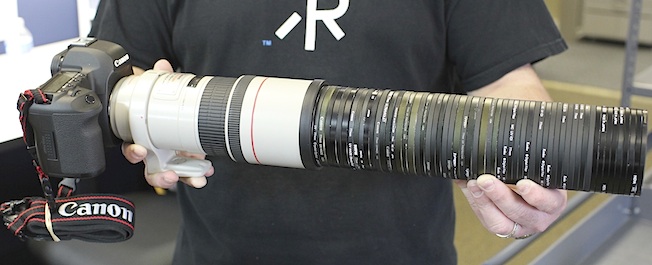
Nope, not enough - light still makes it through.
Upvote
0
P
PackLight
Guest
neuroanatomist said:PackLight said:Put enough elements in a lens the light will never make it through.
How many would that take? Let's try 65:
Nope, not enough - light still makes it through.
Keep adding, but it was this article that came to mind when I was typing that.
But, I do have two single element lenses in the house that have near perfect focus with no aberrations. If Canon RD would get their act together they could perform the same miracle these two lenses perform daily...or maybe Canon RD will never get there.
Upvote
0
- Status
- Not open for further replies.
Similar threads


- Replies
- 5
- Views
- 848


- Replies
- 1
- Views
- 611

