
You are using an out of date browser. It may not display this or other websites correctly.
You should upgrade or use an alternative browser.
You should upgrade or use an alternative browser.
- Status
- Not open for further replies.
It reduces the light getting to the sensor, but not the light you want in the image. The only light it blocks is light from the sides that wash out the photo.
So in some certain cases, putting a hood on means you have to use a slower shutter speed for the same exposure. But that's not the hood blocking out light that's a problem underexposing, it's without the hood letting in bad light that is overexposing.
So in some certain cases, putting a hood on means you have to use a slower shutter speed for the same exposure. But that's not the hood blocking out light that's a problem underexposing, it's without the hood letting in bad light that is overexposing.
Upvote
0
M
mreco99
Guest
dr croubie said:It reduces the light getting to the sensor, but not the light you want in the image. The only light it blocks is light from the sides that wash out the photo.
So in some certain cases, putting a hood on means you have to use a slower shutter speed for the same exposure. But that's not the hood blocking out light that's a problem underexposing, it's without the hood letting in bad light that is overexposing.
oh ok, so it DOES actually reduce the light (whether its good or bad light is another thing) and there will be a need to adjust aperture or shutter to expose correctly?
Upvote
0
Yes, that's why you're using it.mreco99 said:oh ok, so it DOES actually reduce the light (whether its good or bad light is another thing)...
No, because you're camera meters through the lens.mreco99 said:...and there will be a need to adjust aperture or shutter to expose correctly?
Best regards
Eisbaer
Upvote
0
L
Loswr
Guest
Just to clarify a couple of points...
First, hoods block light at angles of incidence too shallow for that light to become part of the image formed by the lens. Without the hood, light at those shallow angles can enter the lens and reflect off lens element surfaces, decreasing contrast and saturation of the image. It might add slightly (probably insignificantly) to the total light in the image, but it would be added as diffuse, non-image-forming light.
Second, you should be using the correct hood for your lens. Canon's hoods are computer-designed to be matched to the lens. There are some caveats. Hoods for zoom lenses are effective mainly/only at the wide end (except the 24-70mm f/2.8L with its reverse-zoom design). Canon makes several EW-83 hoods with different single-letter suffixes, each design for a different lens. Although they will all mount on another lens that takes an EW-83 hood, only the correct hood will block maximal off-angle light without physical vignetting. One side note is that the hoods are designed for the image circle (although the petals of petal-shaped hoods take the rectangular frame into account). So, hoods for EF-S lenses are designed for the smaller image circle those lenses project, and hoods for EF lenses provide the best flare protection when used with a FF sensor, and are less optimal when an EF lens is used on a crop body. In those cases, you can improve flare protection by using a hood not designed for the lens, e.g. the EW-83J for the EF-S 17-55mm can be used on an EF 24-105mm f/4L IS when that lens is used on a crop body, and it will provide better flare protection than the appropriate EW-83H (but using the 17-55's hood with the 24-105 on a FF will cause vignetting).
First, hoods block light at angles of incidence too shallow for that light to become part of the image formed by the lens. Without the hood, light at those shallow angles can enter the lens and reflect off lens element surfaces, decreasing contrast and saturation of the image. It might add slightly (probably insignificantly) to the total light in the image, but it would be added as diffuse, non-image-forming light.
Second, you should be using the correct hood for your lens. Canon's hoods are computer-designed to be matched to the lens. There are some caveats. Hoods for zoom lenses are effective mainly/only at the wide end (except the 24-70mm f/2.8L with its reverse-zoom design). Canon makes several EW-83 hoods with different single-letter suffixes, each design for a different lens. Although they will all mount on another lens that takes an EW-83 hood, only the correct hood will block maximal off-angle light without physical vignetting. One side note is that the hoods are designed for the image circle (although the petals of petal-shaped hoods take the rectangular frame into account). So, hoods for EF-S lenses are designed for the smaller image circle those lenses project, and hoods for EF lenses provide the best flare protection when used with a FF sensor, and are less optimal when an EF lens is used on a crop body. In those cases, you can improve flare protection by using a hood not designed for the lens, e.g. the EW-83J for the EF-S 17-55mm can be used on an EF 24-105mm f/4L IS when that lens is used on a crop body, and it will provide better flare protection than the appropriate EW-83H (but using the 17-55's hood with the 24-105 on a FF will cause vignetting).
Upvote
0
I've noted that the lens hood is not enough in some situations, one may need something to block the light (a "gobo") to further reduce stray light, especially in long exposures. Without the gobo one can get bright low contrast areas in the image.
Even lens hoods on primes may not shadow the front element completely for light sources outside the frame. A typical example is if shooting from a tripod at night and there's a lamp outside the frame but still in front of the camera, then one may need to put a gobo there (I usually stand at the side and use my own body to cast a shadow on the front lens element).
In a side-to-backlight situation, it can be worthwhile to check if the lens hood is providing adequate shadow and if not see if you can put a shadow on the front element with something that is not visible in the frame, which you indeed often can unless you're using a fisheye lens. Then you can get better contrast and/or avoid a lens flare.
Even lens hoods on primes may not shadow the front element completely for light sources outside the frame. A typical example is if shooting from a tripod at night and there's a lamp outside the frame but still in front of the camera, then one may need to put a gobo there (I usually stand at the side and use my own body to cast a shadow on the front lens element).
In a side-to-backlight situation, it can be worthwhile to check if the lens hood is providing adequate shadow and if not see if you can put a shadow on the front element with something that is not visible in the frame, which you indeed often can unless you're using a fisheye lens. Then you can get better contrast and/or avoid a lens flare.
Upvote
0
Short answer, no, long answer, it blocks the incident light that could cause flare (causing low contrast and washed out scenes.) It will reduce the light you dont want in your scene assuming you dont want that light in the scene.
Upvote
0

To get to the heart of your question, the hood will not make your image darker or cause you or your camera to have to adjust the settings to expose correctly.
If you have the hood use it and if you don't have the hood go buy it and then use it. Hoods are good.
If you have the hood use it and if you don't have the hood go buy it and then use it. Hoods are good.
Upvote
0
I always use lens hood (almost 100%) if I have time to put it on. The hood will not cut down USEFUL light and will not need additional aperture opening. It will cut down unwanted flare. It will help protect the lens from dust, water and foreign objects, especislly for people like me that do not use filter to protect the lenses.
Upvote
0

As long as you have the right lens hood, it will only improve the photo.
It is possible to put the wrong a hood onto a lens that will vignette the photo, but as long as you use Canon's or a good knock off, you'll be fine. And you'd see that in the viewfinder anyway.
Lens hoods also provide some measure of protection in drops and bumps. I highly recommend them.
It is possible to put the wrong a hood onto a lens that will vignette the photo, but as long as you use Canon's or a good knock off, you'll be fine. And you'd see that in the viewfinder anyway.
Lens hoods also provide some measure of protection in drops and bumps. I highly recommend them.
Upvote
0
N
NotABunny
Guest
I've tested my 70-200 F4 IS with and without its hood (Hoya HD protector on), in a bright summer day, sun high, close to the sun; UV should not be a concern at that altitude, but could have an effect.
Bottom line: there was no difference in the look of the images. (Did shoot at 200 mm though, so what Neuroanatomist said might the the reason.)
Bottom Bottom line: test it.
Bottom line: there was no difference in the look of the images. (Did shoot at 200 mm though, so what Neuroanatomist said might the the reason.)
Bottom Bottom line: test it.
Upvote
0
L
Loswr
Guest
NotABunny said:I've tested my 70-200 F4 IS with and without its hood...Bottom line: there was no difference in the look of the images. (Did shoot at 200 mm though, so what Neuroanatomist said might the the reason.)
That's exactly the reason, IMO. If the hood provided adequate flare protection at 200mm, it would vignette heavily with the much wider FoV at 70mm. So, hoods protect mostly/only at the wide end of zooms.
Upvote
0
neuroanatomist said:NotABunny said:I've tested my 70-200 F4 IS with and without its hood...Bottom line: there was no difference in the look of the images. (Did shoot at 200 mm though, so what Neuroanatomist said might the the reason.)
That's exactly the reason, IMO. If the hood provided adequate flare protection at 200mm, it would vignette heavily with the much wider FoV at 70mm. So, hoods protect mostly/only at the wide end of zooms.
Adequate or maximum?
Upvote
0
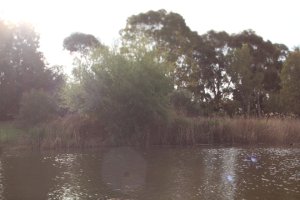
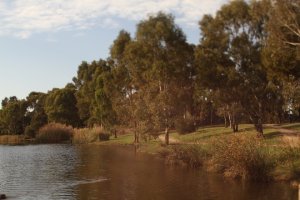
As a pretty extreme example, consider the following two images.
I've got a Zodiak 35mm Fisheye for Kiev88 (Medium Format), covers a 6x6cm image circle so it is *huge* (see photo top of this page here.
Just for fun, I mounted it on my 7D with a tilt adapter and took it down the river. Because of its huge front element, and no hood, it takes in enormous amounts of light from all angles and bounces them around inside. This reduces contrast and washes out the colours. With my camera on auto WB and auto exposure, this is what happens to the photo (camera-jpg). First one is with the sun in the top left of shot, second one is rotated right maybe 70-90 degrees.
If I'd had a hood on, or used a lens with a more sensible front-element size, it would have looked like a normal photo. Whether that results in having to use a longer shutter, what does it matter, really? If you are, the longer shutter is what you want, that's the photo with the normal amount of light, with the normal shutter speed. If you're not using a hood, you (might be) using a faster-than-normal shutter, not the other way around.
I've got a Zodiak 35mm Fisheye for Kiev88 (Medium Format), covers a 6x6cm image circle so it is *huge* (see photo top of this page here.
Just for fun, I mounted it on my 7D with a tilt adapter and took it down the river. Because of its huge front element, and no hood, it takes in enormous amounts of light from all angles and bounces them around inside. This reduces contrast and washes out the colours. With my camera on auto WB and auto exposure, this is what happens to the photo (camera-jpg). First one is with the sun in the top left of shot, second one is rotated right maybe 70-90 degrees.
If I'd had a hood on, or used a lens with a more sensible front-element size, it would have looked like a normal photo. Whether that results in having to use a longer shutter, what does it matter, really? If you are, the longer shutter is what you want, that's the photo with the normal amount of light, with the normal shutter speed. If you're not using a hood, you (might be) using a faster-than-normal shutter, not the other way around.
Attachments
Upvote
0
Even if the hood were designed to perfectly fit the edges of the image, and zoom as the lens does (a few do this, Canon 24-70 2.8), it would not protect 100% fom flair.
Hoods provide some protection from flair, not 100%, but it is a whole lot better than none. A gobo can still be useful.
The hood of a 70-200 is shading the front element exactly the same amount at 70 vs 200. So it makes no sence to say hoods protect mostly/only at the wide end of zooms.
Hoods provide some protection from flair, not 100%, but it is a whole lot better than none. A gobo can still be useful.
The hood of a 70-200 is shading the front element exactly the same amount at 70 vs 200. So it makes no sence to say hoods protect mostly/only at the wide end of zooms.
Upvote
0
TexPhoto said:The hood of a 70-200 is shading the front element exactly the same amount at 70 vs 200. So it makes no sence to say hoods protect mostly/only at the wide end of zooms.
You have a point (kinda) but what they are saying is that the hood is designed for 70mm in that case. The hood for a 200mm prime could be much much deeper and keep even more stray light out of the lens. But if you put that hood on the 70-200 it would vignette at 70mm
For the 70-200 (with the proper hood) there is a lot more light entering the lens that is not part of the picture at 200mm than at 70mm.
Upvote
0
L
Loswr
Guest
TexPhoto said:So it makes no sence to say hoods protect mostly/only at the wide end of zooms.
Angle of view matters.
Look at the ET-74 hood for the 70-200mm f/4L IS (which is 3.15" long). Imagine the level of flare protection provided by that hood at 70mm and f/4.

Now, look at the EW-83H hood for the 24-105mm f/4L IS (which is 1.7" long).

Do you think the dedicated hood for the 24-105mm lens is going to provide the same level of flare protection at 70mm and f/4 on that lens? What would a shot at 24mm look like if you put a round, 3.15" long hood on the 24-105mm? Holding a toilet paper roll up to your eye might give you some idea...
Upvote
0
To be fair, I think @texphoto is pointing out that in a zoom lens such as a 70-200mm the lens hood limits the angle of incident light to the front element the same regardless of the internal positions of the zoom mechanism. This much is true. However, he's not correct in his statement (I'm paraphrasing) that the zoom position doesn't matter at all. Clearly, at 200mm the front element is being exposed to a far greater angle of incident light than will be in the field of view of the lens which is how flare is created
Upvote
0
- Status
- Not open for further replies.
Similar threads

- Replies
- 14
- Views
- 675
