DPreview First impression review 5D IV

Viggo said:
And if you weren't so defensive you would see I wasn't complaining about Sony at all, I just said that no one even cared about exposure latitude before Sony made it possible, suddenly it's the end all.

You're kidding, right? Ever heard of negative (print) film? No wonder no one ever cared about exposure latitude...

Ever shot Velvia/chrome? I'm pretty sure if you did, you'd really, really care about exposure latitude. Or at least be aware of what it's like to not have it...

Also, I thought that of late subject tracking and predictive AF that doesn't front-focus on nothing in your image in AF-C was the 'end all'...

Or could it be that we just feel that 'technologies that get the camera out of the way so you can focus on the photography' are the end all?
 
Upvote 0
rishi_sanyal said:
Or even if spot-metering were linked to AF point, you're telling me you can get the exact exposure needed to balance the highlights from blowing while keeping the exposure good enough for the faces you're exposing? Even if the difference between those two (the dark faces and the bright backlight) approaches near the dynamic range of your camera?

This makes me wonder - have you even shot fast-paced weddings/events?

Linking exposure to an AF spot reading would likely be a way of crippling your useable exposure latitude. In the situation you describe I'd have been using fill at around minus one and two thirds, and maybe bracketing at two thirds as well.
 
Upvote 0
Sporgon said:
rishi_sanyal said:
Or even if spot-metering were linked to AF point, you're telling me you can get the exact exposure needed to balance the highlights from blowing while keeping the exposure good enough for the faces you're exposing? Even if the difference between those two (the dark faces and the bright backlight) approaches near the dynamic range of your camera?

This makes me wonder - have you even shot fast-paced weddings/events?

Linking exposure to an AF spot reading would likely be a way of crippling your useable exposure latitude. In the situation you describe I'd have been using fill at around minus one and two thirds, and maybe bracketing at two thirds as well.

Exactly. Exactly where the Mark IV will help you. So you don't have to spot-meter and choose between blown highlights or properly-exposed faces.

Using fill and bracketing? In the moment as you skirt down the aisle to capture the newly-wed couple? Sure, if you have the luxury. But if you don't, you benefit from the Mark IV, or any camera without extra read noise.

Which was my entire point. Why is that such a difficult concept to swallow? Do we have mostly studio photographers here or something? In which case, by all means, feel free to ignore all the points we make about DR and AF... when you have all the time in the world to set up your shot, heck shoot medium format or large format film or something.
 
Upvote 0
I somewhat stumped that someone seriously thinks correct exposure is so difficult. In fast pace action I use auto iso and I always limit my shutterspeed to never go below for example 1/2000s. That is one of the things that really helps with the 1dx compared to lower end models. And that makes it the right tool for my type of photography. But those critical missed shots that would have been saved by 5 stops latitude, no, can't say I have ever experienced that.... And if I'm shooting some fast portraits in a backlit situation I wouldn't care about clipping a highlight l, but make the face correctly exposed, see the difference I wouldn't compose my shot with strong backlight without a lamp in front. If I only have natural light I move so it's from the side. Again, I just can't agree with you on this latitude being the absolute way to shoot fast in difficult light, I really don't get why it's so difficult to learn what is going to fool the meter either way.

Well, I'm going out and shot with the worthless 1dx, done and done.
 
Upvote 0
Viggo said:
I somewhat stumped that someone seriously thinks correct exposure is so difficult. In fast pace action I use auto iso and I always limit my shutterspeed to never go below for example 1/2000s. That is one of the things that really helps with the 1dx compared to lower end models. And that makes it the right tool for my type of photography. But those critical missed shots that would have been saved by 5 stops latitude, no, can't say I have ever experienced that.... And if I'm shooting some fast portraits in a backlit situation I wouldn't care about clipping a highlight l, but make the face correctly exposed, see the difference I wouldn't compose my shot with strong backlight without a lamp in front. If I only have natural light I move so it's from the side. Again, I just can't agree with you on this latitude being the absolute way to shoot fast in difficult light, I really don't get why it's so difficult to learn what is going to fool the meter either way.

It's not about 5 stops. That was 2-3 stops, in that example -- exactly how much the *camera* decided to underexpose, not me.

You use Auto ISO and don't let the shutter speed drop below 1/2000s? That's exactly one of the point I emphasize over and over again on DPR - that cameras need to allow for adjustable min shutter speed thresholds (Sony now offers one button access to this - I know, heresy for me to mention here).

That's *exactly* how I shoot. But that doesn't stop the camera, especially Canons, from underexposing 2-3 stops in backlit scenarios.

I know you couldn't care about clipping a highlight in those backlit scenarios... my point is you WOULDN'T have clipped the highlights because your CAMERA would've underexposed in that backlit scenario. And with a camera with low read noise/high low ISO DR, that wouldn't matter. But for the 5D Mark III, it unfortunately would.

It's not that latitude is the 'absolute way to shoot fast in difficult light' - it's that it *allows* you to cope with fast-paced shooting scenarios.

I really don't get how you and I can be wanting the same thing and yet literally talking past one another, all the while potentially benefiting from exactly the same camera technologies that allows us to focus on the photography, not the camera's limitations.
 
Upvote 0
Do people think that DPRAW will save many shots, looking at the amount of correction I don't think it will, maybe 5mm or so at max, some of the vids it looks even less, maybe 1-2mm! (also I note the vids are all close subject matter, how will it work long end of 500-1000mm?) When I miss focus its normally way more than what I have seen with DPRAW's correction, not so much with portrait or static subjects but anything moving, people, bikes, cars, if the focus was missed by me I seem to miss it enough just to bin the shot, my macro work may be improved/saved a little by DPRAW but other forms of photography like birds etc.. I am not so sure but can't wait to give it a go, only thing that will do my nut in is saving files that are twice the size, given say I may save 1 in 10 shots or maybe even 1 in 100 shots thats a lot of extra MB's for a small percentage of images.
 
Upvote 0
Wesley said:
Viggo, please tell me you also never miss focus.

I know a lot here waiting to use DPRAW to fix their focus.
Would love for you to teach them newbies how it's done.

AF is the reason I bought the 1dx and 35 L II and the 200 f2. I feel nothing is good enough when it comes to nailing AF always. But exposure I can guesstimate and compensate for, AF you can't, you have to trust the camera.

That is also the reason I have been really frustrated and picky. I sent my 1dx in 5 times for AF inconsistency issues, they finally got it right. I "always" shoot wide open and kids playing and it's not very easy and of course a few misses that can't really be explained other than sometimes AF misses. I'm okay with that. But it's down to an absolute minimum.

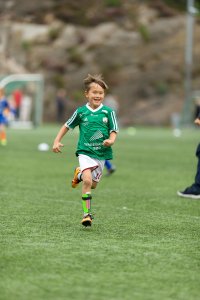
Here's a shot from a couple of days ago just after receiving the 200 L, small faces with no contrast with corner points and everything happens fast when your waving the huge heavy lens around and no dof. I just trust the camera and it seems to work.
 

Attachments

  • image.jpeg
    image.jpeg
    549.6 KB · Views: 195
Upvote 0
Wesley said:
Viggo, please tell me you also never miss focus.

I know a lot here waiting to use DPRAW to fix their focus.
Would love for you to teach them newbies how it's done.

Sadly, as excited as we were in the office about Dual Pixel Raw, the re-focusability is miniscule. I wouldn't be surprised if it equates to something like -1 to +1 on the AF Microadjustment scale. So, practically unusable. mm? No, probably even less.

I, admittedly, had high hopes for this, given my love of fast prime photography, and my frustration at Canon's predictive Servo algorithms completely misfocusing on erratic subjects (kids), particularly if you gave the system the freedom of extra AF points to choose from (iTR). I even wrote hopefully about this in the preview (sort of unfathomable given my anti-Canon bias, no?). But the reality is, well... I better not hurt anyone's feelings here any further...

Note that telephoto shots of kids far away poses an entirely different set of AF requirements compared to accurate candid portraits up close at 35/1.4. Canon generally does well with telephoto lenses, like the 200/2. Shoot a 35/1.4 of a kid up close using AI Servo, and Dual Pixel AF starts to show its advantages.

And all this talk of focus inaccuracy is precisely why we've been so excited by Dual Pixel AF - particularly its (finally) Servo (AF-C) implementation in the 5D IV...
 
Upvote 0
iTR only works in 61 point auto. First thing I do is remove the "all points" and Zone AF from my camera. I use spot, single, 4 with slow pace, and 8-point Case 6 with chaotic movement.

I have my AF-on set up to for example Case 1 or 4 and the *-button to case 6 with 8 point. I also have one of the front buttons set, as well as on the 200 lens itself, to switch between Servo and One Shot. That makes it split second fast to use completely different setups for AF.
 
Upvote 0
rishi_sanyal said:
Wesley said:
Viggo, please tell me you also never miss focus.

I know a lot here waiting to use DPRAW to fix their focus.
Would love for you to teach them newbies how it's done.

Sadly, as excited as we were in the office about Dual Pixel Raw, the re-focusability is miniscule. I wouldn't be surprised if it equates to something like -1 to +1 on the AF Microadjustment scale. So, practically unusable. mm? No, probably even less.

I, admittedly, had high hopes for this, given my love of fast prime photography, and my frustration at Canon's predictive Servo algorithms completely misfocusing on erratic subjects (kids), particularly if you gave the system the freedom of extra AF points to choose from (iTR). I even wrote hopefully about this in the preview (sort of unfathomable given my anti-Canon bias, no?). But the reality is, well... I better not hurt anyone's feelings here any further...

Note that telephoto shots of kids far away poses an entirely different set of AF requirements compared to accurate candid portraits up close at 35/1.4. Canon generally does well with telephoto lenses, like the 200/2. Shoot a 35/1.4 of a kid up close using AI Servo, and Dual Pixel AF starts to show its advantages.

And all this talk of focus inaccuracy is precisely why we've been so excited by Dual Pixel AF - particularly its (finally) Servo (AF-C) implementation in the 5D IV...

Bad news for the eyelash to pupil focus shift people?

Wouldn't taking stills with live view have more vibration because of the mirror?

How would you compare eyeAF AF-C with DPAF servo?
 
Upvote 0
95% of my shots are close with the 35 at 1.4 8) the L II's AF and the ability to place exact focus is why I say it's absolutely worth it over the for example the Sigma.

Perhaps this thread went a bit OT here.... Sorry about that...

Not sure why the image is flipped, but uploaded from my phone.
 

Attachments

  • image.jpeg
    image.jpeg
    328.5 KB · Views: 204
Upvote 0
Viggo said:
iTR only works in 61 point auto. First thing I do is remove the "all points" and Zone AF from my camera. I use spot, single, 4 with slow pace, and 8-point Case 6 with chaotic movement.

I have my AF-on set up to for example Case 1 or 4 and the *-button to case 6 with 8 point. I also have one of the front buttons set, as well as on the 200 lens itself, to switch between Servo and One Shot. That makes it split second fast to use completely different setups for AF.

No, iTR also works in Zone and Large Zone AF, as well as 61 point Auto. Again, I think it's ironic that folks here are telling DPR that it is we that need to read the manual.

?

Yes, one of the powerful features of Canon DSLRs is the customization that allows you to switch cases and AF area modes. Which also doesn't detract from the point that with certain competitors, we don't even need to change from AF-C to AF-S for a portrait, because AF-C simply isn't as jumpy as AI Servo is on a Canon, nor does AF-C on said peers result in horridly front-focused photos (where nothing is in focus) because the predictive algorithm front-focused due to expecting continued movement toward the camera despite the subject stopping.

These are realities that many Canon shooters have found ways of working around. Focus-and-recompose AF-S is pretty much what most Canon shooters I meet have their camera set up to, or AF-C single point for sports shooters, who simply don't trust iTR. And, oddly enough, most 5D Mark III shooters I know don't shoot Auto ISO. Why? Because Auto ISO wasn't programmable enough until the 7D Mark II.

Funny how that works - when something isn't good enough, people don't use it. And if they haven't used different systems, they don't even know there's something better... that's not meant as an insult to said people, but a simple reality.
 
Upvote 0
Viggo said:
95% of my shots are close with the 35 at 1.4 8) the L II's AF and the ability to place exact focus is why I say it's absolutely worth it over the for example the Sigma.

Perhaps this thread went a bit OT here.... Sorry about that...

Not sure why the image is flipped, but uploaded from my phone.

Without getting into too many specifics, Canon's 35mm F1.4L II is quite possibly the best lens ever made, in my humble opinion.
 
Upvote 0
Wesley said:
rishi_sanyal said:
Wesley said:
Viggo, please tell me you also never miss focus.

I know a lot here waiting to use DPRAW to fix their focus.
Would love for you to teach them newbies how it's done.

Sadly, as excited as we were in the office about Dual Pixel Raw, the re-focusability is miniscule. I wouldn't be surprised if it equates to something like -1 to +1 on the AF Microadjustment scale. So, practically unusable. mm? No, probably even less.

I, admittedly, had high hopes for this, given my love of fast prime photography, and my frustration at Canon's predictive Servo algorithms completely misfocusing on erratic subjects (kids), particularly if you gave the system the freedom of extra AF points to choose from (iTR). I even wrote hopefully about this in the preview (sort of unfathomable given my anti-Canon bias, no?). But the reality is, well... I better not hurt anyone's feelings here any further...

Note that telephoto shots of kids far away poses an entirely different set of AF requirements compared to accurate candid portraits up close at 35/1.4. Canon generally does well with telephoto lenses, like the 200/2. Shoot a 35/1.4 of a kid up close using AI Servo, and Dual Pixel AF starts to show its advantages.

And all this talk of focus inaccuracy is precisely why we've been so excited by Dual Pixel AF - particularly its (finally) Servo (AF-C) implementation in the 5D IV...

Bad news for the eyelash to pupil focus shift people?

Wouldn't taking stills with live view have more vibration because of the mirror?

How would you compare eyeAF AF-C with DPAF servo?

Yes, bad news for shallow DOF photographers who find their current system limiting (I would fall under this category).

Which is why I'm so excited by DPAF. Not so excited at using a DSLR at arm's length, though.

Vibration because of mirror? No, because Canon uses electronic first curtain by default in Live View. No vibrations whatsoever. Just tack sharp images!

Sony Eye AF-C is great, yes. But, it's big problem is that it's simply not sticky enough, which we cover in our video here:

https://youtu.be/OhkH7wIPOu8?t=1m32s

So, I find it frustrating to use Eye AF-C for actual wedding, candidate portraiture, event work. It's a real problem, and I find myself reverting to just using focus-and-recompose with the Sony, as I'd use a Canon DSLR in viewfinder mode.

DPAF on the 5D IV is completely different. It nails faces at F1.4 even if they're moving, thanks to AF-C. Better than viewfinder AF-C, ironically and heretically, which tends to be jumpy and erratic with erratic movement.

Hence, in a nutshell, I'd consider DPAF overall to be *more* usable than Sony's AF-C generally speaking.

The bigger problem Canon faces right now is usability of DPAF. Its 'Face Detect+Tracking', 'FlexiZone-Multi', and 'FlexiZone-Single' modes aren't idea, and too confusing, with too much overlapping similarity between modes. Furthermore, there isn't any mode that doesn't require you to tap the screen to specify your subject, which is a shame (FaceDetect+Tracking should still have a mode where it tracks whatever was under your initial AF point). Finally, the AF point isn't recorded, so when you magnify in Image Review, it doesn't zoom into your focus point - which makes it cumbersome to check focus.

But overall, it's amazing, and makes me wish Canon had a hybrid OVF/EVF, or full-frame mirrorless camera.

 
Upvote 0
Never ever have I said Servo is jumpy, and it isn't .... I use One Shot very seldom, usually just release the AF-on button. One shot is for very small adjustments or to recompose to the extreme corners as I never crop in post. I just don't use the buttons on the 200 or that front button for anything else, so it's nice to have. Same with exposure lock. It's there but hardly use it.

I said I also removed the zone AF, I would never let my camera decide which focusing point to use, even if it worked great.

You keep taking what people say and then turn them into some crazy assumption. A temporary four second switch between Servo and One Shot in a specific setting for a specific effect or composition isn't to say the tracking can't be used for exact focus placement.

What needs to be understood is that when a lens is only "about correctly" calibrated it makes the AF unstable, if it's the right value of afma, it's like glue. This would be very well known for anyone who care to do things the right way.

Ps. I read through the manual when buying the camera and setting it up, along with the AF guide, but without actually using it you can't really fine tune settings to where it's not almost perfect, but works properly.
 
Upvote 0
Viggo said:
Never ever have I said Servo is jumpy, and it isn't .... I use One Shot very seldom, usually just release the AF-on button. One shot is for very small adjustments or to recompose to the extreme corners as I never crop in post. I just don't use the buttons on the 200 or that front button for anything else, so it's nice to have. Same with exposure lock. It's there but hardly use it.

I said I also removed the zone AF, I would never let my camera decide which focusing point to use, even if it worked great.

You keep taking what people say and then turn them into some crazy assumption. A temporary four second switch between Servo and One Shot in a specific setting for a specific effect or composition isn't to say the tracking can't be used for exact focus placement.

You misunderstand. That's what I'm saying *we* (as in everyone in the office who's used this system extensively against others) say.

Also, AFMA is extremely complicated in how, and when, it works properly, and it's too much to get into here.

Please answer me this simple question: have you shot weddings?
 
Upvote 0
rishi_sanyal said:
The bigger problem Canon faces right now is usability of DPAF. Its 'Face Detect+Tracking', 'FlexiZone-Multi', and 'FlexiZone-Single' modes aren't idea, and too confusing, with too much overlapping similarity between modes. Furthermore, there isn't any mode that doesn't require you to tap the screen to specify your subject, which is a shame (FaceDetect+Tracking should still have a mode where it tracks whatever was under your initial AF point). Finally, the AF point isn't recorded, so when you magnify in Image Review, it doesn't zoom into your focus point - which makes it cumbersome to check focus.

But overall, it's amazing, and makes me wish Canon had a hybrid OVF/EVF, or full-frame mirrorless camera.

Thanks for this - helpful to know.

Appreciate you taking the time on here to answer people's queries and criticisms thoroughly and patiently. I don't understand why people are getting so snarky about things - I thought your preview of the 5D4 was unbiased and helpful.


Cheers,
d.
 
Upvote 0