Lee Jay said:
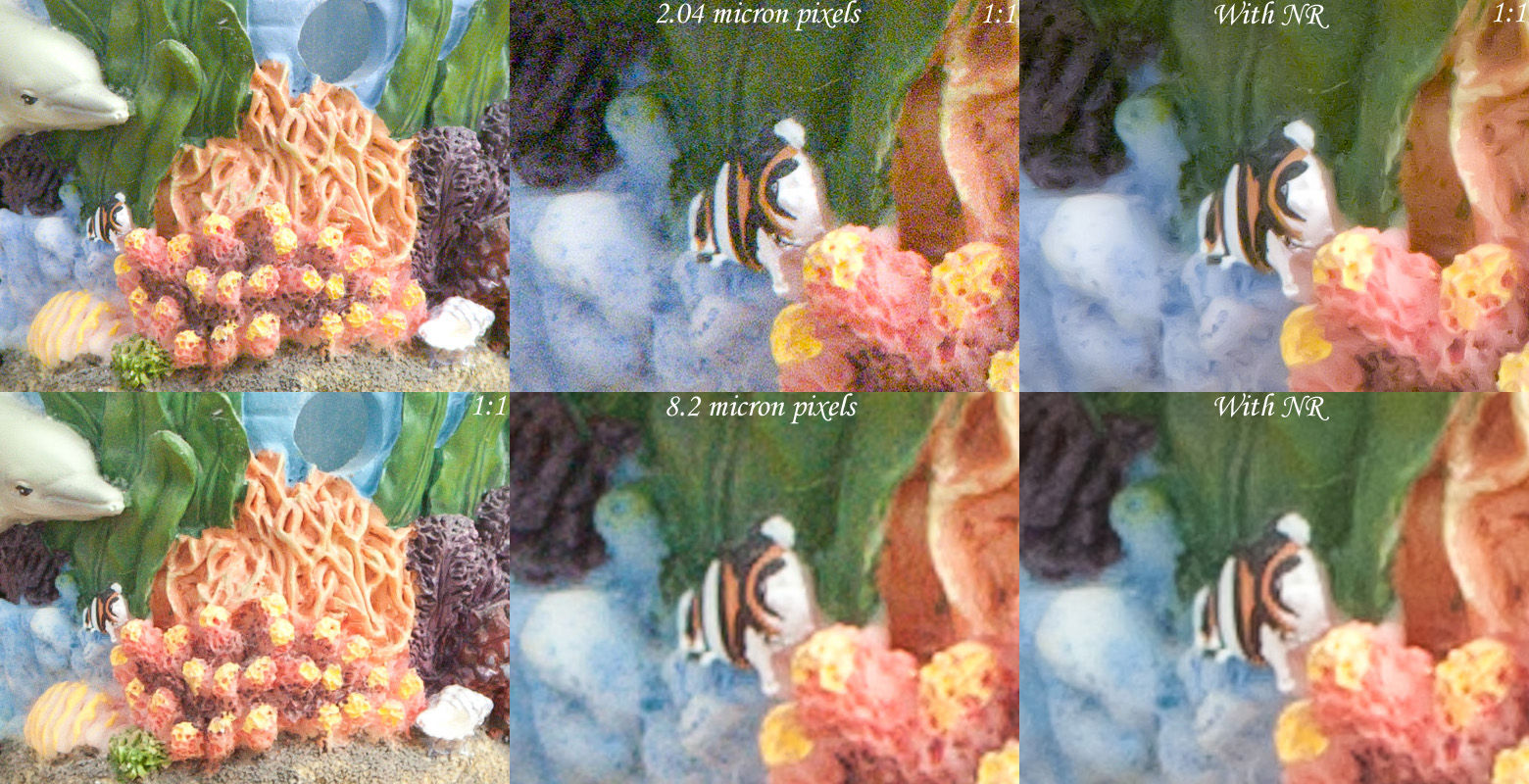
And noise reduction software is dramatically better at removing noise and preserving detail than block averaging is. Plus, smaller pixels mean a higher-corner-frequency AA filter. Both effects mean that the smaller pixels give you lower noise and better resolving power in the same light and exposure.
Noise reduction software applies to all images, regardless of pixel size. You can't bring software into the hardware equation here. Sensors are hardware. From a hardware standpoint, smaller pixels/bigger pixels, so long as the total sensor area is the same, it really doesn't matter.
Trying to bring in post-processing aspects brings in a massive amount of subjectivity into the discussion, and then it becomes impossible to guage anything. Person A might use Topaz DeNoise, Person B might use Neat Image, Person C might just use LR/PS built in NR. Let's keep the argument to concrete information that we can all agree on. Sensor area/output magnification. That's all that would really matter. A smaller sensor has the potential to produce sharper results, but overall, noise is going to be the same (at best).
Lee Jay said:
Viper28 said:
Lee Jay said:
Viper28 said:
I would prefer the 16-18mpx low noise, high DR option myself.
For the millionth time, lower pixel counts do NOT mean lower noise and higher DR! In fact, the other way is more likely.
Hmm strange then that the Canon 5D and 40D were both approx 10mpx cameras of the same generation but the IQ, noise and DR of the 5D is clearly better than the 40D (at a given ISO). Or if you prefer the Nikon D300 and D3 both c. 12mpx cameras of the same generation and guess what the D3 has better IQ, noise and DR! So regardless of the maths or anything else, when the chips are down large pixels seem to outperform small ones
Large sensors out-perform small sensors. Small pixels out-perform large pixels as long as you don't get so small that the smaller pixels are too small for the manufacturing technology making them.
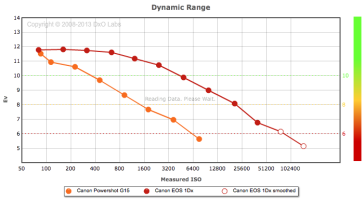
The 70D, even with 40MP out-performs the 7D with 18MP. The G15 with its teeny, tiny pixels out-performs the 1Dx in DR even with its enormous pixels.
The idea that small pixels are somehow bad is long, long out-of-date.
First, I really have to quash this idea, because it is fundamentally WRONG: The 70D is NOT NOT
NOT a 40mp camera!!!!!!!!!!!!! The 70D has 20.2 million pixels. Only the center 80% of those pixels (16.16mp) have split
PHOTODIODES. A photodiode and a pixel are not the same thing. The 70D has, only has, always has had, and will only ever have, 20.2 million PIXELS. The 16.16 million center rectangle of pixels have split photodiodes. There are 32.32 million photodiodes packed into 16.16 million pixels, which comprise the center 80% of the sensors 20.2 million pixels in total.
When it comes to DPAF, photodiodes != pixels. DPAF pixels have two photodiodes,
but they are still one pixel. The split photodiodes are underneath the microlens and color filter...so you could never read 32.32 million pixels out independently and have it be anything better or different than reading those 16.16 million pixels out. The split halves are the same pixel, under the same filter and same microlens. If they were separate pixels, DPAF simply wouldn't work. The entire point of the technology is that you can read light from each half of the lens, and therefor detect phase differential, from each and every individual PIXEL. The 70D has 20.2 million pixels. Only. In which case, the gap between the 7D and 70D is 2.2mp...which is practically trivial, since both sensors have roughly the same total area. (The 70D's real advantage is that it is actually slightly larger in dimensions than the 7D...more total area, more total light, albeit a nearly trivial "more".)
As for the pixels. I've never said they are bad. Small pixels out-RESOLVE large pixels, they do not necessarily out-PERFORM large pixels. But small pixels can only out-resolve large pixels in certain circumstances. Sometimes, having more pixels for identical framing means large pixels can effectively outresolve smaller pixels...because you can either use a longer lens, or get closer, and still achieve the same framing. If resolving power is all that matters to you, and you have excellent skill with noise reduction (which is arguably
more difficult to apply to images made from smaller pixels than images made from larger pixels), then smaller pixels will certainly be better for your use case.
Smaller pixels will always
outresolve larger pixels, but they do not normally outperform larger pixels. The only case where smaller pixels might literally outperform larger pixels is if the smaller pixels had considerably better technology than the larger pixels. If you packed in ultra high Q.E. silicon materials (i.e. black silicon), ultra low noise readout (i.e. slower frequency readout, thermal cooling), backside illumination, high power microlenses and double microlens layers, etc. then sure, you could produce smaller pixels that might be capable of outperforming larger pixels....for a time... But the same technology can always be applied to larger pixels. On a normalized basis, where the technology field is flat, (and where you don't assume some specific post processing software is used to change the output of the sensor), smaller pixels
cannot perform -->
better <-- than larger pixels. At best, they could perform as well, at worst...well, they would perform worse.
Pixel performance is a fairly complex thing. I challenge you to pit G15 sports, wildlife, and bird photos against the same kinds of photos from the 1D X. I'm willing to bet good money that, assuming you find work from skilled photographers who actually know how to effectively work the equipment in hand, you will NEVER find any G15 images that are better than 1D X images. The G15 may have greater DR per pixel, but the 1D X
trounces it in terms of sensor area.



 ]
]