Full Frame Astrophotography DSLR Coming [CR1]

Canon Rumors

Who Dey
Canon Rumors Premium
Jul 20, 2010
12,753
5,577
279,596
Canada
www.canonrumors.com
HTML:
We’re told that Canon will release their first full frame DSLR geared to astrophotography some time in 2016. It is unknown which camera will get the conversion to an “a” model.</p>
<p>This would follow the APS-C astrophotography DSLRs from the past, the EOS 20Da and the EOS 60Da.</p>
<p>Nikon is about to release the D810a, which is their first full frame astrophotography camera.</p>
 
I am not sure if it is the best idea to be the same as the photo of this post 5DSRa.

It would be much better to make a 5DIIIa type camera. Less mpixels = less noise in high iso. In addition, less megapixels = better resistance in star trailing.
 
Upvote 0
Dear Teachers and Friends.
Would you please teach me = " What are the quality/ functions of DSLR geared to astrophotography that regular DSLR that we have , do not have ?
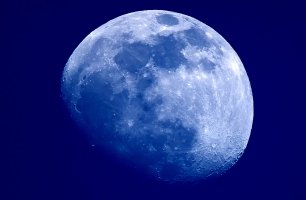
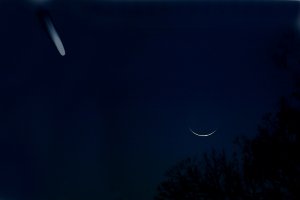
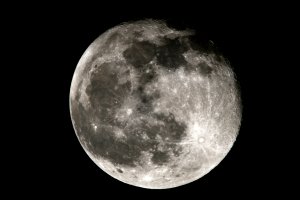
Sorry, I never do Astrophotos before, Just Shoot the moon and shoot the comet( Comet Panstarrs 3/10/2013).
Thank you, Sir/ Madame.
Surapon
 

Attachments

  • M-19.jpg
    M-19.jpg
    358.8 KB · Views: 475
  • CPS-2.jpg
    CPS-2.jpg
    588.7 KB · Views: 496
  • THE MOON-SMALL-FILE-2.jpg
    THE MOON-SMALL-FILE-2.jpg
    851.1 KB · Views: 576
Upvote 0
Sith Zombie said:
Maybe the 6Da? Cheap with a great sensor. I feel the AF of the 5d series would increase the price and is not really needed on what is a pretty specialist tool.
This is an excellent idea. In fact I think there are some sites that astro modify existing 6D cameras...
 
Upvote 0
tron said:
Sith Zombie said:
Maybe the 6Da? Cheap with a great sensor. I feel the AF of the 5d series would increase the price and is not really needed on what is a pretty specialist tool.
This is an excellent idea. In fact I think there are some sites that astro modify existing 6D cameras...
Yeah, makes sense. After the 6Dmkii hits, they could keep the original 6D going as the astro version. New camera and market for minimum R&D, tooling costs etc
 
Upvote 0
Ha stands for H-Alpha, one of the primary emission band of the Hydrogen.
It's a deep red that's pretty much invisible to human eyes and so the filters before the sensor tend to cut it out.
But in the Astro-photo domain, that's the principal band of light since most of the universe is Hydrogen (emmission nebula emits mostly in that band (M42, California, Laguna, etc...) It's not that important for galaxies or stellar cluster which emits light in pretty much every band).
So conventionnal Canon DSLRs cut out something like 60-70% of your most useful frequency in Astro..

That's mostly why there's a few companies providing filter replacement for DSLR. Once the new filter is installed, you have to use a custom white-balance to take daylight picture because the red channel will be a lot stronger than before, but you can still use the camera normally.
The filter replacement operation is not cheap though (around 300-400€ depending on the camera) and the warranty is immediatly voided by the operation. So, Canon offering "a" models is mostly a good news.

If you still got questions, shoot, i'll try to answer. :)

Djaaf
 
Upvote 0
surapon said:
Dear Teachers and Friends.
Would you please teach me = " What are the quality/ functions of DSLR geared to astrophotography that regular DSLR that we have , do not have ?
Sorry, I never do Astrophotos before, Just Shoot the moon and shoot the comet( Comet Panstarrs 3/10/2013).
Thank you, Sir/ Madame.
Surapon
Dear friend Surapon. The specific cameras for astrophotography (20Da 60Da) are more sensitive to infrared and also ultraviolet, that normal cameras do not capture. In addition, dedicated cameras to astrophotografy comes with appropriate software to Post Production needed to treat images of this type ..
 
Upvote 0
ajfotofilmagem said:
surapon said:
Dear Teachers and Friends.
Would you please teach me = " What are the quality/ functions of DSLR geared to astrophotography that regular DSLR that we have , do not have ?
Sorry, I never do Astrophotos before, Just Shoot the moon and shoot the comet( Comet Panstarrs 3/10/2013).
Thank you, Sir/ Madame.
Surapon
Dear friend Surapon. The specific cameras for astrophotography (20Da 60Da) are more sensitive to infrared and also ultraviolet, that normal cameras do not capture. In addition, dedicated cameras to astrophotografy comes with appropriate software to Post Production needed to treat images of this type ..
Hi,
They still block infrared.. H-alpha is deep red, but not infrared yet.

A cooled 5Da will be nice... ;D

Have a nice day.
 
Upvote 0
surapon said:
tron said:
@Surapon: They improve the response to Ha mostly and possibly to IR...

Thanks you, Sir, Dear friend Mr. Tron.
I know IR = Infared ( ???), But What is " Ha", Sir ?
And why why we need to improve the sensitive of IR and Ma for Astrophotos shooting ?
Have a great day, Sir.
Surapon
Hello,

Ha is a specific spectral line emitted by many nebulae that normally look very faint.

Off topic: In addition the sun is spectacular at Ha. (Google for Ha telescopes)

Unfortunatelly a normal (Bayern type) DSLR is not the best way to take pictures of it (hence the off topic declaration)
 
Upvote 0
I think after choice of the 60D for the 60Da we should expect a 6Da coming. The banding noise on a 6D is lower than even a 5D mark III, which I suppose would help in astro.

Unless of course, Canon wants to target the astro D810 and make a 5DSa, which would be pretty incredible, if not for the high-ISO noise. But since full-frame cameras can use wider focal length lenses with wide apertures, I think it might negate the difference between a 60Da and a 5DSa, since you could use a 24mm F/1.4 or a 14MM f/2.8 with longer exposures without startrails on a full frame camera. And I mean, the 5DS is still at the noise level of a 7D Mark II, which is an improvement over a 60D anyway.
 
Upvote 0
tron said:
I am not sure if it is the best idea to be the same as the photo of this post 5DSRa.

It would be much better to make a 5DIIIa type camera. Less mpixels = less noise in high iso. In addition, less megapixels = better resistance in star trailing.

It's better to have more pixels... more resolution. For DSLR astrophotography with conventional lenses, most of us are reach limited and therefore opt for a crop sensor. While noise is a huge factor for astrophotography, ISO 1600 on any current rebel is excellent in the noise department when you consider image stacking. If this is as good in the noise department as the 7DII, it would give you a FF view with really excellent resolution and outstanding IQ.

Also, if you were using this camera it is assumed that you would be using it on a tracking mount, and with a quality tracking mount and good polar alignment, star trailing is not really a factor.

Actual sensitivity to HA will be a factor. If canon releases this as a dual use camera it will likely not be as sensitive as simply modifying a stock camera... which is also much cheaper than buying XDa camera... if history repeats itself.
 
Upvote 0
Yes, the mods are more for deep field than for wide field (landscape) astrophotography. One of the issues about mods is that the color response for daytime use is altered some when you remove the filtration of far red wavelengths. This can be adjusted for using a screw-in or clip-in filter on the adapted SLR. (See Astronomix filters)

This also brings up the issue of whether the deep field astrophotographer would be better off with a CCD and filter set. The issues that favor the astro-specific CCD are high quantum efficiency (but CMOS is catching up) and sensor cooling, allowing operation for long periods without getting extraneous signal from warming of the sensor. Some people shoot with their SLRs in a Peltier device cooled chamber (10 to 20 degrees below ambient).

The 6D is a darn good low-light camera without pattern noise (banding). Roger Clark of Clarkvision claims that the 7D2 is even better from the standpoint of no banding AND lower thermal noise than the 6D.
 
Upvote 0
Just a question as I really don't know much of the technical aspects: Is an "a" type cam strictly considered an astro only cam, or is the "a" configuaration an enhanced asset which allows you to do both daylight photography and outstanding astrophotography?
After posting I read this, http://randombio.com/d90infrared.html but the question remains...
Is it possible, to manually adjust the white balance in post (RAW) to a "normal photography" color scale?

Thank you for any hint on that. Regards, Peter

Otherwise, if they'd announce a 6Da I would add it to my 5D3 and be happy camper for years...;-)
 
Upvote 0
Just a question as I really don't know much of the technical aspects: Is an "a" type cam strictly considered an astro only cam, or is the "a" configuaration an enhanced asset which allows you to do both daylight photography and outstanding astrophotography?

After posting I read this, http://randombio.com/d90infrared.html but the question remains...
Is it possible, to manually adjust the white balance in post (RAW) to a "normal photography" color scale?
Thank you for any hint on that. Regards, Peter

Otherwise, if they'd announce a 6Da I would add it to my 5D3 and be happy camper for years...;-)

Or as a fellow poster put it, how much more sensitive is a dual use camera?
Canon1 said:
tron said:
Actual sensitivity to HA will be a factor. If canon releases this as a dual use camera it will likely not be as sensitive as simply modifying a stock camera... which is also much cheaper than buying XDa camera... if history repeats itself.
 
Upvote 0