Grainy images from my 5D MK IV?

Pixel peeping has undoubtedly cost me many thousands of pounds over the years. For me personally, the release of the 5D Mklll signified the end of the comparison websites (the camera is so good) and I am now far more content as a result - I now invest my 'pixel peeping' time in improving my photography.
I certainly don't advocate everyone stops 'pixel peeping' - I've spent enough time on it in the past, but for me now, I'm much happier without it.
I'm sure the MklV is a great camera, limit the 'pixel peeping' a little and enjoy photography.
For what it's worth, my favourite comparison website was 'imaging resource Comparimeter'
 
Upvote 0
I agree about comparing per sensor area, print size etc but when I am Focal Length limited I have to compare at pixel level. Fortunately, I found out that 5DIV works very well with my 500 II and 2XIII with very nice results even at 100%. At the same time the use of 2X alleviates somehow the need to magnify at 100%. The quality is better than what I can usually get from my 7DII + 500 + 1.4XIII at most lighting conditions. I haven't compared it side to side with my 5DIII mostly because I haven't used my5DIII for birds lately. But one and a half year ago 5DIII excelled at 100% with my 100-400II. So both are very good at 100%. I just have not made a one to one comparison using same lenses, settings and lighting conditions.
 
Upvote 0
And I didn't buy the 5DIV because I expected radically better low-light, high-ISO performance. What I concluded from reviews and discussions was that it would give a modest improvement in IQ generally, and higher resolution without much of a noise penalty.

The main reason I bought the 5DIV, upgrading from the 5DIII, was for the improved AF, both through the viewfinder and in LiveView. Very good move!

And what I've found is that I'm getting a more pleasing IQ for people, still life, and landscape, and that working at 100% I'm very happy with the improvement over the 5DIII--except if I've underexposed. That's where I see a little less forgiving of a noise issue, even at ISO 200 - 400! This is a circumstance that is not troubling and can be avoided, but does exist.

(I'm STILL trying to get out for some nature/birds, but work, family, and weather keep laughing at me.)

So, back to the OP's question, in my experience, the 5DIV does NOT produce grainy images compared to the 5DIII except when underexposure happens and light areas such as an overcast sky are included.

How did we wander into insults? Don't know!

By the way, PBD, do you even OWN a 5DIV? Or are you just speculating?

Mikehit, you raise an excellent point about reconsidering the practice of cleaning up noise at 100%. I'm not going to give it up going from 5DIII to 5DIV, but certainly at some point of MP inflation it won't make sense. Maybe even now, but it's working fine for prints...
 
Upvote 0
Mikehit said:
But that isn't what you do, is it?

The aim of any photographer is to deliver the best image he or she could for a given *output* resolution and size. That often implies to understand the characteristics of a given *input* resolution, ISO and exposure, to decide how to process the image to deliver that best *output*.

Some authors believe *some* characteristics like noise are best evaluated at 1:1 because an image pixels maps to a screen pixel without any processing between. It doesn't tell anything of the quality of the final output image, which depends on many other factors.

It's just a way to ensure you really see what you're looking for - a single characteristic -, and nothing hides or modifies it. I think it's a reasonable approach. But of course no one is forced to use it (and really see no reason why use an offensive tone to say it).

I use to evaluate noise and sharpening at 1:1, especially for critical areas (and depending on output, an A3+ requires may require more care than an A6), then change it to a lower magnification which could give a better understanding of how it would look at the final output - which will show you other characteristics you can't see at 1:1 - and then print a proof, of course. I found I need less printed proofs following this process.

Is the IV *input* more "grainy" of the III, or is it just a a psychological effect of the higher resolution? And is that "grain" noise, and not the effect of looking at smaller details now resolved? I do not know. But it's something that can be quantitatively and objectively measured (for what is worth....), if needed - just IMHO all other parameters must be equal, or the comparison is skewed.

Then I'm quite sure a sensor with more pixel can deliver a better image than one with less for a given size and resolution - the image will be downsampled more, or less upsampled (if ever needed). It's just like large format cameras deliver less "grainy images" because they didn't need to be enlarged much, using the same emulsion.

But if you want to compare two emulsion to evaluate their grain (not the image they produce), you would look at the film (maybe with a microscope), not get a 35mm and a 6x7 one and print them at the same size - the latter would win anyway unless really worse. And yes, these kind of comparisons are often very little useful, especially if the differences are small enough and visible only in corner cases, what matters is the final image you're able to deliver.

 
Upvote 0
Wow, I'll answer a lot of the points later when I have the time, but really you guys are over the top saying this 'has been reduced to insults'. How is including fools in a group of other well intentioned but largely misguided assessors insulting?

Now if anybody took it personally I am sorry if I offended you, but I am not sorry for the words I wrote and I'd beg you to look at why you think that epithet was either aimed at you or feel it describes you.
 
Upvote 0
Jack Douglas said:
StudentOfLight said:
Lets assess the situation. OP with few posts starts thread. OP vanishes after one post. You guys argue repeatedly. Hmmmmm

Yes, isn't CR wonderful! :) Even without Dilbert. Seriously though, each thread always provides some tidbits of useful information (if you're willing to wade through the not so useful).
Jack

Question seemed sincere. How many posts should a poster have before posters should post posts?

As for vanishing, I don't think it was anything I posted. At least not in this thread... ::)
 
Upvote 0
YuengLinger said:
I think grain doex show a bit more whe images are underexposed, especially overcast skies.

Otherwise, I'm getting cleaner images up to about ISO 5000. From there the same.

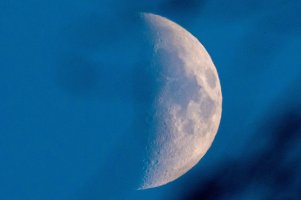
Here is unedited RAW @ 5000 ISO... There IS grain. This is 1/4th of a 30 MP image crop.

:/

Otherwise can be suppressed but not always. Especially when the images are underexposed.
 

Attachments

  • moon.jpg
    moon.jpg
    1.1 MB · Views: 200
Upvote 0
Diko said:
YuengLinger said:
I think grain doex show a bit more whe images are underexposed, especially overcast skies.

Otherwise, I'm getting cleaner images up to about ISO 5000. From there the same.

Here is unedited RAW @ 5000 ISO... There IS grain. This is 1/4th of a 30 MP image crop.

:/

Otherwise can be suppressed but not always. Especially when the images are underexposed.

ISO 500 at 200% viewing - I'm not surprised you can see grain.
 
Upvote 0
Mikehit said:
Diko said:
YuengLinger said:
I think grain doex show a bit more whe images are underexposed, especially overcast skies.

Otherwise, I'm getting cleaner images up to about ISO 5000. From there the same.

Here is unedited RAW @ 5000 ISO... There IS grain. This is 1/4th of a 30 MP image crop.

:/

Otherwise can be suppressed but not always. Especially when the images are underexposed.

ISO 500 at 200% viewing - I'm not surprised you can see grain.

He said ISO 5000!
 
Upvote 0
Diko said:
YuengLinger said:
I think grain doex show a bit more whe images are underexposed, especially overcast skies.

Otherwise, I'm getting cleaner images up to about ISO 5000. From there the same.

Here is unedited RAW @ 5000 ISO... There IS grain. This is 1/4th of a 30 MP image crop.

:/

Otherwise can be suppressed but not always. Especially when the images are underexposed.

You are at ISO 5000 which is likely ISO 3200 pushed or ISO 6400 pulled down. There will be grain. With the 6D and 5D III there would have been actual color noise. The color noise was easy to get rid of but grain will just be there. The grain looks like it is the actual noise in the signal. So that looks quite good. Better than my Sony A7 II.

If you are really bothered by it you can always apply a slight Gaussian blur then down sample and sharpen. That would get rid of the noise.
 
Upvote 0
tcmatthews said:
Diko said:
YuengLinger said:
I think grain doex show a bit more whe images are underexposed, especially overcast skies.

Otherwise, I'm getting cleaner images up to about ISO 5000. From there the same.

Here is unedited RAW @ 5000 ISO... There IS grain. This is 1/4th of a 30 MP image crop.

:/

Otherwise can be suppressed but not always. Especially when the images are underexposed.

You are at ISO 5000 which is likely ISO 3200 pushed or ISO 6400 pulled down. There will be grain. With the 6D and 5D III there would have been actual color noise. The color noise was easy to get rid of but grain will just be there. The grain looks like it is the actual noise in the signal. So that looks quite good. Better than my Sony A7 II.

If you are really bothered by it you can always apply a slight Gaussian blur then down sample and sharpen. That would get rid of the noise.
Well that's the most useful comment in this thread.
 
Upvote 0
tron said:
Well that's the most useful comment in this thread.

Are you sure? That's a challenging image to reduce noise within - because of the tiny details on the Moon surface, compared to the far less detailed sky, which you would like to preserve. Today, if you use Photoshop ACR will do a good job in reducing input noise while trying to preserve detail. Otherwise I'd use layers and masks to preserve the Moon details, while maybe applying a stronger reduction to the sky noise (and avoid to re-sharpen it later).
 
Upvote 0
LDS said:
tron said:
Well that's the most useful comment in this thread.

Are you sure? That's a challenging image to reduce noise within - because of the tiny details on the Moon surface, compared to the far less detailed sky, which you would like to preserve. Today, if you use Photoshop ACR will do a good job in reducing input noise while trying to preserve detail. Otherwise I'd use layers and masks to preserve the Moon details, while maybe applying a stronger reduction to the sky noise (and avoid to re-sharpen it later).

And PS CC noise reduction now has a great ''by channnel'' option!

Gaussian blur is an old school hammer at this point.
 
Upvote 0
LDS said:
tron said:
Well that's the most useful comment in this thread.

Are you sure? That's a challenging image to reduce noise within - because of the tiny details on the Moon surface, compared to the far less detailed sky, which you would like to preserve. Today, if you use Photoshop ACR will do a good job in reducing input noise while trying to preserve detail. Otherwise I'd use layers and masks to preserve the Moon details, while maybe applying a stronger reduction to the sky noise (and avoid to re-sharpen it later).
May be it's not THE method but I would certainly give it a try even if only to test it. I realize that it might not apply to all cases but I can think of some it will. In addition just before I read that entry I was about to mention another member's - I do not remember whose - advice that had proposed to do aggressive noise reduction first and then reduce size and sharpen.

But until your equally interesting entry of yours that specific comment was (in my humble opinion) the most useful. Now we have at least two useful comments... :)

EDIT: OK At least three! I just read the previous entry! :D
 
Upvote 0
tron said:
But until your eually interesting entry of yours that specific comment was (in my humble opinion) the most useful. Now we have at least two useful comments... :)
EDIT: OK At least three! I just read the previous entry! :D

These may be useful advices, but the OP asked something else, yes useful, but maybe off-topic :)

Anyway noise reduction needs also spawned many plug-ins with specific capabilities that may go beyond what can be achieved in Photoshop. You can even try the now free, although a bit old, Dfine 2 from Nik Collection (here a review http://www.northlight-images.co.uk/review-nik-dfine-v2 - BTW: nice new site, Keith!)
 
Upvote 0