I'm not impressed with my 70-200mm f/2.8L USM... so is it me or the lens?

Status
Not open for further replies.
May 31, 2011
2,940
1
21,766
48
A little history to begin with. I have a 60D and previously owned a 70-200mm f/4L USM and it was ok. It didn't seem like a significant jump in image quality from my 55-250mm IS. Yes, I have faster shutter speeds, lower iso, and better bokeh (not to mention the size of the 70-200 drives the ladies wild... I assume... only guys ever comment about the size of the lens).

I decided to upgrade to the 70-200mm f/2.8 and I'm still not wowed. Not the way I am when I use my 100mm f/2.8L macro USM. I was considering getting a 200mm f2.8L prime, but thought the 70-200 would be more usable for a variety of situations. I've also considered getting a 135mm f/2, but that seems too redundant to have with my 100mm L macro.

So the other day I was shooting at 1/400th of a second because it was a really cloudy day and I was losing shots left and right (though in retrospect I should have taken off the CPL filter earlier and I should have bumped the iso up from 100 to 1200). So I take full blame for that, but the images I lost really irked me. I assumed incorrectly that 1/focal length would be sufficient (200x1.6=320 = shutter speed >1/320. Nope).

Then yesterday it was a cold sunny day, so I took some shots without the CPL and some shots with. I normally shoot in aperture priority, but today I decided to go freestyle and shoot in manual. Iso was between 320 and 640. And my shutter speeds were 1/2000 and 1/8000 of a second. And I'm still not happy with the result. I've heard that the 70-200 is tack sharp between 70-135, and I have quite a few of the shots within that range, and I'm not blown away.

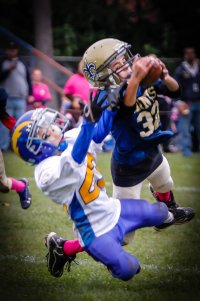
The first two shots are Lightroom adjusted images adjusted from raw for the cloudy day with the 1/400 to 1/500th day. The 2nd set are untouched jpegs from the sunny day with the cpl and up to 1/8000 of a second. I was shooting in raw and I adjusted some of those, but not to the point where I was pleased with the result.

So my query for yall is, is it me or is it my lens?
 

Attachments

  • _MG_7637.jpg
    _MG_7637.jpg
    314.5 KB · Views: 2,829
  • _MG_7655.jpg
    _MG_7655.jpg
    462.3 KB · Views: 2,920
So here are some of the shots with full sun, unaltered by Lightroom, but reduced in size by 60% so I could fit them onto here.

For what it is worth, I was using AF servo and using the center point. So from a practical standpoint, the center of the image is where the focus was supposed to be. And since I didn't alter these in regards to cropping, that wouldn't affect the location of where the image was supposed to be focused.
 

Attachments

  • _MG_7886.jpg
    _MG_7886.jpg
    864.8 KB · Views: 1,992
  • _MG_7985.jpg
    _MG_7985.jpg
    906.1 KB · Views: 1,987
  • _MG_7920.jpg
    _MG_7920.jpg
    987.9 KB · Views: 1,976
Upvote 0
I am super duper happy with the lens for last several years.
I am not for a single moment implying that you do not know what you doing, but do carefully examine your technique, something must be amiss.
Do post when you figure out so we all can learn too.
Best wishes and regards.

Here is a photo I took a week ago.
 

Attachments

  • _70C4609-as-Smart-Object-1.jpg
    _70C4609-as-Smart-Object-1.jpg
    381.8 KB · Views: 3,012
Upvote 0
I really do not recommend getting a expensive wide aperture lens with a body that has no AFMA. Narrow apertures usually hide focus inaccuracies in the depth of field, but its tough to hide front or back focus at f/2.8 or wider. You can, of course use it at f/8, but I doubt if you want that.
The images appear to be back focused, were you using AI Servo? Is the lens focusing accurately with a static object? If accurate on a static object at f/2.8, then its either a issue with not using AI Servo, or not having the AF point on the eye or wherever you want the focus point to be.
You may need to send the lens and body to Canon to be calibrated, with the 60D, there is no other way when lens and body do not match.
 
Upvote 0
Joe, you're first shot has 'motion blur', despite shooting at 1/400s, perhaps 1/1,000s + panning with the action. The shutter speed is to freeze the action in the moment, but you're shooting handheld and you're arms are moving too. As others have said you need to use AI Servo mode and begin focusing about 2-3 seconds before you take your shot and roll with the action, whilst continuously shooting in hi-speed mode - that way you get some keepers.

The 1st pic is OOF down to you I'm afraid, nothing to do with camera or lens.
 
Upvote 0
I can totally understand why you are upset at loosing those pictures I particularly really really like the first one, I’d be gutted, could have been a great shot but honestly the lens is not at fault you said it yourself, ‘I take full blame’. I doubt there is a better lens available to take that picture.

Practice, practice and practice more and just when you think you are getting it think about that picture …. and practice a bit more
 
Upvote 0
jdramirez said:
Iso was between 320 and 640. And my shutter speeds were 1/2000 and 1/8000 of a second. And I'm still not happy with the result. I've heard that the 70-200 is tack sharp between 70-135, and I have quite a few of the shots within that range, and I'm not blown away.

General recommendation: For movement use Tv mode with AutoISO and something like 1/3200s+ (the motion blur in your pictures is due to the way too slow 1/400s). But your motion blur sure looks tack sharp :-> ... you're purse really seems to be way ahead of your skills.

I've got a 60d, too, and this model is missing af micro adjustment - so do some tripod shots with a tilted inch ruler (google for details), focus some point @f2.8 and see if the af is indeed where it's supposed to be - otherwise you've got to have the lens adjusted, replace it (if possible) or get some camera model with afma. The 70-200/2.8 is really made for full frame, crop users might be more happy with the 70-300L unless you really really need the small depth of field and have to have a zoom at the same time.
 
Upvote 0
Pretty sure it's the lens...you have some brutal (and really unattractive) falloff/"vignetting" on the first shot. That's not normal unless something is really weird inside the lens.

Both of those shots are incredibly blurry relative to how well this lens can perform. The first has horrible motion blur; of course 1/focal length won't solve that if the subject is in motion. (And since you're using a 1.6 crop anyway and digital has twice the sharpness of film give-or-take, try 1/3.2(focal length) to get acceptable results at the very minimum unless you have very steady hands). The second shot is obviously focused wrong.

It's a myth that this lens is as sharp as a high end prime (wide open) or nearly as sharp as the newest zooms. The corners are soft at f2.8... But those are incredibly soft images, worse than what any lens alone should do. It might also be an issue of your AF not keeping up. Try shooting a still object from a tripod with liveview. If it's still soft (and you've got that wonky vignette) then something is up. Otherwise, it's user error.
 
Upvote 0
On a 60D that's the full frame equivalent of 112-320mm, and without IS that's just too long to shoot handheld. Really all of the 70-200 2.8's are stellar performers, particularly the f/2.8 IS versions. I think if you use a monopod or tripod and a faster shutter speed you'll get much better results. Zoomed in all the way 1/400th is pretty much the minimum shutter speed you'll want to be using, so for fast moving subjects you'll want to go even faster.
 
Upvote 0
Axilrod said:
On a 60D that's the full frame equivalent of 112-320mm, and without IS that's just too long to shoot handheld.

Um, you are infected by IS-itits :-p ... for action shots IS doesn't matter at all, though it's convenient because it steadies the frame and lets you set the af point(s) easier - but that's no necessity like on supertele lenses. To freeze fast action you need at least 1/1000s+, at 320mm ff-equivalent that's hardly a problem even for 18mp @100% crop.

Policar said:
Pretty sure it's the lens...you have some brutal (and really unattractive) falloff/"vignetting" on the first shot. That's not normal unless something is really weird inside the lens.

I noticed that too but thought it's a broken post processing software (wrong lens profile) - isn't it?
 
Upvote 0
I had a 70-300 f4-5.6 IS USM for many years before getting my 70-200 f2.8L IS MkII. When I got the MkII, I took many comparison shots and, without a doubt, the 70-200 is sharper. One thing I wanted to know is whether I should continue to carry the 70-300 for the extra reach. But, cropping shots taken with the 70-200 at 200mm is still sharper than the 70-300 at 300mm.

I have also shot figure skating events with the MkII on a 60D and learned that the 60D is a bit lacking in the focus tracking department. Roughly 20% of my shots were OOF. With the 7D, less than 5% are OOF.

First tip for shooting sports with the 60D/70-200 MkII, make sure you're shooting with center focus point only. This will prevent another subject from grabbing focus from a different focus point. Also, the center focus point on the 60D can take advantage of the 2.8 (even if you're shooting at smaller apertures).

Second, use AI Servo mode. Be aware that AI Servo mode is predictive focusing and not exactly real time. It tries to predict where the subject will be when the shutter is actually tripped. To do so, it keeps track of the movement of the subject.

This works great when the subject moves in a straight line, but if the subject takes a sudden turn, the predictive focusing can be thrown off. This is where I ran into trouble with skating. That first shot or two just after the skater turned were more likely to be OOF. One work around is to get in the habit of momentarily lifting your finger off the shutter button when you subject changes direction. This forces the AI Servo mode to start over.

Third, look into "back button focusing" (google it). This is one of those things that you'll either love or hate.

Fourth, make sure your lens is in IS mode 2 for panning. Then, keep your elbows in, turn at the waist, and continue panning through the shots. (I don't agree that IS doesn't matter at high shutter speed action shots. Faster speeds may mitigate some of the benefits of IS, but I think every thing you can do to eliminate camera movement helps.)

Fifth, don't be afraid of ISO 3200 for action (noise Ninja helps a bunch).

When I first used the 70-200 on the 60D for skating, it did seem that I lost more shots to OOF. But, it then occurred to me that OOF was more obvious at f2.8 than using the 70-300 at 5.6. One solution was to shoot the 70-200 at 5.6, but I really needed the 2.8 for low light rinks.

The 70-200 f2.8L II is a great lens, but it may not live up to its full potential as a sport lens on a 60D. It's a fantastic sport lens on a 7D.
 
Upvote 0
FTb-n said:
But, cropping shots taken with the 70-200 at 200mm is still sharper than the 70-300 at 300mm.
You are talking of the non-L version, correct? Of course that's no match to a lens that is 6 times more expensive, I was talking of the 70-300L which is only half the price of the 70-200L...

FTb-n said:
I have also shot figure skating events with the MkII on a 60D and learned that the 60D is a bit lacking in the focus tracking department. Roughly 20% of my shots were OOF. With the 7D, less than 5% are OOF.
Only 20%? You're lucky! I think the af servo of my 60d is a bad joke and never use it unless something is moving with constant speed directly towards or away from me. The 60d simply is not customizable enough and has far too few af points to do efficient tracking.

FTb-n said:
Second, use AI Servo mode. Be aware that AI Servo mode is predictive focusing and not exactly real time. It tries to predict where the subject will be when the shutter is actually tripped. To do so, it keeps track of the movement of the subject.
Ymmv, but definitely not my recommendation with the 60d. I shoot action with high shutter @iso2000-3200 and one shot, works for me though of course iso noise and esp. limited dynamic range @high iso is a big problem.
 
Upvote 0
Just my 2 cents but I would take some pics of non moving objects preferably on a tripod and then you can see how sharp your lens is. These look like motion blur to me. Also remember about depth of field wide open at 200mm depending on how close you are to the subject.
 
Upvote 0
Yes, my 70-300 is non-L and maybe closer to the image quality of the OP's 55-250.

I also shoot ISO 2000-3200 for most indoor sports with the 70-200 MkII. For skating, One Shot isn't enough. AI Servo is a definate plus. Noise Ninja does wonders for high ISO noise. I've been happy with the dynamic range, but then I moved up from an XT.
 
Upvote 0
I am not sure how well the 60D AF works but should be able to take killer shots with that lens. On my 7D and 70-200 2.8L non-IS I get fantastic sports shots. Hand held, even indoors at an ice rink with horrible light at 200mm. I always shoot ai servio, Shutter priority ( 1/500th for movement directly at me or 1/1000 for side movement), outside during the day, you shouldn't have a lack of light and I would keep my iso at 100 and aperture between f2.8 and f8 depending what your shooting.

To figure out if it's you, your camera or your lens. go out to the park, bring a tripod, set your timer to 2 sec and snap some still life shots. Pick an object that is standing out on its own with some depth behind it like a player on a field would have. snap some shots and try your other lens. if that doesn't produce well something is wrong. I always shoot sports hand held and if your over 1/500th I don't think IS would help. make sure you relax when you shoot, take smooth breaths and don't get caught up in the action. Go shoot some kids that aren't yours and worry about getting the shot not if their going to catch the ball or not.

just my 2 cents.
 
Upvote 0
I have also shot figure skating events with the MkII on a 60D and learned that the 60D is a bit lacking in the focus tracking department. Roughly 20% of my shots were OOF. With the 7D, less than 5% are OOF.

that's about my experience...I used the same combo for a few skating shows, perhaps about a 70-80% keeper rate at the last show I went to. However, even out of the "keepers", many were not sharp, but remained usable after some PP sharpening in-house. I like to shoot in RAW so I don't fire bursts, but instead try to predict when the skater(s) do moves and time the shot right.

I have to say, though, that exceeded my expectations of the 60D AF. I still missed a few shots, but once I improved my technique a bit (faster shutter speeds, better/longer tracking) I was pleasantly surprised at the turnout. Still, a better AF system would really be nice...I guess I have one now in the 5D, with the caveat of loss of reach...

______________

Regarding the OP's shots, definitely need a faster shutter speed...but even then, it should not be THAT blurry. For sports one really has to use Servo mode, hold the camera firm and track the subject(s) one is interested in shooting. I've learned through experience that typically you can't just pick up the camera, point and shoot and hope for a sharp shot...
 
Upvote 0
With skating, timing is everything. I don't rely on burst either. Burst without timing is a good way to get a bunch of shots of a skater's backside during a spin.

Regarding the OP's focus question, try the Bob Atkins focus test. If you have access to a second body, try it with both bodies. If there is a focus issue, two bodies will help determine whether it's the lens or the body.

http://www.bobatkins.com/photography/technical/focus_testing.html
 
Upvote 0
Status
Not open for further replies.