Image Quality - Body vs Lens?

Finally honed in on "lens" greatness (for my T1i) in a Sigma 17-50, Canon 100 2.0 and Canon 200 2.8II. All of these lenses work perfectly with the 1.6x effect so I'll stick with crop. With that itch to upgrade the body many reviews of the latest offering (the 70D) say that the image quality is OK which leaves me sticking with the T1i. Is it possible that there'll be a crop-sensor camera in the future that will get rave image quality reviews or is that where full-frame comes in and it's just best to place much more importance on lens selection?
I imagine I'd like whipping through touch-screens and all, but if there's no gain in image quality to be had then there's not much point really; I think.

:-\
 
Generally, the lens has more of an impact on IQ than the body. That's usually true in good light; what a FF sensor offers is the capability to boost the ISO (even the old, original 5D has less noise than the 70D - sensor size matters), and more flexibility to choose a thinner depth of field if you want it.
 
Upvote 0
Cory said:
Is it possible that there'll be a crop-sensor camera in the future that will get rave image quality reviews or is that where full-frame comes in and it's just best to place much more importance on lens selection?

+1 on lenses being more important than bodies for IQ. The long rumored 7DII is supposedly on the horizon for the first half of 2014. If that happens, it could be a major step ahead in APS-C IQ... or maybe not. :o

If you are happy with your current camera, stick with it and keep working on your technique.
 
Upvote 0
Cory said:
Finally honed in on "lens" greatness (for my T1i) in a Sigma 17-50, Canon 100 2.0 and Canon 200 2.8II. All of these lenses work perfectly with the 1.6x effect so I'll stick with crop. With that itch to upgrade the body many reviews of the latest offering (the 70D) say that the image quality is OK which leaves me sticking with the T1i. Is it possible that there'll be a crop-sensor camera in the future that will get rave image quality reviews or is that where full-frame comes in and it's just best to place much more importance on lens selection?
I imagine I'd like whipping through touch-screens and all, but if there's no gain in image quality to be had then there's not much point really; I think.

:-\
It is quite simple. Bigger bucket holds more water. Same rule for sensor size, bigger sensor = better iq. To me, you need both good body and lens to make good photos in bad light conditions.
 
Upvote 0
Generally speaking, format has much more impact on IQ than lens (which, of course, does not apply to your 17-50). See here,

http://www.the-digital-picture.com/Reviews/ISO-12233-Sample-Crops.aspx?Lens=118&Camera=453&Sample=0&FLI=0&API=3&LensComp=335&CameraComp=736&SampleComp=0&FLIComp=0&APIComp=0

for example, how your 100/2 easily outperforms, at close to equivalent apertures, one of the sharpest lenses you can mount on a crop body: the 60 macro. Or you can compare the same lens on crop vs. FF, wide open

http://www.the-digital-picture.com/Reviews/ISO-12233-Sample-Crops.aspx?Lens=118&Camera=453&Sample=0&FLI=0&API=0&LensComp=118&CameraComp=736&SampleComp=0&FLIComp=0&APIComp=0
 
Upvote 0
Full frame sensors yield sharper images in standardized tests like the ISO 12233 crops and Imatest SFR tests. The reason is the bigger sensor - with the framing matched, the APS-C image must be enlarged more for a given output size, meaning a softer result. The increased sharpness with FF is evident in real-world shooting, too.

It's important to remember that the topic at hand is "image quality". Many people fall into the trap of equating image quality with sharpness - it's an easy trap to fall into because iamge sharpness is easy to measure and plot on a graph. However, things like bokeh, color transmission, contrast (global and micro), presence or absense of aberrations, flare, dynamic range, etc., all impact image quality.

EDIT: Ran across a relevant, real-world comment in another thread.

ajfotofilmagem said:
Every day I see people in CR, praising 5D classic. Now that is a cheap camera (and very old) can compete in price with APS-C. I see in my city, some photographers doing weddings with classic 5D + 28-135mm, and the result is quite disappointing. On the other hand, several photographers doing weddings with 7D + 17-55mm has far superior results.

Worth noting that on many measurements, the 5D sensor outperforms the 7D sensor.
 
Upvote 0
Cory said:
Thanks. Even with my T1i I'm able to do well at 6400 with Lightroom 4 and I rarely really even want to go bigger than 2.8 (although 2.0 comes in handy in our wretched gym with the 100 2.0).
7DII? :o

If you are happy with the camera, then I would recommend holding on to it. Technology always improves, but it seems like the glass stays around a while. Why not hold on to the body and see what comes out in the next year. There was a CR2 on the 7D Mk II earlier today.

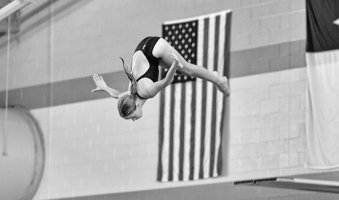
I have the same issue with my T1i at dive meets. Here's what I was able to pull with a 85mm 1.8. The second one is with the 70-200 2.8. The 85mm definitely had the advantage for a faster shutter speed.

I used LR4 for noise reduction and minor exposure adjustments. They aren't bad, but our dive meets are the only time I've run across, with what I do, where a full frame camera would have been better for me.

Also added a football pic from a night game using the 70-200. It could be better, but it's not bad.
 

Attachments

  • TEA&M Pearland Dive Meet-381BW Crop.jpg
    TEA&M Pearland Dive Meet-381BW Crop.jpg
    81.9 KB · Views: 1,273
  • TEA&M Pearland Dive Meet-126.jpg
    TEA&M Pearland Dive Meet-126.jpg
    1.5 MB · Views: 1,286
  • Cougar Football-284.jpg
    Cougar Football-284.jpg
    564.7 KB · Views: 1,272
Upvote 0
Wow. Nice pictures.
As far as sharpness goes, too, many point to the Canon 17-55 as the ultimate, but that there are great almost-as-good-as choices for a lot less expense. Either way, though, I like the color rendering of the Sigma lens much more than that of the Canon. I have found the Canon to be a bit sharper, but the other producing (subjectively) nicer pictures.
I think if there was a T6i that had the important parts of the 70D without the articulating screen, wifi or GPS I'd probably get that right now.
 
Upvote 0
Cory said:
Thanks. Even with my T1i I'm able to do well at 6400 with Lightroom 4 and I rarely really even want to go bigger than 2.8 (although 2.0 comes in handy in our wretched gym with the 100 2.0).
7DII? :o

If you are happy with your images, I honestly see no reason to upgrade. Just work on your technique as others suggested. Then your results will even be better!

If you want to see a HUGE improvement in low light performance (and image quality), and if budget allows, get a 6D (or a used 5DII) and pair it with the 24-70 f/2.8 II. And make sure you keep the primes ;)
 
Upvote 0
neuroanatomist said:
Full frame sensors yield sharper images in standardized tests like the ISO 12233 crops and Imatest SFR tests. The reason is the bigger sensor - with the framing matched, the APS-C image must be enlarged more for a given output size, meaning a softer result. The increased sharpness with FF is evident in real-world shooting, too.

It's important to remember that the topic at hand is "image quality". Many people fall into the trap of equating image quality with sharpness - it's an easy trap to fall into because iamge sharpness is easy to measure and plot on a graph. However, things like bokeh, color transmission, contrast (global and micro), presence or absense of aberrations, flare, dynamic range, etc., all impact image quality.

EDIT: Ran across a relevant, real-world comment in another thread.

ajfotofilmagem said:
Every day I see people in CR, praising 5D classic. Now that is a cheap camera (and very old) can compete in price with APS-C. I see in my city, some photographers doing weddings with classic 5D + 28-135mm, and the result is quite disappointing. On the other hand, several photographers doing weddings with 7D + 17-55mm has far superior results.

Worth noting that on many measurements, the 5D sensor outperforms the 7D sensor.
It is. The set 5D classic + 28-135mm results in inferior images (mostly) to the set 7D + 17-55mm. Some people recommend blindly buy the full frame cameras, without recommending lenses that can extract the potential quality that exists in them. It turns out that all zoom lenses like the Canon 28-135mm are bad in the corners of the image, or cost more than the body 5D classic. The best lens I've ever seen anyone use in the 5D classic is the Sigma 24-70 F2.8 (old model), because the photographers who do weddings in my town think absurd to spend more money on the lens than the camera body. I think it would be smarter to use a good APS-C camera in conjunction with a lens of excellent quality.
 
Upvote 0
ajfotofilmagem said:
It turns out that all zoom lenses like the Canon 28-135mm are bad in the corners of the image, or cost more than the body 5D classic.

I am not sure why we are discussing here a lens like the 28-135 vs. the much higher class 17-55 but while we at it, I do not see the dreadful corners here:

http://www.the-digital-picture.com/Reviews/ISO-12233-Sample-Crops.aspx?Lens=116&Camera=9&Sample=0&FLI=2&API=0&LensComp=398&CameraComp=736&SampleComp=0&FLIComp=3&APIComp=0

or here

http://www.the-digital-picture.com/Reviews/ISO-12233-Sample-Crops.aspx?Lens=116&Camera=9&Sample=0&FLI=0&API=1&LensComp=398&CameraComp=736&SampleComp=0&FLIComp=0&APIComp=0

Obviously, not the 5D classic (it is 16mp vs. 12 mp) but corner resolution is not really so much dependent on pixel density. The 1DsII (16mp) with the 28-135 outperforms the fancy 17-55 on the 60D petty much across the range, according to TDP.

Now, imagine a real lens on a recent FF body. Wait, I do not need to imagine it.
 
Upvote 0
I shoot a lot of indoor sports and lots of figure skating -- fast, erratic moving subjects in sometimes challenging light. I went from an XT with a 70-300 f4-5.6 (non-L) to a 60D with a 70-200 f2.8 II. Somewhere, in between, I borrowed a 70-200 f2.8 Mark I for my XT and saw a huge improvement. But, noise at 1600 was still noise. With that one experience, I was sold on the 70-200 L. But, I also realized that sensors do matter. It's not like 40 years ago when Kodachrome 64 was just as good in a Canon FTb as it was in the F1.

Since then I upgraded to the 7D and my keeper rate went up significantly due to better focus tracking. But, I still needed Noise Ninja or Lightroom to clean up the noise. I often shoot between 1600 and 3200.

Early this year I upgraded to the 5D3 and my image quality increased dramatically. Rarely do I need to clean up noise. Images are sharper and with the bigger pixels, color depth is deeper. For challenging, harsh lighting, I have more flexibility in Lightroom to tone down the highlights and bring out detail in the shadows.

I went through a lot of mind games to convince myself that I would never "need" full frame because I just couldn't see myself spending the money for it. I thought the 7D was the greatest camera made -- until my 5D3 arrived.

Granted, for outdoor stuff, I still get some good use out of the 7D. But, it's a backup body when indoors.

It's easier to invest first in lenses. They often last longer. That 100 f2.0 should be great lens on crop or full frame. (It's still on my wish list.) But, sometimes there's no escaping the benefit of upgrading sensors (even if the body surrounding it isn't top of the line).

So, body or lens? Yes.
 
Upvote 0
One more note. It is true that the 5D3 yields sharper images than the 7D when using the same lens. The image quality comparison tool on The-Digital-Picture.com illustrates this quite nicely. Contrary to popular belief, the extra pixel density of the 7D doesn't necessarily result in sharper images compared to cropping a FF image to the same perspective.

When I made my move to FF, I feared the loss of that extra reach with my 70-200. I had grown accustomed to capturing shots of skaters at the far end of the rink with an effective focal length of 320mm. So, when I got the 5D3, I did lots of comparison tests between it and the 7D with the same 70-200. I cropped the 5D3 images to the same perspective of the 7D. In my tests, the cropped 5D3 images typically looked as sharp or sharper than the non-cropped 7D images -- and always looked richer in color depth with less noise.
 
Upvote 0
Pi said:
ajfotofilmagem said:
It turns out that all zoom lenses like the Canon 28-135mm are bad in the corners of the image, or cost more than the body 5D classic.

I am not sure why we are discussing here a lens like the 28-135 vs. the much higher class 17-55 but while we at it, I do not see the dreadful corners here:

http://www.the-digital-picture.com/Reviews/ISO-12233-Sample-Crops.aspx?Lens=116&Camera=9&Sample=0&FLI=2&API=0&LensComp=398&CameraComp=736&SampleComp=0&FLIComp=3&APIComp=0

or here

http://www.the-digital-picture.com/Reviews/ISO-12233-Sample-Crops.aspx?Lens=116&Camera=9&Sample=0&FLI=0&API=1&LensComp=398&CameraComp=736&SampleComp=0&FLIComp=0&APIComp=0

Obviously, not the 5D classic (it is 16mp vs. 12 mp) but corner resolution is not really so much dependent on pixel density. The 1DsII (16mp) with the 28-135 outperforms the fancy 17-55 on the 60D petty much across the range, according to TDP.

Now, imagine a real lens on a recent FF body. Wait, I do not need to imagine it.
I mentioned the 5D classic, much praised in CR. Of course, other superior models show the full frame advantages over 5D classical. Looking at the comparison of the link you posted, I see the corners of the image (which I mentioned) of 28-135mm with much chromatic aberration, and less sharpness compared to the same lens aperture F. I also realized that this comparison (even at the corners), 17-55mm shows moiré that certifies the ability of the lens resolution surpassing the 60D sensor.
 
Upvote 0