Is the DSLR in danger of becomming an endangered species?

  • Thread starter Thread starter Flake
  • Start date Start date
Status
Not open for further replies.
Flake said:
Maybe an odd question at first glance, but there is a lot of substance behind it. Canon in particular has pushed up prices of its higher end DSLR models to such a degree that the really need to produce something pretty special - the trouble is that they don't produce image quality that much better than the previous models.

Last month Canon held a management briefing here The interesting thing is what they said about comming compact cameras:

"we will further differentiate and enhance our lineup by launching new cameras offering the image qualities that approaches SLR cameras; furthering the improvement in design and qualities, and by incorporating features such as network, connectivity capabilities."


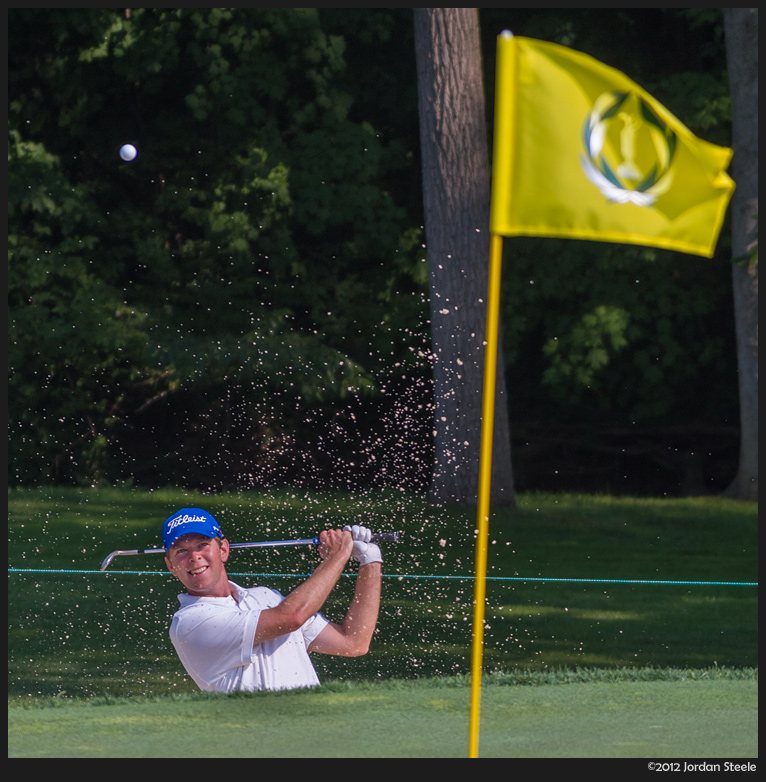
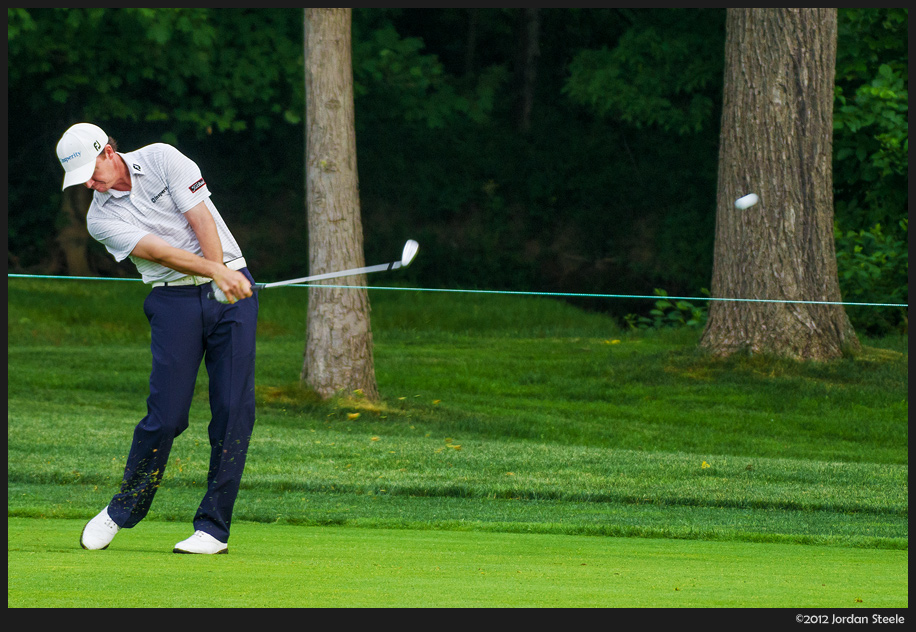
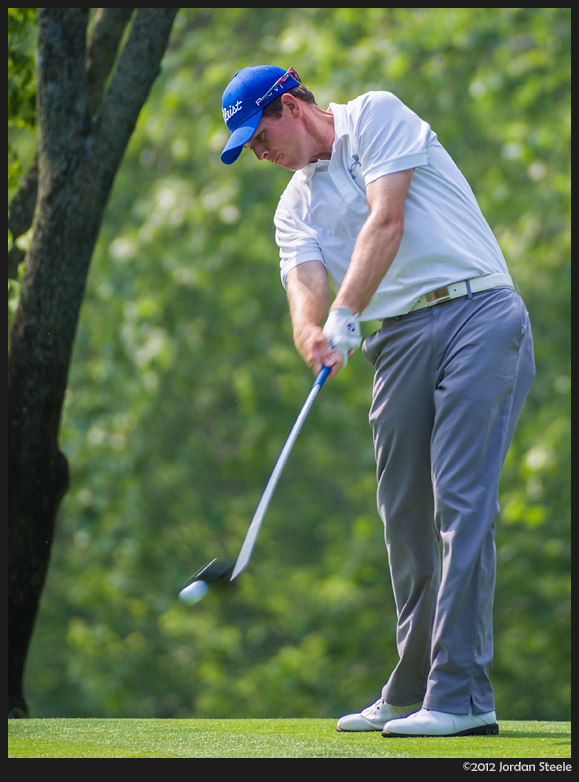
Now I'm sure that there will be those who view this as some kind of heresy and won't believe that this is even possible, but have a look at these images taken with the Olympus E-M5 and a Canon FD 50-300mm f/4.5L and then ask yourself seriously if a DSLR would have returned better image quality.

Falling sales of high end product will reduce profits, and put pressure on manufacturers to raise high prices even higher, but what is the real point of paying so much for something which isn't returning images significantly better than those which can be obtained for a tenth of the outlay? Of course we know that clients expect to see a big camera, better than something they might own, and for those users, there's little choice

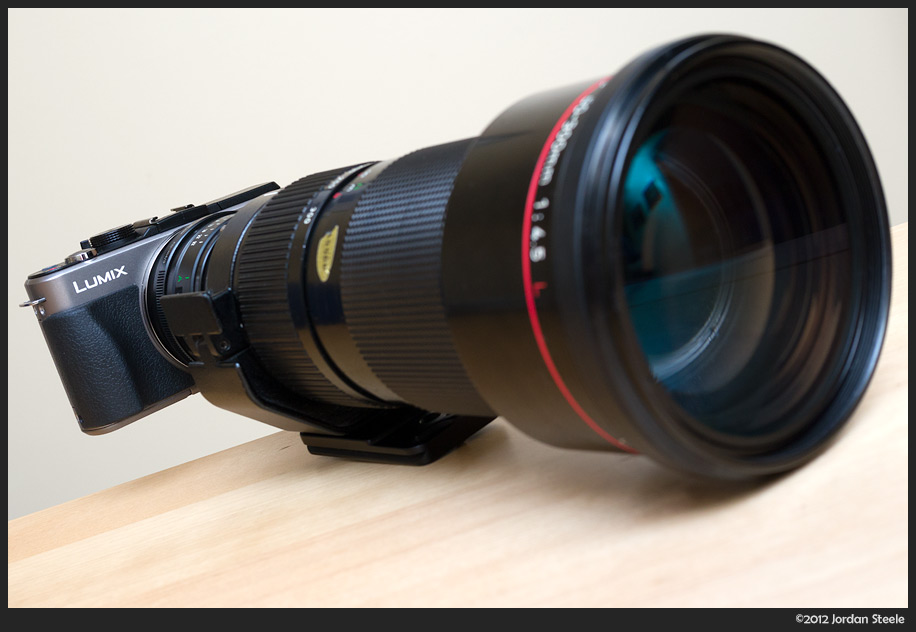
An Olympus E-M5 and Canon 50-300mm f/4.5L essentially looks like this...

50-300-4.jpg


That is a huge set up... I don't think he would have noticed a DSLR making it 1/2" longer.
 
Upvote 0
Flake said:
RLPhoto said:
Flake said:
Maybe an odd question at first glance, but there is a lot of substance behind it. Canon in particular has pushed up prices of its higher end DSLR models to such a degree that the really need to produce something pretty special - the trouble is that they don't produce image quality that much better than the previous models.

Last month Canon held a management briefing here The interesting thing is what they said about comming compact cameras:

"we will further differentiate and enhance our lineup by launching new cameras offering the image qualities that approaches SLR cameras; furthering the improvement in design and qualities, and by incorporating features such as network, connectivity capabilities."


Now I'm sure that there will be those who view this as some kind of heresy and won't believe that this is even possible, but have a look at these images taken with the Olympus E-M5 and a Canon FD 50-300mm f/4.5L and then ask yourself seriously if a DSLR would have returned better image quality.

Falling sales of high end product will reduce profits, and put pressure on manufacturers to raise high prices even higher, but what is the real point of paying so much for something which isn't returning images significantly better than those which can be obtained for a tenth of the outlay? Of course we know that clients expect to see a big camera, better than something they might own, and for those users, there's little choice

When you take 50,000 Photos a year for live events, weddings, studio photos, concerts, and many other things, films workflow can be a strain to manage, tag, print, copy, email, scan for clients. Digital is king for speed while I feel film is for medium or large format jobs which require the extra detail and DR. IE: architecture & Landscapes.

The 35mm film format isnt worth the extra processing and cost for me. Its detail isnt worth it compared to just shooting digital.

Also, No one says you have to shoot with the latestest and greatest gear. A Good full-frame 5Dc and an EG-S screen can run you as low as 800$ and has AF if you'd like to use it. Thats a bargian compared to processing and drum scans to get every ounce of IQ from a slide.

Just my 2 Cents.

You do know that the Olympus OM-D E-M5 is a 16 MP digital mirrorless camera ?

My Bad. LOL I Just hear olympus OM and think of my Old OM-1.

Carry On. ;D
 
Upvote 0
facedodge said:
^^^ Essentially, it's about the lens and if you want shots like that you need a lens at least 5 inches long.

with that much light the same shots can be made with a Nikon 1 and the tiny 30-110mm lens.
He did not even get the ball or club-hits-ball once in a picture. ;-)
 
Upvote 0
AvTvM said:
facedodge said:
^^^ Essentially, it's about the lens and if you want shots like that you need a lens at least 5 inches long.

with that much light the same shots can be made with a Nikon 1 and the tiny 30-110mm lens.
He did not even get the ball or club-hits-ball once in a picture. ;-)

300 f/4.5 is nearly three times as long and nearly twice as bright than the 110 f/5.6, although, that is a nifty little lens.
 
Upvote 0
Camera is a tool . A tool should fit the owner and usage. There is no doubt that the OM D E-M4 is a good camera. Can it replace the existing DSLR??? I have to say NO. Just think of the following items: Price, shutter/Af delay, wide choice of lenses, View finder. DSLR will beat the OM D. As for picture quality, It is hard to say, based on the size we have seen in the web. Remember the oldsaying in the old filem days? " Post card size picture from a box camera under the sun will look as good as a picture from Rollie" Therefore I am not getting into it. Another thing is the percentage of "keeper" from sporting event. I am sure that everybody will agree that the DSLR is definitely higher.
 
Upvote 0
AvTvM said:
with that much light the same shots can be made with a Nikon 1 and the tiny 30-110mm lens.
He did not even get the ball or club-hits-ball once in a picture. ;-)

The E-M5 is a lot better than the Nikon 1. If I wanted a slower lens with AF, I also could have used the Panasonic 100-300mm or Olympus 75-300mm, both of which are much smaller than the FD 50-300, but they're a stop or more slower and not as good optically.

Anyway, I'm the photographer linked to in the OP (and the 50-300L picture above is mine on my GX1).

I think you're being tongue in cheek with the second comment, but just in case...when you photograph golf, you do NOT click the shutter before ball impact. That's a very quick way to have angry golfers and get removed from the premises. I did get a few shots shortly after impact when I was rather far away and using the long end when I photographed the practice rounds, but I didn't do it during the Pro-Am because it's a competition round.

For instance:

hoag_sand.jpg


walker_fairway.jpg


hoag_drive2.jpg


A few other points for anyone who is interested:

1) The 50-300L is a great lens! I was wary when I bought it, as many older manual focus zooms are pretty poor...this lens rocks. Also, it is rather large and heavy. However, since the FOV is the same as a 100-600mm lens on full frame, it's still smaller than a similar length lens on an APS-C or Full Frame DSLR. It is true that I wouldn't have noticed the extra size (especially since I shot the tournament with both the horizontal and vertical grips on my E-M5, which makes it just a little smaller than a DRebel with grips). Yeah, a 7D with a 100-400L would be similar in size and capability, but also a lot more expensive. But yeah, really long stuff isn't where m4/3 shines in the size department. (Aside from using shorter focal lengths for the same FOV).

2) I am a former Canon shooter...I loved the system but eventually got bogged down by all the weight. While the times I use the 50-300L are not exactly huge reduction in size and weight, it's the everyday stuff where it's big. My shoulder bag used to have the 1Ds Mark II, 70-200 f/2.8L IS II, 17-40L, Sigma 50/1.4 and 100 f/2.8L IS Macro...maybe another lens or two. All told it was close to 18 lbs of gear, and it wasn't that fun. Now I will carry my E-M5 with 7-14mm or 12mm f/2, 25mm f/1.4 and 45mm f/1.8, and either a lightweight 40-150mm zoom or if I want more depth of field control, a 135mm f/2.8 for my long lens. My kit bag now weighs about 4 lbs. It's definitely not the right choice for everyone, but it has been wonderful for me.

3) The Oly E-M5 has image quality roughly on par with my 1Ds II. Similar (or even slightly better) dynamic range, and high ISO noise is within a half stop. It's a more responsive camera, though...9fps and faster single shot AF. Of course, it's not nearly as good in continuous AF, though.

I've found the switch to Micro 4/3 wonderful, and it does some things (aside from weight) better than DSLRs...for instance, the single shot autofocus on both the E-M5 and recent Panasonic bodies (GH2, G3, GX1) is exceptionally fast and dead-on accurate. Puts the AF in almost any DSLR to shame. In low light, my GX1 absolutely smokes the 1Ds II in single shot. And, you never have to worry about front or back focus with a CDAF system.

However, if you need really shallow DOF (and thus the FF or larger sensor), or you need great continuous autofocus, a DSLR is still by far the best option. I don't see DSLRs going away just yet, but I think a large portion of the market will shift to mirrorless in the next decade, especially as continuous AF improves to match or exceed that in DSLRs.

While I'm sure there will be full frame mirrorless cameras coming eventually, they won't be quite as good in size reduction just because of the longer focal lengths needed for long lens work and the larger image circle vs APS-C or m4/3, but just like now, photographers will have to see what they're willing to trade for other advantages.

Thanks for the interest in my photos, though!

 
Upvote 0
I was thinking yesterday about how small APS Elph cameras were back in the 1990's (with APS-H sized 'sensors') and put a table together to see just what kind of cameras they were able to cram into these small packages (most importantly physical dimensions, weight, and lens - FL, zoom, and aperture). Here's what I put together, information obtained from Canon Museum website:

ModelLensSizeWeight Released
ELPH24-48mm f/4.5-6.290 x 60 x 27 mm190 gMay 1996
ELPH 490Z22.5-90mm f/5.6-8.9 120 x 65 x 47 mm 290 gJune 1996
ELPH 10 [AF] 25mm f/6.7110 x 63 x 43 mm180 gNovember 1996
ELPH 260Z30-60mm f/4-7.8113 x 59 x 38 mm175 gJuly 1997
ELPH Jr26mm f/2.890 x 60 x 24 mm125 gSeptember 1997
ELPH 370Z23-69mm f/4.5-9.995 x 65 x 32 mm205 gMarch 1998
ELPH LT23mm f/4.885 x 55 x 35 mm115 gSeptember 1998
ELPH 224-46mm f/4.2-5.687 x 57 x 25 mm181 gMarch 1999
ELPH LT26026-52mm f/4.2-6.793 x 63 x 30 mm150 gMarch 2000
ELPH LT27024-65mm f/4.5-895 x 64 x 35 mm180 gFebruary 2001
ELPH Z323.5-54mm f/4.8-7.698 x 50 x 33 mm150 gMarch 2002

Compare that to a few modern digital cameras:

ModelLensSizeWeight Lens Equ.
G1X (3/2"sensor) 15-30mm f/2.8-5.8 117 x 81 x 65 mm 534 g 28-112mm
S100 (1/1.7" sensor) 5.2-26mm f/2.0-5.9 99 x 60 x 28 mm 198 g 24-120mm
ELPH 320HS (1/2.3" sensor) 4.3-21.5mm f/2.7-5.9 94 x 57 x 21 mm 145 g 24-120mm
ELPH 530HS (1/2.3" sensor) 4-48mm f/3.4-5.6 86 x 54 x 20 mm 163 g 28-336mm

Back in the APS film days that absolute best zoom was a 4x (490Z - 29-117mm equivalent with a very slow f/5.6-8.9 aperture). Nowadays we have smaller, lighter cameras with 12x zooms (see 530HS). In comparison the G1X looks huge, despite having a smaller 'sensor' than all the film cameras. Small, light cameras can be made with larger sensors, but at the cost of zoom range and maximum aperture. I highly doubt most amateurs would want to give up zoom range for a larger sensor (most of whom would not understand what the larger sensor or aperture would mean in terms of DOF, IQ or high ISO noise). I would like to see what Canon could do with a camera somewhere in between a G1X and the S100 in terms of sensor size, overall dimensions, and weight.

Slightly off topic post, but I figured it was kind of related to the subject.
 
Upvote 0
In three / four years time, the 5Div won't be a DSLR in the conventional sense but will instead be an EF mount mirrorless camera with a hybrid electronic and optical viewfinder. It will be billed as Canon's flagship advanced technology model. The 1 series will stay as a DSLR for a bit longer for those requiring a more rugged, time tested design.
 
Upvote 0
Hillsilly said:
In three / four years time, the 5Div won't be a DSLR in the conventional sense but will instead be an EF mount mirrorless camera with a hybrid electronic and optical viewfinder. It will be billed as Canon's flagship advanced technology model. The 1 series will stay as a DSLR for a bit longer for those requiring a more rugged, time tested design.

Hope not. I don't want to have to switch to the 1 series.
 
Upvote 0
Yes - That will be part of the sales strategy - forcing people who "like things the way they are" to shell out for a 1 series.

That being said, the next 5D, being the "Advanced Technology" model will be jammed packed with a lot of cool features - wifi, bluetooth, GPS, DLNA. You'll be able to control all of the camera features (and flash settings) from your mobile phone / tablet. The touchpad LCD will allow unlimited focus points. And the new viewfinder will allow you to overlay a lot of data on top of an optical viewfinder image if you want - there will actually be no real downside. All those people who are buying 5Diii's now, will be kicking themselves that they didn't wait four years for this thing.
 
Upvote 0
Hillsilly said:
Yes - That will be part of the sales strategy - forcing people who "like things the way they are" to shell out for a 1 series.

That being said, the next 5D, being the "Advanced Technology" model will be jammed packed with a lot of cool features - wifi, bluetooth, GPS, DLNA. You'll be able to control all of the camera features (and flash settings) from your mobile phone / tablet. The touchpad LCD will allow unlimited focus points. And the new viewfinder will allow you to overlay a lot of data on top of an optical viewfinder image if you want - there will actually be no real downside. All those people who are buying 5Diii's now, will be kicking themselves that they didn't wait four years for this thing.

I know I won't kick myself... I'll love shooting this camera for 4 years!
 
Upvote 0
Jman13 said:
Anyway, I'm the photographer linked to in the OP (and the 50-300L picture above is mine on my GX1).
...
I think you're being tongue in cheek with the second comment, but just in case...when you photograph golf, you do NOT click the shutter before ball impact. That's a very quick way to have angry golfers and get removed from the premises. I did get a few shots shortly after impact when I was rather far away and using the long end when I photographed the practice rounds, but I didn't do it during the Pro-Am because it's a competition round.
...
Thanks for the interest in my photos, though!

Really appreciate your response and your thoughts and agree with all them. I have no experience whatsoever with golf - neither as player nor as (live) spectator nor as photographer. While I found your first series of pictures of very good technical quality, I could not help nut notice that the ball or ball contact where never captured in them. Until your response it did not occur to me that "untimely" shutter noise was the reason for this.

With your second series of pictures you certainly have demonstrated your skill as photographer in getting perfectly timed and well-composed shots showing "peak golf action". I especially like the first pic of the second series!

My full respect, congrats and sincere apologies for my first, somewhat snide remark.
 
Upvote 0
dawgfanjeff said:
Imagine the sensor size you can get on a tablet compared to a FF camera. The current SLR form factor's limitation would be irrelevant. Just add a tripod mount on the side, you could be looking at ridiculous IQ for portraits and landscapes. Not to mention how much easier manual focusing would be at that size.

Of course, I could be completely, wrong, too:)

I'm trying to imagine how thick a tablet would be with a FF sensor. As a sensor gets larger, lenses get longer. Thats why sensors are so tiny in tablets, no one would buy a tablet 5 inches thick, and, if it was a telephoto 9 inches thick.

Now, the large sensor you refer to... 4 X 5 inches? Imagine the lens for that! You would have a 1 ft thick tablet with a $10K lens.

You could use a pinhole lens, of course, but it would be even thicker.
 
Upvote 0
KyleSTL said:
I would like to see what Canon could do with a camera somewhere in between a G1X and the S100 in terms of sensor size, overall dimensions, and weight.
Looks like Sony is the first one out the door with a camera like I described (the new RX100). It's pretty amazing to see it along side competitive cameras and how it is just about the size of the Canon S100, despite having a sensor over 4 times larger (Nikon CX format) and having a good range fast lens (28-100mm f/1.8-4.9).

http://www.dpreview.com/previews/sony-dsc-rx100/4
 
Upvote 0
Mt Spokane Photography said:
dawgfanjeff said:
Imagine the sensor size you can get on a tablet compared to a FF camera. The current SLR form factor's limitation would be irrelevant. Just add a tripod mount on the side, you could be looking at ridiculous IQ for portraits and landscapes. Not to mention how much easier manual focusing would be at that size.

Of course, I could be completely, wrong, too:)

I'm trying to imagine how thick a tablet would be with a FF sensor. As a sensor gets larger, lenses get longer. Thats why sensors are so tiny in tablets, no one would buy a tablet 5 inches thick, and, if it was a telephoto 9 inches thick.

Now, the large sensor you refer to... 4 X 5 inches? Imagine the lens for that! You would have a 1 ft thick tablet with a $10K lens.

You could use a pinhole lens, of course, but it would be even thicker.


Ok, I admit it. I don't really know what I'm talking about:) I was just dreaming and thinking like a marketing director who hadn't talked to the grownups yet about pesky issues like physics.
But still...if cameras could talk straight to a tablet via NFC or even bluetooth. When do we get tabletized versions of Canon tools?
 
Upvote 0
Personally Flake, while those images are good, I'm certain a Full Frame/DSLR would best them. Take a look at the pictures again, and imagine just for a second the subjects weren't famous... They're still passable, but they aren't works of art. It takes a photographer/editor for sure to make works of art, but the tool, and it's lack of shallow depth of field, is making every image look boring, the bokeh is horrible, and as far as I'm concerned, at least some of the images should have quality bokeh/oof on parts of the subject themselves. The shot second from the top is by far the best ( http://admiringlight.com/blog/wp-content/uploads/2012/05/rory_drive.jpg ), and still requires a touch of editing in post to improve the background blur. My 10 cents. And my personal feeling is that Crop body imaging from 1.6x-2x-2.7x is for most purposes, specifically a consumer level endeavor.

I've looked seriously at switching to micro 4/3rds, I've studied the system, tested it in person on several occasions and after getting a FF, I wouldn't consider the 4/3rds system further. Before I got the FF, and was on 1.6x 7D crop only, it was much more enticing. I would not go back to crop outside of a really useful, high quality point and shoot/camera phone.
 
Upvote 0
Status
Not open for further replies.