jrista et al, Why Astrophotography?

traingineer said:
You know, there is 1 main advantage I noticed with inexpensive telescopes/mounts, they're usually a lot lighter and smaller.

Very true. I guess that's one of the biggest pros of going inexpensive. If you need portability, then high end stuff just isn't viable. That's one of the reasons I got the Orion Atlas...I do take it out to dark sites about 40 miles away or so. The 10Micron GM2000HPS has an ultra portable version, where the head disassembles into two lighter weight parts, plus the control box. But it's still heavier than the Atlas...

I do love using my 600mm lens as a telescope. It's relatively short, so good for wider field work. Optically, it's as good as the $12,000 Officina Stellare HiPer API 152, and faster. Once I get a mono CCD camera, it will make for a superb wide field setup. I also like using my 100mm and 50mm lenses with my DSLR mounted to a Vixen dovetail for really wide field stuff. I haven't had many opportunities to do that...but the first clear night in almost four weeks is supposed to happen on the 13th...I plan to take the Atlas, my DSLR and those two lenses out to a dark site and see if I can get some wide field shots of the milky way core, scorpius, and a few of the Ha nebulas near the galactic core. :) I've been waiting for the 13th for so long, I'm kind of chomping at the bit. :P
 
Upvote 0
jrista said:
traingineer said:
You know, there is 1 main advantage I noticed with inexpensive telescopes/mounts, they're usually a lot lighter and smaller.

Very true. I guess that's one of the biggest pros of going inexpensive. If you need portability, then high end stuff just isn't viable. That's one of the reasons I got the Orion Atlas...I do take it out to dark sites about 40 miles away or so. The 10Micron GM2000HPS has an ultra portable version, where the head disassembles into two lighter weight parts, plus the control box. But it's still heavier than the Atlas...

I do love using my 600mm lens as a telescope. It's relatively short, so good for wider field work. Optically, it's as good as the $12,000 Officina Stellare HiPer API 152, and faster. Once I get a mono CCD camera, it will make for a superb wide field setup. I also like using my 100mm and 50mm lenses with my DSLR mounted to a Vixen dovetail for really wide field stuff. I haven't had many opportunities to do that...but the first clear night in almost four weeks is supposed to happen on the 13th...I plan to take the Atlas, my DSLR and those two lenses out to a dark site and see if I can get some wide field shots of the milky way core, scorpius, and a few of the Ha nebulas near the galactic core. :) I've been waiting for the 13th for so long, I'm kind of chomping at the bit. :P

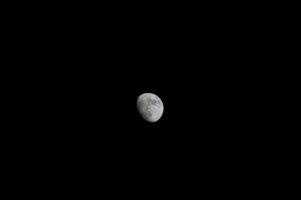
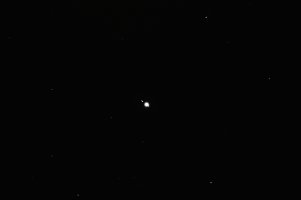
Luckily, it won't be Friday on the 13th but anyway, I tried using my Sigma 105mm on the 7D, and I found it near impossible to get near accurate focusing, especially on the moon. Mainly because you have to quickly turn the ring slightly to make the focusing system move, otherwise, it doesn't focus. :'( I also have an image of Jupiter and it's moons.
(deep sky stacker was used)
 

Attachments

  • Soft Moon.JPG
    Soft Moon.JPG
    31.5 KB · Views: 420
  • Jupiter+moons.JPG
    Jupiter+moons.JPG
    78.5 KB · Views: 436
Upvote 0
traingineer said:
jrista said:
traingineer said:
You know, there is 1 main advantage I noticed with inexpensive telescopes/mounts, they're usually a lot lighter and smaller.

Very true. I guess that's one of the biggest pros of going inexpensive. If you need portability, then high end stuff just isn't viable. That's one of the reasons I got the Orion Atlas...I do take it out to dark sites about 40 miles away or so. The 10Micron GM2000HPS has an ultra portable version, where the head disassembles into two lighter weight parts, plus the control box. But it's still heavier than the Atlas...

I do love using my 600mm lens as a telescope. It's relatively short, so good for wider field work. Optically, it's as good as the $12,000 Officina Stellare HiPer API 152, and faster. Once I get a mono CCD camera, it will make for a superb wide field setup. I also like using my 100mm and 50mm lenses with my DSLR mounted to a Vixen dovetail for really wide field stuff. I haven't had many opportunities to do that...but the first clear night in almost four weeks is supposed to happen on the 13th...I plan to take the Atlas, my DSLR and those two lenses out to a dark site and see if I can get some wide field shots of the milky way core, scorpius, and a few of the Ha nebulas near the galactic core. :) I've been waiting for the 13th for so long, I'm kind of chomping at the bit. :P

Luckily, it won't be Friday on the 13th but anyway, I tried using my Sigma 105mm on the 7D, and I found near impossible to get near accurate focusing, especially on the moon. I also have an image of Jupiter and it's moons.
(deep sky stacker was used)

How are you focusing? Live view 10x? You should be able to get pretty accurate in-camera, especially with the short focal length of 105mm. Trying to focus through the viewfinder is pretty much impossible. I can't even do that with my 600mm lens. I either use live view at 10x zoom, or I use BackyardEOS in it's focusing mode while tethered to the camera.
 
Upvote 0
jrista said:
traingineer said:
jrista said:
traingineer said:
You know, there is 1 main advantage I noticed with inexpensive telescopes/mounts, they're usually a lot lighter and smaller.

Very true. I guess that's one of the biggest pros of going inexpensive. If you need portability, then high end stuff just isn't viable. That's one of the reasons I got the Orion Atlas...I do take it out to dark sites about 40 miles away or so. The 10Micron GM2000HPS has an ultra portable version, where the head disassembles into two lighter weight parts, plus the control box. But it's still heavier than the Atlas...

I do love using my 600mm lens as a telescope. It's relatively short, so good for wider field work. Optically, it's as good as the $12,000 Officina Stellare HiPer API 152, and faster. Once I get a mono CCD camera, it will make for a superb wide field setup. I also like using my 100mm and 50mm lenses with my DSLR mounted to a Vixen dovetail for really wide field stuff. I haven't had many opportunities to do that...but the first clear night in almost four weeks is supposed to happen on the 13th...I plan to take the Atlas, my DSLR and those two lenses out to a dark site and see if I can get some wide field shots of the milky way core, scorpius, and a few of the Ha nebulas near the galactic core. :) I've been waiting for the 13th for so long, I'm kind of chomping at the bit. :P

Luckily, it won't be Friday on the 13th but anyway, I tried using my Sigma 105mm on the 7D, and I found near impossible to get near accurate focusing, especially on the moon. I also have an image of Jupiter and it's moons.
(deep sky stacker was used)

How are you focusing? Live view 10x? You should be able to get pretty accurate in-camera, especially with the short focal length of 105mm. Trying to focus through the viewfinder is pretty much impossible. I can't even do that with my 600mm lens. I either use live view at 10x zoom, or I use BackyardEOS in it's focusing mode while tethered to the camera.

I used 10x live fiew and manual focusing, turning the ring as slowly as possible.
 
Upvote 0
traingineer said:
jrista said:
How are you focusing? Live view 10x? You should be able to get pretty accurate in-camera, especially with the short focal length of 105mm. Trying to focus through the viewfinder is pretty much impossible. I can't even do that with my 600mm lens. I either use live view at 10x zoom, or I use BackyardEOS in it's focusing mode while tethered to the camera.

I used 10x live fiew and manual focusing, turning the ring as slowly as possible.

Well, that's the right technique. Are you having trouble because the camera is shaking? Sometimes it actually helps to pretty much grab the whole rig, and balance it against yourself with as much surface area as possible. When the camera just kind of hangs free, it is sometimes actually more susceptible to wild shake than if it is being actively balanced by you. You'll still have some shake, but it should be slower and less problematic for your focusing.

BackyardEOS is a program that runs on a laptop or Windows 8 tablet that has a focusing mode that can control the lens' focus group directly. It has fast, medium, and slow controls, and it's actually the best way to focus DSLRs. The program costs about $50, but I've found it to be completely invaluable, especially for focusing my DSLR for astrophotography. If you can't get your focusing figured out using live view and 10x zoom, and are serious enough to spend the fifty bucks, BYEOS will definitely do the trick.
 
Upvote 0
jrista said:
traingineer said:
jrista said:
How are you focusing? Live view 10x? You should be able to get pretty accurate in-camera, especially with the short focal length of 105mm. Trying to focus through the viewfinder is pretty much impossible. I can't even do that with my 600mm lens. I either use live view at 10x zoom, or I use BackyardEOS in it's focusing mode while tethered to the camera.

I used 10x live fiew and manual focusing, turning the ring as slowly as possible.

Well, that's the right technique. Are you having trouble because the camera is shaking? Sometimes it actually helps to pretty much grab the whole rig, and balance it against yourself with as much surface area as possible. When the camera just kind of hangs free, it is sometimes actually more susceptible to wild shake than if it is being actively balanced by you. You'll still have some shake, but it should be slower and less problematic for your focusing.

BackyardEOS is a program that runs on a laptop or Windows 8 tablet that has a focusing mode that can control the lens' focus group directly. It has fast, medium, and slow controls, and it's actually the best way to focus DSLRs. The program costs about $50, but I've found it to be completely invaluable, especially for focusing my DSLR for astrophotography. If you can't get your focusing figured out using live view and 10x zoom, and are serious enough to spend the fifty bucks, BYEOS will definitely do the trick.

Shake wasn't an issue, as I said before, the Sigma's focusing ring is just not good enough for slow/steady turning. I have already looked at Backyard EOS before and it is a very nice program. The 2 shots I have were just quick/rushed ones I did a few hours ago, just step up the tripod, kept it stable, point at object, focus and take the images.
 
Upvote 0
traingineer said:
jrista said:
traingineer said:
jrista said:
How are you focusing? Live view 10x? You should be able to get pretty accurate in-camera, especially with the short focal length of 105mm. Trying to focus through the viewfinder is pretty much impossible. I can't even do that with my 600mm lens. I either use live view at 10x zoom, or I use BackyardEOS in it's focusing mode while tethered to the camera.

I used 10x live fiew and manual focusing, turning the ring as slowly as possible.

Well, that's the right technique. Are you having trouble because the camera is shaking? Sometimes it actually helps to pretty much grab the whole rig, and balance it against yourself with as much surface area as possible. When the camera just kind of hangs free, it is sometimes actually more susceptible to wild shake than if it is being actively balanced by you. You'll still have some shake, but it should be slower and less problematic for your focusing.

BackyardEOS is a program that runs on a laptop or Windows 8 tablet that has a focusing mode that can control the lens' focus group directly. It has fast, medium, and slow controls, and it's actually the best way to focus DSLRs. The program costs about $50, but I've found it to be completely invaluable, especially for focusing my DSLR for astrophotography. If you can't get your focusing figured out using live view and 10x zoom, and are serious enough to spend the fifty bucks, BYEOS will definitely do the trick.

Shake wasn't an issue, as I said before, the Sigma's focusing ring is just not good enough for slow/steady turning. I have already looked at Backyard EOS before and it is a very nice program. The 2 shots I have were just quick/rushed ones I did a few hours ago, just step up the tripod, kept it stable, point at object, focus and take the images.

If it really is the manual focus ring, then BYEOS might just do the trick. It focuses electronically, so the build quality of the manual focus ring really doesn't matter. If the lens focuses well when using AF, then you would have very fine grained control with BYEOS. You should be able to get things tack sharp.
 
Upvote 0
jrista said:
traingineer said:
jrista said:
traingineer said:
jrista said:
How are you focusing? Live view 10x? You should be able to get pretty accurate in-camera, especially with the short focal length of 105mm. Trying to focus through the viewfinder is pretty much impossible. I can't even do that with my 600mm lens. I either use live view at 10x zoom, or I use BackyardEOS in it's focusing mode while tethered to the camera.

I used 10x live fiew and manual focusing, turning the ring as slowly as possible.

Well, that's the right technique. Are you having trouble because the camera is shaking? Sometimes it actually helps to pretty much grab the whole rig, and balance it against yourself with as much surface area as possible. When the camera just kind of hangs free, it is sometimes actually more susceptible to wild shake than if it is being actively balanced by you. You'll still have some shake, but it should be slower and less problematic for your focusing.

BackyardEOS is a program that runs on a laptop or Windows 8 tablet that has a focusing mode that can control the lens' focus group directly. It has fast, medium, and slow controls, and it's actually the best way to focus DSLRs. The program costs about $50, but I've found it to be completely invaluable, especially for focusing my DSLR for astrophotography. If you can't get your focusing figured out using live view and 10x zoom, and are serious enough to spend the fifty bucks, BYEOS will definitely do the trick.

Shake wasn't an issue, as I said before, the Sigma's focusing ring is just not good enough for slow/steady turning. I have already looked at Backyard EOS before and it is a very nice program. The 2 shots I have were just quick/rushed ones I did a few hours ago, just step up the tripod, kept it stable, point at object, focus and take the images.

If it really is the manual focus ring, then BYEOS might just do the trick. It focuses electronically, so the build quality of the manual focus ring really doesn't matter. If the lens focuses well when using AF, then you would have very fine grained control with BYEOS. You should be able to get things tack sharp.

Okay!
 
Upvote 0
Here is an example of how sharp you can get the moon with BYEOS:

1TwzDVI.jpg


PZ1UULd.jpg


This is effectively perfect focus. The fine-grained controls in BYEOS allowed me to find the exact focal plane where the moon sharpened up to maximum. One tiny step forward or back, and things got visibly less sharp and atmospheric turbulence was visibly worse. IMO, even if all you do is shoot the moon, BYEOS is totally worth the money. :P

It also has a planetary imaging mode that will take video clips, automatically string them together, and offers a few other features (such as 10x zoom video, which when the planet only fills a tiny area of the sensor, can be quite useful).
 
Upvote 0
Thank you guys for your detailed responses in this thread. I have also always been fascinated with the universe outside of the Earth, and astrophotography is certainly part of that. Unfortunately, I live pretty much dead smack in the middle of Europe's largest heavy light pollution area, with the nearest clear-ish (note the -ish) skies being at least a 3 or 4 hour drive. One day I'll be in or closer to a better area, in the meantime I just enjoy the images of other astrophotographers :)
 
Upvote 0
JorritJ said:
Thank you guys for your detailed responses in this thread. I have also always been fascinated with the universe outside of the Earth, and astrophotography is certainly part of that. Unfortunately, I live pretty much dead smack in the middle of Europe's largest heavy light pollution area, with the nearest clear-ish (note the -ish) skies being at least a 3 or 4 hour drive. One day I'll be in or closer to a better area, in the meantime I just enjoy the images of other astrophotographers :)

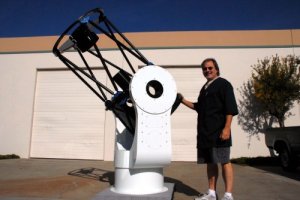
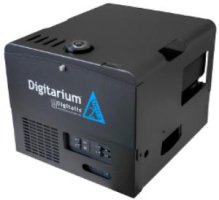
How about a digital planetarium? Lightweight (26kg), easy to set up in your house, do more than just observing stars, and it's only 22,000$, a bargain compared to the Planewave Telescope.
 

Attachments

  • Digitarium Delta 2.jpg
    Digitarium Delta 2.jpg
    8.9 KB · Views: 607
Upvote 0
JorritJ said:
Thank you guys for your detailed responses in this thread. I have also always been fascinated with the universe outside of the Earth, and astrophotography is certainly part of that. Unfortunately, I live pretty much dead smack in the middle of Europe's largest heavy light pollution area, with the nearest clear-ish (note the -ish) skies being at least a 3 or 4 hour drive. One day I'll be in or closer to a better area, in the meantime I just enjoy the images of other astrophotographers :)

You don't have to worry about LP nearly as much these days. You can use a camera lens, DSLR, and a Light Pollution Suppression or Reduction filter, even under the most heavily light polluted "red" and "white" zones. I know quite a few astrophotographers now who live in the middle of or very near to big cities, and they still image.

Look for the Astronomik CLS EOS Clip In filter. It's super easy to use...it literally just clips right into Canon EOS DSLRs. You can then attach the DSLR to a telescope with a T-adapter and T-ring, or to a Canon EF lens (note, you CAN NOT use EF-S lenses, as the short backfocus doesn't leave room for the filter.) There are also other brands that offer similar filters, with varying strengths.

Personally, even though I am under a yellow->green transition zone, I use the Astronomik CLS with my 7D. It has allowed me to get quite a few great nebula shots:

http://jonrista.com/category/astrophotography/deep-sky/nebula-deep-sky/

The summer nebula and galactic core season is starting now, and I hope to be getting some more nebula photos with this filter soon.

Anyway, if you really want to do some astrophotography, and already have some Canon EF lenses and an EOS DSLR, then you CAN do astrophotography! You can do ultra wide field astrophotography with lenses of 50mm and wider, wide field with lenses between 50mm and 1200mm, and deep field with lenses longer than that. The Astronomik CLS EOS Clip-in filter is about $140. You can pick up a small equatorial tracking mount and tripod for around $800, or if you want to start even cheaper than that, with lenses of around 200mm and shorter you can use something like the iOpteron SkyTracker, which is about $500.

You could try without tracking, but you really going to be limited to really light exposures at focal lengths below 35mm. So something like the SkyTracker at the very least is important. You could take it a step up, and support larger lenses or small telescopes, with something like the Celestron Advanced VX mount or the iOptron ZEQ25 (the latter being very slightly more expensive but a fair bit better.)
 
Upvote 0
jrista said:
You could try without tracking, but you really going to be limited to really light exposures at focal lengths below 35mm. So something like the SkyTracker at the very least is important. You could take it a step up, and support larger lenses or small telescopes, with something like the Celestron Advanced VX mount or the iOptron ZEQ25 (the latter being very slightly more expensive but a fair bit better.)

The IOptron ZEQ25GT is actually overall better, similar price, polar alignment is easier, I think it's lighter and it can DANCE :o

http://www.youtube.com/watch?v=tTwMIq87IyY#
 
Upvote 0
So we’re getting another meteor shower on the 23rd (Friday) from 9pm UAE time (GMT 18.00 + 3) until 5am on the 24th, I think my new UWA Sigma needs to feel that evening air this weekend!! 8)
Anyone else heading out to photograph the spectacle??
 
Upvote 0
sjbradbury said:
Because it's really hard to do well, I like a challenge.

Aye! Astrophotography is the most challenging photography I do. It takes so much time, with careful planning, careful management of gear and tracking, and hours of processing, to create one image. In comparison, my bird and wildlife photography is a cakewalk.
 
Upvote 0
Boy am I feeling old.. Astrophotography was the first thing that interested me. I bought an OM-1, had a 12.5" reflector made, and bought a Bill Schaefer mount. Used to cook my film myself.

I am so behind times, it is amazing how technology has taken over. I got into computers when analog to digital was coming into play. Writing software for machines.

I still have all my old equipment. Is there a way to computerize the old Schaefer mount. It has an old drive corrector that works. But, it is ancient.

Been thinking about having the mirror re-coated on the reflector, and playing around with it some.

Gary
 
Upvote 0
garyknrd said:
Boy am I feeling old.. Astrophotography was the first thing that interested me. I bought an OM-1, had a 12.5" reflector made, and bought a Bill Schaefer mount. Used to cook my film myself.

I am so behind times, it is amazing how technology has taken over. I got into computers when analog to digital was coming into play. Writing software for machines.

I still have all my old equipment. Is there a way to computerize the old Schaefer mount. It has an old drive corrector that works. But, it is ancient.

Been thinking about having the mirror re-coated on the reflector, and playing around with it some.

Gary

Scott Rosen [email protected] might be able to help you with your mount. His site says he has put steppers on his Schaefer.
 
Upvote 0