Rienzphotoz said:Everybody Loves Rockwell
I'm sure he is having a good time watching all the chatter generated from a front page CR posting

Upvote
0
Rienzphotoz said:Everybody Loves Rockwell
facedodge said:May we never speak of Ken Rockwell at Canon Rumors again.

It is quite possible that a good chunk of his online traffic comes from CR members trying to find some "unique" comments by KR ;Ddanski0224 said:Rienzphotoz said:Everybody Loves Rockwell
I'm sure he is having a good time watching all the chatter generated from a front page CR posting

danski0224 said:Rienzphotoz said:Everybody Loves Rockwell
I'm sure he is having a good time watching all the chatter generated from a front page CR posting


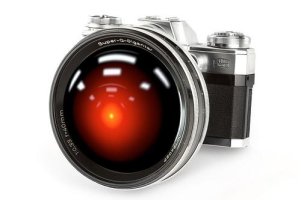
RomainF said:Zeiss 40mm f/0,33, some kind of a joke :
The fastest usable lens may actually be an American Optical 81mm f/0.38. No pictures though...
Kubrick has used an f/0.7 lens with a speed-booster to get an f/0.38 one too to shoot some candles-lighted scenes in Barry Lyndon. The original f/0.7 was made by the Nasa to shoot the dark side of the moon.
Well, that's what the legend says...
candc said:: Dave, although you took very thorough precautions in the pod against my hearing you, I could see your lips move.

neuroanatomist said:candc said:: Dave, although you took very thorough precautions in the pod against my hearing you, I could see your lips move.
Allow me…
Jim O said:LetTheRightLensIn said:Jim O said:BTW, for any of you who criticize him (and I often find myself in that group), his site has an Alexa ranking in the top 5000 for US and top 8000 globally. He could choose to monetize that with Google ads (and make A LOT of money), but he doesn't. Yes, he posts affiliate links and solicits contributions, but no one is forced to give a donation or click on a link. Just saying...
Probably because he already lives so well off it as is, why toss in ads and risk killing the golden goose. I don't know if it is true, but he claims to not need to work because of his website and yet he lives in a big house in one of the fanciest and most expensive towns in the entire nation and has many kids so his website must be doing more than fine just with the links and donations (assuming he is not just joking around with his claims about not needing to work because of the website).
So I guess he is a genius in a way.
I think he says his wife works, and while I haven't seen all of his family photos, I've only ever seen two children.
He also does, or assists at, workshops. He is an inventor who holds at least one patent, probably more.
He sold a condo in San Diego which he bought for nothing. If you know anything about California real estate, even after the bubble burst it was worth a lot. So moving to a nice area on Long Island may not have been as huge a stretch as one might think. I have a pharmacist and a school teacher across the street from me in a 5500 square foot house plus a detached garage with living space above. They did it in a similar fashion. They certainly could not afford a seven figure home on what pharmacists and school teachers make here (combined under $150K).
That's a rather small front element ;DRomainF said:Zeiss 40mm f/0,33, some kind of a joke :
chromophore said:Ever since DxO published their findings about signal gain to compensate for oblique angle light loss at fast f-numbers, people have been taking that report as gospel and making all sorts of inaccurate inferences about what that means. One popular misconception is that it means f/1.0 isn't really f/1.0
Indeed, one cannot make that conclusion and at the same time say that the DOF or background blur is different, because if the oblique angles of light were not being captured to some extent, the result would not show the peripheral rays that contribute to the shallower DOF and the greater background blur in the first place.
And the whole situation becomes clear once we think about the geometry of the incoming light. Yes, very oblique rays do not contribute as much to the image as perpendicular rays, but the consequence of this is vignetting, not a uniform loss of light across the image plane. If the loss was that strong, you would see it in the blur disks of out-of-focus highlights. There would be a falloff in intensity from center to edge. But we don't see that, and the camera's image processor is not sophisticated enough to compensate for it in such a specific way.
neuroanatomist said:DoF and exposure at those ultrawide apertures aren't linked in the way you think they are. When you open up from f/2 to f/1.2, for example, the extra light isn't all hitting the sensor at progressively more oblique angles. If that we're the case, only the OOF regions of the image would be darker, and the clandestine ISO boost the camera applies would have to be selectively applied only to those regions.
I just took a series of shots of an angled page of text, from f/1.2 to f/2 with the 85L II - it's clear that DoF gets deeper with each aperture step, starting with the first step from f/1.2 to f/1.4. The steps did not appear qualitatively different.
LetTheRightLensIn said:What are you are saying would mean that it would need to boost for a loss of light it can capture easily and not boost for what it can't grab easily and even just already there it's not working out.
It can be a tricky thing to judge that and if you have a body where the effect is not on the larger size even moreso.
neuroanatomist said:LetTheRightLensIn said:What are you are saying would mean that it would need to boost for a loss of light it can capture easily and not boost for what it can't grab easily and even just already there it's not working out.
It can be a tricky thing to judge that and if you have a body where the effect is not on the larger size even moreso.
It can be a tricky thing to understand the optical principles involved.
Apparently, it can also be a tricky thing to construct a coherent sentence.
LetTheRightLensIn said:neuroanatomist said:LetTheRightLensIn said:What are you are saying would mean that it would need to boost for a loss of light it can capture easily and not boost for what it can't grab easily and even just already there it's not working out.
It can be a tricky thing to judge that and if you have a body where the effect is not on the larger size even moreso.
It can be a tricky thing to understand the optical principles involved.
Apparently, it can also be a tricky thing to construct a coherent sentence.
that wasn't much of a response
also it can depend upon the internal construction of a lens too, so not all say 50 1.4s would react in quite the same way